


Concrete Grinding in Canal Point, FL
Floors That Work as Hard as You Do
Hear from Our Customers
Professional Concrete Grinding Services Near You
Most coating failures happen before the epoxy even goes down. The concrete wasn’t prepped right. It wasn’t ground evenly. Contaminants were left behind. Then the coating lifts, chips, or bubbles within months.
Concrete grinding done correctly eliminates those problems. You get a clean, profiled surface that coatings actually bond to. No dust floating through your facility for days. No uneven spots that show through the finish. No wondering if it’ll hold up under real use.
The result is a floor that looks better, lasts longer, and requires way less maintenance than what you’re dealing with now. Better light reflection means you’re not burning through lighting costs. Sealed, polished concrete resists moisture, stands up to Florida’s humidity, and doesn’t need constant waxing or chemical treatments.
You’re not just getting a smoother floor. You’re getting a surface that actually performs—one that handles traffic, resists wear, and doesn’t become a maintenance headache six months down the line.
Concrete Grinding Contractors in Canal Point
We’ve been serving South Florida since 2020, specializing in concrete grinding, polished concrete, and epoxy flooring. We’re veteran-owned, which means we show up on time, do what we say we’ll do, and don’t waste your time with runarounds.
We’ve worked with the Coast Guard, US Army, City of Doral, City of Sunny Isles, and county projects across the region. Government and military clients don’t hire companies that cut corners. They hire crews that deliver consistent results under tight deadlines.
Canal Point and the surrounding areas deal with unique challenges—high humidity, moisture issues, and concrete that takes a beating from Florida’s climate. We use dustless grinding systems with HEPA filtration, so your space stays clean while we work. No subcontractors. No surprises. Just our full-time team handling your project from start to finish.
Our Concrete Floor Grinding Process
First, we assess your concrete. Not every floor is the same. Some have old coatings that need removal. Others have cracks, spalling, or soft spots that need repair before grinding starts. We’ll tell you upfront if your slab isn’t suitable for grinding or if prep work is needed first.
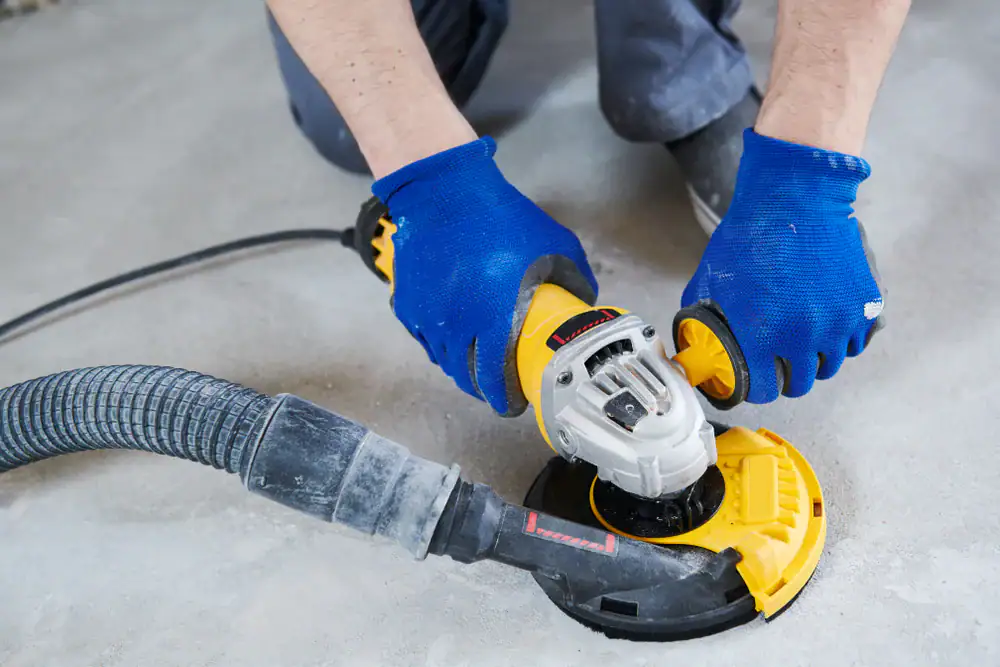
Once the surface is ready, we use diamond grinding equipment with dustless vacuum systems. The diamonds cut through the concrete, removing contaminants, smoothing high spots, and creating the profile your coating needs to bond. The vacuum captures dust at the source, so you’re not dealing with cleanup for days afterward.
Depending on the project, we may go through multiple passes with progressively finer grits. This levels the surface, opens up the pores for better adhesion, and prepares the floor for whatever comes next—whether that’s epoxy, urethane, a decorative coating, or a polished finish. For polished concrete, we continue refining the surface until it’s smooth, reflective, and ready to perform for decades.
After grinding, we clean the surface completely and inspect for any issues. If we’re applying a coating, we move into that phase immediately while the concrete is fresh and ready. If you’re handling the coating separately, we leave you with a surface that’s prepped to spec and ready to go.
Ready to get started?
Concrete Restoration Services in Canal Point, FL
Every concrete grinding project includes surface assessment, diamond grinding with dustless HEPA filtration, and complete cleanup. We handle commercial warehouses, retail spaces, residential garages, and industrial facilities throughout Canal Point and the broader South Florida region.
Florida’s construction market is booming—ranked third in the nation for cement consumption, with new permitting trending upward across the state. That means more concrete going down, and more surfaces that need proper prep before coatings, polishing, or resurfacing. In Canal Point specifically, where construction and extraction occupations make up nearly 9% of the workforce, there’s a strong understanding of what quality surface work looks like.
We also offer shot-blasting for heavier contamination, scarifying for aggressive material removal, and concrete repair for damaged slabs. If your floor has excessive patching, holes, or soft areas, we’ll address those before grinding starts. Polished concrete is an option for clients who want a low-maintenance, high-durability finish without additional coatings—especially valuable in Florida’s humid climate where moisture resistance matters.
Our equipment and process are designed to minimize downtime. For smaller residential projects like kitchen floors, we can turn around work in 24 to 48 hours. Larger commercial jobs are scheduled based on your operational needs, and we’re available for emergency response when timelines are tight.

How long does concrete grinding take for a typical project?
It depends on the size of the space, the condition of the concrete, and what you’re prepping for. A residential garage might take a day. A 10,000-square-foot warehouse could take several days, especially if we’re doing multiple passes or dealing with old coatings that need removal first.
For kitchen floors or smaller residential areas, we can usually complete the work in 24 to 48 hours, including prep and cleanup. Commercial projects get scheduled around your operations—we can work nights or weekends if that keeps your business running without interruption.
The biggest variable is the concrete itself. If it’s in good shape and relatively clean, grinding moves quickly. If there are cracks, spalling, or previous coatings that didn’t come off cleanly, we’ll need extra time to address those issues before we can grind to spec. We’ll give you a realistic timeline upfront after assessing the surface.
Is dustless concrete grinding really dustless, or is that just marketing?
It’s not completely dustless—nothing is—but it’s as close as you’ll get with professional equipment. We use diamond grinders connected to industrial HEPA vacuum systems that capture dust at the source, right where the grinding happens. The difference between that and traditional grinding is night and day.
Without a vacuum system, concrete dust gets everywhere. It’s a respiratory hazard, it coats everything in the space, and cleanup takes forever. With our dustless setup, the dust gets pulled into a filtration system before it ever becomes airborne. You’ll see some fine residue, but nothing like the mess you’d get otherwise.
This matters especially in occupied buildings or spaces where you can’t afford downtime for extensive cleanup. We’ve worked in active facilities where operations continued in adjacent areas while we ground concrete—something that wouldn’t be possible with traditional methods. If you’ve got health and safety standards to meet, or if you just don’t want to spend days cleaning up after the work is done, dustless grinding is the only way to go.
Why does concrete need to be ground before applying epoxy or coatings?
Coatings don’t stick to smooth, sealed, or contaminated concrete. If the surface is too smooth, there’s nothing for the coating to grab onto. If it’s dusty, oily, or has old sealers on it, the new coating just sits on top of that contamination instead of bonding to the concrete itself. Then it fails.
Grinding removes contaminants and creates a profile—basically, it opens up the pores of the concrete so the coating can penetrate and bond mechanically. Think of it like sanding wood before painting. You’re giving the coating something to grip.
Most epoxy failures happen because this step was skipped or done poorly. Someone acid-etched instead of grinding, or they didn’t grind deep enough, or they left dust and debris behind. The coating looks fine for a few weeks, then it starts lifting or bubbling. Proper grinding eliminates that risk. It’s not optional if you want the coating to last.
Can you grind concrete that already has an old coating on it?
Yes, but the old coating has to come off first. We can’t grind through most epoxy or urethane coatings—they’ll gum up the diamonds and create a mess. We typically use shot-blasting or scarifying to remove old coatings, then switch to diamond grinding once we’re back to bare concrete.
Some coatings come off easier than others. Thin sealers might grind away without much trouble. Thick epoxy systems or coatings that were applied over multiple layers take more aggressive removal methods. We assess the existing coating first and recommend the best approach.
If the old coating is failing—peeling, bubbling, or delaminating—that’s a sign the concrete underneath wasn’t prepped correctly the first time. Once we remove it and grind the surface properly, you’ll have a much better foundation for whatever coating goes down next. Skipping this step just means you’re applying new material over a bad surface, and it’ll fail again.
What’s the difference between grinding and polishing concrete?
Grinding is surface prep. Polishing is a finish. Grinding removes material, levels the surface, and creates the profile needed for coatings or further treatment. Polishing takes that ground surface and refines it through progressively finer grits until it’s smooth, dense, and reflective.
If you’re applying epoxy, you grind and stop there. The coating becomes your finish. If you want polished concrete as the final floor, you grind first, then continue through multiple polishing steps using finer and finer diamond abrasives. The concrete gets harder and shinier with each pass. The result is a floor that reflects light, resists staining, and doesn’t need waxing or coatings to look good.
Polished concrete is popular in commercial spaces, retail stores, and modern homes because it’s low-maintenance and lasts for decades. In Florida, it handles humidity better than most other flooring options—no warping, no mold, and it stays cool underfoot. The upfront cost is higher than basic grinding and coating, but the long-term savings in maintenance and durability usually make it worth it.
How much does concrete grinding cost in Canal Point, FL?
Pricing depends on square footage, the condition of the concrete, what needs to be removed, and how many passes are required. A small residential project might run a few hundred dollars. A large commercial space with heavy prep work can run several thousand. We give transparent pricing after assessing the job—no surprises, no hidden fees.
Factors that affect cost include whether there’s an old coating to remove, if the concrete needs repair before grinding, and how smooth or profiled the surface needs to be. More aggressive grinding or additional passes add time and material cost. If you’re in a tight timeline and need expedited work, that can also affect pricing.
We’ve worked with everyone from homeowners to government contractors, and we price fairly based on the scope of work. You’re not paying for expensive pay-per-call leads or inflated marketing costs—you’re paying for experienced crews, professional equipment, and results that hold up. If you want a ballpark number, call us. We’ll ask a few questions about your project and give you a realistic estimate before we ever show up.
Other Services we provide in Canal Point
Leave a Reply