


Concrete Grinding in Davie, FL
Floors That Actually Stay Level and Safe
Hear from Our Customers
Concrete Floor Grinding Contractors Davie
Your floor stops being a liability. Those raised control joints that make forklifts bounce and loads shift? Gone. The uneven spots where water pools or coatings peel after six months? Leveled out before we ever open a can.
Concrete grinding isn’t about making things pretty—it’s about making them right. When the surface is properly prepped, your epoxy bonds the way it’s supposed to. Your polished finish reflects light evenly instead of highlighting every flaw. Your team stops tripping over lippage that shouldn’t exist.
Most coating failures start before the coating even goes down. The concrete wasn’t flat. The high spots weren’t addressed. Someone skipped the prep work or did it halfway. We use dustless grinding equipment that removes material precisely where it needs to come off, creating a surface that’s actually ready for what comes next—whether that’s epoxy, polyaspartic, or a polished finish.
Concrete Grinding Services Davie FL
We handle concrete grinding and epoxy flooring across Davie and South Florida. We’ve worked on Coast Guard facilities, military installations, city municipal buildings, and commercial warehouses where the floor needs to perform under serious daily stress.
Davie sits right in the middle of Broward County’s industrial corridor. You’ve got distribution centers, educational facilities, manufacturing spaces—places where an uneven floor isn’t just annoying, it’s dangerous. We grind floors in environments where precision matters and downtime costs money.
We’re not the cheapest option, and that’s intentional. You’re paying for equipment that doesn’t fill your building with silica dust, operators who know how much material to remove, and a surface that’s actually ready for the next step. If you want it done fast and wrong, we’re not your call.
Professional Concrete Grinding Process Davie
We start by mapping your floor. Not eyeballing it—actually measuring where the high spots are, where the lippage exceeds tolerance, and what needs to come down. This tells us how aggressive the grind needs to be and what grit sequence makes sense for your surface.
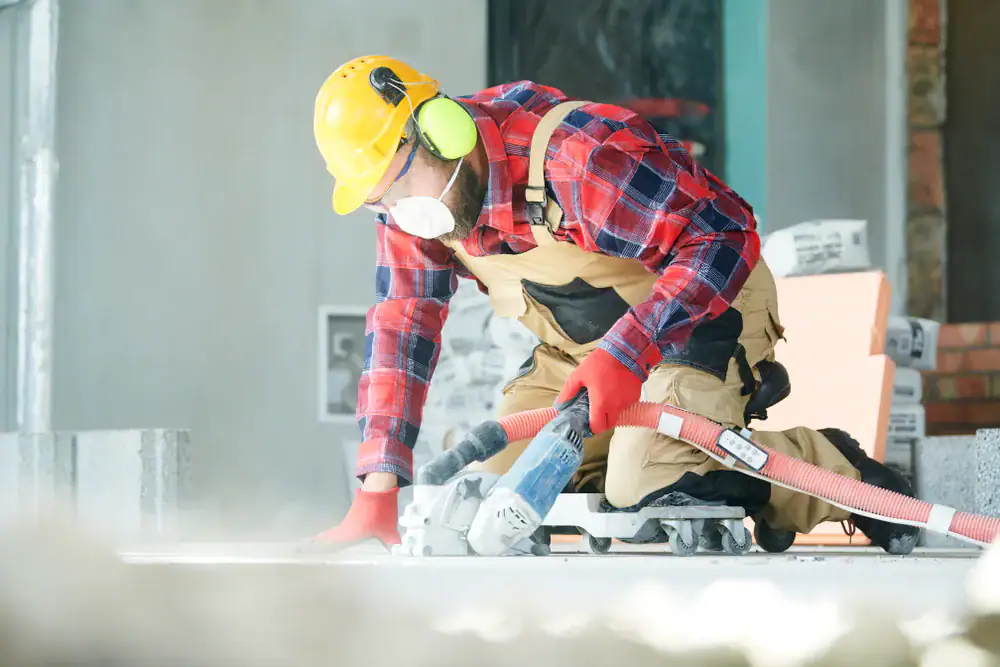
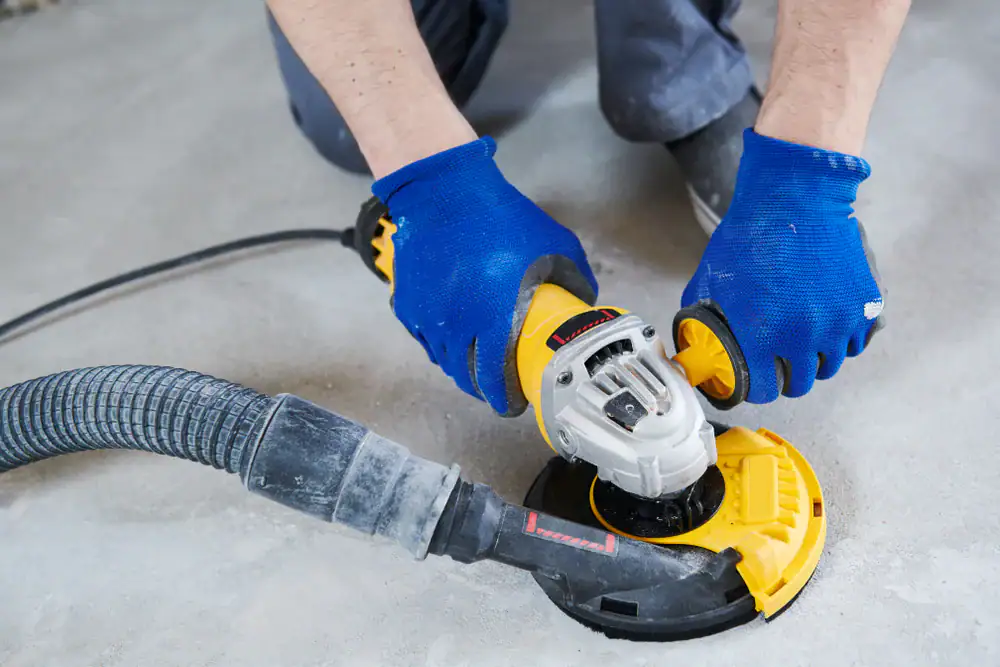
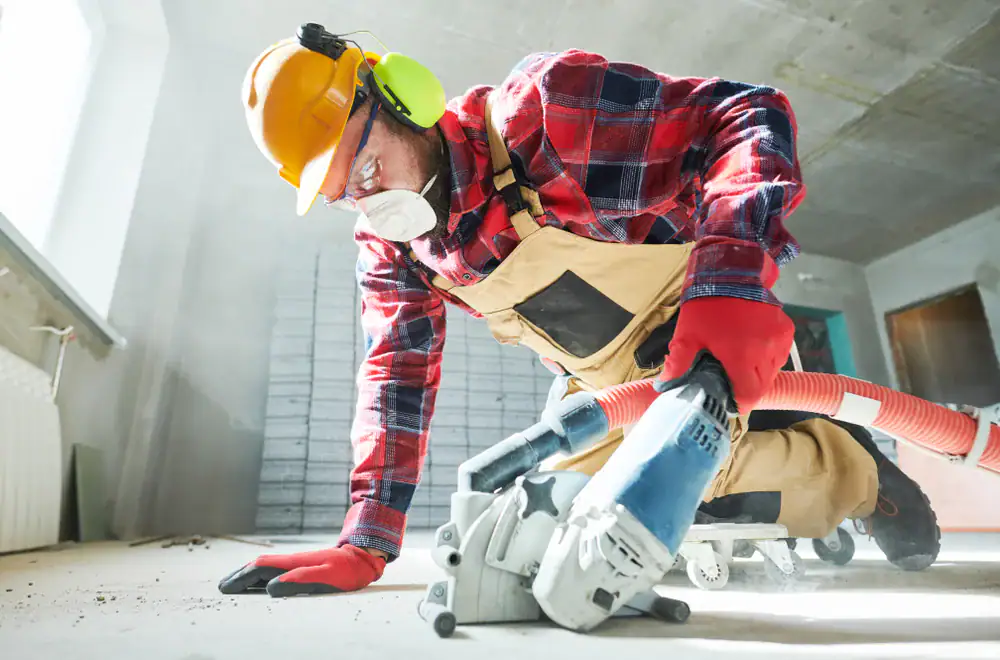
Then we grind. We use dustless equipment that captures concrete dust at the source, so your facility doesn’t turn into a silica cloud. Depending on what you need, we’re either removing old coatings, leveling uneven pours, opening up the concrete’s pores for better adhesion, or creating the scratch pattern your specific coating system requires.
After grinding, we profile-test the surface. Your concrete needs a specific texture for epoxy to bond correctly—too smooth and it won’t grab, too rough and you’ll see the texture through the coating. We verify the profile matches what your floor system needs before we leave. If you’re having someone else apply the coating, they’re walking into a surface that’s actually ready. If we’re doing the coating, we’re controlling quality from start to finish.
Ready to get started?
Concrete Grinding Contractors Davie Florida
You get dustless grinding using commercial-grade equipment with HEPA filtration. That means your neighboring tenants aren’t complaining, your product inventory isn’t getting covered in dust, and your team isn’t breathing silica all day.
We handle surface profiling to match your coating specs. If you’re putting down epoxy, we create the CSP profile your product data sheet calls for. If you’re polishing, we take the concrete through the grit progression that gets you to the shine level you actually want—not just whatever looks “good enough.”
Davie’s concrete tends to be harder than what you’ll find in older South Florida builds. The aggregate mix and curing conditions here mean you need someone who knows how to adjust grinding speed, pressure, and grit selection based on what the floor’s actually made of. We’ve ground enough floors in this area to know what works and what burns through diamonds without getting you anywhere.
For commercial and industrial clients, we work around your schedule. If grinding needs to happen at night or over a weekend to avoid disrupting operations, that’s what we do. For residential clients in Davie’s newer developments, we coordinate with your other trades so the floor gets prepped at the right point in your project timeline.
How long does concrete grinding take for a typical warehouse floor?
It depends on square footage, how uneven the floor is, and what you’re prepping for. A 5,000-square-foot warehouse with moderate lippage usually takes one to two days. If we’re removing old epoxy or dealing with serious high spots, add time.
The real answer is that we don’t rush it. Grinding too fast means you miss spots, create an inconsistent profile, or leave scratch patterns that show through your coating. We move at the pace that gets the floor right.
If you’ve got a hard deadline—like a coating crew scheduled or a tenant moving in—tell us up front. We’ll let you know if it’s realistic or if you need to adjust expectations. We’d rather have that conversation before we start than halfway through when it’s too late to fix the schedule.
What’s the difference between concrete grinding and concrete polishing?
Grinding is surface prep. Polishing is a finish. Sometimes they overlap, but they’re not the same thing.
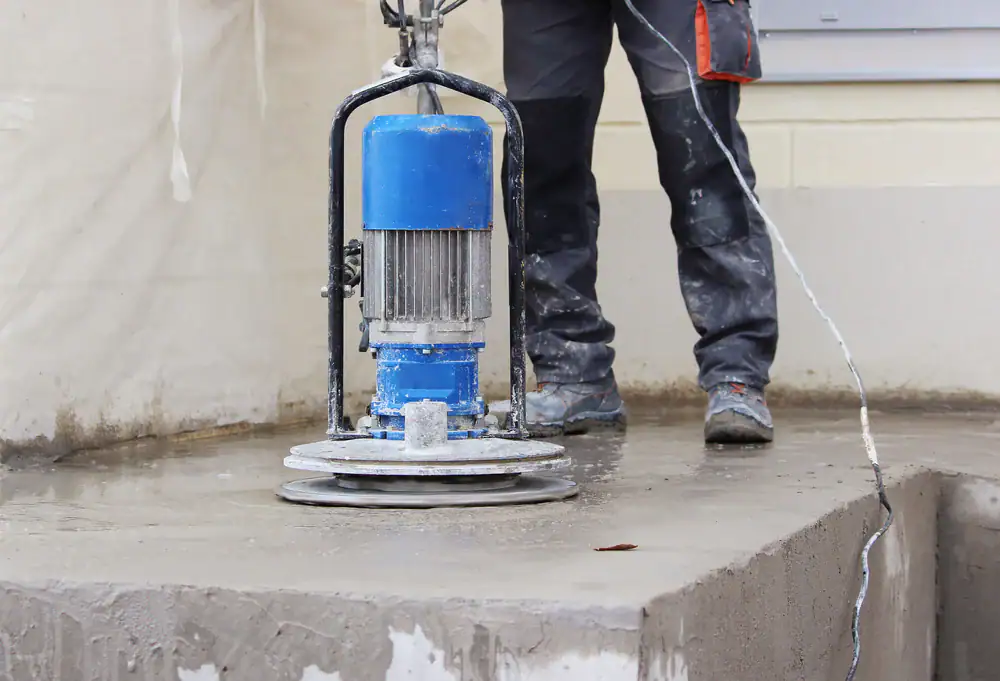
When we grind, we’re removing material to level the floor, eliminate coatings, or create the texture your epoxy needs to bond. We’re typically using metal-bond diamonds in coarser grits—30, 60, 120—to reshape the surface. The goal is function: a flat, clean, properly profiled slab.
Polishing takes concrete through a full grit progression using resin-bond diamonds, usually starting around 100 grit and working up to 400, 800, or higher depending on the shine level you want. We’re refining the surface, densifying it with hardeners, and bringing out the aggregate. The goal is aesthetic and durability: a finished floor that reflects light and resists wear.
Some projects need both. We’ll grind to flatten and prep, then polish to finish. Other projects just need grinding because you’re coating over it. It depends on what you’re trying to end up with.
Can you grind concrete that already has epoxy on it?
Yes, and we do it regularly. Old epoxy has to come off before new epoxy goes down, and grinding is usually the most effective way to remove it—especially if the existing coating is well-bonded.
We use aggressive metal-bond tooling to strip the epoxy and expose fresh concrete underneath. Depending on how thick the coating is and how well it’s stuck, this can take longer than grinding bare concrete. But it’s the right way to do it. Trying to coat over old epoxy without proper prep is how you end up with delamination six months later.
Once the old coating is off, we keep grinding to create the profile your new system needs. That might mean going through a few more grit passes to smooth out the scratch pattern or open up the concrete’s pores. The end result is a surface that’s chemically and mechanically ready for a new coating that’ll actually last.
Is concrete grinding going to create a huge dust problem?
Not if it’s done right. We use dustless grinding equipment with shrouded tools and HEPA vacuums that capture dust at the point of generation. You’ll see some fine residue, but nothing like the silica clouds that come from dry-cutting or using grinders without dust collection.
This matters for two reasons. First, silica dust is a serious health hazard. OSHA has strict limits on respirable crystalline silica exposure, and we’re not interested in putting anyone at risk—our crew or yours. Second, dust contamination ruins the next steps. If your concrete is covered in a layer of fine powder, coatings won’t bond correctly no matter how good the profile is.
After grinding, we vacuum and clean the surface thoroughly. By the time we’re done, you’ve got a clean slab that’s ready for whatever comes next—not a job site that needs three days of cleanup before you can move forward.
Do I need to grind my concrete before applying epoxy coating?
In most cases, yes. Epoxy needs a rough surface to grab onto—what’s called a concrete surface profile, or CSP. If your concrete is smooth, sealed, or contaminated with oils or curing compounds, epoxy won’t bond properly no matter how good the product is.
Grinding opens up the concrete’s pores, removes surface contaminants, and creates the mechanical anchor pattern that epoxy relies on. Depending on the coating system, you might need a CSP 1 or 2 for thin mil epoxy, or a CSP 3 or 4 for thicker systems or high-build coatings. We match the grind to what your specific product requires.
Skipping this step is the number one reason epoxy fails early. It might look fine for a few weeks or months, but eventually it starts peeling, bubbling, or delaminating—especially in high-traffic areas. Grinding costs money up front, but it’s a lot cheaper than ripping out a failed coating and starting over.
Can concrete grinding fix uneven floors in older buildings?
It can level out a lot of issues, but there are limits. If you’ve got localized high spots, lippage at control joints, or areas where the slab settled unevenly, grinding can bring those down and create a flatter surface. We’ve fixed plenty of older warehouse floors in Davie where decades of forklift traffic caused joints to heave or crack.
What grinding can’t fix is large-scale structural settlement or slabs that are way out of level across the whole floor. If your building has foundation issues or the slab has dropped several inches in one corner, you need a structural repair before grinding does anything useful.
The best move is to have us look at it. We’ll tell you if grinding solves the problem, if you need leveling compound in addition to grinding, or if the issue is beyond what surface prep can address. We’re not going to grind your floor for two days and leave you with something that’s still not usable.
Other Services we provide in Davie
Leave a Reply