


Concrete Grinding in Hypoluxo, FL
Dustless Grinding That Actually Keeps Your Space Clean
Hear from Our Customers
Professional Concrete Grinding Services Hypoluxo
Your concrete becomes the foundation it should’ve been from the start. Level. Smooth. Ready for whatever comes next, whether that’s epoxy coating, polished concrete, or just a clean slate that doesn’t crack under Florida’s heat.
You’re not dealing with dust clouds that settle on everything you own. Our dustless grinding system uses industrial vacuums and HEPA filters that capture debris at the source. Your furniture stays covered, your HVAC stays clean, and you’re not spending the next week wiping down surfaces.
The surface we leave behind bonds properly with coatings. That means your epoxy or sealer actually sticks instead of peeling up six months later because someone rushed the prep work. You’re also getting a floor that reflects light better, which cuts down on your energy bills in a state where cooling costs matter. And in Hypoluxo’s waterfront climate, you need concrete that can handle moisture without breaking down.
Concrete Grinding Contractors Hypoluxo FL
SPF Industrial has been handling concrete grinding and polished concrete work since 2020, and we’ve done it for clients who don’t accept excuses. That includes the U.S. Coast Guard, Army installations, the City of Doral, and the City of Sunny Isles. When government contracts are on the line, the work has to meet standards most contractors never see.
We’re based in South Florida, so we understand what Hypoluxo properties face. Homes built in the 1990s with settling foundations. Waterfront estates where salt air accelerates wear. Garages and driveways that expand and contract under heat that hits triple digits. We use Sherwin Williams and Fosroc products because they’re formulated for this climate, not just because they’re premium brands.
You’re working directly with us, not through a general contractor who adds margin and loses details in translation. We show up when we say we will, we walk the job with you first, and we give you transparent pricing before we start.
Concrete Floor Grinding Process Hypoluxo
We start with a walkthrough. You show us the space, we assess the concrete’s condition, and we talk about what you’re trying to accomplish. If you’re prepping for epoxy, we need to create a specific profile. If you’re restoring an old slab, we’re removing contaminants and leveling out the surface. Different goals require different approaches.
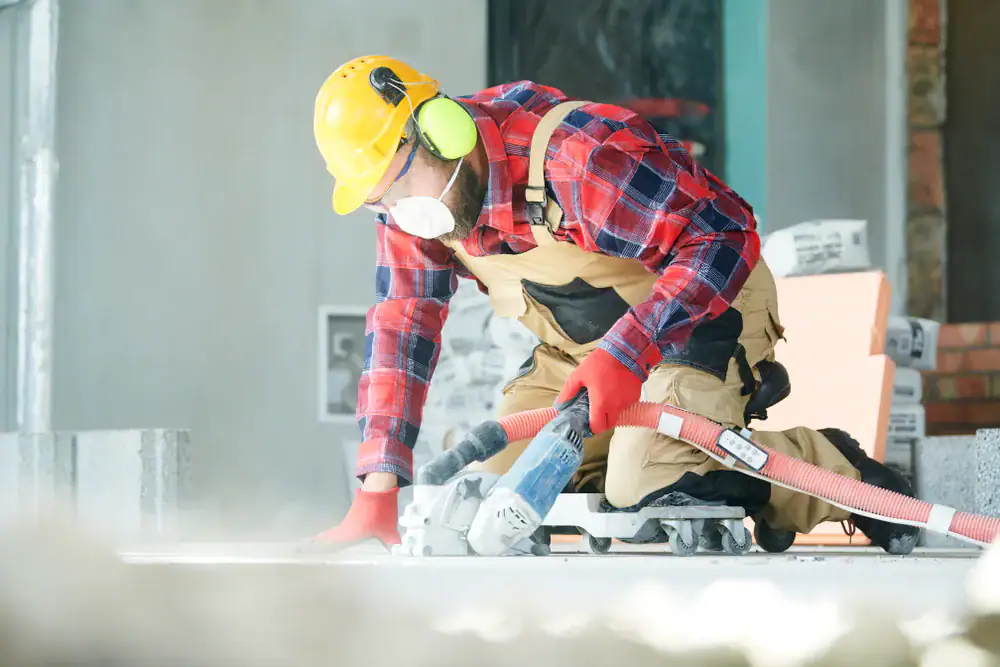
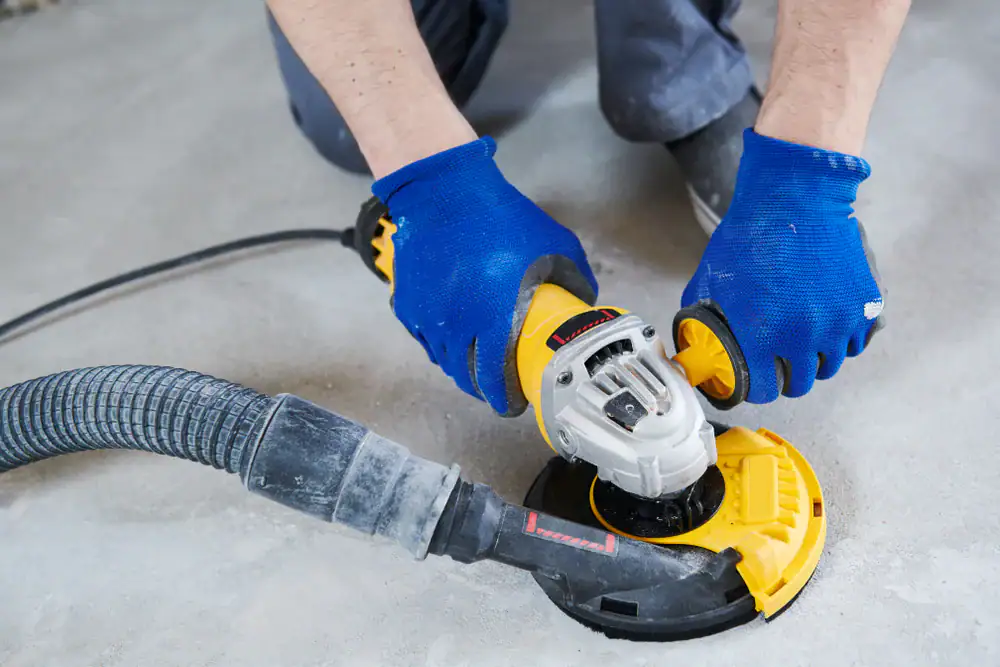
Once we’re on site, we set up our dustless grinding equipment. These aren’t the grinders that turn your space into a construction zone. Our machines connect to high-performance vacuums that pull dust as we work. You’ll see the difference immediately—no haze in the air, no grit on your counters.
The grinding itself removes the top layer of concrete to expose a fresh surface. We’re correcting unevenness, taking out old coatings that failed, and opening up the pores so new materials can bond. Depending on the size and condition, most residential jobs wrap up in 24 to 48 hours. Commercial spaces take longer, but we work fast because we know downtime costs you money.
After grinding, we clean the surface completely and check it for the profile depth your coating needs. Then it’s ready. If you’re having us install epoxy or polishing, we move right into that phase. If another contractor is finishing the job, they’re getting a surface that’s prepped correctly.
Ready to get started?
Concrete Restoration Services Hypoluxo FL
You’re getting concrete grinding that removes surface damage, old coatings, and contaminants without filling your property with dust. That’s the baseline. But you’re also getting a surface profile that’s been prepared to the right depth for whatever coating or finish you’re applying next. If the profile is too shallow, coatings don’t bond. Too deep, and you’re using more material than necessary. We dial it in.
In Hypoluxo, where properties sit near the water and humidity is constant, moisture resistance matters. We’re not just smoothing concrete—we’re creating a surface that seals properly and resists the mold and mildew growth that cheaper work invites. Homes here were largely built in the 1990s, and many have foundation settling or surface cracking from decades of heat expansion. Grinding levels those issues out before they get worse.
You’re also getting speed. We know you don’t want contractors occupying your space for weeks. Our equipment is commercial-grade, and we’ve done enough of these jobs that we don’t waste time figuring things out on your dime. For kitchens and smaller residential areas, we’re typically in and out in two days. Larger commercial floors take longer, but we’ll give you an honest timeline upfront.
And if something goes wrong or you have an emergency, we respond. We don’t disappear after the deposit clears. You’ll get a follow-up call, and if there’s an issue, we’ll handle it.

How does dustless concrete grinding actually work compared to traditional methods?
Traditional concrete grinders throw dust everywhere. You’ve probably seen it—the entire room turns into a haze, and you’re cleaning surfaces for days afterward. Some environments, like food production facilities or medical spaces, can’t allow that kind of contamination. Even in homes, it’s a nightmare if you have respiratory issues or just don’t want to deep-clean your entire house.
Dustless grinding uses grinders that connect directly to industrial vacuums with HEPA filtration. As the diamond grinding heads remove the concrete surface, the vacuum pulls the dust into a containment system before it ever hits the air. You’ll still see some fine particles if you’re looking closely, but it’s not even close to the same level of mess.
The other advantage is speed. With traditional grinding, you’re spending extra time on cleanup and protecting areas that don’t need work. With dustless systems, we’re grinding and moving without stopping to manage dust clouds. That means less disruption to your space and faster turnaround. For commercial clients, that’s the difference between closing for a day versus closing for a week.
What’s the difference between concrete grinding and polished concrete?
Concrete grinding is surface preparation. We’re removing the top layer of concrete to create a smooth, level base that’s ready for coatings or further treatment. It’s the first step, not the finished product. You’d grind concrete before applying epoxy, before polishing, or just to remove old failed coatings and start fresh.
Polished concrete is a multi-step process that starts with grinding but goes much further. After we grind the surface, we move through progressively finer diamond abrasives—think of it like sanding wood from rough grit to fine. Each pass makes the surface smoother and more reflective. Then we apply a densifier, which hardens the concrete chemically, and continue polishing until you get that high-gloss finish.
Polished concrete is the actual floor finish. It’s what you walk on. Grinding is the prep work that makes polished concrete (or any other coating) possible. If someone tries to polish concrete without grinding it first, the finish won’t last. You need that clean, profiled surface for anything to bond or shine correctly. A lot of contractors skip proper grinding to save time, and that’s why you see coatings failing or polished floors losing their shine within months.
How long does concrete grinding take for a typical residential project?
For most residential garages, basements, or single-room projects, you’re looking at one to two days. A standard two-car garage usually takes about six to eight hours of actual grinding time, but we factor in setup, cleanup, and letting the surface cure if we’re moving straight into coating. Kitchens and smaller indoor spaces can often be done in 24 to 48 hours total, which includes prep and final cleanup.
Larger homes or properties with multiple areas take longer. If you’re grinding an entire first floor or a big commercial showroom, that might stretch into three or four days depending on the square footage and the condition of the existing concrete. Concrete that’s heavily damaged or has multiple layers of old coatings takes more passes to get clean.
The other factor is what’s happening after the grinding. If we’re just prepping the surface and another contractor is coming in later, we finish faster. If we’re also applying epoxy or moving into polishing, that adds time but keeps the project under one contractor, which usually means better results. We’ll give you a specific timeline after we see the space. What matters is that we don’t drag the job out—we know you want your space back.
Can concrete grinding fix uneven or cracked floors in older homes?
Grinding can level out minor unevenness and smooth surface cracks, but it’s not a structural repair. If your concrete has settled unevenly or you’ve got foundation issues causing major cracks, grinding will improve the surface but won’t fix what’s happening underneath. You’d need to address the foundation problem first, then we can grind the surface to make it level and smooth.
For homes in Hypoluxo built in the 1990s, settling is common. Concrete shifts over time, especially in Florida’s soil conditions and heat. Grinding removes high spots and creates a more uniform surface, which makes a big difference if you’re installing epoxy or polished concrete. But if the slab is cracked all the way through or moving significantly, you’ll see those cracks come back unless the underlying issue is fixed.
Surface cracks—the kind that are shallow and caused by wear or minor shifting—grind out completely. We’re removing the top layer anyway, so those disappear. Deeper cracks need to be filled and sealed before grinding. We’ll tell you honestly what’s fixable with grinding and what needs more work. There’s no point in grinding a floor that’s going to crack again in six months because the real problem wasn’t addressed.
Why does concrete grinding matter before applying epoxy or coatings?
Epoxy and other coatings don’t stick to smooth concrete. They need a rough, porous surface to grip onto—that’s called a profile. If you pour epoxy over concrete that hasn’t been ground, it might look fine for a few weeks, but it’ll start peeling or bubbling as soon as moisture gets underneath or the coating experiences any stress. Grinding opens up the concrete’s pores and creates that mechanical bond.
Grinding also removes contaminants that prevent adhesion. Oils, sealers, dirt, old coatings—all of that has to come off before new material goes down. Even concrete that looks clean has a surface layer of laitance, which is a weak, chalky film that forms during curing. Grinding takes that off and exposes the stronger concrete underneath.
In Florida’s climate, this matters even more. Heat and humidity put stress on coatings. If the bond isn’t strong from the start, you’ll see failures faster here than in drier climates. We’ve pulled up plenty of failed epoxy jobs where the contractor skipped grinding or didn’t grind deep enough. You end up paying twice—once for the bad job, and again to have it removed and done correctly. Proper grinding costs less than fixing shortcuts.
What should I look for when hiring concrete grinding contractors in Hypoluxo?
First, ask if they use dustless equipment. If they don’t, you’re signing up for a mess that’s going to take days to clean. Dustless grinding is standard for professional contractors now—if someone’s still using old grinders without vacuum systems, they’re behind the curve or cutting costs in ways that hurt you.
Second, ask about their experience with Florida concrete. Concrete here behaves differently than it does in other climates. Heat expansion, moisture, salt air if you’re near the water—all of that affects how concrete wears and how coatings perform. A contractor who’s only worked up north or in dry climates won’t understand the prep work Florida concrete needs.
Third, look at their client list. We’ve worked with the Coast Guard, Army installations, and multiple municipalities. Government contracts require bonding, insurance, and the ability to meet strict standards. If a contractor has that kind of work on their resume, it’s a good sign they know what they’re doing. Finally, make sure they’re giving you transparent pricing and a clear timeline upfront. If someone’s vague about costs or when they’ll finish, you’re going to have problems later.
Other Services we provide in Hypoluxo
Leave a Reply