


Concrete Grinding in Indian River Estates, FL
Level Floors That Last Without the Dust
Hear from Our Customers
Professional Concrete Floor Grinding Contractors
You get a floor that’s level, clean, and ready for whatever comes next. No more lippage between tiles. No more uneven patches that crack coatings or trip people up. No more wondering if the surface is actually prepared correctly.
Concrete grinding removes the top layer—old coatings, adhesive residue, surface damage—and exposes fresh, sound concrete. That’s what allows epoxy, polish, or resurfacing to bond properly and last. Without it, you’re just covering up problems.
The process also opens the pores of the concrete, which matters in Florida. Humidity and moisture vapor are real issues here in Indian River Estates. If the surface isn’t prepped to handle that, your coating will fail. Grinding gives you a mechanical profile that locks everything in place and lets the concrete breathe where it needs to.
You’re not just smoothing things out. You’re building a foundation that holds up under foot traffic, forklifts, salt air, and time.
Concrete Grinding Services in Indian River Estates
We started in July 2020, and we’ve spent the years since working on floors that matter—Coast Guard facilities, military bases, city buildings, high schools, warehouses, and residential garages across Indian River County and beyond.
We’re not a franchise. We’re not subbing out the work. Everything we do is handled in-house by our own crew, using commercial-grade equipment and materials from Sherwin Williams, Fosroc, and other manufacturers we trust.
Indian River Estates sits in a humid, coastal climate that’s tough on concrete. We’ve seen what happens when contractors skip steps or use the wrong methods. We don’t. Our grinding process is dustless, our prep work is thorough, and our consultations are transparent. You’ll know what we’re doing and why before we start.
How Concrete Grinding Works in Florida
We start with an assessment. We check the condition of your concrete, look for moisture issues, measure any damage or unevenness, and figure out what profile depth you need based on what’s going next—epoxy, polish, overlay, or something else.
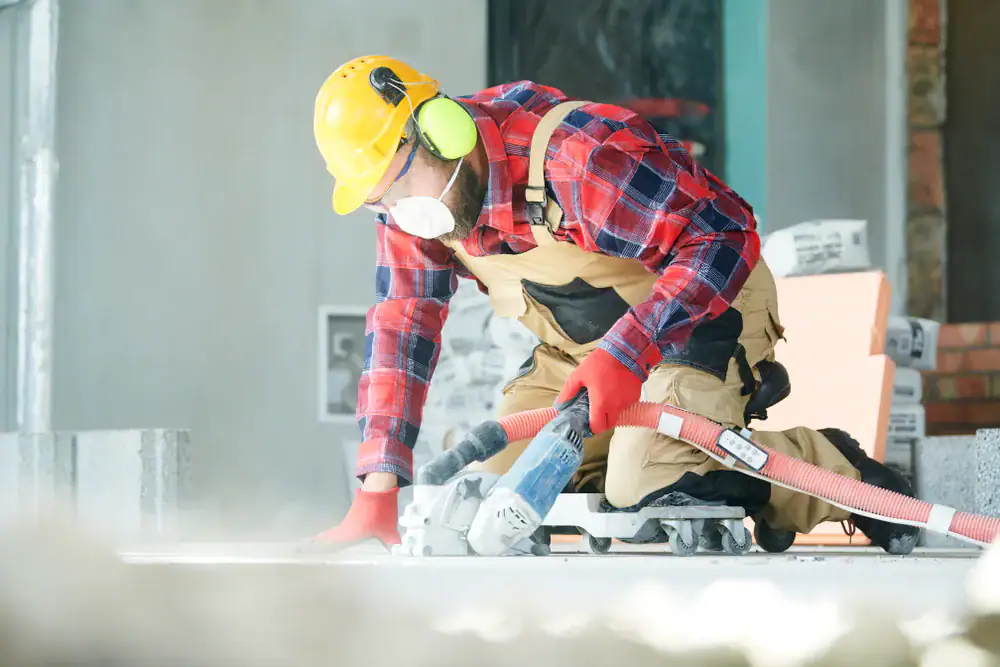
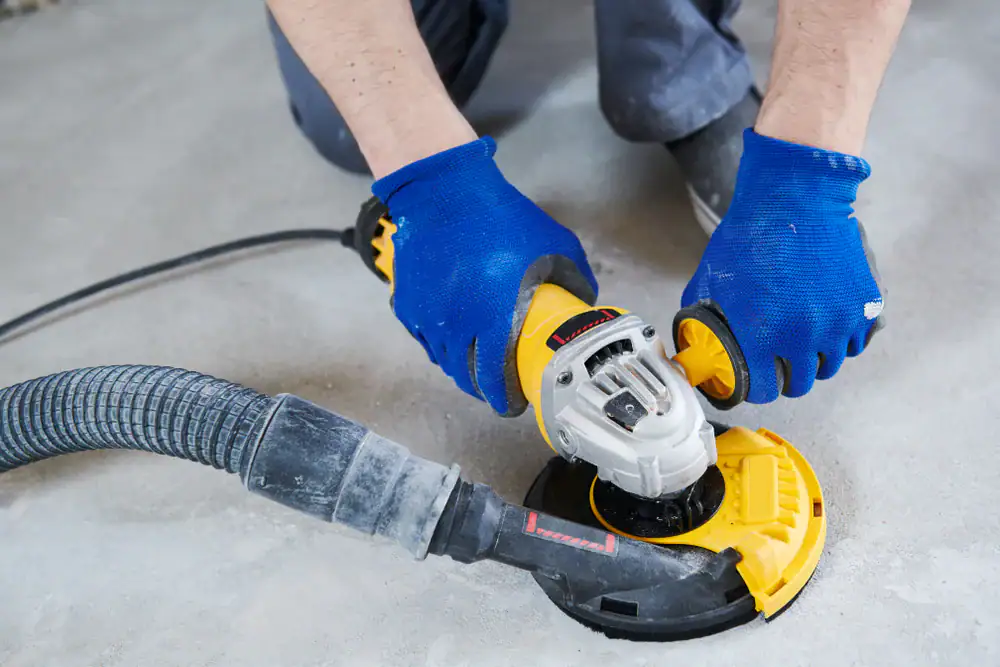
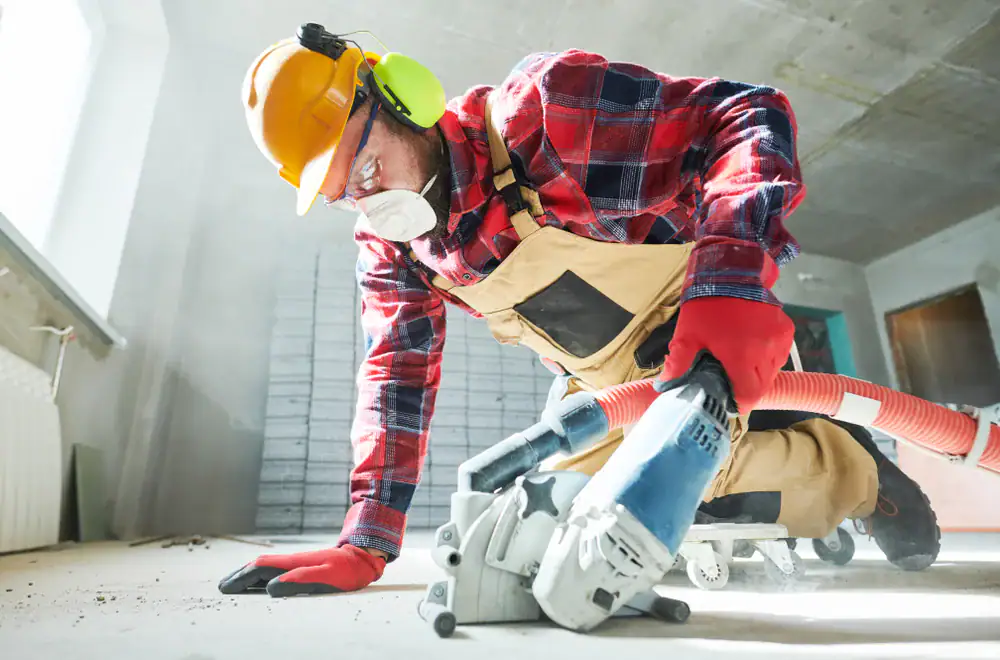
Then we grind. We use diamond-embedded tooling that mechanically removes the surface layer. This isn’t sanding. It’s aggressive enough to take off old coatings, thin-set, paint, or damaged concrete, but controlled enough to leave you with a smooth, level surface. Our equipment connects to high-performance vacuums with HEPA filters, so the dust stays contained. You won’t be dealing with clouds of silica or cleanup for days afterward.
Once the grinding is done, we evaluate the surface profile and make sure it’s within spec. If you’re getting epoxy or a coating, that profile needs to be right or the bond won’t hold. If you’re polishing, we move into the next grit levels until we hit the finish you want.
The timeline depends on the size of the space and the condition of the concrete, but most projects move fast. For smaller residential jobs like garage floors, we’re typically in and out in a day or two. Larger commercial spaces take longer, but we work around your schedule to minimize downtime.
Ready to get started?
Cement Grinding and Polished Concrete Contractors
You get complete surface preparation. That means grinding, dust extraction, debris removal, and a final surface that’s ready for the next step. We handle shot-blasting when needed, scarifying for heavier removal, and diamond grinding for precision work.
We also handle the follow-through. If you’re getting polished concrete, we take the floor through progressive diamond grit levels until it’s glossy and sealed. If you’re getting epoxy or resurfacing, we make sure the profile matches the manufacturer’s specs so the coating bonds correctly.
In Indian River Estates and the surrounding Treasure Coast area, moisture is a constant factor. We test for it. If your slab has high moisture content, we’ll tell you, and we’ll recommend vapor barriers or moisture mitigation before we move forward. Skipping that step is how coatings fail six months later.
We also work with your timeline. If you’re a business, we can schedule grinding during off-hours or weekends to avoid disrupting operations. If you’re a homeowner, we keep the work area contained and clean so the rest of your property stays livable. Our process is dustless, but we still protect surrounding areas and clean up completely before we leave.
How long does concrete grinding take for a typical garage or warehouse floor?
For a standard two-car garage, grinding usually takes four to eight hours depending on the condition of the concrete and what needs to be removed. If there’s old epoxy, tile adhesive, or significant surface damage, it takes longer. If the slab is in decent shape and just needs profiling for a new coating, it’s faster.
Warehouse floors and larger commercial spaces are measured differently. We calculate by square footage and factor in obstacles, access points, and whether we’re working around equipment or inventory. A 5,000-square-foot warehouse might take two to three days if we’re doing full surface prep.
Turnaround also depends on what’s happening after the grinding. If we’re applying epoxy or polishing the floor, that adds time. But if you just need grinding and you’re handling the rest, we can move quickly. We’ll give you a realistic timeline during the consultation so you can plan accordingly.
Is concrete grinding really dustless, or is that just marketing?
It’s not completely dustless—nothing is—but it’s as close as you’re going to get with this kind of work. Our grinders connect directly to industrial vacuums with HEPA filtration, so the dust gets captured at the source. You won’t see clouds in the air or layers of silica settling on everything.
Traditional concrete grinding without dust control is a nightmare. You’re dealing with respiratory hazards, contaminated HVAC systems, and hours of cleanup. That’s not how we operate. Our equipment is designed for enclosed spaces, and we’ve used it inside occupied buildings, schools, and food-service facilities where air quality matters.
There’s still some fine dust that escapes—it’s concrete, not magic—but it’s minimal. We also seal off work areas when needed and run air scrubbers if the project calls for it. If you’ve had grinding done before and remember the mess, this won’t be that.
Can you grind concrete that already has epoxy or coating on it?
Yes. That’s actually one of the most common reasons people call us. Old epoxy fails, peels, or just looks bad after years of use, and the only way to properly redo it is to grind off the existing coating and start fresh.
Grinding removes the old epoxy and exposes clean concrete underneath. Depending on how thick the coating is and how well it bonded originally, this can take some time. Some coatings come up easily. Others are stubborn. We adjust our tooling and grit levels based on what we’re dealing with.
Once the old coating is gone, we inspect the concrete for cracks, spalling, or moisture issues. If there’s damage, we address it before applying anything new. Grinding also creates the surface profile needed for the new epoxy to bond correctly. Without that profile, you’re just setting yourself up for another failure. This is how the job should be done, and it’s how we do it every time.
What’s the difference between grinding and polishing concrete?
Grinding is surface preparation. Polishing is a finish. They use similar equipment, but the goals are different.
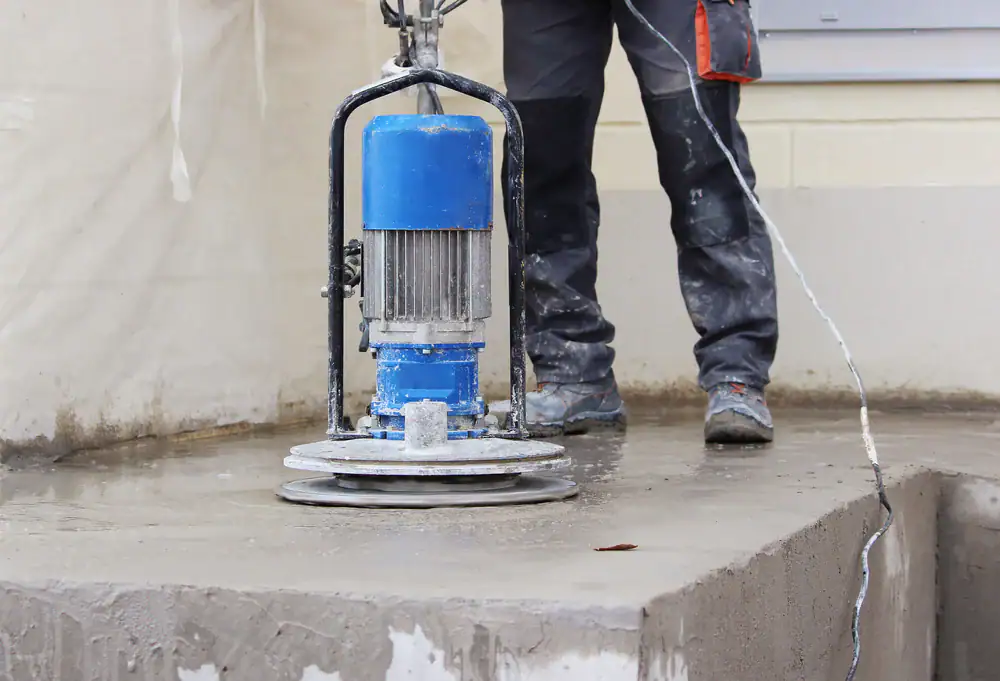
Grinding removes material—coatings, damage, unevenness—and creates a specific surface profile. You’re taking off the top layer to expose sound concrete or to prep the surface for a coating. The result is functional, not decorative. It’s rough, matte, and ready for the next step.
Polishing takes that ground surface and refines it through progressively finer diamond grits until the concrete becomes smooth and reflective. You’re not adding a coating. You’re densifying and polishing the concrete itself until it shines. The result is a finished floor that’s durable, easy to clean, and doesn’t need wax or topical sealers.
Most polished concrete projects start with grinding. You can’t polish a damaged or uneven surface and expect good results. We grind first to level everything out, then move into the polishing stages. If you just need prep work for epoxy or resurfacing, we stop after grinding. If you want polished concrete as the final product, we keep going.
Does grinding fix cracks or low spots in the concrete?
Grinding levels out high spots and removes surface irregularities, but it doesn’t fill in cracks or low areas. If your slab has cracks, spalling, or dips, those need to be repaired separately before or after grinding.
What grinding does is remove lippage—those uneven edges between tiles or sections of concrete that create trip hazards. It also takes down ridges, old adhesive buildup, and other raised imperfections. The result is a flat, even surface across the entire floor.
For cracks and low spots, we use epoxy fillers, cementitious patches, or self-leveling compounds depending on the severity and what the floor is being used for. Once those repairs cure, we grind everything flush so the patches blend in with the surrounding concrete. Then we move forward with polishing or coating.
If your floor has significant structural issues—settling, heaving, large voids—grinding won’t solve that. You’d need a concrete contractor to address the underlying problem first. But for surface-level damage and unevenness, grinding combined with proper patching gets you back to a solid, level foundation.
Why does concrete grinding cost what it does?
Because the equipment is expensive, the labor is skilled, and the process takes time. You’re not renting a Home Depot grinder and hoping for the best. You’re hiring a crew with commercial-grade machines, dust extraction systems, and the experience to prep your floor correctly the first time.
The cost depends on the size of the space, the condition of the concrete, what needs to be removed, and what’s happening afterward. Grinding a clean slab for polishing costs less than grinding off failed epoxy and repairing damage underneath. We give you a written estimate after we assess the job so there’s no guessing.
What you’re paying for is a floor that’s actually ready for the next step. If the grinding isn’t done right, your epoxy will peel, your polish will look uneven, and you’ll be paying someone else to redo it in a year. That’s more expensive than doing it correctly now. We use the right tools, the right process, and the right materials. The price reflects that, and the results prove it.
Other Services we provide in Indian River Estates
Leave a Reply