


Concrete Grinding in Mangonia Park, FL
Turn Damaged Concrete Into Durable, Professional Floors
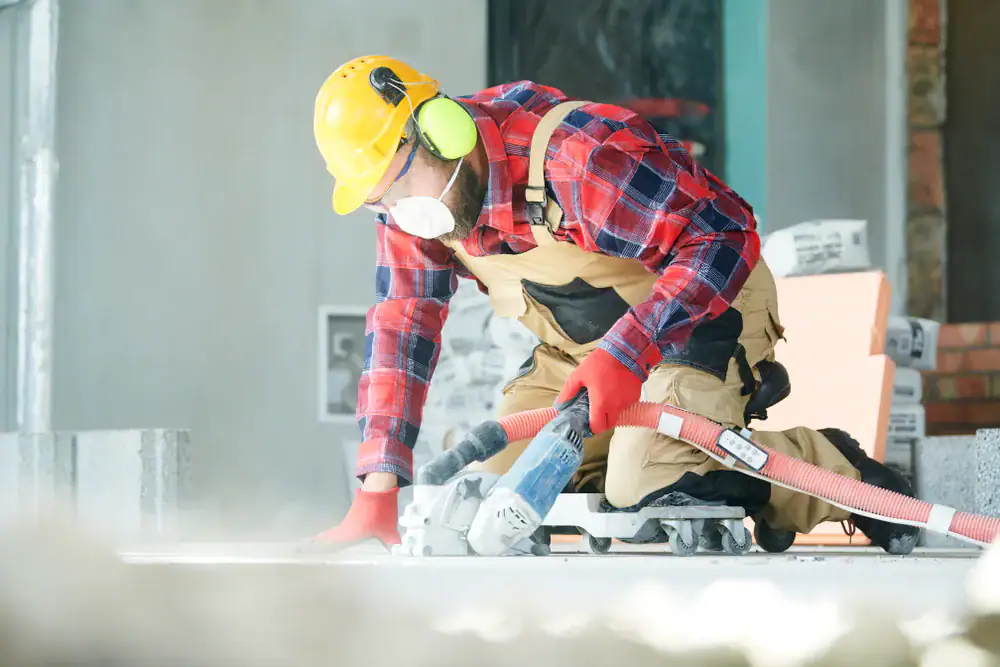
Hear from Our Customers
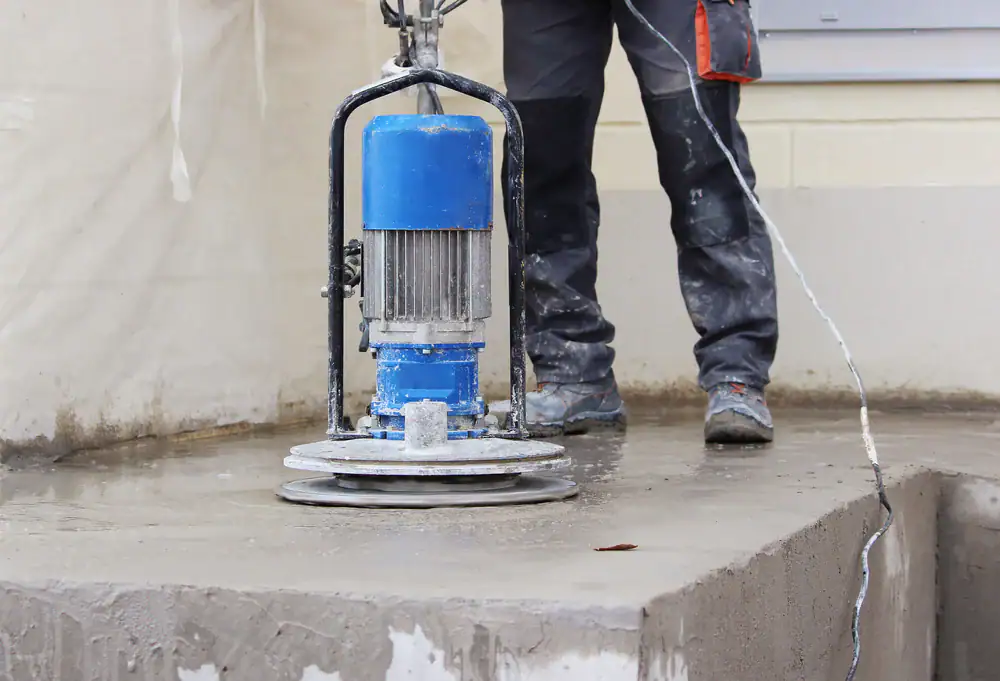
Professional Concrete Floor Grinding Contractors
Your concrete takes a beating in Mangonia Park. High humidity seeps into unprotected slabs, causing coating failures, surface damage, and constant repair bills. Most flooring alternatives—carpet, vinyl, even some epoxy systems—can’t handle the moisture levels we deal with year-round in Palm Beach County.
Concrete grinding changes that equation completely. We remove damaged surface layers, eliminate contaminants like old adhesives and coatings, and create a foundation that actually works with Florida’s environment instead of fighting it. The result is a floor surface that gets stronger with use, reflects light to cut your energy costs by 30%, and requires almost zero ongoing maintenance.
This isn’t about making your floors look better for a few months. Properly ground and polished concrete maintains structural integrity for 30+ years in commercial settings—triple the lifespan of vinyl and without the mold issues that destroy carpet in our climate. You’re looking at a floor that handles forklifts, constant foot traffic, and humidity swings without breaking down.
Veteran-Owned Concrete Grinding Services
We’ve served Mangonia Park and the broader Palm Beach County area since 2020. We’re veteran-owned, which means we approach concrete restoration with the same precision and accountability we learned in military service—no shortcuts, no surprises, no excuses.
Our portfolio includes work for the U.S. Coast Guard, Army facilities, City of Doral, City of Sunny Isles, and multiple county projects across South Florida. Those clients demand reliability and results. So do you.
We focus exclusively on concrete grinding, polished concrete, epoxy flooring, and resurfacing. We don’t install tile or wood flooring because we’d rather be exceptional at what we do than mediocre at everything. When you call us, you’re talking directly to the people doing the work—not a general contractor’s subcontractor three layers removed from your project.
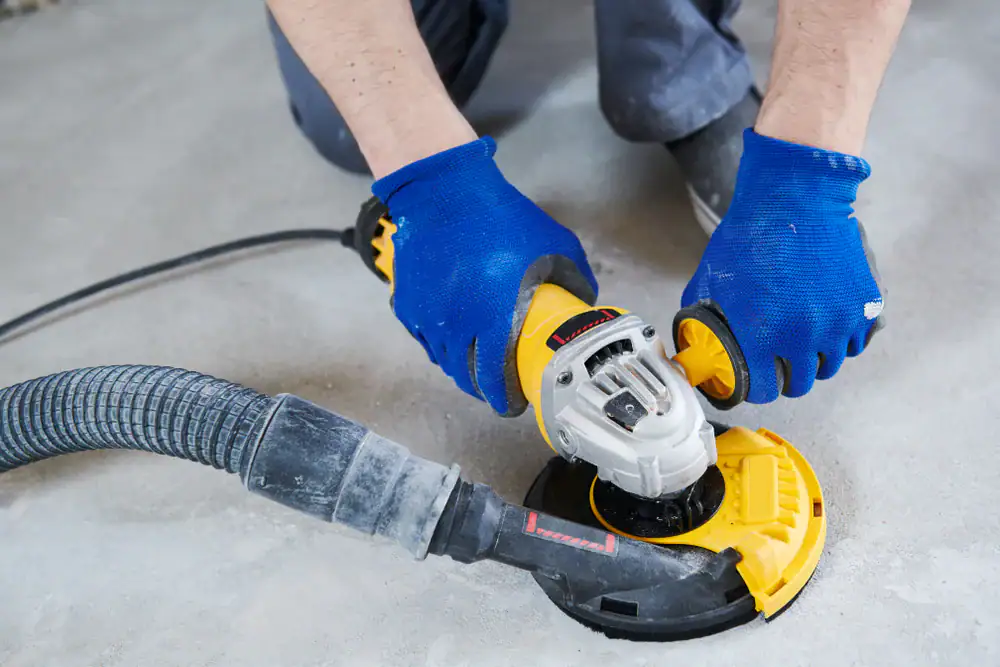
Our Concrete Grinding Process
We start with a moisture assessment. In Florida, this step isn’t optional—it’s the difference between a floor that lasts decades and one that fails in months. We test your concrete slab to verify it’s ready for grinding and identify any underlying moisture issues that need addressing first.
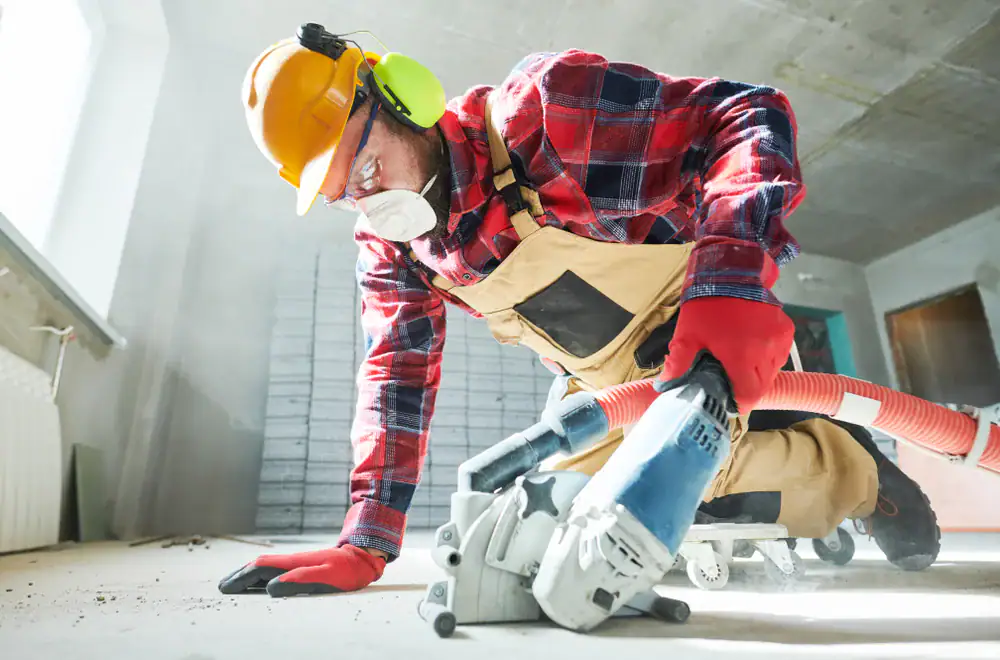
Next comes surface preparation and grinding. We use industrial-grade equipment to remove the damaged top layer of concrete—everything from old coatings and adhesives to stains, pitting, and surface irregularities. This process also opens up the concrete’s pores, which is critical for the densification step that comes next.
The densification process is where the real transformation happens. We apply a chemical hardener that penetrates deep into the concrete and triggers a reaction that increases surface density and abrasion resistance by up to 400%. This is what makes your floor capable of handling heavy machinery and constant traffic without wearing down.
Finally, we move through progressive polishing stages using finer and finer grits until we achieve the finish level you need—from a matte surface for high-traction areas to a high-gloss polish that reflects light and cuts your facility’s lighting costs. Most projects in Mangonia Park wrap up in 24-48 hours, and you can walk on the surface immediately after we’re done.
Ready to get started?
Concrete Restoration Services Mangonia Park
Every concrete grinding project includes complete surface evaluation, moisture testing specific to Florida’s climate conditions, and a transparent assessment of what your floor needs. We don’t upsell services you don’t need, and we don’t hide problems we find.
You get professional-grade materials from manufacturers like Sherwin Williams and Fosroc—the same products we use on military and municipal projects. These aren’t consumer-grade solutions. They’re engineered for commercial durability and backed by manufacturer warranties.
The Palm Beach County area presents unique challenges that most concrete contractors don’t understand. Concrete here needs 30-60 days minimum curing time before coating—significantly longer than in drier climates—because our moisture-rich atmosphere affects how portland cement develops compressive strength. We account for these variables in every project timeline and material selection.
You also get direct communication throughout the process. We handle emergency response when needed, provide follow-up calls after project completion, and give you realistic maintenance expectations upfront. The goal is a floor that performs exactly as promised, with no surprises six months down the road when humidity levels spike or your facility ramps up operations.
How much does professional concrete grinding cost in Mangonia Park?
Concrete grinding typically costs 30-50% less than installing new flooring materials like tile, hardwood, or premium epoxy systems. You’re working with your existing concrete slab, so there’s no demolition or disposal costs eating into your budget.
The exact cost depends on your floor’s current condition, square footage, and the finish level you need. A warehouse floor that just needs basic grinding and a matte finish costs less per square foot than a retail space where you want a high-gloss polished concrete finish. Surface damage, existing coatings, and moisture issues can add to the scope if they need remediation before grinding.
What matters more than the upfront cost is the total cost of ownership. Polished concrete doesn’t need replacement every 5-10 years like carpet or refinishing like hardwood. No waxing, no sealing, no special cleaning products. Your maintenance budget will notice the difference immediately, and that ROI compounds over the 30+ year lifespan you get from properly installed polished concrete in commercial settings.
Can you grind concrete that already has stains or damage?
Yes. We regularly transform concrete floors with existing stains, pitting, paint, adhesive residue, and surface damage. The grinding process removes these surface contaminants and creates a uniform foundation for polishing.
Minor surface issues—oil stains, light scaling, discoloration—usually come out during the initial grinding passes. Deeper damage like significant spalling or structural cracks requires more extensive surface preparation, and in some cases, we’ll recommend resurfacing those areas before grinding to ensure a consistent final appearance.
The key is setting realistic expectations upfront. We’ll assess your floor during the initial consultation and tell you exactly what’s achievable. Some clients want a perfectly uniform appearance across the entire floor. Others are fine with a more industrial look that shows the concrete’s history. Both are possible—it’s about matching the process to your goals and budget. What we won’t do is promise a result we can’t deliver or hide problems that will cause issues later.
How long does concrete need to cure before grinding in Florida?
New concrete in Mangonia Park and the broader Palm Beach County area needs a minimum of 30-60 days curing time before grinding or coating. This timeline is significantly longer than what you’d need in drier climates, and it’s directly related to Florida’s high humidity levels.
Portland cement develops compressive strength through a chemical reaction that requires specific moisture conditions. In Florida’s moisture-rich atmosphere, that process takes longer to complete. If you grind or coat too early, you’re working with concrete that hasn’t reached full structural integrity, which leads to coating adhesion failures, surface degradation, and expensive repairs.
Laboratory testing shows that skipping proper curing and moisture assessment can reduce coating adhesion by up to 75%. We’ve seen countless floors fail not because of bad materials or poor workmanship, but because someone rushed the timeline and applied a coating system to concrete that was still too wet. We test every slab before we start work, and if it’s not ready, we’ll tell you exactly how long to wait and why it matters for your investment.
What’s the difference between concrete grinding and polished concrete?
Concrete grinding is the surface preparation process—it’s the mechanical removal of the top layer of concrete to eliminate damage, coatings, and irregularities. Polished concrete is the finished product you get after grinding, densification, and progressive polishing stages.
Think of grinding as the foundation work. We use coarse-grit diamond tooling to cut through surface contaminants and expose fresh concrete underneath. This step also opens the concrete’s pores so densifying chemicals can penetrate properly. Grinding alone gives you a clean, level surface, but it’s not the final finish.
Polished concrete takes that ground surface and transforms it through densification and multiple polishing passes with increasingly fine diamond grits. The densification process chemically hardens the concrete and increases abrasion resistance by up to 400%. The polishing stages create the reflective finish that cuts lighting costs and gives you that professional appearance. You can stop at different polish levels depending on your needs—matte for high-traction areas, satin for a subtle sheen, or high-gloss for maximum light reflection and visual impact.
Will polished concrete work in Florida’s humid climate?
Polished concrete actually thrives in Florida’s climate. Unlike wood flooring that warps or carpet that develops mold issues, polished concrete is completely unaffected by humidity and moisture once it’s properly cured and sealed.
The challenge isn’t the finished floor—it’s the preparation process. Florida’s humidity means concrete takes longer to cure, moisture testing is non-negotiable, and surface preparation has to account for environmental factors that don’t exist in drier regions. Skip those steps, and you’ll see coating failures, efflorescence, and surface degradation within months.
When the work is done right, polished concrete becomes one of the most durable flooring options available in South Florida. The surface is non-porous after densification, so moisture can’t penetrate and cause internal damage. Temperature fluctuations that destroy other flooring materials don’t affect polished concrete. And the surface actually gets better with heavy use—the constant traffic burnishes the finish and maintains that professional appearance without any special maintenance requirements. It’s why we see polished concrete in warehouses, food service facilities, medical offices, and retail spaces throughout Mangonia Park and Palm Beach County.
How long does a concrete grinding project take?
Most concrete grinding and polishing projects in Mangonia Park wrap up in 24-48 hours from start to finish. The exact timeline depends on your floor’s square footage, current condition, and the finish level you’re targeting.
A straightforward warehouse floor—minimal existing damage, no complicated moisture issues, standard matte or satin finish—usually takes a day or two. More complex projects with significant surface damage, multiple coating layers to remove, or high-gloss polishing requirements might stretch to three or four days. We’ll give you a specific timeline during the initial consultation based on what we see.
The advantage of concrete grinding over other flooring installations is that there’s no extended downtime waiting for materials to cure or adhesives to set. You can walk on the surface immediately after we finish the final polishing pass. Light traffic is fine right away. Heavy machinery and forklifts can get back to work within hours. For facilities that can’t afford extended shutdowns, that rapid turnaround makes a real difference in project planning and operational continuity.
Other Services we provide in Mangonia Park
Leave a Reply