


Concrete Grinding in North Miami, FL
Floors That Work as Hard as You Do
Hear from Our Customers
Professional Concrete Grinding Services
Your floor stops being a problem. That’s the short version.
The longer version: concrete grinding removes the damaged top layer—the part that’s cracked, stained, uneven, or just plain worn out. What’s left is a clean, level surface that’s ready for whatever comes next. Maybe that’s a polished finish that reflects light and cuts your energy costs. Maybe it’s an epoxy coating that can handle forklifts and heavy traffic without peeling in six months.
Either way, grinding is the foundation. Skip it, and you’re building on a surface that’s already compromised. Do it right, and you’re looking at a floor that can last decades with minimal maintenance. No constant patching. No premature coating failure. No dust clouds every time someone walks across the warehouse.
In North Miami’s commercial and industrial facilities, that difference matters. Warehouses running 24/7 don’t have time for floors that fail early. Retail spaces can’t afford a surface that looks tired after a year. Grinding gives you the durability and finish quality that holds up when it counts.
Concrete Grinding Contractors North Miami
We’ve been handling concrete grinding and polished concrete work since 2020, serving commercial, industrial, and residential clients across South Florida. We’ve worked with the Coast Guard, US Army, City of Doral, City of Sunny Isles, and county facilities throughout the region.
That government and municipal work matters because it means we’ve been vetted. Our processes, our results, our reliability—all tested in environments where there’s no room for shortcuts or second chances.
In North Miami, we’re seeing the same patterns everywhere: older facilities need restoration, new construction needs proper surface prep, and property owners are tired of contractors who disappear after the deposit clears. We show up, we communicate clearly, and we finish the job the way it should’ve been done the first time.
Our Concrete Grinding Process
First, we assess your concrete. Not every floor needs the same approach, and we’re not interested in selling you more than what actually solves the problem. We check for cracks, moisture issues, surface damage, and any existing coatings that need removal.
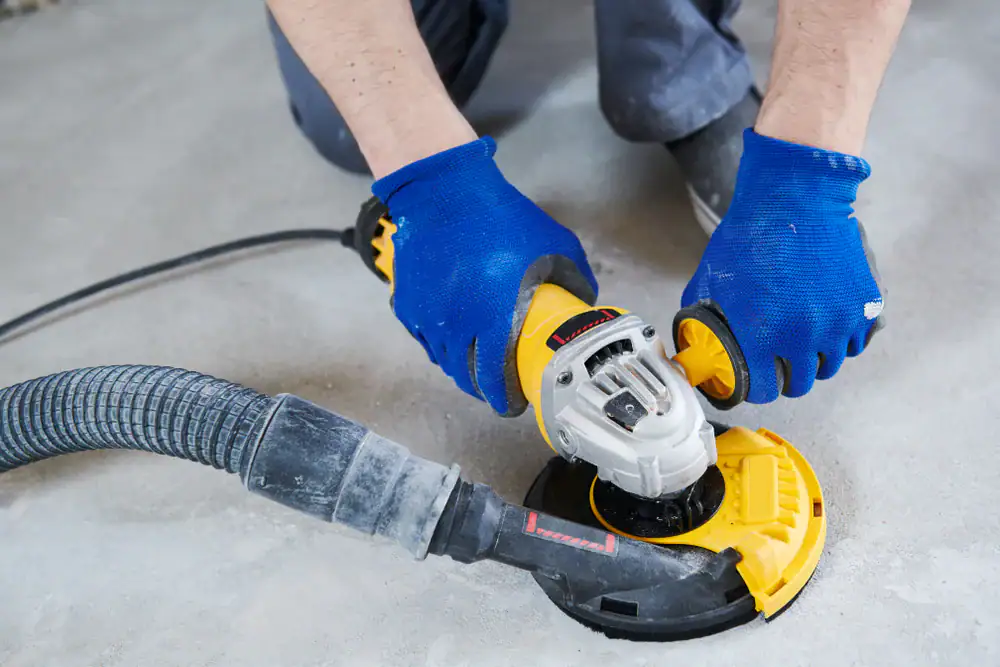
Then we grind. We use industrial-grade equipment that removes the compromised surface layer—how deep depends on what your floor needs. For light damage, we might only take off a thin layer. For heavily worn concrete or thick coating removal, we go deeper. The goal is reaching sound, stable concrete that’s ready for the next step.
During grinding, we manage the dust. Interior jobs get dustless equipment because nobody wants their facility coated in concrete powder. Exterior work is more forgiving, but we still control the mess because that’s just basic professionalism.
After grinding, we evaluate the surface. Sometimes minor crack repair or joint filling is needed before moving forward. If you’re going with polished concrete, we move through progressively finer grits until the surface is smooth and reflective. If you’re adding epoxy or another coating, we make sure the profile is right for maximum adhesion.
The timeline depends on square footage and condition, but most commercial projects in North Miami wrap up in days, not weeks. We coordinate around your schedule because shutting down operations costs money.
Ready to get started?
Concrete Restoration Services North Miami
When we handle concrete grinding in North Miami, you’re getting surface preparation that’s actually complete. That means grinding to the proper depth and profile for whatever finish you’re planning. It means dust control that keeps your facility functional during the work. It means crack repair and joint filling when needed, not just grinding over problems and hoping they disappear.
For commercial and industrial clients in North Miami, the focus is durability and fast turnaround. Warehouses and distribution centers need floors that can handle constant forklift traffic without showing wear. Retail spaces need surfaces that look professional and stay clean. Manufacturing facilities need concrete that won’t generate dust or harbor contaminants.
Polished concrete is becoming the standard in these environments because it checks every box: low maintenance, high durability, LEED-friendly, and cost-effective over its lifespan. North Miami’s growing commercial sector is seeing more warehouse construction and facility renovations, and property owners are moving away from coatings that need replacement every few years.
We also work with residential clients who want the polished concrete look in garages, patios, or interior spaces. The process is the same—grind, refine, polish—but the aesthetic expectations are different. Homeowners care about how it looks. Commercial clients care about how it performs. We deliver both.

How long does concrete grinding take for a commercial space?
It depends on square footage, concrete condition, and what finish you’re after. A 5,000-square-foot warehouse floor in decent shape might take two to three days from start to polished finish. A larger space with heavy damage or thick coatings to remove could stretch to a week or more.
The grinding itself moves quickly with the right equipment. What takes time is the prep work—moving obstacles, protecting drains, setting up dust control—and the finishing passes if you’re going for a high-gloss polished look. Each progressively finer grit takes time, but that’s what creates the reflective surface that actually lasts.
We don’t rush jobs to hit arbitrary deadlines. A floor that’s ground properly the first time saves you money and headaches down the road. A floor that’s rushed ends up uneven, with visible grind marks, or with coatings that fail early because the profile wasn’t right.
Can you grind concrete inside without creating a dust nightmare?
Yes, and we do it regularly for food facilities, retail spaces, and any interior environment where dust contamination is a problem. We use dustless grinding equipment that captures particles at the source with industrial vacuums and filtration systems.
It’s not completely dust-free—nothing is—but it’s controlled enough that adjacent areas can stay operational during the work. Compare that to standard grinding, which creates clouds of fine concrete dust that settle on everything and require extensive cleanup afterward.
For sensitive environments like pharmaceutical facilities or food production areas, we plan the work in phases to minimize disruption. Sometimes that means working overnight or on weekends. Sometimes it means isolating sections with barriers and negative air pressure. The approach depends on your facility’s needs and tolerance for downtime.
What’s the difference between grinding and polishing concrete?
Grinding is the heavy lifting—removing damaged concrete, old coatings, or surface imperfections. Polishing is the refinement that comes after, using progressively finer abrasives to smooth and densify the surface until it’s reflective.
Think of grinding as the foundation and polishing as the finish. You can grind concrete and stop there if all you need is a clean, level surface for a coating. But if you want polished concrete as the final floor, grinding is just the first phase. After that, we move through multiple polishing steps, each one using finer grit to close the pores and bring out the shine.
The polishing process also involves densifiers—chemical hardeners that penetrate the concrete and make it more durable and stain-resistant. That’s what gives polished concrete its reputation for being nearly indestructible. It’s not just ground smooth; it’s chemically enhanced to resist wear, moisture, and damage that would ruin other flooring types.
Will grinding fix cracks and uneven spots in my concrete?
Grinding levels out minor surface irregularities and lippage—those annoying edges where one section of concrete is slightly higher than another. It’s great for smoothing out rough spots and removing trip hazards caused by uneven settling.
But grinding doesn’t fix structural cracks or major foundation issues. If your concrete has wide cracks, spalling, or significant voids underneath, those need repair before grinding. We’ll fill cracks, patch damaged areas, and address any underlying problems so the grinding work actually lasts.
Skipping that repair step is a common mistake. Some contractors will grind right over cracks and hope the customer doesn’t notice. Six months later, those cracks reappear—sometimes worse than before—because the underlying issue was never addressed. We handle repairs first, then grind, so you’re not paying twice for the same work.
How much does concrete grinding cost in North Miami?
Pricing depends on square footage, concrete condition, and how much prep work is needed before grinding. A straightforward grinding job on clean, accessible concrete costs less than a project requiring coating removal, extensive crack repair, or working around equipment that can’t be moved.
Most commercial concrete grinding in North Miami runs between a few dollars per square foot for basic surface prep and higher for full polished concrete with multiple refining passes. Residential projects can vary more widely depending on aesthetic expectations and site access.
We give transparent pricing after seeing the space. No vague estimates or surprise charges when the job’s done. We walk the site, assess what’s needed, and give you a number that reflects the actual work—not a lowball bid that gets inflated with change orders later. If your concrete has issues that will add cost, we tell you upfront so there’s no confusion when the invoice arrives.
Is polished concrete slippery when wet?
Not as much as most people assume. Polished concrete actually has decent slip resistance because of its smooth, dense surface. Water doesn’t penetrate or pool the way it does on porous concrete, so it tends to sheet off rather than creating slick spots.
That said, any hard, smooth surface can be slippery when wet if there’s standing water or if it’s polished to an extremely high gloss. For commercial spaces where slip resistance is critical—like restaurant kitchens or facility entrances—we adjust the finish level or add slip-resistant treatments to meet safety standards.
The key is matching the finish to the environment. A warehouse floor doesn’t need the same slip resistance as a retail entrance that sees rain tracked in daily. We discuss your specific use case and recommend a finish level that balances aesthetics, durability, and safety. You’re not stuck choosing between a floor that looks good and one that’s functional—you can have both with the right approach.
Other Services we provide in North Miami
Leave a Reply