


Concrete Grinding in The Hammocks, FL
Smooth, Level Floors Without the Dust Cloud
Hear from Our Customers
Professional Concrete Floor Grinding Contractors
You’re looking at concrete that’s uneven, pitted, or just not smooth enough for the coating you want. Maybe you’ve got old epoxy that needs to come off. Or a surface so rough that nothing’s going to bond properly.
Concrete grinding fixes that. It levels out the highs, smooths the lows, and opens up the pores so sealers and coatings can actually grab hold. You end up with a clean profile that’s ready for whatever comes next—epoxy, polyurethane, polished concrete, or just a good sealer.
The difference shows up later. Coatings don’t peel. Floors don’t crack from uneven weight distribution. And you’re not calling someone back in six months because the surface prep wasn’t done right the first time. That’s what proper concrete floor grinding gets you—a foundation that holds up under forklifts, foot traffic, and Florida’s humidity without falling apart.
Concrete Grinding Services in The Hammocks
We’ve been handling concrete grinding and floor prep across South Florida since 2020. We’ve worked on Coast Guard facilities, Army installations, municipal buildings in Doral and Sunny Isles, and commercial spaces throughout Miami-Dade County.
The Hammocks sits in one of the most humid parts of the state. That means concrete absorbs moisture, coatings cure differently, and surface prep has to account for conditions that don’t exist in drier climates. We’ve dialed in our process for exactly that—high humidity, sudden rainstorms, and floors that need to perform in Florida heat.
You’re not getting a crew that learned concrete grinding in Nevada and hopes it translates. You’re getting contractors who know how South Florida concrete behaves and what it takes to prep it correctly.
How Our Concrete Grinding Process Works
First, we assess the slab. We’re looking at how uneven it is, what kind of coating or contaminants are on the surface, and what profile depth you need for whatever’s going on top. That determines which diamond grit we start with and how many passes we’ll make.
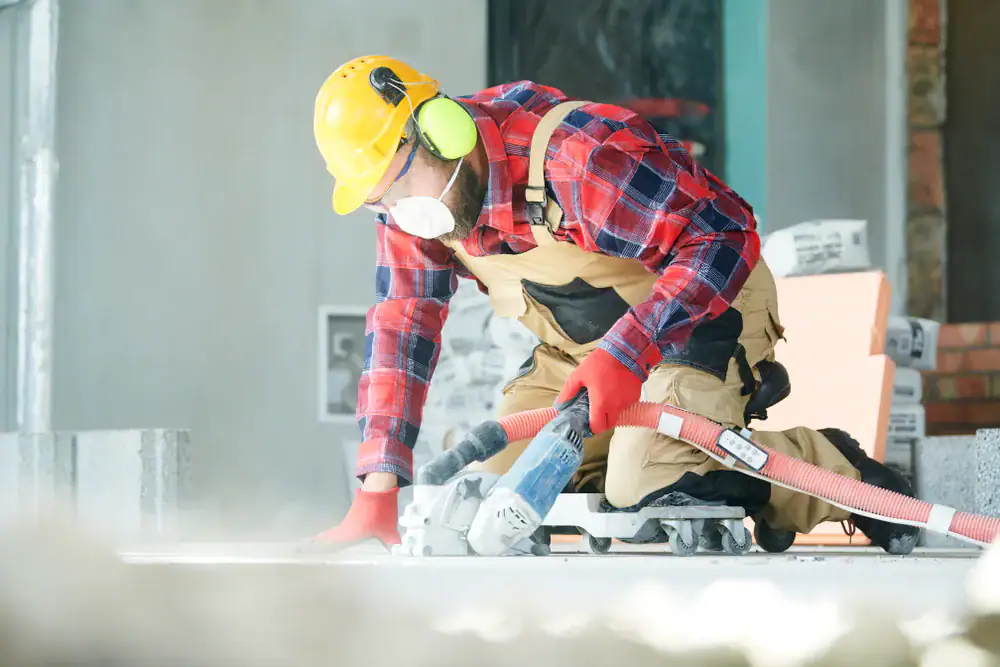
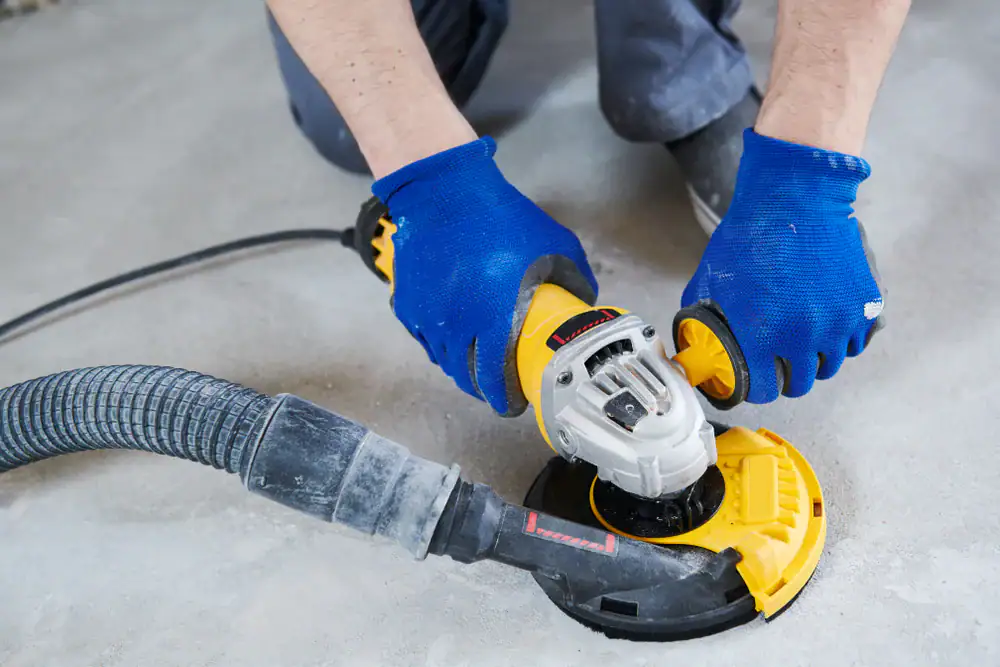
Then we grind. We use industrial grinders with diamond abrasives that remove old coatings, smooth out rough patches, and level uneven sections. Our equipment connects to high-performance vacuums with HEPA filters, so you’re not dealing with a dust storm. The concrete dust gets captured as we work—no settling on equipment, no respiratory concerns, no massive cleanup afterward.
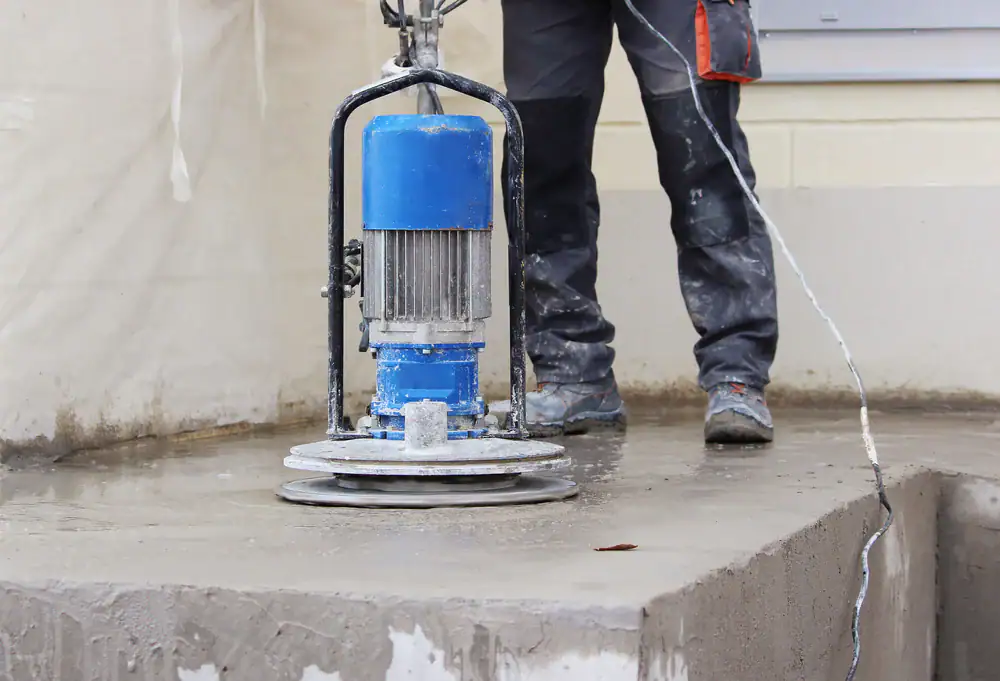
We make multiple passes if needed, moving from coarser to finer grits depending on the finish you’re after. For epoxy or coating prep, we stop at a profile that gives good mechanical bond. For polished concrete, we keep going until the surface is smooth and reflective.
Once grinding’s done, we vacuum everything again and check the surface. You’re left with a clean, level slab that’s ready for the next step—whether that’s coating, sealing, or polishing. Most projects wrap in 24 to 48 hours depending on square footage.
Ready to get started?
Cement Grinding and Concrete Restoration Services
You get dustless grinding with industrial vacuums that capture 99% of airborne particles. That matters in The Hammocks, where humidity already makes air quality a concern and dust can trigger mold growth if it settles in the wrong places.
You get equipment that handles both small residential garages and large commercial warehouses. We’re not showing up with a hand grinder for a 10,000-square-foot space. We bring the right tools for the job size, which keeps the timeline realistic and the results consistent.
You get contractors who understand Florida concrete. High humidity affects curing times and moisture levels in the slab. We account for that during prep so coatings don’t fail three months later because moisture was trapped underneath. We also know how salt air near the coast accelerates concrete deterioration, so we adjust our approach based on how close you are to the water.
And you get transparent pricing with a walkthrough before we start. No surprises, no upselling mid-project. We tell you what needs grinding, why, and what it costs. Then you decide.

How long does concrete grinding take for a typical garage or warehouse?
A standard two-car garage usually takes four to six hours, including setup and cleanup. A 5,000-square-foot warehouse might take a full day, sometimes two if there’s heavy coating removal or significant leveling work.
The timeline depends on how much material we’re removing and what condition the concrete’s in. If you’ve got thick epoxy or multiple layers of old coatings, that takes longer to grind through than bare concrete. Same with deep pits or major unevenness—we’re making more passes to get it level.
We can often work around your schedule. For commercial spaces that can’t shut down during business hours, we’ll come in evenings or weekends. For kitchens or food service areas, we’ve done 24-hour turnarounds when timing was tight. Just tell us what you’re working with and we’ll map out a realistic timeline.
Is concrete grinding really dustless, or is that just marketing?
It’s not completely dustless—that’s physically impossible—but it’s about 99% dust capture when done right. Our grinders connect directly to industrial vacuums with HEPA filters that pull dust as we grind. You’ll see some fine residue, but nothing like traditional grinding where dust coats everything in the room.
This matters more than you’d think in Florida. Concrete dust mixed with humidity can create a mess that’s hard to clean and can promote mold growth. In food service or pharmaceutical environments, airborne dust is a contamination risk. Even in a regular warehouse, it’s a respiratory hazard and a cleanup nightmare.
We use equipment specifically designed for dust containment, not just a shop vac duct-taped to a grinder. The difference is obvious when you see the workspace afterward. No thick layer of dust on your equipment, no need for extensive post-job cleaning, and no health concerns for anyone in the building.
Will grinding fix cracks or just make the surface smooth?
Grinding smooths and levels the surface, but it doesn’t repair structural cracks. If you’ve got cracks wider than a quarter-inch or areas where the slab has settled unevenly, those need to be filled and repaired before grinding.
What grinding does fix: surface irregularities, minor pitting, rough texture, old coating removal, and minor height differences between slab sections. It creates a uniform surface profile so coatings bond properly and the floor looks consistent.
If your concrete has significant cracking, we’ll point that out during the walkthrough. We handle crack repair and concrete restoration as part of our service lineup, so we can address both issues in one project. But it’s important to know that grinding alone won’t solve structural problems—it’s a surface prep technique, not a structural fix. We’ll be straight with you about what your floor needs.
What’s the difference between grinding for epoxy versus grinding for polished concrete?
The profile depth is different. For epoxy or coating prep, we grind to create a rougher surface—think medium-grit sandpaper texture. That roughness gives the coating something to grab onto mechanically. We’re opening up the concrete’s pores so the epoxy can penetrate and bond.
For polished concrete, we keep grinding with progressively finer diamond grits until the surface is smooth and reflective. We’re essentially turning the concrete itself into the finished floor, so we’re going for a glass-like finish rather than a rough profile.
The equipment and process are similar, but the endpoint is completely different. Epoxy prep might stop at 30 or 40 grit. Polished concrete might go all the way to 400 grit or higher, depending on the shine level you want. We adjust our approach based on what’s going on top of the concrete—or if the concrete itself is the final surface.
Can you grind concrete that already has epoxy or coating on it?
Yes, and that’s one of the most common reasons people call us. Old epoxy that’s peeling, discolored, or just outdated needs to come off before you can apply new coating. Grinding removes it completely and preps the surface for a fresh application.
The thickness and type of existing coating affects how long removal takes. Thin epoxy might come off in one or two passes. Thick industrial coatings or multiple layers take longer. We use coarser diamond grits initially to chew through the coating, then switch to finer grits to smooth and profile the concrete underneath.
This is way more effective than chemical strippers, which leave residue that can interfere with new coatings. Grinding gives you a clean, bare surface with the right profile for maximum bond strength. And because we’re capturing dust as we work, you don’t end up with epoxy particles floating around your space. It’s the cleanest, most thorough way to remove old floor coatings.
How does Florida’s humidity affect concrete grinding and the results?
Humidity affects both the grinding process and how well coatings perform afterward. High moisture levels in the air mean the concrete slab itself often holds more moisture than it would in a drier climate. If we grind and immediately coat without accounting for that moisture, you risk coating failure—bubbling, peeling, or delamination.
We check moisture levels in the slab before and after grinding. If readings are too high, we’ll recommend dehumidifying the space or waiting for conditions to stabilize before applying coatings. Florida’s heat can actually speed up coating cure times, but humidity slows them down, so we monitor both.
The dust containment system also matters more here. In dry climates, concrete dust eventually settles. In humid Florida air, it can mix with moisture and create a film that’s harder to clean. Our HEPA filtration captures it before that becomes an issue. We’ve dialed in our process specifically for South Florida conditions, so you’re not dealing with problems that come from contractors who don’t understand how humidity impacts concrete work.
Other Services we provide in The Hammocks
Leave a Reply