


Garage Epoxy Flooring in Acacia Villas, FL
Your Garage Floor Fixed Right the First Time
Hear from Our Customers
Epoxy Garage Floor Coating Services
You’ve seen the peeling. The hot tire pickup. The bubbles forming after six months because someone skipped the prep work or used the wrong product for this climate.
Florida humidity destroys most garage floor coatings within two years. That’s not an exaggeration. Over 70% of DIY epoxy installations fail before they hit the three-year mark, and plenty of professional jobs aren’t much better if the contractor doesn’t understand moisture vapor or proper surface prep.
Here’s what changes when the floor is done right. Spills sit on top instead of soaking in. Oil, brake fluid, gasoline—none of it stains. You can hose it down, drag equipment across it, park hot tires on it daily. The surface stays intact because it’s bonded correctly to concrete that was actually prepared for South Florida conditions.
A proper epoxy garage floor in Acacia Villas should give you 15 to 20 years. Not two. Not five. Decades. That only happens when the installer knows how to handle moisture, uses commercial-grade materials, and doesn’t cut corners on the grind or the cure time.
Epoxy Flooring Contractors Acacia Villas
We’ve been installing epoxy floor coatings and polishing concrete across South Florida since 2020. We’re veteran-owned, and we don’t do tile, wood, or anything outside of resin and concrete work. That focus matters because epoxy in Florida is its own specialty.
We’ve worked with the Coast Guard, the Army, the City of Doral, Sunny Isles, and high schools throughout the region. We’ve installed floors at the Faena Hotel and Hard Rock. Those projects don’t happen unless you know what you’re doing and can handle the pressure of high-traffic commercial environments.
Acacia Villas sits in one of the toughest climates for garage floor coatings. High humidity, sudden storms, heat that makes asphalt soft by noon. Your garage floor has to handle all of it without breaking down. We’ve seen what fails here, and we’ve spent years dialing in what works.
Professional Garage Floor Coating Process
First, we diamond-grind the concrete. Not acid etch. Not a quick scuff with a buffer. We remove the top layer of your slab to expose clean, porous concrete that epoxy can actually bond to. This step is where most failures start—skip it or do it poorly, and the coating will lift within a year.
Next, we address moisture. Florida concrete sweats. If there’s vapor pressure coming through your slab, we handle it before any coating goes down. That might mean a moisture barrier or a specific primer system. It’s not optional.
Then we apply the epoxy system—usually a multi-layer build with a base coat, color flake or solid tone depending on what you want, and a clear topcoat for UV and chemical resistance. We add slip-resistant aggregate if you need traction. The materials we use come from Sherwin Williams and Fosroc, not a big-box store.
Cure time is 24 to 48 hours depending on temperature and humidity. Most projects finish in one or two days total. You’re not waiting a week to use your garage.
Ready to get started?
Garage Floor Painting and Coating Options
You’re getting a non-porous surface that repels automotive fluids and household chemicals. Oil changes, antifreeze spills, battery acid—it all wipes up without staining. That’s the difference between epoxy and bare concrete or a cheap sealer.
You’re also getting a floor that won’t crack from thermal shock when you park a hot car on it in July. The coating flexes slightly with temperature changes instead of delaminating. That’s a material and application thing, not luck.
In Acacia Villas, your garage is exposed to everything Florida throws at it. Humidity spikes during summer storms. Heat that turns your garage into an oven by mid-afternoon. We build the floor system to handle those swings without breaking down.
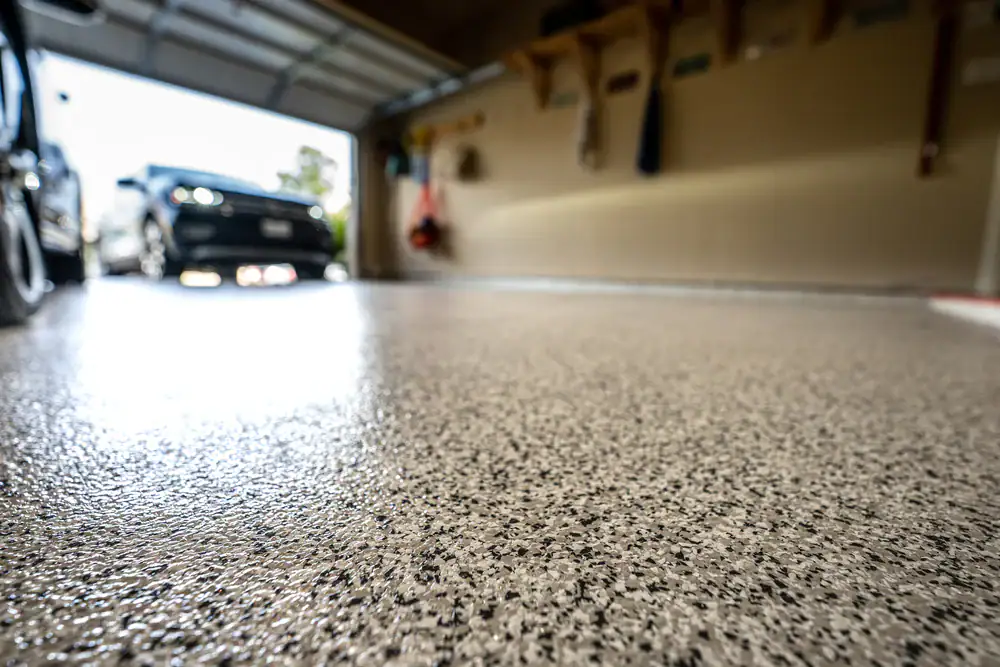
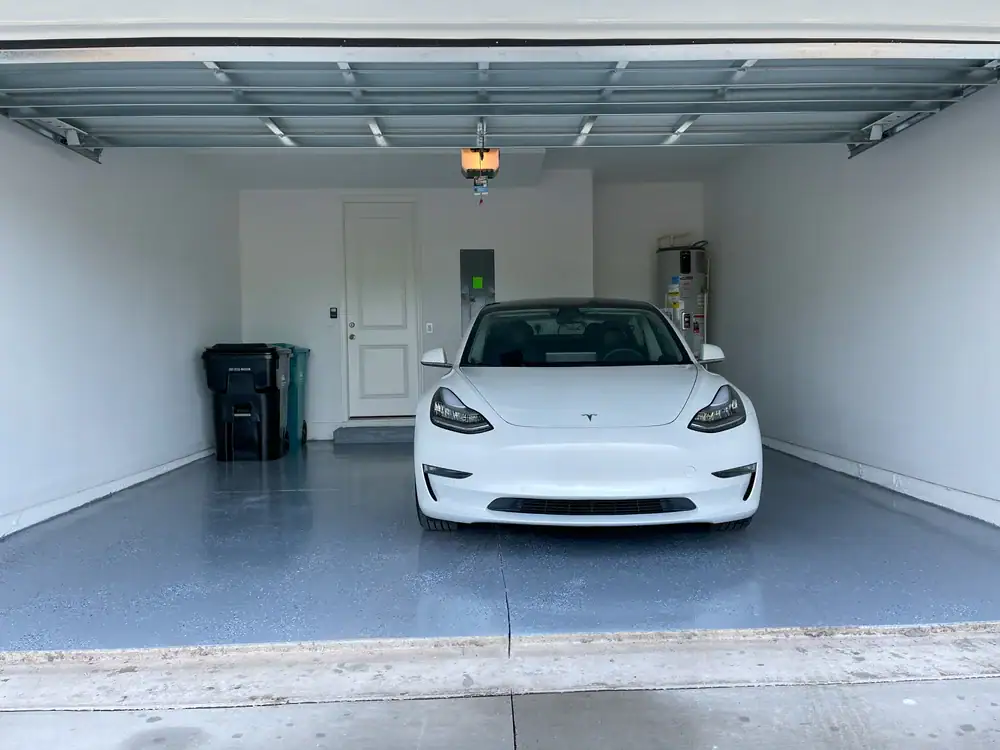
The finish is customizable. Solid colors, multi-tone flake blends, high-gloss or satin. Some people want a showroom look. Others just want something clean and functional that doesn’t embarrass them when the garage door is open. Both are possible with the same base system.
This isn’t a cosmetic fix. It’s a protective coating designed to outlast your car. Most professionally installed epoxy garage floors last 15 to 20 years in South Florida when maintained correctly. You’ll repaint your house twice before you need to redo this floor.
How long does garage epoxy flooring take to install in Acacia Villas?
Most garage floor coating projects take one to two days from start to finish. Day one is surface prep and base coat application. Day two is topcoat and final details, though smaller garages sometimes get completed in a single day if conditions are right.
The floor is ready for foot traffic in 24 hours. You can park on it after 48 hours in most cases, though we recommend waiting 72 hours in high humidity to let the coating fully cure. Florida’s moisture slows cure times slightly compared to drier climates, so we adjust our process and product selection to account for that.
We don’t rush cure times to finish faster. A coating that isn’t fully cured will fail early, especially under the weight and heat of a vehicle. You’re better off waiting an extra day than dealing with tire marks or delamination six months later.
Will epoxy hold up to Florida heat and humidity long-term?
Yes, but only if it’s installed correctly with the right materials. Florida’s climate kills most DIY epoxy jobs and plenty of professional ones that cut corners. The two biggest threats are moisture vapor coming through the slab and thermal stress from hot tires on hot days.
We address moisture during prep by testing the slab and using vapor barriers or moisture-mitigating primers when needed. That prevents the bubbling and delamination you see on failed floors. For heat, we use commercial-grade epoxy systems that flex slightly with temperature changes instead of becoming brittle or soft.
The epoxy systems we install are the same ones we’ve used for Coast Guard facilities and municipal buildings across South Florida. Those floors see heavy traffic, extreme conditions, and zero tolerance for failure. Your garage gets the same materials and process. When done right, you’re looking at 15 to 20 years of service life, not the two to three years most homeowners get from big-box kits.
What’s the cost difference between DIY kits and professional installation?
DIY epoxy kits run $200 to $600 for a two-car garage depending on the brand. Professional epoxy flooring typically costs $3 to $8 per square foot, so figure $1,500 to $4,000 for the same space depending on the system and finish you choose.
That looks like a big gap until you factor in failure rates. Most DIY jobs fail within 18 to 36 months in Florida because the kits use water-based epoxy that can’t handle moisture or heat, and most homeowners don’t have the equipment to properly grind the concrete. When it fails, you’re paying to strip the old coating and redo the floor—often costing more than if you’d hired a pro the first time.
Professional installation gives you proper surface prep, commercial-grade materials, and a floor that lasts 15 to 20 years. The cost per year is actually lower than DIY when you account for longevity. You’re also not spending your weekend grinding concrete and breathing fumes. For most people in Acacia Villas, the time saved and the peace of mind are worth the upfront investment.
Can you fix a garage floor where the old epoxy is peeling?
Yes, but the old coating has to come off completely first. You can’t just coat over peeling epoxy and expect it to hold. We grind the floor down to bare concrete, removing all traces of the failed coating, then start fresh with proper prep and a new system.
The grind also tells us why the first coating failed. Usually it’s poor surface prep, moisture issues, or a product that wasn’t rated for Florida’s climate. We fix those problems before applying anything new so you don’t end up in the same situation two years later.
Resurfacing a failed floor costs about the same as a new install because the labor is similar. The difference is you’re getting a floor that’s built to last this time. Most people who come to us with peeling epoxy had a DIY kit or a cheap contractor who skipped steps. We don’t skip steps.
Is epoxy flooring slippery when wet in a garage?
It can be if no slip resistance is added, but that’s easily fixed during installation. We add slip-resistant aggregate to the topcoat, creating traction even when the floor is wet from rain, washing a car, or humidity condensation.
The level of slip resistance is adjustable based on how you use the garage. Light aggregate works for most residential garages where you’re just parking cars and storing things. Heavier aggregate makes sense if you’re working on vehicles, using the space as a shop, or concerned about wet conditions.
Plain epoxy with no aggregate has a smooth, glossy finish that looks great but can be slick when wet. Most people in Acacia Villas choose a light texture for safety without sacrificing the clean appearance. It’s a small addition during install that makes a big difference in how the floor performs day to day.
How do you maintain an epoxy garage floor after installation?
Maintenance is simple. Sweep or blow out dirt and debris regularly so it doesn’t get ground into the coating. Mop with water and a mild cleaner when the floor gets grimy. That’s it for routine care.
For spills, wipe them up when you notice them. Epoxy resists staining from oil and chemicals, but leaving fluids sitting for weeks isn’t ideal. A quick cleanup with a rag or paper towel is usually enough. Harsh solvents and degreasers aren’t necessary and can dull the finish over time if used too often.
Avoid dragging sharp metal objects or using metal shovels directly on the floor. Epoxy is tough, but it’s not indestructible. If you’re moving heavy equipment or toolboxes, use furniture pads or rubber feet. Most damage we see on older floors comes from abuse, not normal wear. Treat the floor reasonably, and it’ll outlast everything else in your garage.
Other Services we provide in Acacia Villas
Leave a Reply