


Garage Epoxy Flooring in Atlantis, FL
A Garage Floor That Actually Holds Up
Hear from Our Customers
Epoxy Garage Floor Coating Services
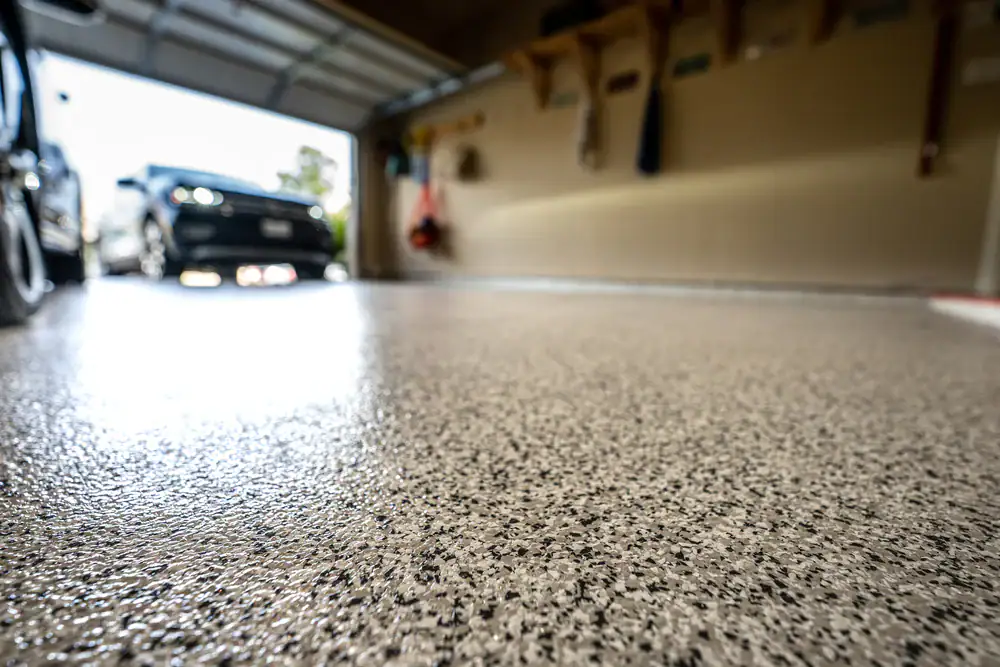
Your garage becomes the easiest room in your house to maintain. Oil drips wipe up in seconds. Tire marks don’t stick. The floor doesn’t crack or peel when summer humidity hits 90%.
Most epoxy garage flooring failures happen because installers skip the prep work or use products that weren’t made for South Florida. You end up with bubbles within six months, or the coating lifts when your car’s been sitting in the sun. That’s not a flooring problem—that’s an installation problem.
When the floor is prepped correctly and the epoxy floor coating is mixed for local conditions, you get a surface that handles everything. Hot tires, spilled chemicals, salt air, power washers. It looks sharp, cleans fast, and doesn’t need babying. You’ll actually want to park inside again.
Trusted Epoxy Flooring Contractors Atlantis
We started SPF Industrial in July 2020 with one focus: epoxy and polished concrete done right. We’re veteran-owned, which means we show up on time, do what we say, and don’t disappear after the install.
We’ve worked with the Coast Guard, the U.S. Army, the City of Doral, and Sunny Isles. If a floor needs to hold up under real use, we’ve probably done it. That same standard applies whether it’s a military facility or your two-car garage in Atlantis, FL.
You’re not getting a sales pitch or a runaround. You’re getting a straight answer about what your floor needs, what it’ll cost, and how long it’ll take. Then we do the work and follow up to make sure it’s holding up the way it should.
Our Garage Floor Coating Process
First, we assess your concrete. Not every slab is ready for epoxy, and we’re not going to coat over problems just to get paid. If there’s moisture vapor or structural issues, we’ll tell you before we start.
Next comes surface prep. We grind the concrete to open the pores, remove any existing coatings, and create a profile that lets the epoxy bond. This step takes the most time, but it’s the difference between a floor that lasts two years and one that lasts twenty.
Then we apply the epoxy system in layers. We adjust resin ratios based on the day’s humidity and temperature because Florida’s climate doesn’t follow the instructions on the back of the can. We broadcast flake into the wet coating for texture and slip resistance, then seal everything with a topcoat that handles UV exposure and chemical spills.
Cure time depends on conditions, but most garage floors are ready for light foot traffic in 24 hours and full vehicle use in 48 to 72 hours. We’ll give you the real timeline upfront, not the marketing version.
Ready to get started?
Garage Epoxy Flooring Atlantis FL
You’re getting a full surface evaluation before we touch anything. We test for moisture vapor using two methods because one isn’t enough in Florida. If the slab isn’t ready, we’ll tell you what needs to happen first.
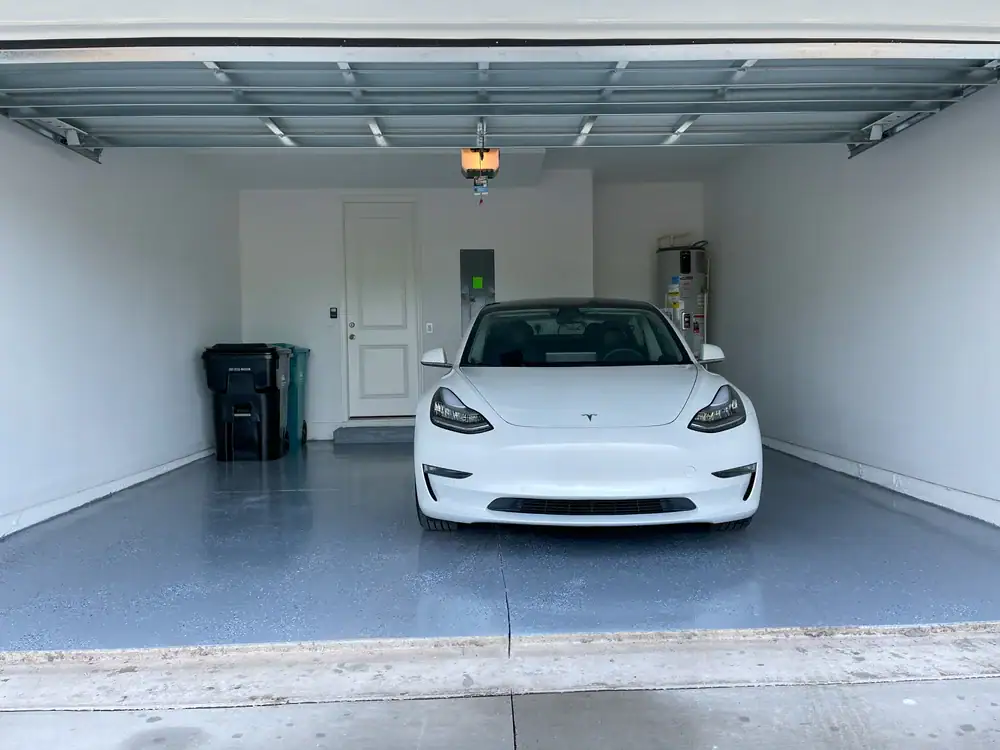
The prep work includes grinding, crack repair if needed, and a deep clean to remove oils and contaminants. Then comes the epoxy system: primer, base coat, broadcast flake in your choice of color blend, and a clear topcoat with UV inhibitors. The flake isn’t just decorative—it adds grip and hides imperfections in older concrete.
In Atlantis, most properties were built in the late ’70s, which means the concrete has had decades to settle and develop hairline cracks. We address those during prep so they don’t telegraph through the coating. We also account for the fact that 30% of homes here sit vacant part of the year, which means temperature swings and humidity changes when the AC isn’t running. The epoxy system we use is formulated to handle that.
You’ll also get a walkthrough after the job where we explain how to maintain the floor. It’s low-maintenance, but there are a few things worth knowing to keep it looking new.
How long does garage epoxy flooring last in Florida’s climate?
A professionally installed epoxy garage floor in Florida should last 15 to 20 years if it’s done right. The key is climate-specific prep and product selection.
Most failures happen because the installer used a one-size-fits-all approach. Florida’s humidity slows curing, and moisture vapor from the slab creates pressure under the coating. If you don’t test for vapor and adjust the install process, the epoxy will bubble or delaminate within two years.
We use dual-method moisture testing and adjust resin ratios based on real-time conditions. That’s why our installs hold up. You’re not fighting the climate—you’re working with it.
What’s the difference between DIY epoxy kits and professional installation?
DIY kits fail over 70% of the time in Florida within 18 to 36 months. That’s not because homeowners are careless—it’s because the kits aren’t designed for this environment.
The products in big-box stores use thin mil coatings that can’t handle Florida’s heat, humidity, or UV exposure. They also don’t come with the equipment needed to properly grind and profile the concrete. Without that step, the coating sits on top of the slab instead of bonding into it.
Professional installs use commercial-grade epoxy systems with higher solids content, proper surface prep equipment, and climate-adjusted application techniques. You’re paying for a floor that works, not one that looks good for six months.
Can epoxy flooring increase my home’s resale value in Atlantis?
Yes. Epoxy floors can boost resale value by up to 5%, and in Atlantis where the median home value is $582,700, that’s nearly $30,000. Even conservative estimates show ROI between 60% and 80%.
Buyers aged 25 to 40—who make up a significant portion of the market—pay premiums for homes with finished garages. One study found that homes with epoxy garage floors sold for $40,000 more and three months faster than comparable homes without them.
In a neighborhood where 92% of residents own their homes and the per capita income is nearly $69,000, a finished garage signals that the property has been maintained. It’s not just cosmetic—it’s a selling point.
How do you prevent hot tire pickup and bubbling?
Hot tire pickup happens when the coating hasn’t fully cured or when the wrong product was used. Bubbling is almost always a moisture vapor issue. Both are preventable with the right approach.
For hot tires, we use epoxy systems with higher heat resistance and ensure full cure time before the floor sees vehicle traffic. We also apply a topcoat that’s specifically rated for thermal cycling, which is what happens when a hot tire sits on a cool floor.
For bubbling, we test the slab for moisture vapor before we start. Concrete is porous, and in Florida’s humid climate, vapor rises through the slab and gets trapped under the epoxy. That creates pressure—sometimes up to 300 psi—which causes bubbles and delamination. We use vapor mitigation primers when needed and adjust our install schedule based on humidity levels.
What’s the cost of epoxy garage flooring in Atlantis?
Most residential garage floor coatings in Atlantis run between $3 and $12 per square foot, depending on the system and the condition of your concrete. A standard two-car garage (400-500 square feet) typically costs between $1,800 and $5,000.
The range exists because not all floors are the same. If your concrete needs significant crack repair, moisture mitigation, or if you want a metallic finish instead of standard flake, the price goes up. We give you transparent pricing after we assess your slab—no surprises, no upsells.
Cheaper isn’t better in this industry. A $2-per-square-foot install will fail, and you’ll pay twice to have it redone. A quality install costs more upfront but lasts decades. That’s the difference between spending $2,000 now or $4,000 over the next five years.
How soon can you start, and how long does installation take?
Most garage epoxy flooring projects in Atlantis take two to three days from start to finish, depending on the size and condition of the floor. We can usually schedule your project within a week of your consultation.
Day one is surface prep: grinding, crack repair, and cleaning. Day two is the epoxy application and flake broadcast. Day three is the topcoat. Then the floor needs 24 to 48 hours to cure before you can walk on it, and 48 to 72 hours before you can park on it.
If you need faster turnaround, we offer expedited scheduling for an additional fee. We’ve completed kitchen floors in 24 to 48 hours when clients needed it. For garages, we don’t cut corners on cure time—it’s the difference between a floor that lasts and one that fails.
Other Services we provide in Atlantis
Leave a Reply