


Garage Epoxy Flooring in Eden, FL
Floors That Actually Survive Florida’s Climate
Hear from Our Customers
Epoxy Garage Floor Solutions in Eden
You’re not just covering concrete. You’re eliminating the cycle of oil stains that won’t come out, cracks that spread every summer, and that damp smell that shows up after heavy rain.
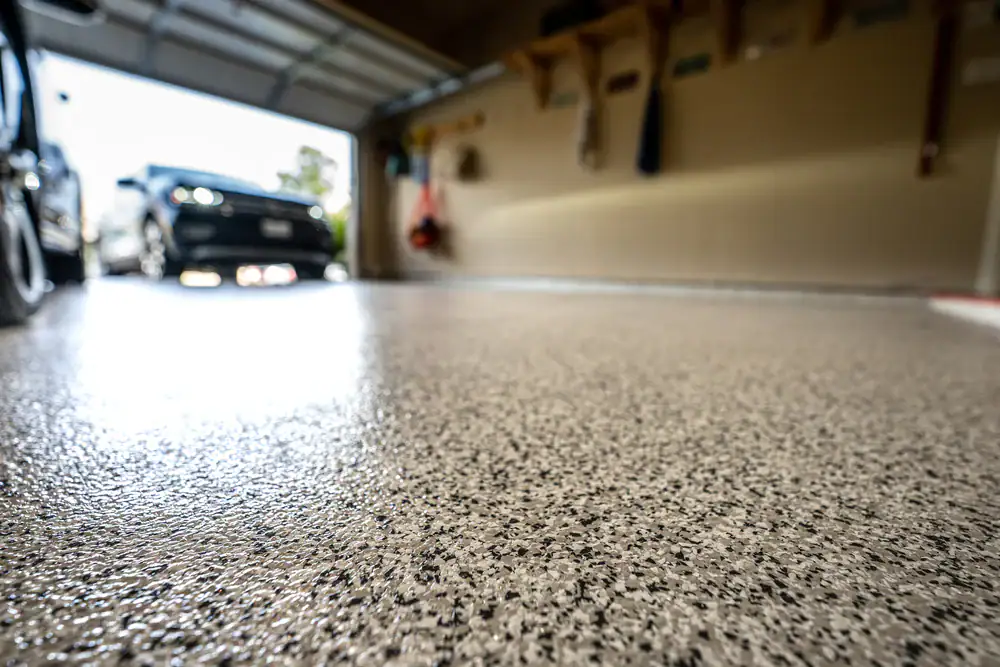
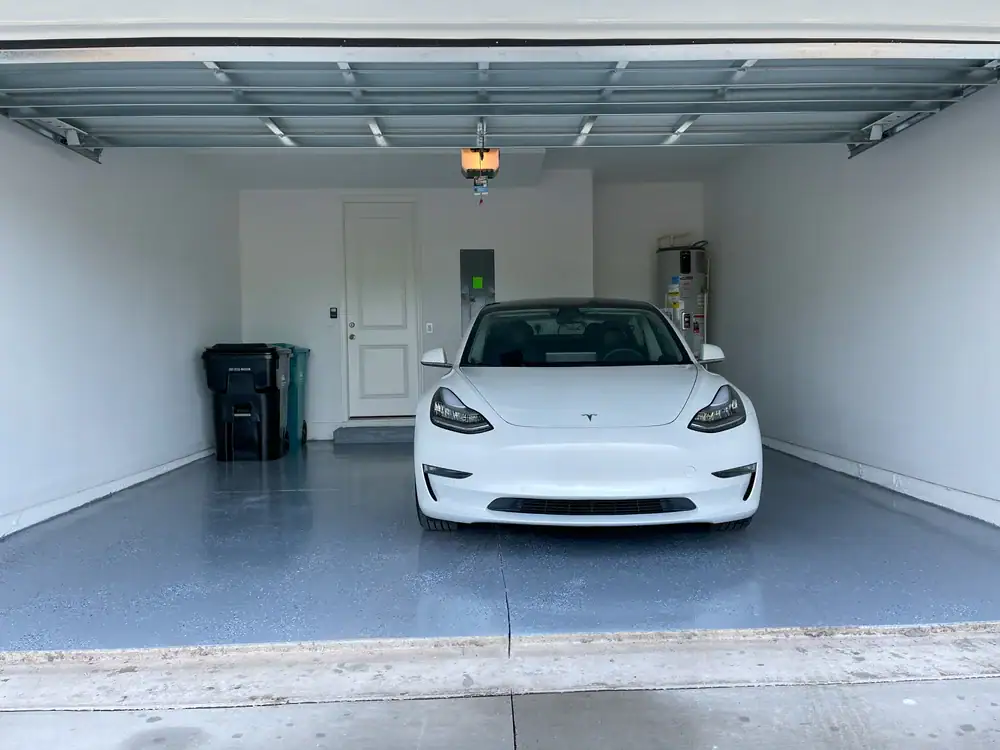
An epoxy garage floor creates an impermeable barrier. That means when your car drips brake fluid or you spill something, it wipes clean. No absorption. No permanent damage.
In Eden, where humidity regularly pushes past 80% and temperatures swing from blazing afternoons to cool nights, your concrete expands and contracts. Epoxy flexes with it. The floor stays intact while bare concrete would crack. You also get a surface that reflects light instead of absorbing heat, which makes your garage noticeably cooler and cuts down on that oven effect when you open the door.
Most installs finish in one to two days. You’re back to parking, working, or whatever you use the space for almost immediately. And because the coating is UV-stable, it won’t yellow or fade even with direct sun exposure through open garage doors.
Trusted Epoxy Flooring Contractors in Eden
We’ve been installing epoxy and polished concrete systems since 2020, working with clients who don’t accept shortcuts. That includes the Coast Guard, US Army facilities, and cities like Doral and Sunny Isles Beach.
We’re veteran-owned. We don’t use subcontractors. Every person on your job is a full-time employee who’s done this work in Florida’s specific conditions.
Eden sits in a part of South Florida where moisture, heat, and storm exposure aren’t occasional problems—they’re constants. We prep concrete using shot-blasting and diamond grinding because surface prep determines whether your floor lasts two years or twenty. We monitor moisture levels during installation and use UV-resistant topcoats because we know what fails here and why.
Garage Floor Coating Process in Eden
First, we assess your concrete. We’re checking for moisture vapor transmission, existing damage, and whether the slab needs repair before any coating goes down. If there are cracks or spalling, we fix them. Epoxy won’t bond properly to unstable concrete.
Next comes surface preparation. We use shot-blasting or diamond grinding to open the concrete’s pores and remove any existing sealers, oils, or contaminants. This step is non-negotiable. It’s the difference between a floor that lasts and one that peels off in sheets during the next humid summer.
Once the surface is prepped and cleaned, we apply a moisture-mitigating primer if needed, then the epoxy base coat. We can add decorative flakes or leave it solid depending on what you want. After that cures, we apply a UV-stable topcoat with optional anti-slip additives.
The whole process typically takes one to two days depending on your garage size and the specific system we’re installing. You’ll need to keep vehicles off the floor for about 24 to 48 hours while it fully cures, but after that, it’s ready for full use.

Ready to get started?
What’s Included in Eden Garage Epoxy Services
Every garage floor project includes full concrete prep—not a quick acid etch, but actual mechanical surface preparation. We’re talking shot-blasting or diamond grinding to create the profile epoxy needs to bond permanently.
You also get crack and spall repair where needed. We’re not coating over problems and hoping they don’t show up later. If your slab has issues, we address them first.
The materials we use come from manufacturers like Sherwin Williams, Fosroc, Laticrete, and Flowcrete—companies that supply commercial and industrial projects, not big-box store kits. These are moisture-tolerant, UV-stable systems designed for Florida’s environment.
In Eden and the surrounding areas, we see a lot of garages that flood during heavy storms or deal with constant condensation. Our epoxy systems include moisture mitigation when necessary, which prevents the coating from lifting due to vapor pressure from below. We also add anti-slip texture to the topcoat if you want it, which is useful when the floor gets wet from rain or washing your car.
You’re also getting transparent pricing and a one-on-one consultation before we start. No surprises. No upsells once we’re halfway through the job.
How long does epoxy flooring last in Florida’s humidity and heat?
A properly installed epoxy garage floor in Eden, FL should last 15 to 20 years in a residential setting, even with Florida’s humidity and temperature swings. The key word is “properly installed.”
Most failures happen because of poor surface prep or using the wrong product for the climate. When concrete isn’t mechanically prepped—just acid-etched or painted over—the coating doesn’t bond deeply enough. Add Florida’s moisture vapor transmission, which increases significantly in summer heat, and you get pressure building under the coating that eventually pushes it off.
We use moisture-tolerant epoxy systems and UV-stable topcoats specifically because of Eden’s conditions. The epoxy itself is chemical-resistant and handles temperature changes without cracking. The UV protection prevents yellowing and breakdown from sun exposure. If your garage floods occasionally or you get condensation on the floor during humid months, the impermeable barrier keeps water from soaking into the concrete and causing mold or that musty smell.
What’s the difference between epoxy and the coating kits sold at hardware stores?
Box store kits are typically water-based epoxy or epoxy paint, which is a much thinner coating than what we install. They’re designed for DIY application, which means they’re more forgiving during install but far less durable long-term.
The main differences are thickness, chemical resistance, and surface prep. Professional-grade epoxy goes down in multiple coats and builds up a much thicker, harder surface. It’s also 100% solids epoxy in most cases, meaning there’s no water or solvent that evaporates—what you put down is what stays. Box kits are often 50% solids or less.
Surface prep is the bigger issue. Most DIY instructions suggest acid etching or just cleaning the floor. That’s not enough in Florida. You need mechanical prep—shot-blasting or diamond grinding—to open the concrete’s pores and remove any existing sealers or contaminants. Without that, even the best epoxy won’t bond properly.
We also address moisture issues before coating. If your concrete has high moisture vapor transmission, which is common in Eden, a DIY kit will bubble and peel within months. We test for that and use primers or systems designed to handle it.
Will hot tires damage the epoxy coating in my garage?
Hot tire pickup is a real issue, but it’s preventable with the right system and prep. It happens when tires heat up from driving, then sit on a garage floor that wasn’t properly prepared or uses a lower-grade coating. The softened rubber can leave marks or even pull the coating up.
We prevent this by using high-performance epoxy or polyaspartic topcoats that are specifically rated for thermal resistance and tire traffic. These coatings cure harder and bond more aggressively than standard garage paints or thin epoxy kits.
The other factor is surface prep. If the concrete isn’t profiled correctly, the coating sits on top rather than bonding into the substrate. When a hot tire sits on that kind of surface, it can create enough localized pressure to break the bond. Shot-blasting or diamond grinding creates the mechanical profile that prevents this.
We’ve installed floors in garages where vehicles are parked daily right after highway driving, and the coatings hold up without marking or lifting. It’s about using the right materials and doing the prep work that most installers skip.
Can you install epoxy flooring if my garage floor sweats or gets damp?
Yes, but it requires moisture mitigation steps that most installers either don’t know about or skip to save time. Concrete sweating happens when warm, humid air contacts a cooler concrete slab, causing condensation. In Eden, this is common during summer months when your garage stays cooler than the outside air.
Before we coat any floor, we test for moisture vapor transmission using calcium chloride tests or a moisture meter. If the readings are too high, we apply a moisture-mitigating primer that allows vapor to pass through without creating pressure under the topcoat. This prevents the bubbling and peeling you see on floors that were coated without addressing moisture.
We also look at whether the dampness is coming from condensation or actual groundwater intrusion. If you have water coming up through the slab or pooling after rain, that’s a drainage issue that needs to be fixed before any coating goes down. Epoxy creates a waterproof barrier on top, but it won’t stop water from pushing up from below if there’s hydrostatic pressure.
Once the moisture issue is addressed and the right system is installed, your floor will actually help reduce that damp feeling because it seals the concrete and prevents it from releasing moisture into the air.
How much does garage epoxy flooring cost in Eden, FL?
For a standard two-car garage in Eden, you’re typically looking at $1,800 to $4,500 depending on the system, the condition of your concrete, and any decorative options you choose. That breaks down to roughly $3 to $8 per square foot for most residential projects.
The range exists because not all floors are the same. If your concrete has significant cracking, spalling, or moisture issues, there’s more prep work involved. If you want a solid color with a clear topcoat, that’s less expensive than a full broadcast flake system with multiple colors.
We don’t quote over the phone because we need to see the concrete first. Moisture levels, existing coatings, damage, and even how level the floor is all affect the final price. We provide transparent pricing after an in-person assessment, and that quote includes everything—prep, materials, labor, and cleanup.
One thing to consider: a properly installed epoxy floor can add $10,000 to $15,000 to your home’s resale value according to recent buyer surveys. It’s one of the higher-ROI home upgrades you can make, especially in Florida where buyers expect garages to handle the climate.
How soon can I park my car on the floor after installation?
You can walk on the floor within 24 hours, but you should wait 48 to 72 hours before parking a vehicle on it. Full cure takes about seven days, but the floor is hard enough for normal use after two to three days.
The timeline depends on temperature and humidity during installation. In Eden’s heat, epoxy can cure faster, but high humidity can slow it down. We monitor conditions throughout the install and give you a specific timeline based on the system we used and the weather that week.
If you need to use the garage sooner, we can install a polyaspartic topcoat instead of epoxy for the final layer. Polyaspartic cures much faster—often within a few hours—and has better UV resistance than epoxy. It costs slightly more, but it’s worth considering if you can’t afford to keep your car out of the garage for two days.
We also recommend waiting at least a week before placing heavy items like toolboxes or storage racks on the floor, and avoid dragging anything across it during the first few days. The surface is hard, but the bond is still strengthening during that initial cure period.
Other Services we provide in Eden
Leave a Reply