


Garage Epoxy Flooring in Golden Beach, FL
Floors That Actually Last in Florida’s Climate
Hear from Our Customers
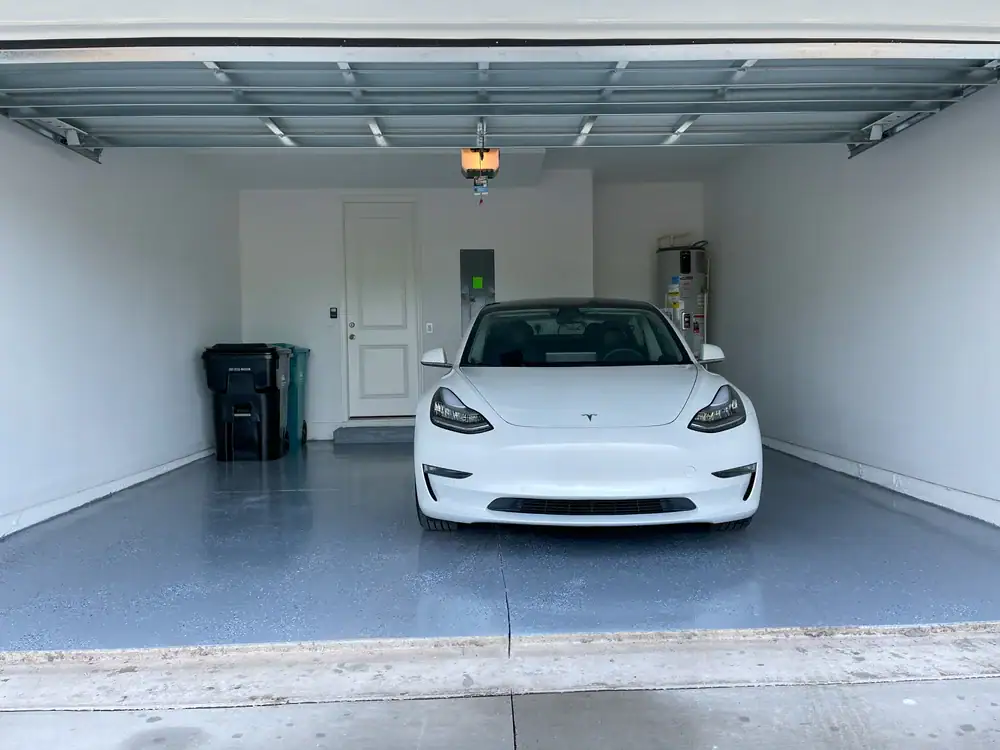
Epoxy Garage Floor Solutions for Golden Beach
No more oil stains that won’t come up. No more concrete that’s pitting and cracking after three years. No more wondering if your floor will hold up through another humid summer.
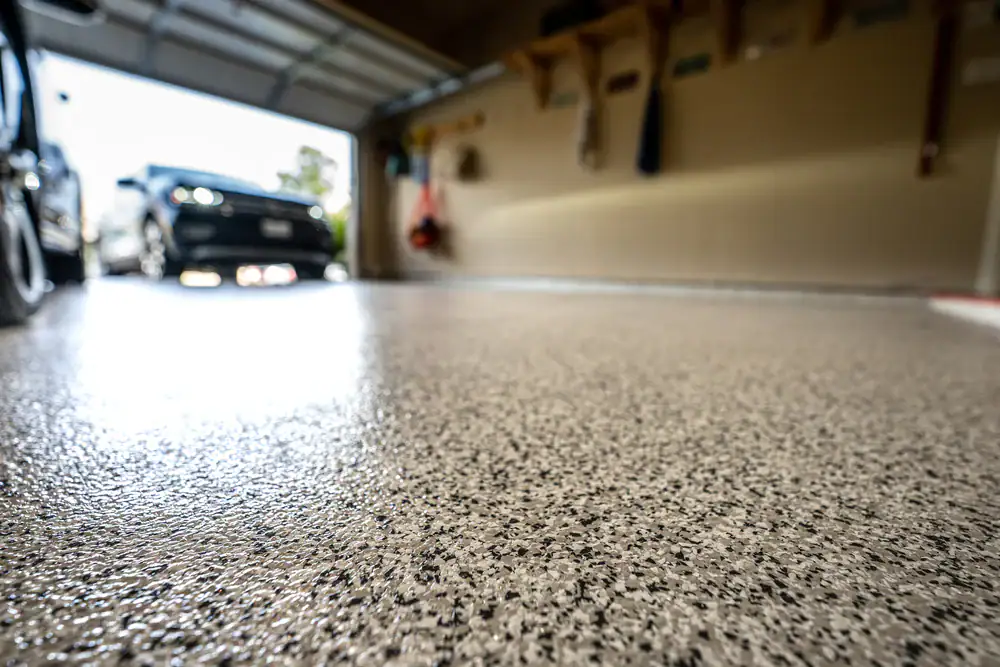
You get a seamless surface that resists chemicals, handles your golf cart without flinching, and actually makes your garage look like part of your home instead of an afterthought. The floor stays intact when moisture tries to push up from below, which is the main reason most garage floor coatings fail in South Florida within a year or two.
It’s not just about appearance. Your garage becomes easier to clean, safer to walk on when wet, and adds real value if you ever sell. Most homeowners see an estimated $10,000 to $15,000 increase in perceived home value with a professionally finished garage. That’s not marketing speak—that’s what buyers notice when they’re comparing properties in Golden Beach.
Trusted Epoxy Flooring Contractor in Golden Beach
We’ve been installing epoxy and polished concrete since 2020. We’ve worked with the US Military, Coast Guard, City of Doral, City of Sunny Isles, and multiple county projects across South Florida. Those clients don’t hire based on the cheapest bid—they hire based on who can deliver floors that perform under real-world conditions.
Golden Beach homeowners face the same challenges as commercial facilities: high humidity, moisture vapor emissions, UV exposure, and year-round heat. Your garage isn’t climate-controlled. It sees temperatures over 100°F regularly, and moisture seeps up through the concrete slab constantly. That’s why we use polyaspartic and commercial-grade epoxy systems designed specifically for Florida, not box-store kits that peel off in twelve months.
We work with Sherwin Williams and Fosroc products. We handle the entire process directly with you, not through a general contractor who adds another layer between you and the crew doing the work.
Our Garage Floor Coating Installation Process
First, we assess your concrete. We’re checking for moisture vapor emissions, existing damage, and whether your slab needs repair before we coat it. If there are cracks or pits, we resurface and prep the concrete properly. Skipping this step is why most epoxy garage floors fail early.
Next, we grind and profile the surface. This isn’t optional in Florida. The concrete needs the right texture for the coating to bond correctly, especially when you’re dealing with high moisture levels year-round. We’re creating a mechanical bond that holds up under pressure.
Then we apply the base coat and topcoat system. Depending on your needs, that might be a polyaspartic system for faster curing and better UV resistance, or a heavy-duty epoxy system for maximum durability. We can add decorative flakes if you want texture and color, or keep it clean and solid. The floor is usually ready for light traffic within 24 hours and full use within 48.
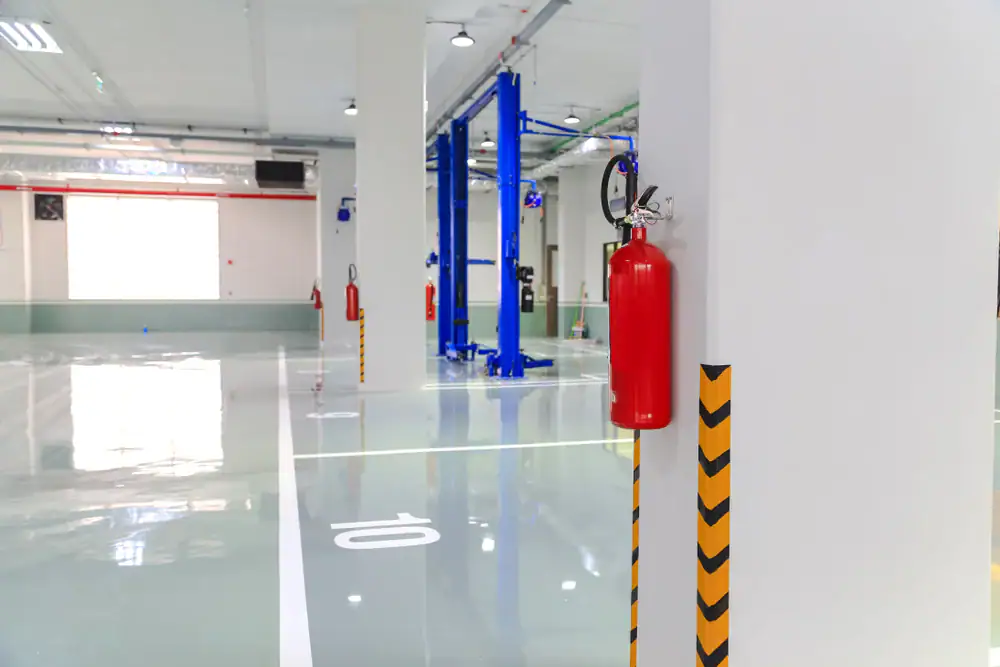
We also handle safety line striping if you’re using the space for parking or need clearly marked zones. Everything gets done in one project window, and we clean up completely when we’re finished.
Ready to get started?
What’s Included in Garage Epoxy Flooring
You’re getting a full surface preparation, not a coating slapped over dirty concrete. That means grinding, crack repair if needed, and proper profiling so the epoxy bonds correctly. This is the difference between a floor that lasts fifteen years and one that peels in eighteen months.
The coating itself is commercial-grade. We’re using moisture-resistant systems that handle South Florida’s vapor emissions, which are significantly higher than most of the country. Your garage floor is constantly fighting moisture pushing up from below. If the coating can’t handle that, it bubbles and fails. Ours can.
You also get a warranty that actually means something. If the floor doesn’t perform as intended, we handle it at no additional cost. We’re not a crew that disappears after the install. We’ve been working in Golden Beach and across South Florida long enough that our reputation depends on floors holding up years later, not just looking good on day one.
Most garage projects in Golden Beach are completed within one to two days depending on size and condition. If you need faster turnaround for an urgent situation, we can often accommodate 24 to 48-hour timelines. And if you’re military or a senior, ask about our discount—we’re setting up a program specifically for those groups.
How long does epoxy flooring actually last in Florida’s humidity?
If it’s installed correctly with the right system, you’re looking at 15 to 20 years or more. That’s not an exaggeration. The key is using coatings designed for high moisture vapor emissions, which Florida has in abundance.
Most failures happen because someone used a standard epoxy that wasn’t built for this climate, or they didn’t prep the concrete correctly. When moisture pushes up through the slab and the coating can’t breathe or flex, you get bubbling and peeling within a year. Polyaspartic coatings and moisture-mitigated epoxy systems are specifically engineered to handle this.
We’ve installed floors for government and military facilities across South Florida, and those projects demand long-term performance. Your garage faces the same environmental conditions. The difference between a floor that lasts two years and one that lasts twenty comes down to product selection and proper surface prep before the first coat goes down.
Why do box store epoxy kits fail so quickly?
They’re not designed for Florida’s moisture levels, and they don’t include the surface preparation that’s required for a lasting bond. You’re essentially painting over concrete and hoping it sticks.
The concrete in your garage isn’t smooth. It has a surface layer of laitance—weak material that needs to be ground off before any coating is applied. Box store kits tell you to acid etch or just clean the floor, but that’s not enough in high-humidity environments. Without mechanical grinding and profiling, the epoxy bonds to that weak surface layer instead of the solid concrete underneath.
Add in the fact that most DIY epoxies can’t handle moisture vapor transmission, and you’re set up for failure from day one. When moisture pushes up through the slab, the coating lifts. You’ll see it start to peel at the edges or bubble in spots within six to twelve months. A professional install costs more upfront, but you’re not redoing the floor every couple of years.
What’s the difference between epoxy and polyaspartic coatings?
Polyaspartic cures faster and handles UV exposure better, which matters if your garage door is open frequently or you have windows letting in direct sunlight. Epoxy is extremely durable but can yellow over time with UV exposure.
In South Florida, polyaspartic is often the better choice for residential garages. It’s more flexible, which helps when the concrete expands and contracts with temperature changes. It also cures quickly—usually within 24 hours for full use—so you’re not waiting days to park your car again.
Epoxy is still an excellent option, especially for heavy-duty applications or if UV exposure isn’t a concern. Both systems resist chemicals, stains, and moisture when installed correctly. The decision comes down to your specific garage conditions, how you use the space, and how quickly you need it back in service. We’ll walk through both options during the consultation so you know exactly what you’re getting and why.
Can you install epoxy over my existing garage floor coating?
Usually, no. If there’s an existing coating, we need to remove it completely before installing a new system. Coating over a failing floor just means the new layer will fail along with the old one.
The exception is if your current floor is in perfect condition with no peeling, bubbling, or delamination, and it’s a compatible product. But in most cases, especially in Florida where moisture causes so many coating failures, the existing layer needs to come off. We grind it down to bare concrete, assess the slab condition, make any necessary repairs, and then start fresh.
This adds time to the project, but it’s the only way to ensure the new floor actually lasts. If someone tells you they can just coat over your peeling epoxy without removing it first, they’re setting you up for another failure. You’ll be calling someone else in a year to redo it again. We’d rather do it right the first time.
How do I maintain an epoxy garage floor?
It’s easier than you think. Regular sweeping or blowing out debris, occasional mopping with a mild cleaner, and that’s about it. You’re not sealing it every year or scrubbing out stains that have soaked into bare concrete.
Epoxy creates a non-porous surface, so spills sit on top instead of absorbing into the concrete. Oil, antifreeze, even paint—they wipe up without leaving a permanent mark. If you drop something heavy and chip the coating, that can be spot-repaired, but it’s rare with a properly installed system.
Avoid using harsh acidic cleaners or metal scrapers that could scratch the surface. A soft-bristle broom and a standard mop are all you need for regular maintenance. The floor is designed to handle the wear and tear of daily use without constant attention. That’s one of the main reasons people choose epoxy garage flooring over leaving the concrete bare or using tiles that crack and shift over time.
How much does garage epoxy flooring cost in Golden Beach?
It depends on your garage size, the condition of your concrete, and which coating system makes sense for your situation. We don’t do ballpark quotes over the phone because too many variables affect the final price.
If your concrete needs significant repair, that adds cost. If you want decorative flakes or a custom color, that’s different pricing than a solid color system. If we need to remove an existing failed coating, that’s additional prep work. A standard two-car garage in good condition typically falls within a predictable range, but we’d rather give you an accurate number after seeing the space.
We do transparent pricing with a 1-on-1 consultation. You’ll know exactly what you’re paying for and why, with no surprises when the project is done. We’re also working on a discount program for military members and seniors, so ask about that when you reach out. The goal is a floor that lasts 15-plus years, which makes the cost per year pretty reasonable compared to replacing cheaper solutions every few years.
Other Services we provide in Golden Beach
Leave a Reply