


Garage Epoxy Flooring in Key Biscayne, FL
A Garage Floor That Actually Lasts in Florida
Hear from Our Customers
Professional Epoxy Floor Coating Key Biscayne
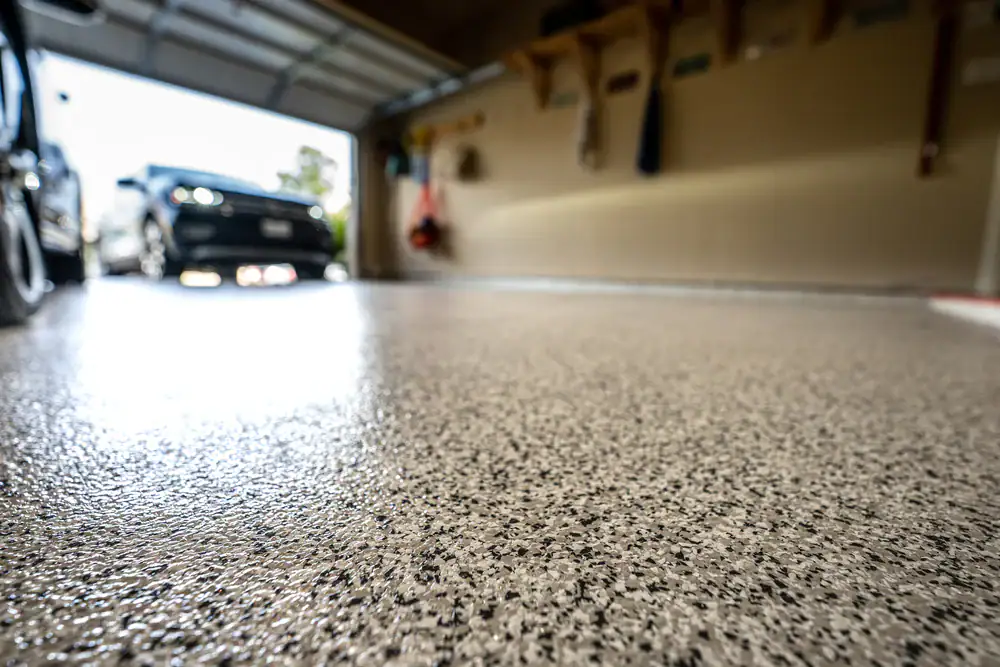
Your concrete stops absorbing moisture, oil, and salt air. That means no more staining, no mold creeping up from the slab, and no constant resealing every few years.
The floor becomes easier to clean than what you’re dealing with now. A quick sweep and occasional mop replaces scrubbing stains that never fully come out. You’ll spend less time maintaining it and more time actually using your garage.
You also get a floor that can handle Florida heat without peeling up when you park a hot car on it. Cheaper coatings fail here all the time—the tires lift the finish right off the concrete. We use polyaspartic and commercial-grade epoxy systems that stay bonded even when your tires are 150+ degrees after a drive. That’s the difference between a floor that lasts two years and one that lasts fifteen.
If you’re planning to sell, a finished garage floor adds around $10,000 to $15,000 in perceived home value. It’s one of the few upgrades that buyers notice immediately and actually factor into their offer.
Epoxy Flooring Contractors Key Biscayne Trusts
We’ve been installing epoxy and polished concrete floors since 2020, working with clients who can’t afford to redo the job—Coast Guard facilities, US Army bases, City of Doral municipal buildings, and high schools across Miami-Dade County. When a floor needs to hold up under heavy equipment, constant foot traffic, and Florida’s humidity, we’re the ones they call.
We bring that same level of prep and installation quality to residential garages in Key Biscayne. Most of our homeowner clients come to us after a DIY epoxy failed or a cheaper contractor’s work started peeling within a year. The difference isn’t the product—it’s the surface preparation and moisture testing that most installers skip.
We’re based in South Florida, so we understand what coastal humidity does to concrete. We test for moisture before we coat anything, and we won’t start a job if conditions aren’t right. That’s why our floors stay down and our clients don’t call us back with problems.
Our Garage Floor Coating Process Explained
We start with a consultation at your property. We’ll look at your existing concrete, check for cracks or moisture issues, and talk through what you’re using the garage for—parking, storage, workshop, gym. That determines which coating system makes sense for your situation.
Next comes surface prep, which is the most important part of the entire job. We grind down the concrete to open up the pores, remove any old sealers or contaminants, and make sure the surface is completely clean and profiled. If there’s moisture in the slab or the humidity is too high, we’ll tell you and reschedule. Applying epoxy over a wet slab is how most failures happen, and we won’t do it.
Once the surface is prepped and conditions are right, we apply a moisture-blocking primer, then the base coat of epoxy or polyaspartic. If you want color flakes or a metallic finish, that goes in while the base is still wet. We then apply a clear topcoat that’s UV-stable and chemical-resistant. The entire installation typically takes one to two days depending on the size of your garage.
You’ll need to keep vehicles off the floor for 24 to 48 hours while it cures. After that, it’s ready for full use. We’ll walk you through basic maintenance—mostly just sweeping and occasional mopping—and give you our contact info in case anything comes up.
Ready to get started?
What’s Included in Garage Epoxy Flooring
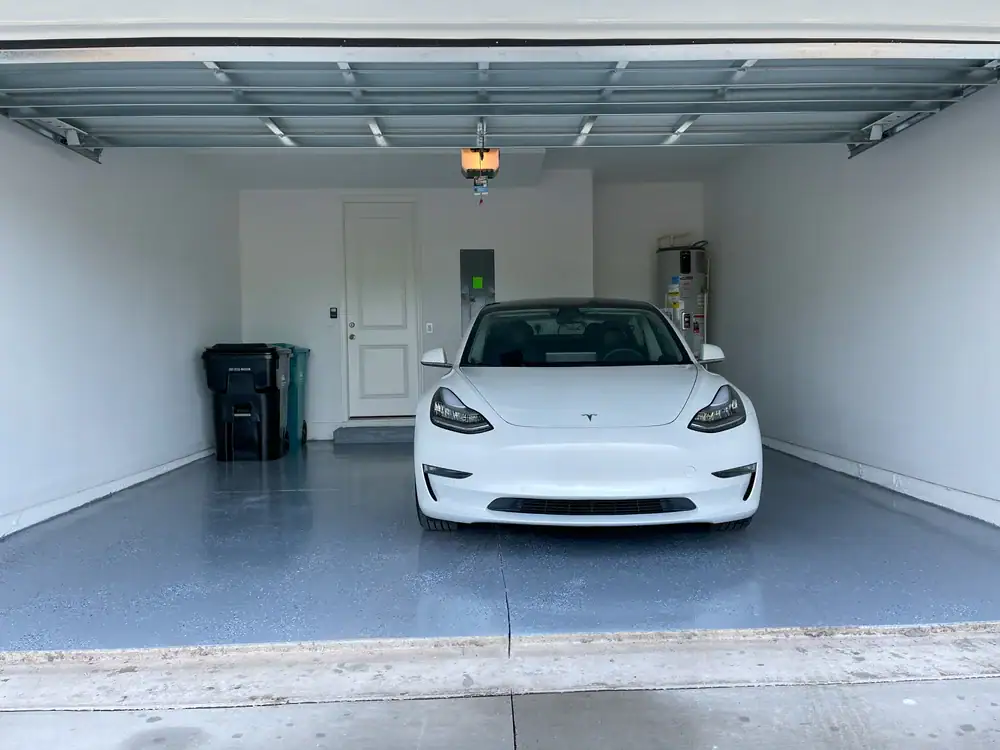
You’re getting a complete system, not just a coat of epoxy rolled over your concrete. That includes mechanical surface grinding, crack repair if needed, moisture testing, primer application, base coat, optional decorative flakes or metallic pigments, and a UV-stable topcoat that won’t yellow in Florida sun.
In Key Biscayne, moisture protection is critical. Your garage is feet from salt water, and humidity here averages 70% year-round. We use moisture-mitigating primers and coatings that create a nonporous barrier. That keeps water vapor from pushing up through the slab and causing the coating to delaminate—a common problem with DIY kits and contractors who skip this step.
We also address hot tire pickup, which is a real issue if you’re parking cars in your garage. When your tires heat up from driving, they can actually pull cheaper epoxy coatings right off the concrete. We use polyaspartic topcoats and high-performance epoxy systems rated for thermal cycling. Your floor won’t peel when you park after a drive to Miami or a trip across the Rickenbacker Causeway.
The finished floor is chemical-resistant to gasoline, oil, brake fluid, and household cleaners. It’s also slip-resistant if you choose a textured topcoat. And because it’s a seamless surface with no grout lines, cleaning takes a fraction of the time compared to tile or leaving the concrete bare.
How much does epoxy garage flooring cost in Key Biscayne?
For a standard two-car garage (around 400 square feet), expect to pay between $1,800 and $4,000 depending on the coating system and finish you choose. A basic solid-color epoxy with flakes is on the lower end. Metallic epoxy or polyaspartic coatings cost more but offer better UV resistance and faster curing times.
The price includes surface prep, which is the most labor-intensive part of the job. We’re grinding down your concrete, filling cracks, and making sure the surface is ready to bond. Cheaper quotes usually mean they’re skipping steps—and that’s why those floors fail within a year or two.
We give transparent pricing during the consultation. No surprises, no upsells once we’re halfway through the job. You’ll know exactly what you’re paying for before we start.
How long does an epoxy garage floor last in Florida’s climate?
A professionally installed epoxy floor lasts 10 to 20 years in Florida if it’s maintained properly. The key factors are surface prep, moisture mitigation, and using a coating system designed for high humidity and heat.
Most failures happen because moisture wasn’t tested before installation or the concrete wasn’t ground properly. If water vapor is trapped under the coating, it will eventually push the epoxy off the slab. We test for moisture and won’t start the job if conditions aren’t right—even if that means rescheduling.
Florida heat and UV exposure can also degrade cheaper coatings. We use UV-stable topcoats that won’t yellow or chalk over time. And because Key Biscayne is right on the water, salt air is another factor. Our coatings are chemical-resistant and won’t break down from salt exposure the way some DIY products do.
Can I install epoxy flooring myself or should I hire a contractor?
You can buy a DIY epoxy kit, but the failure rate is high—especially in Florida. The two biggest issues are surface prep and moisture. If you don’t grind the concrete properly, the epoxy won’t bond. And if you apply it when humidity is too high or there’s moisture in the slab, it will delaminate.
DIY kits also don’t handle hot tire pickup well. Most homeowner-grade epoxies aren’t rated for the thermal cycling that happens when you park a car with hot tires. The coating softens and peels up with the rubber. We see this constantly with DIY jobs that looked great for six months and then started failing.
Professional installation costs more upfront, but you’re paying for proper surface prep, moisture testing, and a coating system that’s actually designed for Florida’s climate. We also carry insurance and guarantee our work. If something goes wrong with a DIY job, you’re pulling up the failed coating and starting over—which costs more than hiring a pro in the first place.
What’s the difference between epoxy and polyaspartic garage floor coatings?
Epoxy is a two-part resin system that’s extremely durable and chemical-resistant. It takes longer to cure—usually 24 to 48 hours before you can walk on it, and up to a week for full vehicle traffic. Epoxy is a great choice for garages, but it can yellow over time if it’s exposed to direct sunlight.
Polyaspartic coatings cure much faster—often within a few hours—and they’re UV-stable, so they won’t yellow or fade. They’re also more flexible, which helps them handle Florida’s temperature swings without cracking. The downside is they cost more and require more skill to install because the working time is so short.
For most Key Biscayne garages, we recommend a hybrid system: an epoxy base coat for durability and chemical resistance, topped with a polyaspartic clear coat for UV protection and fast curing. You get the best of both systems without compromising on performance or longevity.
How do I maintain an epoxy garage floor?
Maintenance is simple. Sweep or blow out dust and debris regularly—sand and dirt can scratch the surface over time if they’re ground in by tires. Mop with a mild cleaner and water when the floor gets dirty. Avoid harsh chemicals like bleach or ammonia, which can dull the finish.
If you spill oil, gasoline, or other automotive fluids, wipe them up when you notice them. The floor is chemical-resistant, so spills won’t stain or damage the coating, but letting them sit for weeks can eventually degrade the topcoat.
You don’t need to reseal or recoat an epoxy floor for 10+ years if it was installed correctly. If you start seeing wear in high-traffic areas, we can apply a fresh topcoat without redoing the entire floor. Most of our clients go years without needing any touch-ups.
Will the epoxy coating hold up if I use my garage as a workshop?
Yes. Epoxy flooring is one of the most durable surfaces you can install in a workshop. It handles dropped tools, rolling toolboxes, welding sparks, and chemical spills without chipping or staining. The coating is impact-resistant and much tougher than bare concrete, which cracks and pits over time.
If you’re working with heavy equipment—lathes, drill presses, compressors—the floor can support the weight without cracking as long as the underlying concrete is in good shape. We’ll check for structural issues during the consultation and recommend repairs if needed before we coat.
The seamless surface also makes cleanup easier. Metal shavings, sawdust, and spills don’t get trapped in cracks or pores the way they do with untreated concrete. A quick sweep or shop vac keeps the floor clean, and you’re not dealing with concrete dust every time you move something.
Other Services we provide in Key Biscayne
Leave a Reply