


Garage Epoxy Flooring in Parkland, FL
Floors That Handle Florida Heat Without Cracking
Hear from Our Customers
Epoxy Garage Floor Coating Parkland
Most garage floors in Parkland crack, stain, and deteriorate within a few years. The concrete absorbs oil, the surface stays rough, and every spill becomes permanent. You’re stuck sweeping around the mess because nothing actually cleans it.
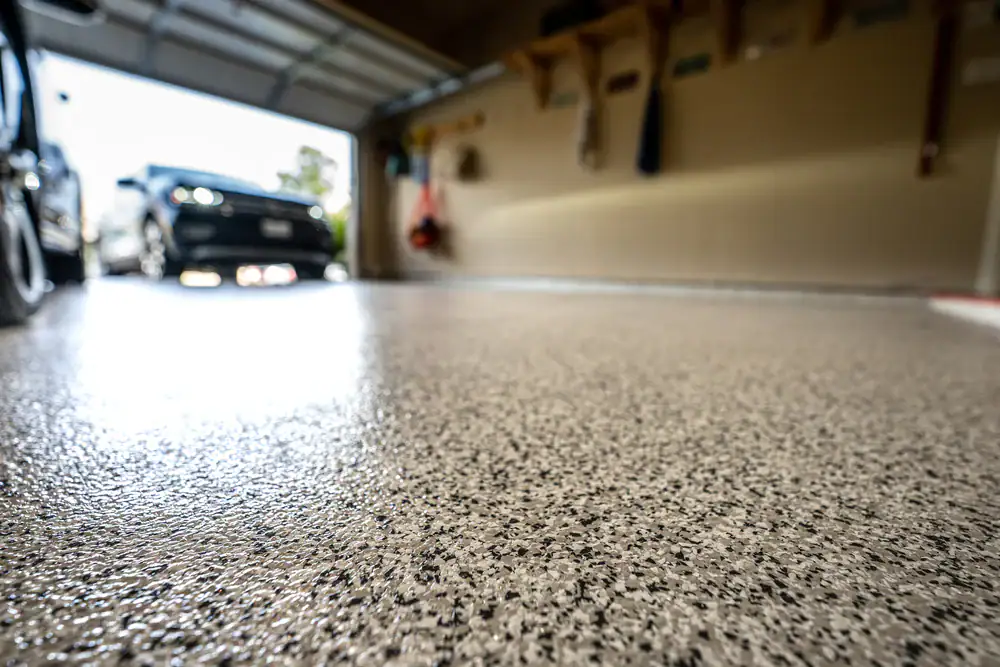
A professionally installed epoxy garage floor changes that. The coating seals the concrete completely, so spills wipe up instead of soaking in. Hot tires don’t leave marks. Humidity doesn’t cause peeling. The surface stays smooth, cleanable, and intact through Florida summers.
This isn’t about making your garage look nice for a weekend. It’s about having a floor that performs the way you need it to—resisting chemicals, handling weight, and staying low-maintenance for 15+ years. That’s what happens when the installation is done right with materials designed for this climate.
Epoxy Flooring Contractors Parkland FL
We specialize in epoxy flooring and polished concrete across South Florida. We work directly with homeowners and commercial clients in Parkland, handling everything from residential garages to municipal facilities. Our team has completed projects for the U.S. Military, Coast Guard, City of Doral, and Broward County schools.
We use Sherwin Williams and Fosroc products because they hold up in Florida’s climate. Our installations include proper surface prep—diamond grinding, crack repair, moisture testing—so the coating bonds permanently instead of peeling in two years.
You’re not getting a sales pitch or a runaround. We walk you through what your floor needs, what it’ll cost, and how long it takes. Most residential garage floors are done in 24 to 48 hours.
Garage Floor Coating Installation Process
First, we prep the concrete. That means diamond grinding the surface to remove any existing coatings, contaminants, or weak spots. This step creates the mechanical bond that keeps epoxy from peeling. If there are cracks or structural issues, we repair them before moving forward.
Next, we apply the epoxy system in layers. The base coat goes down first, followed by decorative flakes or a solid color depending on what you choose. Then we seal everything with a UV-stable topcoat that resists yellowing and chemical damage. Each layer needs time to cure properly, which is why we control temperature and humidity during installation.
Once it’s cured, your garage is ready to use. The floor will handle vehicle traffic, spills, and daily wear without breaking down. You’ll clean it with a mop or hose, and it’ll look the same in ten years as it does the day we finish.
Ready to get started?
Residential Epoxy Flooring Parkland FL
Every installation starts with a consultation where we assess your concrete and discuss what you’re looking for. We measure the space, check for moisture issues, and explain which epoxy system makes sense for your garage. You’ll get transparent pricing upfront—no surprises later.
Parkland homeowners deal with heat, humidity, and afternoon storms that put constant stress on unprotected concrete. That’s why we use UV inhibitors and flexible resins in our coatings. These materials expand and contract with temperature changes without cracking, which is critical in South Florida.
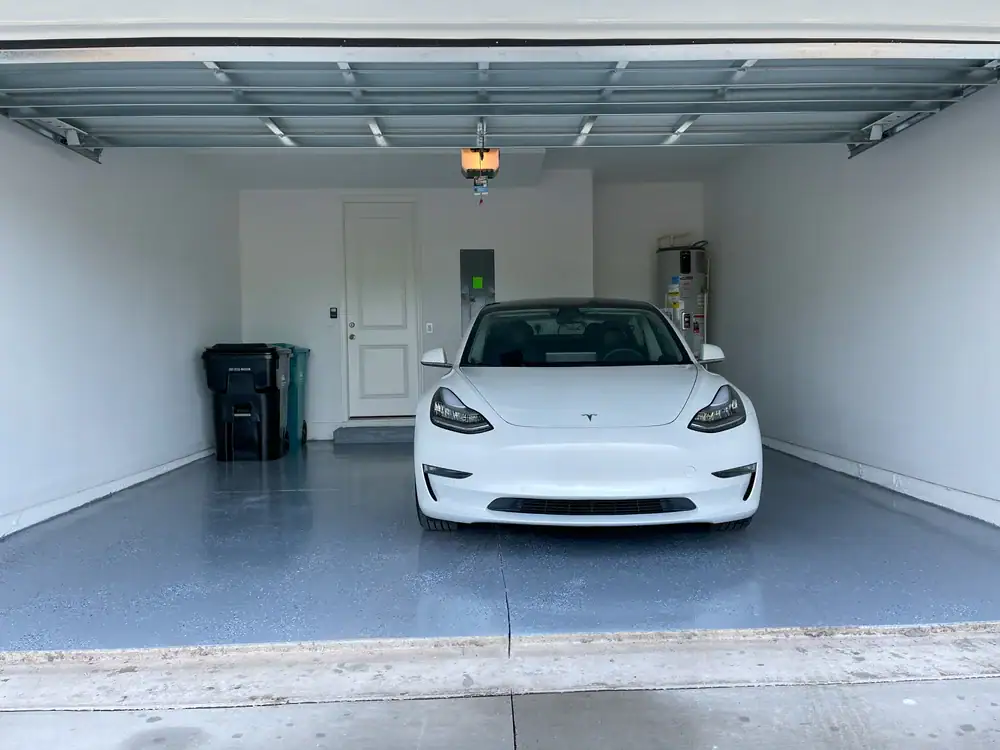
You’ll also choose your finish—metallic effects, decorative chip systems, or solid colors. Flakes add grip and hide imperfections. Metallics create depth and movement. Both options resist hot tire pickup, which is a common problem with cheaper coatings or DIY kits that weren’t designed for Florida conditions.
We handle all the prep, application, and cleanup. You’re left with a garage floor that’s chemical-resistant, easy to maintain, and built to last 15 to 20 years with minimal upkeep.
How much does epoxy garage flooring cost in Parkland, FL?
Cost depends on the size of your garage, the condition of your concrete, and which coating system you choose. A standard two-car garage typically ranges from $1,500 to $3,500 for a professional installation. That includes surface prep, crack repair, base coat, decorative flakes or color, and a UV-stable topcoat.
If your concrete has significant damage or moisture issues, the prep work takes longer and costs more. But skipping that step leads to peeling and failure, which means you’ll pay twice—once for the bad job and again to fix it.
DIY kits run $200 to $500, but they don’t include the equipment or expertise needed for proper surface prep. Most homeowners who try the DIY route end up with bubbling, peeling, or uneven coverage within a year. Professional installations last 15+ years because we use commercial-grade materials and handle the prep correctly.
How long does it take to install an epoxy garage floor?
Most residential garage floors take one to two days from start to finish. Day one is surface prep—grinding, cleaning, and repairing the concrete. Day two is applying the epoxy layers and topcoat. After that, the floor needs 24 to 48 hours to cure before you can park on it.
If you’re using a faster-curing polyaspartic system, the timeline shrinks. Some polyaspartic coatings cure in a few hours, so you can have your garage back the same day. But epoxy systems are more common for residential garages because they’re cost-effective and extremely durable.
Weather affects the schedule. High humidity or rain can delay curing, so we monitor conditions closely during installation. In Parkland’s climate, we sometimes adjust our process to account for afternoon storms or temperature swings. The goal is a proper cure, not a rushed job.
Will epoxy flooring hold up in Florida’s heat and humidity?
Yes, if it’s installed correctly with the right materials. Florida’s heat causes concrete to expand, and humidity creates moisture pressure from below. Cheap epoxy or improper prep leads to cracking, peeling, and delamination within a couple of years.
We use UV-stable topcoats and flexible resins designed for high-temperature environments. These coatings handle thermal expansion without breaking the bond to the concrete. We also test for moisture before installation—if the slab is releasing too much vapor, we address it with a moisture barrier or different coating system.
Hot tire pickup is another issue in Florida. When tires heat up on the road and then park on a weak coating, they can pull the finish right off the floor. Professional-grade epoxy resists this because it’s chemically cross-linked and harder than consumer products. That’s the difference between a floor that lasts two years and one that lasts twenty.
Can you install epoxy over my existing garage floor coating?
Sometimes, but usually we remove the old coating first. If the existing finish is peeling, flaking, or poorly bonded, anything we put on top will fail. Epoxy needs direct contact with clean, prepared concrete to form a permanent bond.
We test the old coating by trying to scrape or lift it. If it comes up easily, it has to go. If it’s still solidly attached and in good shape, we can rough it up with diamond grinding and apply the new system over it. But that’s rare—most existing coatings in Florida garages are already compromised by heat, moisture, or poor installation.
Removing old coatings adds time and cost to the project, but it’s the only way to guarantee the new floor won’t peel. We use grinders to strip everything down to bare concrete, then proceed with the standard prep and installation process. You end up with a floor that’s built to last instead of a temporary patch.
What’s the difference between epoxy and polyaspartic garage floor coatings?
Epoxy is the most common choice for residential garages. It’s durable, chemical-resistant, and cost-effective. The downside is cure time—it takes 24 to 48 hours before you can use the floor, and installation requires controlled conditions to avoid humidity issues.
Polyaspartic coatings cure faster, often in a few hours. They’re also more UV-resistant, so they don’t yellow over time. But they cost more—typically 20% to 30% higher than epoxy. Polyaspartic is popular for commercial spaces or homeowners who need their garage back immediately.
Both systems perform well in Florida if installed correctly. Epoxy gives you excellent durability at a lower price point. Polyaspartic gives you speed and slightly better UV resistance. For most Parkland homeowners, epoxy is the right call unless you’re on a tight timeline or want the absolute fastest cure available.
How do I maintain my epoxy garage floor after installation?
Maintenance is simple. Sweep or blow off dirt and debris regularly so it doesn’t get ground into the surface. For deeper cleaning, mop with water and a mild detergent—nothing harsh or acidic. The epoxy is chemical-resistant, but you don’t need aggressive cleaners to keep it looking good.
Spills wipe up easily because the coating is non-porous. Oil, gasoline, brake fluid—they all sit on the surface instead of soaking in. Just wipe them up with a rag or paper towel. If something sits for a while, it still cleans off without staining the floor.
Avoid dragging sharp metal objects across the surface. Epoxy is tough, but it’s not indestructible. If you’re moving heavy equipment or toolboxes, lift instead of dragging. Other than that, the floor takes care of itself. No sealing, no waxing, no special treatments. It’s built to handle daily use without constant upkeep.
Other Services we provide in Parkland
Leave a Reply