


Garage Epoxy Flooring in The Crossings, FL
Garage Floors Built for Florida’s Humidity and Heat
Hear from Our Customers
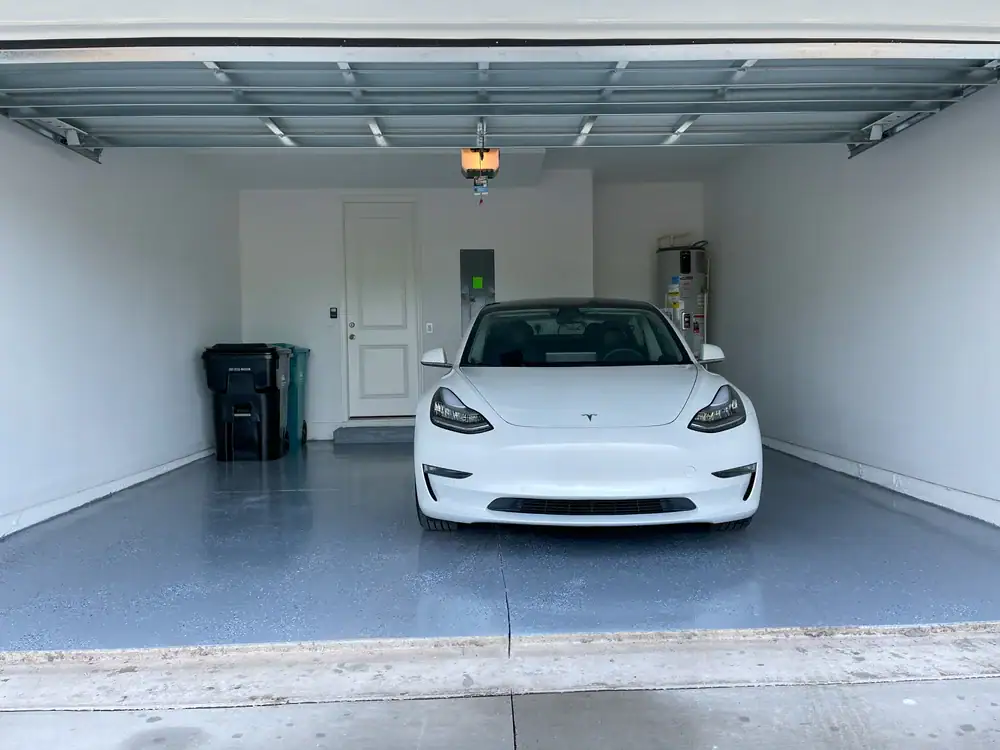
Epoxy Garage Floor Coating That Lasts
Your garage probably looks like every other concrete slab in The Crossings—stained from oil drips, cracked from settlement, maybe some tire marks you’ve given up trying to scrub out. It’s functional, but it’s not doing anything for your home’s value or your own satisfaction when you pull in each day.
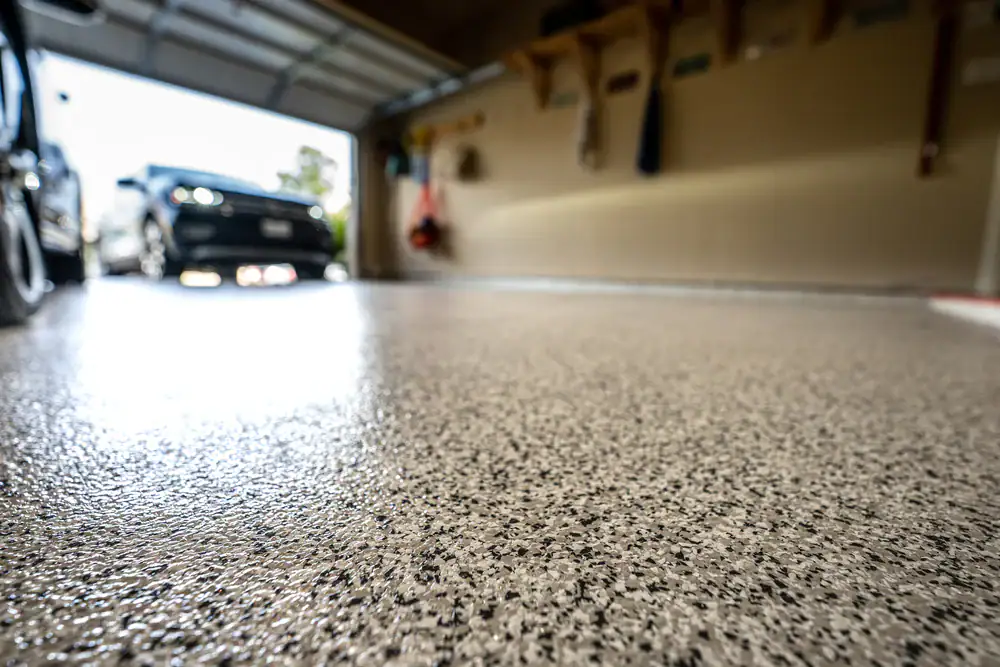
A proper epoxy garage floor changes that. You get a surface that resists chemicals, wipes clean in seconds, and holds up under Florida’s heat without the hot tire pickup problem that ruins most DIY jobs. The floor stays glossy, protected, and frankly, impressive.
Homeowners in Miami-Dade are paying premiums for finished garages—67% of buyers under 40 specifically look for them. That’s not just aesthetics. It’s about durability, functionality, and knowing the space can handle whatever you throw at it. Whether you’re parking daily, running a workshop, or converting part of the garage into a gym, the floor needs to keep up. Epoxy does that. Concrete alone doesn’t.
Epoxy Flooring Contractors in The Crossings
We’ve been installing epoxy flooring across South Florida since 2020. We’ve worked with the Coast Guard, US Army, City of Doral, and City of Sunny Isles—projects where the floor can’t fail and the timeline matters. That same approach applies to your garage in The Crossings.
We’re veteran-owned, which means we show up on time, communicate clearly, and don’t disappear after the install. We use Sherwin Williams and Fosroc products exclusively—no budget alternatives, no shortcuts. You get the same materials we’d spec for a municipal facility, applied by technicians who adjust resin ratios based on real-time humidity readings.
The Crossings sits in one of the most humid parts of Miami-Dade County. That means moisture management isn’t optional—it’s the difference between a floor that lasts 15 years and one that bubbles after the first rainy season. We’ve done enough installs here to know exactly how to prep your slab and which primers work when humidity’s sitting at 76%.
Our Garage Floor Coating Process
We start with a consultation at your property. No high-pressure sales, no vague estimates—just a walkthrough where we assess your concrete’s condition, check for moisture issues, and talk through what you actually need. You’ll get transparent pricing on the spot.
Once we’re scheduled, the real work begins with surface prep. This is where most failures happen, so we don’t rush it. We grind the concrete to open the pores, remove any existing coatings or contaminants, and repair cracks or spalling. If there’s a moisture issue, we address it with the right primer before any epoxy goes down. Florida’s humidity doesn’t care about your timeline—it’ll ruin a floor if the prep isn’t right.
After prep, we apply a moisture-tolerant primer, then the epoxy system itself. Depending on what you’ve chosen—solid color, flake, metallic—the application changes slightly, but the attention to detail doesn’t. We adjust mix ratios for temperature and humidity, work in sections to avoid lap marks, and make sure the coating bonds properly.
Most installs finish in one to two days. You can walk on it within hours, park on it within 24 to 48 hours depending on the system. We follow up after the cure to make sure everything’s holding up the way it should.
Ready to get started?
Garage Floor Epoxy Options in The Crossings
Every garage floor coating we install starts with proper surface preparation—grinding, crack repair, and cleaning. That’s non-negotiable. From there, you’re choosing between solid color epoxy, decorative flake systems, or metallic finishes. All three resist chemicals, clean easily, and hold up under Florida’s conditions. The difference is mostly aesthetic.
Solid color epoxy is straightforward and durable. It’s what we install in most commercial and municipal projects because it works. Flake systems add texture and hide imperfections better—useful if your slab has seen some wear. Metallic epoxy is the high-end option, popular in The Crossings for homeowners who want something that stands out. It’s more expensive, but the finish is unique.
We’re also seeing more requests for hybrid systems that combine epoxy with polyaspartic topcoats. Polyaspartic cures faster and adds UV resistance, which matters if your garage gets direct sunlight. It’s overkill for some applications, but in South Florida, it extends the life of the floor and prevents yellowing.
Pricing in 2025 runs $3 to $6 per square foot for solid color, $5 to $8 for flake, and $8 to $15 for metallic. That includes prep, materials, labor, and cleanup. If your concrete needs significant repair or moisture mitigation, that’s extra—but we’ll tell you that upfront, not after we’ve started.
How long does epoxy flooring last in Florida’s humidity and heat?
Professional epoxy installations last 15 to 20 years in Florida if the prep work is done right and the system is designed for high humidity. That’s the key difference between a pro install and a DIY job. Most DIY failures happen within two years because the concrete wasn’t prepped correctly or the wrong primer was used.
Florida’s humidity sits between 72% and 76% year-round in The Crossings. That moisture tries to push up through your concrete slab, and if the epoxy isn’t applied over a moisture-tolerant primer, it’ll eventually delaminate. We test for moisture before every install and adjust our approach accordingly.
Heat is the other factor. When your garage hits 95+ degrees in summer, hot tires can pull up coatings that weren’t cured properly or weren’t formulated for high temps. We use commercial-grade epoxy systems from Sherwin Williams and Fosroc—same products we’d use on a Coast Guard facility. They’re engineered to handle Florida’s conditions without softening or lifting.
What’s the difference between epoxy and concrete paint for garage floors?
Concrete paint sits on top of the surface. Epoxy bonds into it. That’s the fundamental difference, and it’s why paint fails so quickly in garages.
Garage floor paint might last a year if you’re lucky—maybe two if you don’t park on it much. It chips under tire traffic, peels when exposed to oil or chemicals, and fades under UV exposure. It’s a cosmetic fix, not a protective one.
Epoxy is a two-part resin system that chemically bonds to the concrete once the surface is properly ground and prepped. It creates a thick, durable layer that resists impacts, chemicals, abrasions, and moisture. A good epoxy floor coating can handle everything a garage throws at it—oil spills, dropped tools, hot tires, salt from the road.
If you’re comparing costs, paint is cheaper upfront. But you’ll repaint every year or two, and the floor still won’t be protected. Epoxy costs more initially, but it lasts 15+ years and actually improves the functionality of the space. It’s not even close when you factor in longevity and performance.
Can you install epoxy over my existing garage floor without replacing the concrete?
Yes, as long as the concrete is structurally sound. We don’t need to replace your slab—we just need to prep it correctly so the epoxy bonds properly.
During the consultation, we’ll check for major cracking, spalling, or moisture issues. Small cracks get routed out and filled with epoxy filler. Surface damage gets ground down. If there’s an existing coating—old paint, sealer, or a failed DIY epoxy—we remove it completely. Epoxy won’t bond over contaminated or smooth surfaces, so grinding is essential.
Moisture is the bigger concern in The Crossings. If your slab is releasing too much moisture, we’ll apply a moisture-mitigating primer before the epoxy goes down. Skipping that step is why most garage floors fail in Florida. The moisture pushes up through the coating, causes bubbling, and eventually the whole thing delaminates.
If your concrete is severely damaged—deep pitting, major structural cracks, or sections that are crumbling—we’ll tell you. In those cases, resurfacing or repair work comes first. But most garage slabs in Miami-Dade are in good enough shape to coat once they’re prepped correctly.
How much does garage epoxy flooring cost in The Crossings?
Expect to pay between $3 and $15 per square foot depending on the system you choose and the condition of your concrete. That’s for a professional installation with proper prep, premium materials, and a finish that’ll last.
Solid color epoxy runs $3 to $6 per square foot. It’s durable, chemical-resistant, and straightforward. Most of our commercial and government projects use solid color because it works and it lasts. Flake epoxy systems cost $5 to $8 per square foot. The flakes add texture, hide imperfections, and give you more design flexibility. Metallic epoxy is the high-end option at $8 to $15 per square foot—it’s popular in The Crossings for homeowners who want a custom, high-gloss finish.
If your slab needs significant crack repair, moisture mitigation, or removal of old coatings, that’s additional. We’ll assess that during the consultation and give you a clear number before we start. No surprises.
For a standard two-car garage (around 400 square feet), you’re looking at $1,200 to $6,000 depending on the system. That includes surface prep, materials, labor, and cleanup. Compare that to repainting every year or dealing with a stained, cracked slab, and the math makes sense.
How long does the installation take and when can I use my garage again?
Most garage epoxy flooring installs take one to two days from start to finish. You can walk on the floor within a few hours after we’re done, and you can park on it within 24 to 48 hours depending on the system and humidity levels.
Day one is all prep—grinding the concrete, repairing cracks, cleaning, and applying primer if needed. That’s the longest part of the process, but it’s also the most important. If the prep isn’t right, the floor won’t last. Day two is application. We mix and apply the epoxy system in sections, add flakes or metallic effects if that’s part of your design, and apply the topcoat.
Cure time depends on temperature and humidity. In Florida’s heat, epoxy cures faster than it would up north, but high humidity can slow things down slightly. We adjust our formulations and application timing based on real-time conditions in your garage. That’s why we don’t give one-size-fits-all cure times—it depends on what the environment is doing that day.
If you need faster turnaround, we can use polyaspartic topcoats that cure in hours instead of a full day. That’s common for commercial projects with tight timelines, and it works just as well for residential installs. You’ll pay slightly more, but you’ll be back in your garage the same day.
Will epoxy flooring hold up to oil spills and chemicals in my garage?
Yes. That’s one of the main reasons people choose epoxy over paint or bare concrete. Epoxy is chemically resistant, which means oil, gasoline, brake fluid, antifreeze, and most household chemicals won’t stain or damage it.
When something spills, you wipe it up. That’s it. No scrubbing, no staining, no permanent damage. Concrete is porous, so spills soak in and leave marks you can’t remove. Epoxy seals the surface completely, so nothing penetrates.
The chemical resistance depends on the quality of the epoxy and how it’s applied. Cheap, single-part epoxy from a big box store won’t hold up the same way a commercial-grade, two-part system does. We use Sherwin Williams and Fosroc products—same materials specified for industrial facilities and military projects. They’re formulated to handle harsh chemicals, not just light residential use.
If you’re working on cars, running equipment, or storing anything that might leak, epoxy is the right choice. It protects the concrete, makes cleanup easier, and keeps your garage looking clean instead of stained and worn. That’s the functional benefit most homeowners don’t realize until they have it installed.
Other Services we provide in The Crossings
Leave a Reply