


Concrete Grinding in Bayshore Business District, FL
Floors That Work as Hard as You Do
Hear from Our Customers
Concrete Floor Grinding Contractors Near You
Your floor becomes an asset instead of a liability. No more trip hazards eating into your insurance premiums. No more uneven surfaces slowing down forklifts or carts. No more explaining to OSHA why that crack hasn’t been fixed yet.
The concrete grinding process removes damaged surface layers and creates a smooth, level base that holds up under South Florida’s humidity and temperature swings. You’re looking at 20+ years of service life with minimal maintenance. That’s not marketing talk—it’s what happens when you grind properly and seal correctly.
Most facilities are walkable within hours. Full operations resume in 24-48 hours. You’re not shutting down for a week while contractors figure things out. The work happens fast because the process is straightforward when you’ve done it hundreds of times.
Concrete Grinding Services in Bayshore Business District
We’ve been grinding and polishing concrete floors across South Florida since 2020. We’ve handled projects for the Coast Guard, US Army, City of Doral, City of Sunny Isles, and multiple county school systems. Government work doesn’t tolerate shortcuts or excuses.
That experience translates directly to commercial and industrial facilities in Bayshore Business District. The same standards that pass military inspections are what your warehouse, distribution center, or manufacturing floor gets. We’re veteran-owned, which means we show up when we say we will and finish on schedule.
We don’t subcontract the actual grinding work. Our crew handles everything from surface prep to final finish. You’re not dealing with a different company every phase of the project.
Professional Concrete Grinding Process
First, we assess the concrete’s current condition. That means checking for moisture issues, existing coatings, structural damage, and how level the surface actually is. This isn’t a walk-through with a clipboard—we’re testing and measuring because the prep determines everything that follows.
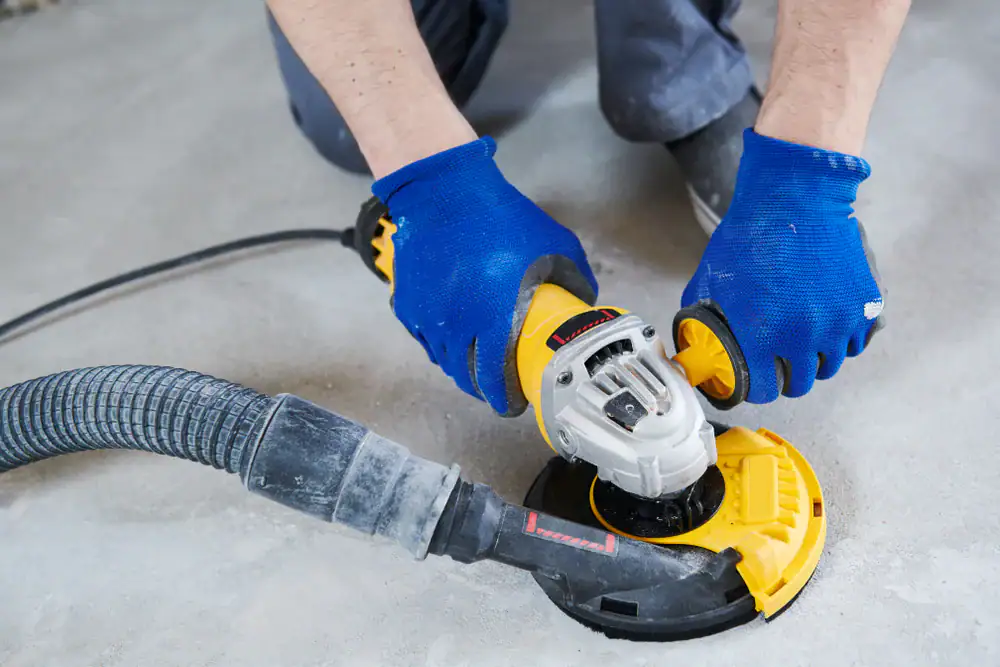
Next comes the grinding itself. We use progressive diamond grinding equipment that removes material in controlled passes. Coarse diamonds handle heavy damage and lippage. Finer grits smooth the surface and open the concrete’s pores for proper sealing. The process is dustless—our equipment captures 99% of particulates at the source.
After grinding, we address any cracks or joints that need filling. Then the floor gets densified and sealed based on your facility’s specific needs. A food processing plant needs different sealing than a warehouse. We’re using commercial-grade materials from Sherwin Williams, Fosroc, and other manufacturers who back their products with actual performance data.
Final step is a walkthrough where you see exactly what was done and what to expect for maintenance. No surprises, no upsells, no “oh by the way” conversations three weeks later.
Ready to get started?
Concrete Restoration Services Bayshore Business District
You’re getting complete surface preparation, not just a pass with a grinder. That includes removing existing coatings, leveling uneven sections, and eliminating lippage where slabs meet. The goal is a uniform surface that performs consistently across the entire floor.
Bayshore Business District facilities deal with salt air and UV exposure that accelerate concrete degradation. Our grinding process accounts for that by removing compromised surface material and applying sealers designed for Florida’s climate. You’re not getting a generic approach copied from a project in Arizona.
The work includes dustless grinding with HEPA filtration, crack repair using flexible polyurea or epoxy fills depending on the location, moisture vapor mitigation if testing shows it’s necessary, and densification that hardens the concrete and reduces dusting. Final sealing protects against stains, chemicals, and abrasion based on your facility’s specific traffic and use patterns.
Most concrete grinding projects in commercial facilities run $3-8 per square foot depending on the existing condition and desired finish level. That’s 30-50% less than tearing out and replacing the slab, with better long-term performance because you’re working with concrete that’s already cured and settled.

How long does concrete grinding take and when can we resume operations?
Most concrete grinding projects are walkable within a few hours after we finish. Full operations—including heavy equipment and normal traffic—can resume in 24-48 hours depending on the sealer used and the facility’s ventilation.
The actual grinding work moves quickly. A 10,000 square foot warehouse floor typically takes 1-3 days from start to finish. Larger facilities or floors with significant damage take longer, but we’re still talking days, not weeks.
The timeline depends on your floor’s current condition and what finish level you need. A basic grind and seal for a warehouse goes faster than a polished concrete finish for a showroom. We’ll give you a specific schedule during the initial consultation based on what we’re actually looking at, not generic estimates.
Will concrete grinding create dust problems in our facility?
No, because we use dustless grinding equipment with integrated HEPA filtration. The vacuum system captures particulates at the grinding head before they become airborne. You’re not dealing with clouds of concrete dust settling on equipment, inventory, or HVAC systems.
This matters especially for facilities with air quality requirements—food processing, pharmaceutical, electronics manufacturing, or any operation where contamination is a concern. Dustless grinding means you can often keep adjacent areas operational during the work.
The equipment isn’t perfect—you’ll see some fine dust immediately around the work area—but it’s 99% cleaner than traditional grinding methods. We also seal off work zones with plastic barriers when necessary. The difference between dustless and conventional grinding is dramatic if you’ve ever dealt with the old approach.
What’s the difference between grinding and polishing concrete floors?
Grinding removes damaged concrete and creates a level surface. Polishing takes that ground surface and refines it to a specific gloss level—from matte to high-gloss mirror finish. They’re related but serve different purposes.
If your floor has cracks, lippage, old coatings, or uneven areas, you need grinding first. That’s the foundation. Polishing comes after if you want an aesthetic upgrade or enhanced durability. Many warehouses and industrial facilities stop at grinding with a basic sealer because they need function, not shine.
Retail spaces, showrooms, and commercial lobbies often go for polished concrete because it looks professional and reflects light better, reducing lighting costs. The polishing process uses progressively finer diamond grits—sometimes up to 3000 grit—to achieve that glossy appearance. It costs more and takes longer than basic grinding, but the result is a floor that’s both durable and visually impressive.
How does concrete grinding hold up in Florida’s climate?
Better than most flooring options because you’re working with the concrete itself, not applying something on top that can delaminate. Florida’s humidity, temperature swings, and salt air destroy coatings that aren’t properly bonded to prepared concrete.
Grinding removes the weak surface layer where moisture and contaminants accumulate. The densifiers we apply penetrate deep and chemically react with the concrete to create a harder, less porous surface. Sealers designed for high-moisture environments provide the top layer of protection.
The key is proper moisture vapor testing before sealing. South Florida concrete often has higher moisture transmission rates than other regions. If we seal over a moisture problem, the sealer fails within months. Testing first, then using moisture-mitigating products when necessary, prevents those failures. That’s why our floors last 20+ years while improperly installed coatings start peeling in two.
What’s the real cost difference between grinding and replacing concrete?
Grinding typically runs $3-8 per square foot for commercial facilities. Tearing out and replacing a concrete slab runs $8-15+ per square foot, plus you’re shut down for weeks instead of days, and you’re dealing with disposal costs and structural concerns.
The math gets more favorable for grinding when you factor in the operational downtime. A warehouse that can’t receive shipments for three weeks loses more money than the flooring project costs. Grinding gets you back online in 24-48 hours.
Replacement only makes sense when the concrete is structurally compromised—major settling, deep cracking throughout, or foundation issues. For surface damage, uneven wear, or cosmetic problems, grinding delivers better ROI. You’re keeping a slab that’s already cured and settled, which means fewer future problems than new concrete that’s still going through its curing cycle.
Can you grind concrete that already has epoxy or other coatings?
Yes, removing existing coatings is part of the grinding process. The diamond grinding heads cut through epoxy, urethane, acrylic sealers, and other coatings to reach the concrete underneath. That’s actually one of the main reasons facilities call us—their coating failed and now they want something more permanent.
The thickness and type of existing coating affects how long removal takes. A thin acrylic sealer grinds off quickly. A thick epoxy system with multiple coats takes more passes. Either way, we’re removing it completely, not just scarifying the surface and hoping the next coating sticks.
Once the coating is gone, we assess the concrete’s condition and proceed with grinding to the appropriate level. Sometimes the concrete underneath is in great shape and just needs leveling. Other times there’s damage that was hidden under the coating. That’s why we give estimates after seeing the floor in person—we need to know what we’re actually dealing with, not guess based on a phone description.
Other Services we provide in Bayshore Business District
Leave a Reply