


Concrete Grinding in Belle Glade, FL
Floors That Handle What Belle Glade Throws at Them
Hear from Our Customers
Professional Concrete Floor Grinding Contractors
Your concrete takes a beating. Forklifts, pallet jacks, chemical spills, washdown procedures—most floors start failing within a few years. Cracks spread. Surfaces dust. You’re patching, sealing, and dealing with the same problems on repeat.
Concrete grinding changes that cycle completely. We’re removing damaged surface layers and creating a foundation that’s up to 400% harder than what you started with. The process densifies the concrete at a molecular level, making it virtually impervious to moisture penetration and chemical damage.
What that means for your facility: no more dusting, dramatically better slip resistance even during washdowns, and a surface that gets more durable over time instead of breaking down. Most properly ground and sealed concrete in Belle Glade lasts 30+ years without needing replacement. That’s not marketing talk—that’s what happens when you treat concrete correctly from the start.
Concrete Grinding Services Belle Glade
We’ve been handling concrete restoration and polished concrete projects across Florida since 2020. Our client list includes Coast Guard facilities, US Military installations, municipal buildings for the City of Doral and City of Sunny Isles, and county school projects—work that gets inspected, needs to perform, and has to last.
Belle Glade’s agricultural and industrial environment creates specific challenges. High humidity, chemical exposure from processing facilities, and heavy equipment loads require concrete solutions that go beyond standard residential approaches. We’ve ground floors in warehouses, manufacturing plants, and agricultural facilities where downtime costs real money and surface failure creates safety liability.
You’re not getting a crew that dabbles in concrete between other jobs. This is what we do—concrete grinding, polishing, and epoxy systems using Sherwin Williams and Fosroc products exclusively.
Our Concrete Grinding Process
First, we evaluate your slab honestly. Not every concrete surface is suitable for grinding, and we’ll tell you upfront if yours isn’t. We’re looking at the existing condition, checking for structural issues, and determining what level of correction your floor needs.
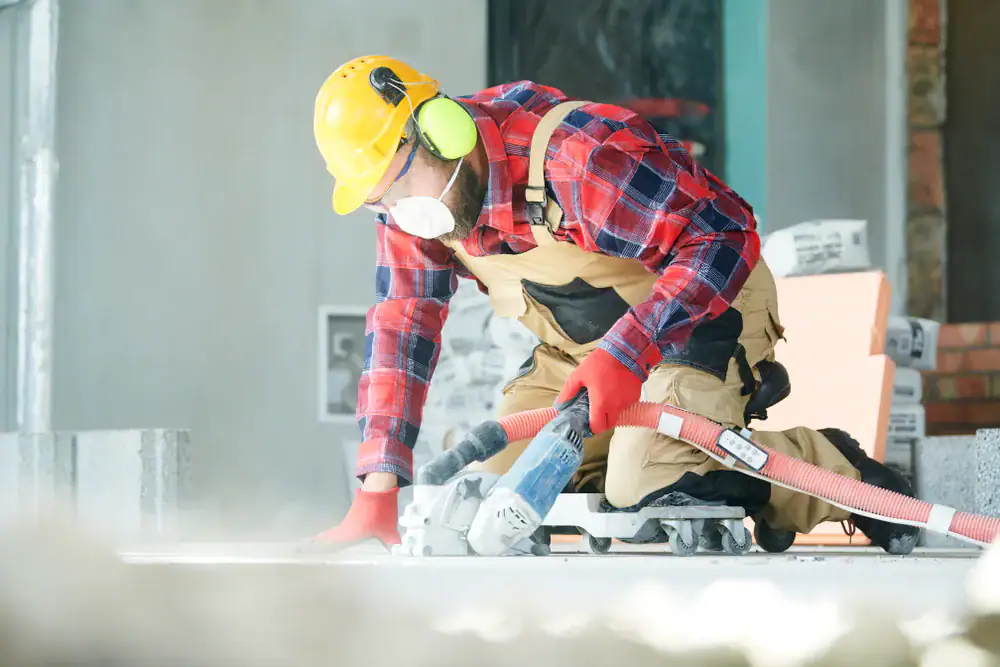
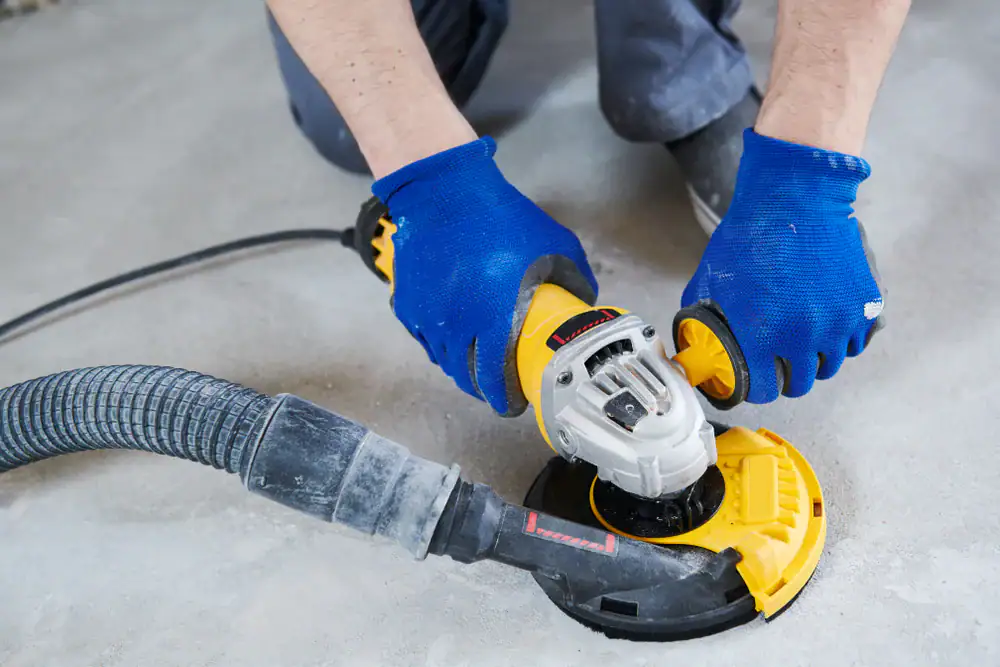
Once we confirm your concrete is a good candidate, we start with coarse diamond grinding to remove the damaged surface layer and level any uneven areas. Our equipment uses diamond-embedded tools that cut mechanically—no harsh chemicals, no curing time. The process is dustless because we run high-performance vacuums and HEPA filters that contain virtually all debris.
After the initial grind, we apply a densifying treatment that penetrates deep into the concrete and chemically hardens it from within. This is what creates that 400% increase in surface hardness. Then we move through progressively finer diamond grits, refining the surface to your specified finish level.
The final step involves applying a penetrating sealer designed specifically for Florida’s climate—high humidity, temperature fluctuations, and moisture exposure. You can walk on the floor immediately after we’re done. No waiting, no odor, no disruption beyond the actual work window.
Ready to get started?
Belle Glade Concrete Restoration Services
Concrete grinding in Belle Glade isn’t just about making floors look better—it’s about creating surfaces that function properly in an environment that destroys standard flooring. Agricultural facilities deal with organic acids, fertilizer residue, and constant moisture. Warehouses need floors that won’t dust under heavy traffic. Manufacturing operations require chemical resistance and easy cleaning.
Our grinding process addresses all of that. You get a surface with excellent slip resistance that meets OSHA requirements, even during washdown procedures. The densified concrete resists moisture penetration, which is critical in an area known as “Muck City” where humidity is constant. Chemical spills that would damage untreated concrete won’t penetrate a properly ground and sealed surface.
We also provide complete documentation for every project—exactly what was done, which materials were used, and what performance characteristics you can expect. That matters for facility management, insurance purposes, and future maintenance planning.
Turnaround depends on your square footage and current floor condition, but we typically complete grinding projects within days, not weeks. For urgent situations, we offer 24-48 hour response. We’re not trying to drag jobs out—you need your facility operational, and we work accordingly.

How long does ground concrete actually last in Florida’s climate?
Properly ground and sealed concrete typically lasts 30+ years in Florida without needing replacement. That lifespan assumes you’re starting with structurally sound concrete and the grinding process is done correctly with appropriate densifiers and sealers.
The key is using products designed specifically for high humidity and temperature fluctuations. Standard sealers break down faster in Florida’s climate. We use penetrating sealers from Sherwin Williams and Fosroc that are formulated to handle moisture exposure and UV degradation.
Compare that to epoxy coatings, which may need renewal every 5-10 years, or tile and vinyl that crack and lift in humid environments. Ground concrete actually becomes more durable over time because the densifying treatment continues to harden as it reacts with the concrete. You’re not adding a coating that can fail—you’re permanently changing the concrete itself.
Can you grind concrete that’s already cracked or uneven?
Yes, but there are limits. We can level minor unevenness and grind around stable cracks. What we can’t do is fix structural problems or concrete that’s actively failing.
During the evaluation, we’re checking whether cracks are stable or still moving, whether the slab has proper support underneath, and if there’s enough sound concrete to work with. If your floor has major settlement issues or the concrete is deteriorating from within, grinding won’t solve that—you’d need repair work first.
For cracks that are stable but unsightly, we can often grind the surface level and then fill cracks with appropriate repair materials before continuing the grinding process. The result isn’t invisible, but it’s clean, level, and functional. We’ll walk you through exactly what’s realistic for your specific floor condition before starting any work.
Is the grinding process going to shut down our facility?
Not entirely, but you will need to keep people and equipment off the specific area we’re working on. The actual grinding is dustless, so we’re not creating air quality problems for adjacent spaces.
Most facilities handle this by having us work in sections or during off-hours. We can grind during nights or weekends if that minimizes your operational disruption. The floor is immediately walkable after we finish each section—no curing time, no waiting for coatings to dry.
For a typical warehouse or manufacturing floor, we’re talking days of work, not weeks. Smaller areas like entryways or specific work zones can often be completed in a single day. We’ll map out a work schedule during the consultation that accounts for your operational needs and minimizes downtime. The goal is to improve your floor without crippling your business in the process.
What’s the difference between grinding and polishing concrete?
Grinding is the mechanical process of removing the surface layer and leveling the concrete. Polishing is what happens when you continue grinding with progressively finer diamond grits to create a smooth, reflective finish.
Think of it like sanding wood. Coarse grits remove material and level the surface. Finer grits refine the finish. With concrete, we start with metal-bond diamonds to cut through the surface, then move to resin-bond diamonds for polishing.
Not every project needs a high-gloss polish. Some facilities want a matte or satin finish for slip resistance. Others want that reflective look for aesthetic reasons or because it improves lighting efficiency. The level of polish you choose doesn’t affect durability—that comes from the grinding and densifying process. Polish level is about appearance and how much light reflection you want. We’ll show you samples of different finish levels so you know exactly what you’re getting.
How does ground concrete hold up to chemicals and agricultural exposure?
Significantly better than untreated concrete, but the sealer choice matters. Agricultural facilities in Belle Glade deal with fertilizers, organic acids, cleaning chemicals, and constant moisture—all of which attack standard concrete.
When we grind and densify concrete, we’re closing the pore structure and making the surface much less permeable. The densifier creates a chemical reaction that hardens the concrete from within. Then we apply a penetrating sealer that fills remaining pores without creating a surface coating that can delaminate.
The result is concrete that resists chemical penetration. Spills that would stain or etch untreated concrete can be wiped up without damage. That said, no concrete is completely chemical-proof. Prolonged exposure to strong acids or bases will eventually cause damage. But for normal agricultural and industrial chemical exposure—fertilizer runoff, cleaning solutions, hydraulic fluid, diesel fuel—properly treated concrete handles it without breaking down. Regular cleaning is still important, but you’re not dealing with permanent staining or surface deterioration from everyday exposure.
Do you only work with commercial and industrial clients in Belle Glade?
No, we handle residential projects too. Garages, basements, patios—anywhere you have concrete that needs grinding or polishing.
That said, our background is heavily commercial and government work. We’ve done Coast Guard facilities, military installations, municipal buildings, and large-scale industrial floors. That experience translates well to residential projects because the technical requirements are the same—you’re still densifying concrete, managing moisture, and creating a durable surface.
For homeowners, ground concrete makes sense in high-traffic areas or anywhere you want a low-maintenance floor that won’t need replacement. Kitchen floors, for example, can be ground and polished to create a seamless, easy-to-clean surface. We offer rapid turnaround on residential projects—often 24-48 hours for smaller areas. Whether you’re a facility manager dealing with 50,000 square feet or a homeowner with a 500-square-foot garage, the process is the same. We just scale the equipment and timeline accordingly.
Other Services we provide in Belle Glade
Leave a Reply