


Concrete Grinding in Boynton Beach, FL
Floors That Handle Florida’s Heat and Humidity
Hear from Our Customers
Professional Concrete Grinding Contractors
Your concrete floor stops being a maintenance headache. That’s what happens when the surface gets ground and polished correctly from the start.
Most property owners in Boynton Beach deal with floors that chip, stain, or need constant resealing because the original prep work was rushed. When we use industrial-grade diamond equipment and apply the expertise we’ve developed over years of projects, your floor becomes the low-maintenance surface it should be. No more yearly refinishing costs. No more worrying about spills soaking in.
The difference shows up in your operating costs. A properly ground and polished concrete floor cuts maintenance expenses by 60-80% compared to VCT or tile. You’re looking at a 20+ year lifespan with nothing more than occasional damp mopping. Florida’s humidity and salt air don’t damage it the way they destroy wood, carpet, or cheaper flooring options.
That’s the outcome: a floor that works with South Florida’s climate instead of fighting it, saving you money every year it’s down.
Boynton Beach Concrete Restoration Services
We’ve been handling concrete grinding and polished concrete installations in Boynton Beach and across Palm Beach County since 2020. We’re veteran-owned, which means we approach every job with the same precision and zero-shortcut mentality that military work demands.
Our client list includes Coast Guard facilities, US Army installations, City of Doral, City of Sunny Isles, and multiple county high schools. Those aren’t projects that go to contractors who cut corners or disappear after the deposit clears. Government and municipal work requires documentation, accountability, and results that last.
We handle everything in-house with full-time employees. No subcontractors showing up with mystery equipment. When you work with us, you get the same crew and the same standards whether it’s a 500-square-foot garage or a 50,000-square-foot warehouse in Boynton Beach.
Our Concrete Grinding Process
We start with a site assessment to check your concrete’s current condition. That means testing for moisture levels, identifying any existing coatings or contaminants, and measuring the slab’s flatness. This isn’t a formality. Florida’s coastal humidity creates moisture issues that will destroy a polished floor if they’re not addressed before grinding starts.
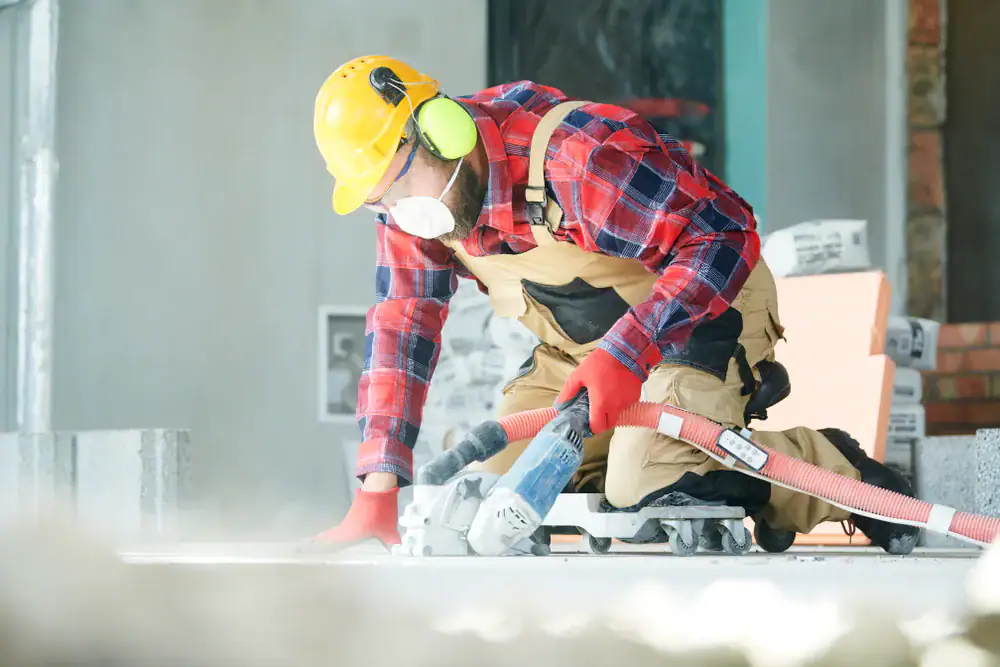
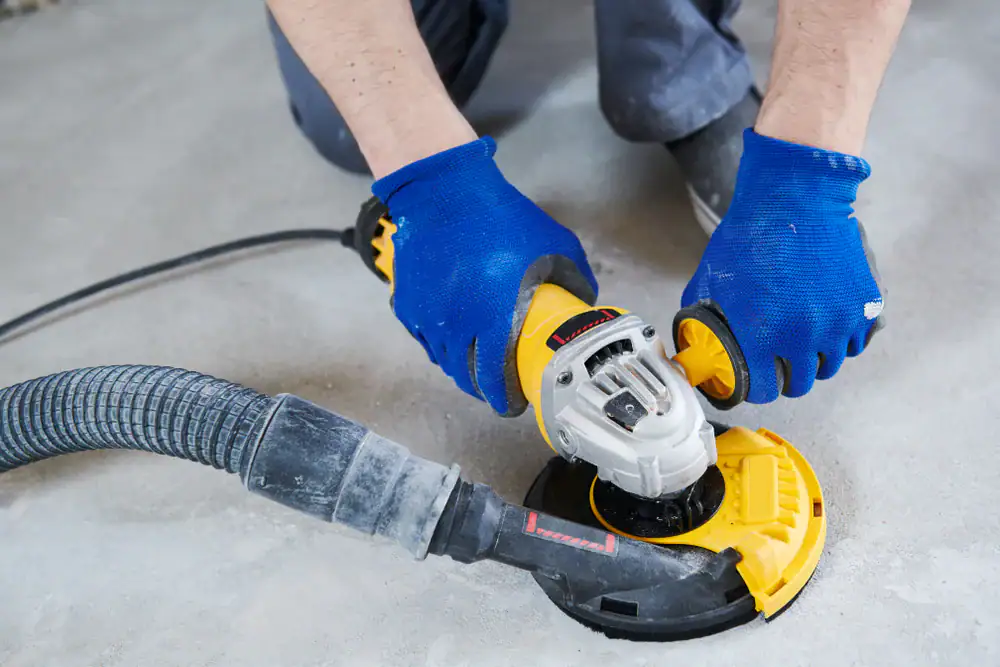
Next comes surface preparation using industrial diamond grinding equipment. We’re removing old sealers, epoxy coatings, adhesives, oil stains, and any other contaminants that prevent proper bonding. This step also levels uneven areas and opens up the concrete’s pores so densifiers can penetrate. Most concrete grinding service failures happen because contractors skip or rush this phase.
After grinding, we apply a densifying treatment that chemically hardens the concrete from within. This fills the microscopic pores and creates a surface that resists moisture penetration, which matters in Boynton Beach where humidity regularly exceeds 85%. Then we move through progressive polishing stages with finer and finer diamond grits until your floor reaches the sheen level you want.
Final step is applying a protective sealer designed specifically for South Florida’s climate. We use products from Sherwin Williams and Fosroc that handle UV exposure, thermal expansion, and salt air without breaking down. The whole process typically takes 3-5 days for commercial spaces, depending on square footage and existing conditions.
Ready to get started?
Concrete Floor Grinding Services
You get complete concrete surface preparation handled by people who’ve done this in Florida’s climate for years. That means diamond grinding to remove all existing coatings and contaminants, crack and joint repair using commercial-grade materials, moisture testing and mitigation if needed, and densification treatment to harden the surface.
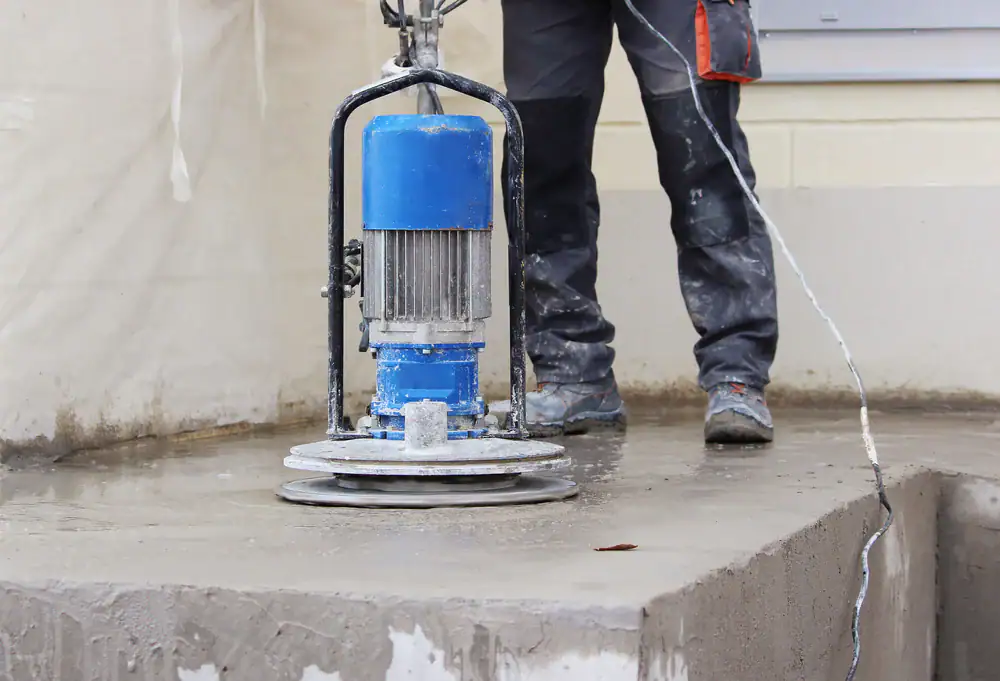
We’re using the same equipment and processes on your project that we use for military installations. Industrial-grade planetary grinders with diamond tooling, not consumer-grade equipment that leaves swirl marks. HEPA-filtered dust extraction so your space stays clean during the work. All materials come from manufacturers like Laticrete, Koster USA, and Advanced Polymer Technology, companies that produce products specifically for commercial and industrial applications.
Boynton Beach properties face specific challenges that affect concrete work. The proximity to the coast means salt air accelerates surface deterioration. High humidity extends curing times by 40-60% compared to drier climates. Thermal expansion from temperature swings can crack improperly prepared floors. We account for all of this in our process because we’ve seen what happens when contractors from other regions try to use the same methods they’d use in Arizona or Colorado.
You also get transparent communication throughout the project. We’ll tell you upfront if your concrete has issues that need addressing before grinding starts. We’ll explain why certain steps matter and what happens if they’re skipped. And we’ll give you a realistic timeline that accounts for Florida’s weather and humidity instead of promising completion dates we can’t hit.

How long does concrete grinding and polishing actually take?
Most commercial projects in Boynton Beach take 3-5 days from start to finish, but that timeline shifts based on your concrete’s current condition and South Florida’s humidity levels.
If we’re grinding a clean slab with no existing coatings, we move faster. If we’re removing old epoxy, dealing with oil stains that have penetrated deep, or repairing significant cracks, it takes longer. The polishing stages themselves are predictable, but surface prep is where timelines vary because every slab is different.
Florida’s humidity also extends curing times for any repair materials or sealers we apply. What might cure in 6 hours in a dry climate can take 10-12 hours here when humidity is above 80%. We don’t rush those steps because doing so creates failures down the road. For residential projects like garage floors or patios, you’re typically looking at 2-3 days. We can handle emergency commercial work in 24-48 hours when necessary, but that requires scheduling flexibility on your end.
What’s the real cost difference between polished concrete and other flooring?
Polished concrete typically costs 30-50% less to install than high-end tile, hardwood, or premium epoxy systems, and the maintenance savings make the gap even wider over time.
For a 10,000 square foot commercial space in Boynton Beach, you might spend $30,000-$50,000 on professional concrete grinding and polishing. That same space would cost $50,000-$80,000 for quality tile installation, and you’d be looking at replacement in 10-15 years. VCT seems cheaper upfront but costs around $5,000 annually just for stripping and waxing. Over a 20-year period, polished concrete saves most property owners $60,000-$100,000 in maintenance and replacement costs.
The bigger financial difference shows up in your operating budget. Polished concrete needs sweeping and occasional damp mopping. No waxing, no refinishing, no specialized cleaning products. Most commercial clients see maintenance costs drop 60-80% in the first year. Residential projects see similar savings, just at a smaller scale. Your garage floor that used to need resealing every 2-3 years now needs nothing but a mop when it gets dirty.
Can you grind concrete that already has epoxy or coating on it?
Yes, removing existing coatings is actually one of the main reasons property owners in Boynton Beach call us for concrete grinding services.
Our diamond grinding equipment cuts through epoxy, urethane, acrylic sealers, and most other coatings that previous contractors applied. The process takes longer than grinding bare concrete because we’re essentially stripping off that old layer before we can start the actual surface preparation. How much longer depends on the coating type and how well it was originally applied. A thin acrylic sealer comes off in a few hours. A thick epoxy system might take a full day for a large space.
The reason this matters is that most coating failures happen because the concrete underneath wasn’t properly prepared. If there was moisture in the slab, or if the surface had contaminants that prevented bonding, the coating eventually bubbles, peels, or delaminates. Just putting new coating over failed coating doesn’t fix anything. We grind down to clean concrete, address whatever caused the original failure, and then build the floor back up correctly. That’s how you get a result that actually lasts in Florida’s humidity instead of failing again in two years.
How do polished concrete floors hold up in Florida’s humidity?
Properly installed polished concrete handles South Florida’s humidity better than almost any other flooring option because the densification process fills the concrete’s pores and prevents moisture penetration.
The problem with humidity isn’t just comfort, it’s what moisture does to flooring materials. Wood warps and rots. Carpet grows mold. Vinyl adhesives break down. Even some epoxy coatings blister when moisture vapor pushes up through the concrete. Polished concrete doesn’t have those vulnerabilities because we’re not adding a separate material on top of the slab. We’re chemically hardening and sealing the concrete itself.
The densifier we apply during polishing reacts with the calcium in concrete to create a crystalline structure that blocks moisture. Then the topical sealer adds another layer of protection against spills and surface moisture. The combination means water vapor from below can’t push through, and liquid water from above can’t soak in. That’s why you see polished concrete in commercial kitchens, coastal warehouses, and other high-humidity environments throughout Boynton Beach and Palm Beach County. It’s one of the few flooring systems that actually improves in performance as it ages, getting harder and more stain-resistant over time instead of degrading.
What’s the difference between concrete grinding and concrete polishing?
Grinding is the preparation phase where we remove coatings and level the surface, while polishing is the refinement phase where we progressively smooth and shine the concrete using finer diamond grits.
Think of grinding as the heavy lifting. We’re using coarse diamond tooling to strip off whatever’s on the surface, whether that’s old sealer, paint, adhesive residue, or just the top layer of weathered concrete. This phase also handles leveling work, removing high spots and lippage between slabs. The concrete looks rough and matte after grinding because we’ve exposed fresh aggregate and opened up the surface.
Polishing comes after grinding and densification. We switch to progressively finer diamond pads, working through multiple stages until the concrete reaches your desired sheen level. Each stage removes the scratches from the previous stage and brings out more clarity and shine. You can stop at different points depending on the look you want: a matte finish for slip resistance in wet areas, a satin finish for most commercial spaces, or a high-gloss finish that looks almost like marble. We typically recommend satin or semi-gloss for commercial applications in Boynton Beach because it balances appearance with practicality. The whole process, grinding through final polishing, is what creates a floor that’s both beautiful and durable enough to handle decades of traffic in Florida’s climate.
Do you work directly with property owners or only through general contractors?
We prefer working directly with property owners because it eliminates communication gaps and lets us deliver exactly what you need without information getting filtered through multiple people.
When you hire us directly, you get a 1-on-1 consultation where we walk your space, discuss your specific concerns, and explain what your concrete actually needs. No sales pitch, no upselling services that don’t apply to your situation. You talk to the same people who’ll be running the equipment and managing your project. That means your questions get answered by people who actually know the technical details, not a sales rep reading from a script.
We do work with general contractors on larger projects, especially new construction where concrete polishing is part of a bigger build-out. But for restoration work, resurfacing, or upgrading existing floors in Boynton Beach, direct relationships work better for everyone. You get transparent pricing without GC markup. We get clear direction on your priorities and concerns. And if something unexpected comes up during the work, which happens with concrete, we can discuss options and solutions immediately instead of playing telephone through a third party. We’re licensed, insured, and bonded for both commercial and residential work, so there’s no project type where you need a GC between us just to get the job done right.
Other Services we provide in Boynton Beach
Leave a Reply