


Concrete Grinding in Cutler Bay, FL
Floors That Handle Florida’s Humidity Without Failing
Hear from Our Customers
Professional Concrete Floor Grinding Contractors
Your concrete stops being a problem. The uneven spots that catch pallet jacks disappear. The adhesive patches left behind from old flooring come up clean. The surface that used to sweat every summer morning stays dry.
Grinding creates the foundation everything else depends on. If you’re coating it, the bond actually holds. If you’re polishing it, the shine stays consistent. If you’re painting it, the coverage goes on smooth without fighting texture or contamination.
Most floor failures in Cutler Bay trace back to poor surface prep. The concrete wasn’t level. The old coating wasn’t fully removed. Moisture was trapped under a sealer that should never have been applied. Grinding fixes what cutting corners creates—it removes the top layer where most problems live and exposes clean concrete that coatings can actually grip.
You’re not paying for perfect. You’re paying for a surface that works with the next step instead of against it.
Concrete Grinding Services in Cutler Bay
We handle concrete grinding for commercial and residential properties across Cutler Bay and Miami-Dade County. We work directly with property owners, facility managers, and homeowners who need floors prepped right the first time.
We’ve ground concrete for the Coast Guard, US Army facilities, City of Doral buildings, and high schools throughout the county. Those jobs don’t go to companies that guess. They go to contractors who show up with the right equipment, follow the process, and deliver surfaces that pass inspection.
South Florida concrete behaves differently than concrete anywhere else. The humidity doesn’t just affect the air—it affects how materials cure, how coatings bond, and how long your floor actually lasts. We account for that in every job because we’ve seen what happens when contractors don’t.
Our Concrete Grinding Process
We start by evaluating the slab. That means checking for moisture levels, identifying high spots, and figuring out what’s on the surface—old coatings, adhesive, sealer, contaminants. This determines which diamond grit we use and how many passes the floor needs.
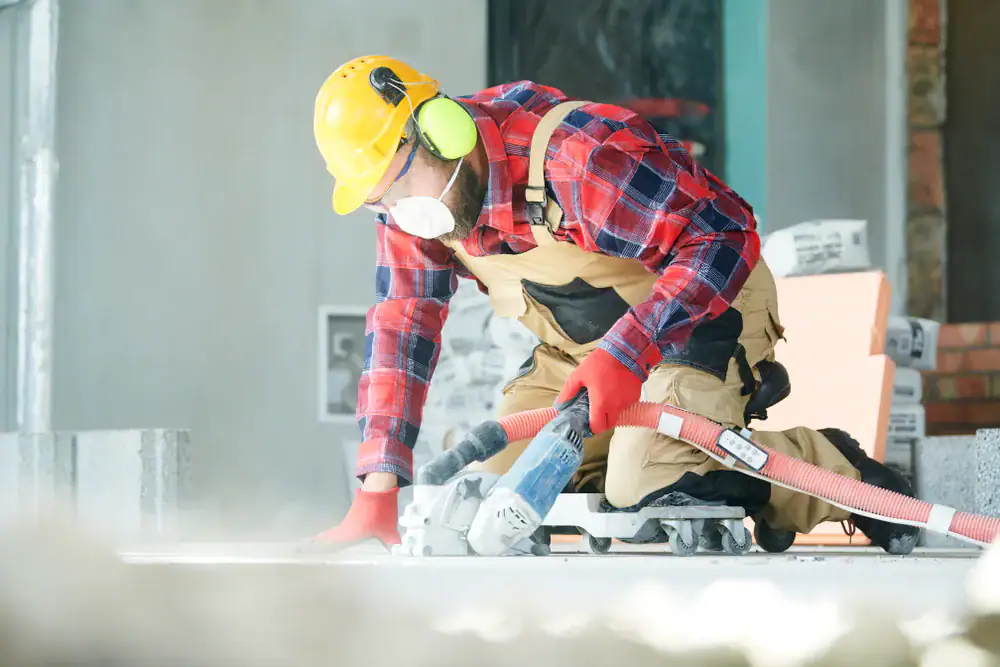
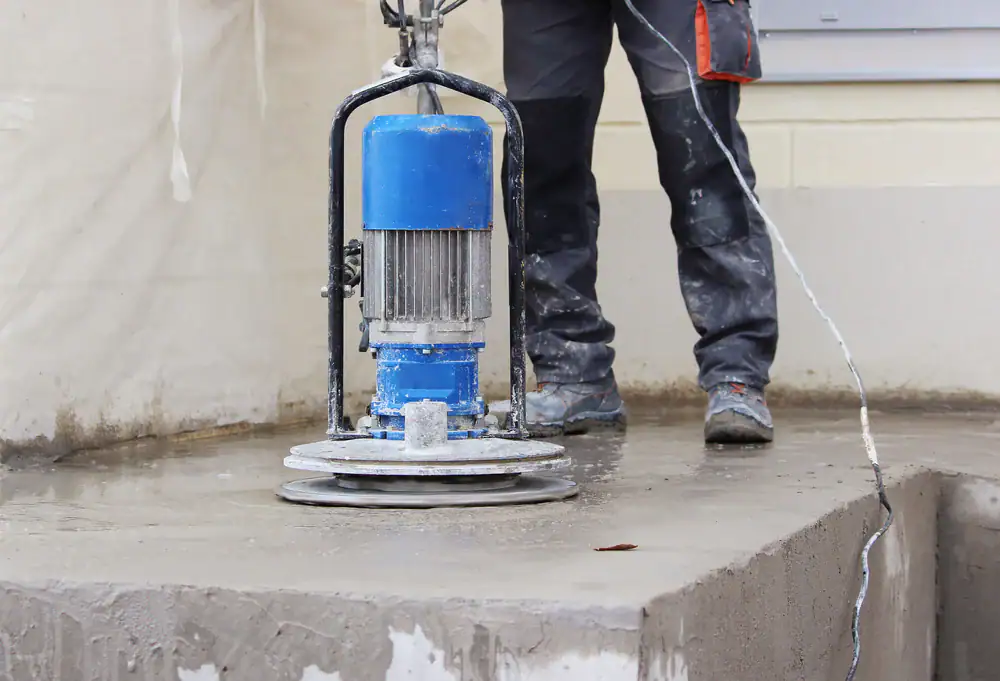
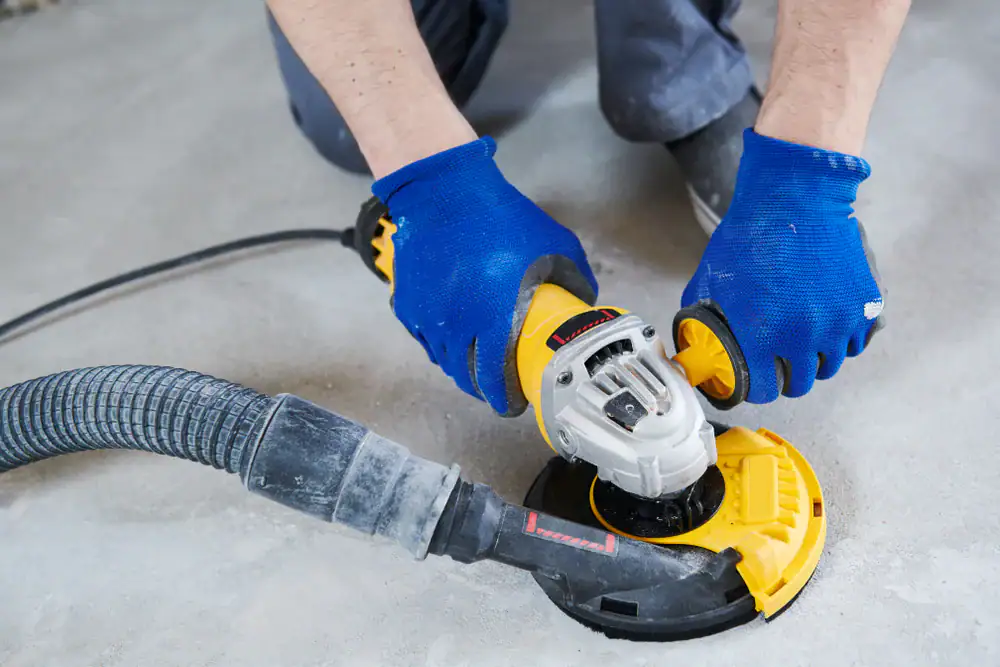
Then we grind. Our equipment removes the top layer of concrete in controlled passes, taking off anywhere from 1/16″ to 1/4″ depending on what the surface requires. We’re not just smoothing—we’re opening the pores of the concrete so whatever comes next actually bonds. The process is dustless. We use vacuums with HEPA filters that capture particles as they’re created, so your space stays clean and breathable.
After grinding, we inspect the surface. It should be uniform, level, and free of contaminants. If you’re polishing, we move into finer grits. If you’re coating, the surface is ready for primer. If you’re sealing, the concrete can breathe and cure properly.
Turnaround depends on square footage and surface condition, but most commercial projects wrap in two to three days. Residential jobs like garages or basements usually finish faster.
Ready to get started?
Concrete Restoration Services Cutler Bay
Surface leveling removes high spots, lippage, and uneven joints that create trip hazards or damage equipment. Coating removal strips old epoxy, paint, sealers, and adhesives that prevent new materials from bonding. Concrete restoration grinds away surface damage—spalling, scaling, staining—and exposes fresh concrete underneath.
We also handle profile creation for specific coatings. Some epoxies need a rough surface to grip. Others need it smooth. Grinding gives you the exact profile the manufacturer specifies, which is the difference between a coating that lasts ten years and one that fails in two.
In Cutler Bay, moisture management is part of every job. We don’t seal concrete that’s still curing. We don’t apply coatings when humidity is above 75%. We don’t ignore sweating slab syndrome and hope it goes away. Florida concrete needs contractors who understand how the climate affects the work—not just during the job, but months and years after.
You’re hiring us to prep the surface so the next step actually works. That’s it. No upselling, no add-ons you don’t need. Just a floor that’s ready for whatever you’re putting on it.

How much does concrete grinding cost in Cutler Bay?
Concrete grinding typically runs between $2 and $6 per square foot depending on surface condition, square footage, and what needs to be removed. A 1,000-square-foot garage usually costs $2,000 to $4,000. A 10,000-square-foot warehouse runs $20,000 to $50,000 depending on how much prep the slab needs.
If you’re just leveling and smoothing, you’re on the lower end. If we’re removing thick epoxy, grinding down to expose aggregate, or dealing with heavy contamination, costs go up because the job takes more time and wears down equipment faster.
We give you transparent pricing after seeing the space. No guessing, no ranges that don’t mean anything. You’ll know what it costs before we start.
Can you grind concrete that has moisture problems?
Yes, but grinding doesn’t fix moisture—it just removes the surface layer that’s trapping it. If your slab is sweating or showing efflorescence, grinding exposes fresh concrete and removes old sealers that were locking moisture in. That’s helpful, but it’s not a cure.
South Florida slabs deal with groundwater, humidity, and hydrostatic pressure. If moisture is coming up through the slab, you need a vapor barrier or moisture mitigation system before you coat or seal anything. Grinding prepares the surface, but it won’t stop water from moving through concrete. We test moisture levels before and after grinding so you know exactly what you’re working with.
If the slab is actively wet, we’ll tell you to fix the source before we grind. There’s no point prepping a surface that’s going to fail the moment you coat it.
How long does concrete grinding take?
Most residential jobs finish in one to two days. A two-car garage takes four to six hours of grinding plus cleanup. Basements or patios run similar timelines depending on access and surface condition.
Commercial projects take longer. A 5,000-square-foot retail space might take two to three days. A 20,000-square-foot warehouse could take a week, especially if we’re removing old coatings or dealing with heavy contamination. The timeline depends on how much material we’re removing, how many passes the floor needs, and whether we’re working around your operations.
We also offer emergency response for time-sensitive projects. If you need a kitchen floor ground and recoated in 48 hours, we can make that happen. Most jobs don’t require that speed, but it’s available when you need it.
Will grinding fix cracks in my concrete floor?
No. Grinding levels the surface and removes coatings, but it doesn’t repair structural damage. If your floor has cracks, spalling, or chunks missing, those need to be filled and patched before grinding.
We can grind around repairs to blend them into the surrounding concrete, but the cracks themselves require epoxy injection, routing and sealing, or full-depth patching depending on severity. Grinding a cracked floor without fixing it first just gives you a smooth cracked floor.
If your concrete is failing because of a structural issue—settlement, poor subgrade, or reinforcement problems—grinding won’t help. You need a concrete contractor to assess the slab and determine whether it can be saved or needs replacement. We’ll tell you honestly if grinding makes sense or if you’re better off addressing the bigger problem first.
Is concrete grinding dusty or messy?
Not when it’s done right. We use dustless grinding equipment with industrial vacuums and HEPA filters that capture 99% of airborne particles as they’re created. You’re not dealing with dust clouds, respiratory hazards, or cleanup that takes days.
The process is loud—grinders run between 90 and 100 decibels—but the dust stays contained. We also seal off work areas when necessary to keep particles from spreading into occupied spaces. If you’re running a business or living in the home while we work, dustless grinding makes that possible without shutting everything down.
Some contractors still use wet grinding or standard grinders without dust collection. That creates a mess, damages surrounding finishes, and leaves you cleaning for weeks. We don’t work that way. You get a clean surface and a clean space when we’re done.
Do I need to grind concrete before applying epoxy or polishing?
Yes. Epoxy won’t bond to sealed, contaminated, or smooth concrete. Polishing won’t produce a consistent shine if the surface has coatings, uneven texture, or damage. Grinding removes what’s in the way and creates the profile the next step requires.
If you skip grinding and go straight to coating, the epoxy might look fine for a few months. Then it starts peeling, bubbling, or delaminating because it never actually bonded. You’ll pay twice—once for the coating that failed, and again to strip it and do it right.
Polished concrete requires multiple grinding passes with progressively finer diamond grits. You can’t polish over old sealer or adhesive. You can’t polish a surface that isn’t level. Grinding is the foundation of the process, not an optional step. If a contractor tells you it’s not necessary, they’re either inexperienced or cutting corners.
Other Services we provide in Cutler Bay
Leave a Reply