


Concrete Grinding in Doral, FL
Level Floors That Actually Stay Level
Hear from Our Customers
Professional Concrete Grinding Services Doral
Your warehouse floor shouldn’t move under truck tires. Your loading dock shouldn’t trap water every time South Florida rain hits. And your concrete shouldn’t look like the last contractor gave up halfway through.
Concrete grinding fixes what’s already there. We’re talking about leveling pumping panels that shift, removing failed coatings that someone else botched, and creating the flat, clean surface you need before any finish goes down. This isn’t cosmetic work – it’s structural prep that determines whether your floor lasts two years or twenty.
Doral sits in the middle of Miami-Dade’s industrial corridor. That means heavy trucks, constant moisture, and concrete that takes a beating. Grinding removes the damaged top layer, exposes fresh aggregate, and gives you a surface that can handle what’s coming next – whether that’s a polished finish, epoxy coating, or just a clean slab that won’t crack under load.
Concrete Floor Grinding Contractors Doral
We’ve been operating in South Florida since 2020. We’ve handled concrete work for the U.S. Coast Guard, Army facilities, the City of Doral, and Sunny Isles municipal projects. Government and military contracts don’t go to crews who show up late or cut corners.
We work directly with property owners and facility managers – not through layers of general contractors. That means faster communication, transparent pricing, and no surprises when the invoice shows up. Our crews use diamond grinding equipment and we partner exclusively with Sherwin Williams and Fosroc products because consistency matters when you’re prepping floors that need to last.
Doral’s industrial zones run 24/7. We schedule around your operations, not the other way around. Licensed, insured, and familiar with Miami-Dade’s codes and hurricane-resistance requirements.
Concrete Grinding Process Doral FL
First, we assess the slab. That means checking for structural issues, measuring high and low spots, and figuring out how much material needs to come off. If there’s an old coating, we determine whether it’s failing or just ugly. Different problems need different equipment – a warehouse floor with forklift damage gets treated differently than a showroom with surface scratches.
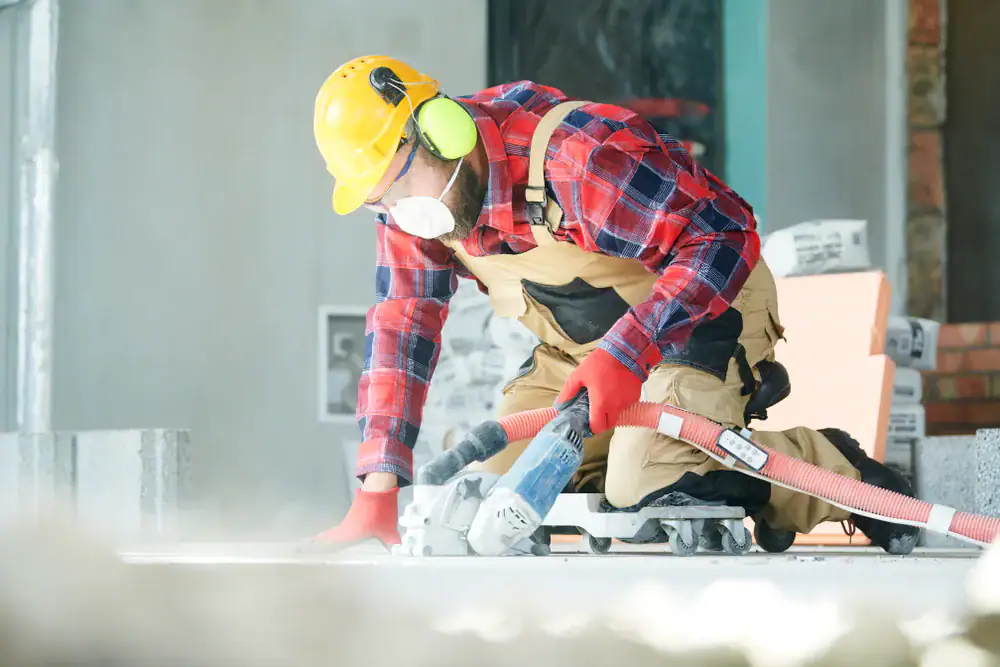
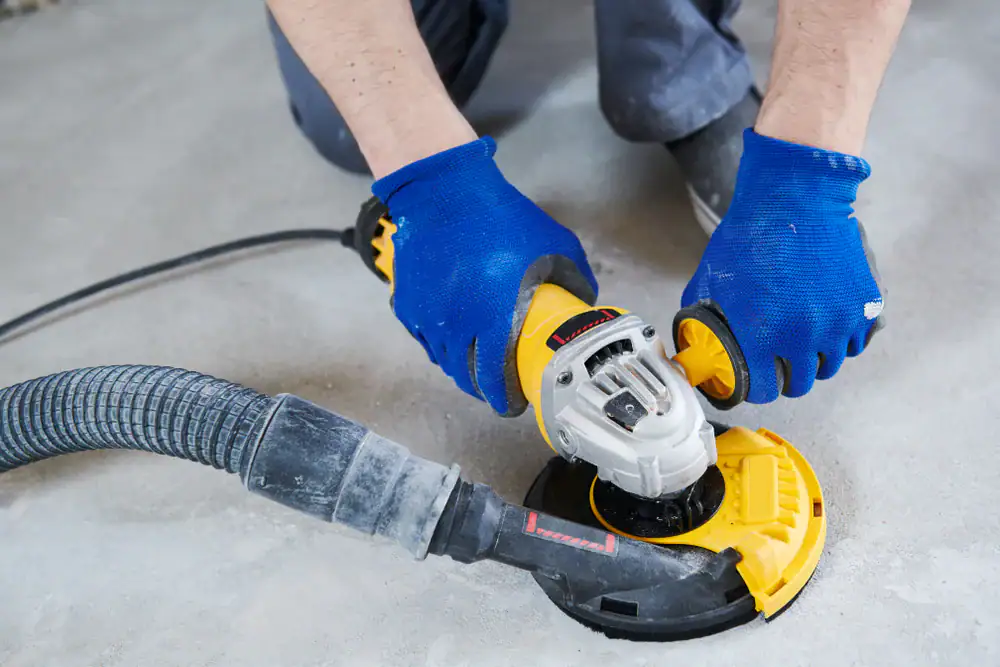
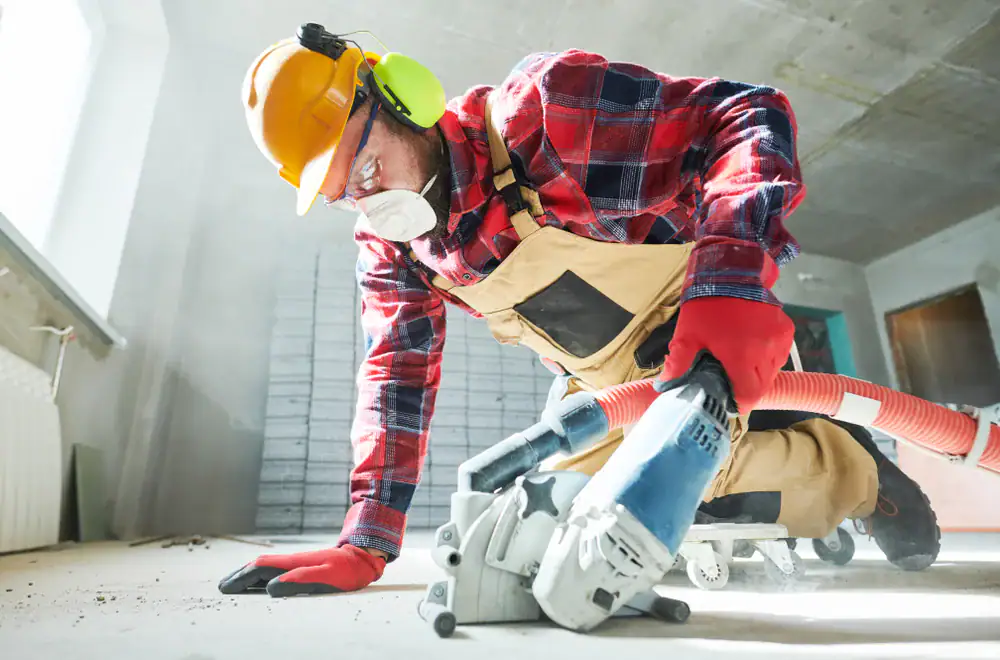
Next, we grind. Diamond tooling removes the top layer of concrete in passes, taking off anywhere from a sixteenth of an inch to a quarter inch depending on what the floor needs. Dust control runs the entire time – HEPA filtration systems keep the air clean and the mess contained. This isn’t loud for the sake of being loud; it’s precision removal of damaged concrete.
After grinding, the surface gets cleaned and inspected. You’ll see exposed aggregate, a uniform texture, and a flat plane that’s ready for whatever comes next. If you’re going with polished concrete, we move into finer grits. If you’re applying epoxy or another coating system, the ground surface provides the mechanical bond that makes it stick. Turnaround depends on square footage, but most commercial jobs in Doral wrap within a few days.
Ready to get started?
Concrete Restoration Services Doral FL
Grinding levels uneven slabs. If your warehouse has panels that have pumped or settled, grinding brings them back to a flat plane. That eliminates trip hazards, improves forklift operation, and stops water from pooling in low spots during Florida’s afternoon storms.
It removes failed coatings. Previous contractors in South Florida have left behind peeling epoxy, delaminated overlays, and finishes that didn’t bond. Grinding takes it all off and gets you back to clean concrete. No patching over problems – just removal and a fresh start.
Grinding also preps for polished concrete. If you want that high-gloss, low-maintenance finish, the surface has to be ground flat first. We work through progressively finer diamond grits until the concrete is smooth enough to polish. The result is a seamless floor that handles oil, resists stains, and costs a fraction of what you’d spend maintaining tile or coated floors over the next decade.
Doral’s ready-mix costs run between $105 and $140 per cubic yard. Grinding extends the life of what you’ve already poured instead of tearing it out and starting over. Especially in industrial zones near Miami International Airport, where downtime costs more than the concrete itself.
How long does concrete grinding take for a typical warehouse in Doral?
Most warehouse floors between 5,000 and 15,000 square feet take two to four days to grind, depending on the condition of the concrete and how much material needs to come off. If we’re just leveling high spots and prepping for a coating, that’s faster than removing a failed epoxy system or grinding down to expose heavy aggregate for polished concrete.
We schedule around your operations. If you need us to work nights or weekends to avoid disrupting logistics, we do that. Doral’s industrial facilities don’t shut down for floor work, so we plan crew rotations and equipment staging to keep your dock doors open and your trucks moving.
Dust control adds time but keeps the job clean. HEPA filtration systems run continuously, and we section off work areas to contain debris. The goal is to finish fast without leaving a mess that takes another week to clean up.
What’s the difference between grinding and polishing concrete?
Grinding removes material. Polishing refines it. Grinding uses coarse diamond tooling to level the slab, remove coatings, or expose aggregate. It’s the prep work that makes everything else possible. Polishing takes a ground surface and works through finer and finer grits until the concrete is smooth and reflective.
Think of grinding as demolition and polishing as finishing. If your floor has cracks, uneven panels, or a failed coating, grinding fixes that. Once the surface is flat and clean, polishing brings out the shine. You can’t polish a damaged slab – the imperfections just become shiny imperfections.
Most commercial projects in Doral start with grinding. Whether you’re applying epoxy, installing a coating system, or going for polished concrete, the slab has to be level first. Grinding gets you there. Polishing is optional, but if you want a low-maintenance, high-durability finish, it’s worth the extra passes.
Can you grind concrete that’s already been coated with epoxy?
Yes, and we do it regularly. Failed epoxy coatings are common in South Florida because humidity and improper surface prep cause delamination. If the coating is peeling, bubbling, or just worn through in high-traffic areas, grinding removes it completely and gets you back to bare concrete.
The process is more aggressive than grinding raw concrete. We use coarser diamonds to break through the epoxy, then switch to finer grits to smooth out the surface once the coating is gone. Dust control is critical here because epoxy particles are harder to contain than concrete dust.
Once the old coating is off, we inspect the slab for damage. Sometimes the concrete underneath is fine and just needs a new finish. Other times, previous contractors didn’t prep correctly, and there’s delamination or weak spots that need repair before anything else goes down. Either way, grinding gives you a clean slate instead of patching over a failing system.
How much does concrete grinding cost in Doral?
Professional concrete grinding in Doral typically runs between $3 and $8 per square foot, depending on the condition of the slab, how much material needs to come off, and what kind of finish you’re prepping for. Removing a failed coating costs more than leveling a few high spots. Grinding to expose heavy aggregate for polished concrete costs more than basic surface prep for an epoxy system.
We don’t charge by the hour. Pricing is based on square footage, scope of work, and site conditions. If your facility has limited access, requires night work, or needs sections completed in phases to keep operations running, that affects the estimate. We provide written proposals after a site visit – no guessing, no surprises.
For context, replacing a concrete slab in Doral costs $8 to $14 per square foot after you factor in demolition, disposal, and new pour costs. Grinding extends the life of what’s already there for a fraction of that. Especially in warehouse and industrial settings, where downtime during a full replacement would cost more than the concrete itself.
Does concrete grinding create a lot of dust?
It can, but not if it’s done correctly. We use HEPA-rated dust collection systems that attach directly to the grinding equipment. These systems capture 99% of airborne particles at the source, before they spread through your facility. The result is a cleaner job site and breathable air for anyone working nearby.
South Florida’s humidity actually helps with dust control. Concrete in Doral holds more moisture than concrete in drier climates, which means less dust generation during grinding. We still run filtration systems the entire time, but the conditions here are more favorable than, say, Arizona or Nevada.
After grinding, we vacuum the floor and remove all debris before moving to the next phase. If you’re staying operational during the work, we section off areas with plastic barriers to contain any residual dust. The goal is to finish the job without forcing you to deep-clean the entire building afterward.
Will grinding fix cracks in my concrete floor?
Grinding levels the surface, but it doesn’t repair structural cracks. If your floor has hairline surface cracks, grinding can remove them by taking off the top layer of concrete. If the cracks are deeper or caused by settlement, shifting, or structural issues, they need to be filled and sealed before grinding happens.
We assess cracks during the initial site visit. Shallow cracks get ground out. Deep cracks get routed, cleaned, and filled with epoxy or polyurea depending on the location and load requirements. Once repairs cure, we grind the entire surface to bring everything level. Skipping crack repair and just grinding over them means the cracks telegraph through whatever finish you apply next.
Doral’s flat terrain and high water table create conditions where slabs settle unevenly. If panels have pumped or separated, grinding can level the surface height differences, but it won’t stop future movement. In those cases, we recommend slab stabilization or mud jacking before grinding. Otherwise, you’re just grinding a floor that’s going to shift again in six months.
Other Services we provide in Doral
Leave a Reply