


Concrete Grinding in Golf, FL
Surfaces Prepared Right, Coatings That Actually Stick
Hear from Our Customers
Concrete Floor Grinding Contractors
You’re not grinding concrete for fun. You’re doing it because the surface isn’t flat, the old coating failed, or you need something that’ll hold up under real use.
Concrete grinding removes old adhesives, levels out uneven spots, and opens up the pores so your epoxy or sealer actually bonds. Without it, you get bubbling, peeling, and a floor that looks bad in six months. With it, you get a surface that’s ready to perform.
Most concrete in Golf has seen years of heat, humidity, and salt air. That means surface degradation, minor cracking, and old coatings that didn’t prep right the first time. Grinding resets the surface so the next layer has something solid to grab onto. It’s not optional if you want the floor to last.
Concrete Grinding Services Golf, FL
SPF Industrial is a veteran-owned concrete and epoxy company serving Golf and the surrounding South Florida area. We don’t subcontract the work. Every grind, every prep, every coating—it’s done by our full-time crew.
We’ve worked with the Coast Guard, the U.S. Army, the City of Doral, and Sunny Isles municipal projects. That’s not to brag—it’s to show we handle high-stakes floors where failure isn’t an option. If a government facility trusts us with their concrete, you can too.
Golf sits in an area where salt, moisture, and temperature swings are constant. Your concrete takes a beating. We account for that in how we prep, what equipment we use, and what coatings we recommend afterward.
Our Concrete Grinding Process
First, we assess the slab. We’re looking at the condition of the surface, any existing coatings, cracks, lippage, or weak spots. That tells us what grit sequence to use and whether you need repairs before we grind.
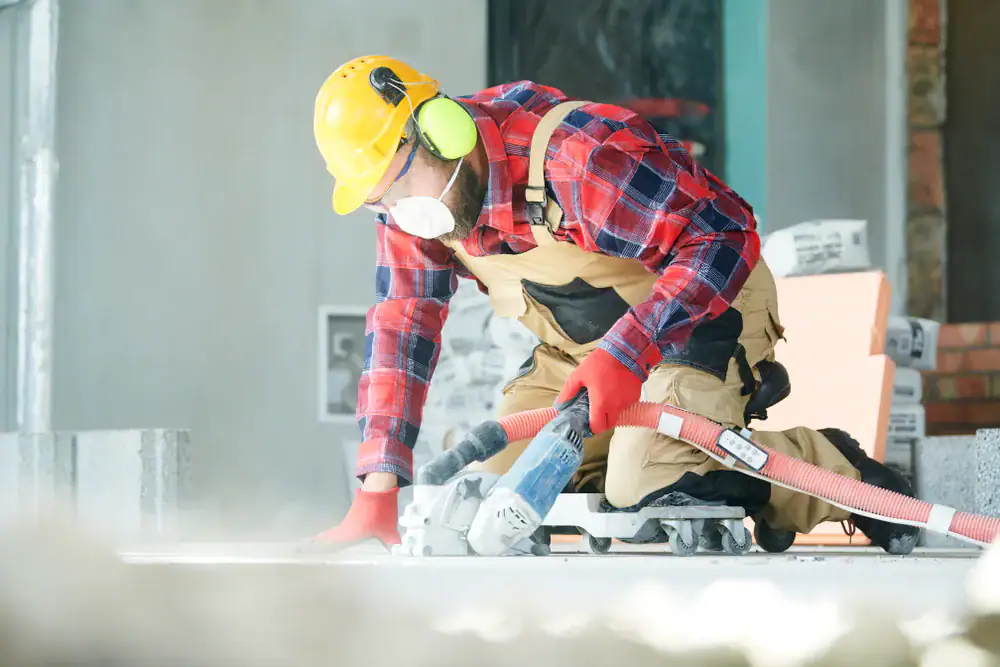
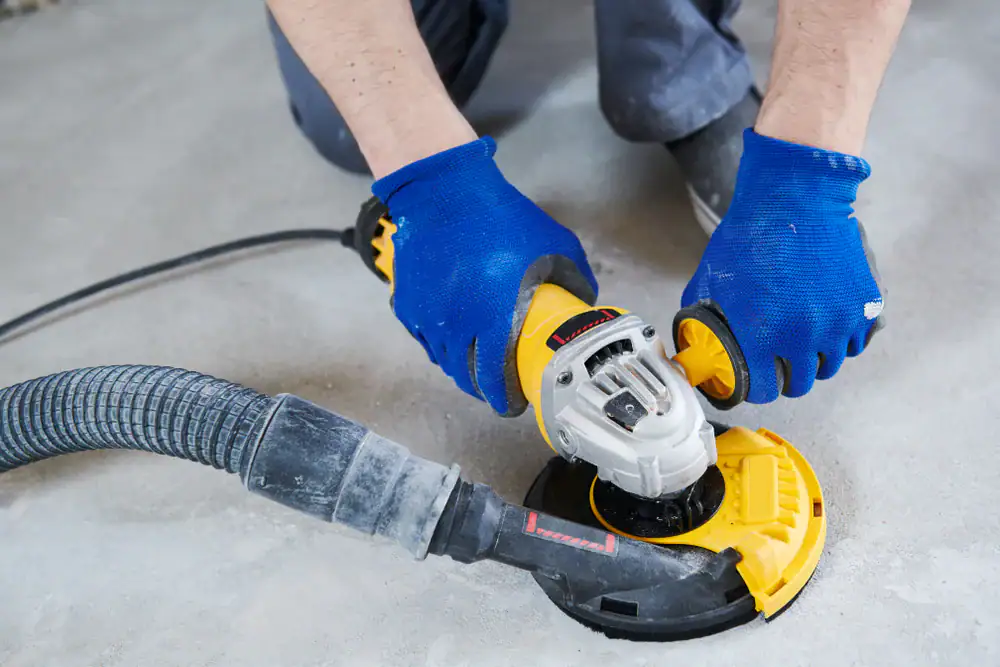
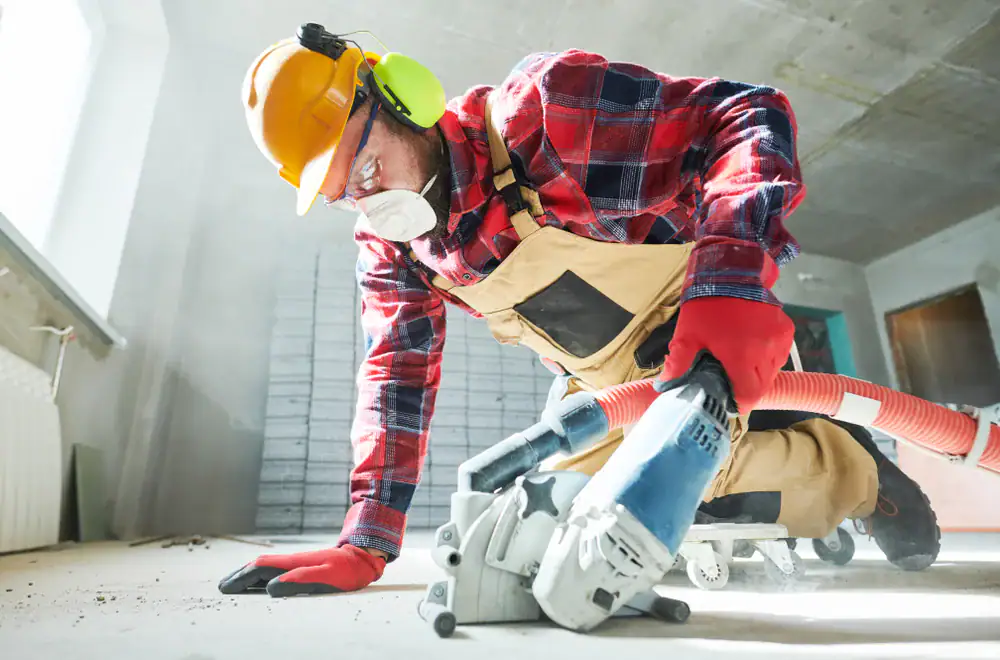
Then we grind. We use diamond-embedded tooling that removes material in controlled passes. Depending on the job, we might go dustless or use a wet system. The goal is to get the surface flat, clean, and profiled so coatings bond properly. If there are high spots, trip hazards, or old epoxy that won’t come up with a scraper, grinding takes care of it.
After grinding, we clean everything. Dust, slurry, debris—it all has to come off before any coating touches the floor. Then we check the profile with a gauge to make sure it meets the spec for whatever’s going down next. If you’re doing epoxy, polished concrete, or a urethane system, the profile has to match. We don’t guess.
Most projects in Golf move fast. We know you can’t shut down a facility or leave a garage torn apart for weeks. Our typical turnaround for grinding and prep is 24 to 48 hours, depending on size and scope.
Ready to get started?
Concrete Restoration Services Golf, FL
When we grind your concrete, you’re getting more than just a pass with a machine. We handle crack repair, joint filling, and patching before we even start grinding. If the slab has structural issues, we’ll tell you up front—not after we’ve already started.
We also handle contaminants. Oil stains, old glue, paint overspray, tire marks—it all affects adhesion. Grinding removes the top layer where that contamination lives. In Golf, we see a lot of salt residue and moisture intrusion, especially near the coast. That has to be addressed or your coating won’t cure right.
You’ll also get a consultation on what comes next. We work with Sherwin Williams, Fosroc, and other commercial-grade product lines. If you’re not sure whether you need epoxy, polyaspartic, or a polished concrete finish, we’ll walk you through what makes sense for your space and your budget. We’re not here to upsell—we’re here to get it right the first time.
Golf’s climate is tough on concrete. The heat accelerates curing issues. The humidity affects how coatings set. The salt eats away at anything that’s not sealed properly. We factor all of that into our prep work so your floor holds up long-term.
How long does concrete grinding take for a typical garage or warehouse?
For a standard two-car garage, grinding usually takes four to six hours, depending on the condition of the slab and whether there’s old coating to remove. A small commercial space or warehouse bay might take a full day or two, especially if there’s significant lippage or surface damage.
The real variable is what we’re starting with. If your concrete is relatively new and just needs a light profile for epoxy, that’s quick. If we’re removing old tile adhesive, grinding down uneven joints, or dealing with a failed coating, it takes longer. We don’t rush it—if the surface isn’t prepped correctly, the next layer fails.
We also account for drying time if we’re using a wet grinding system. In Florida’s humidity, that can add a few hours before we’re ready to move to the next step. Most projects in Golf are done within 24 to 48 hours from start to finish, including any repairs and cleanup.
Will concrete grinding create a lot of dust in my space?
It can, but we offer dustless grinding for indoor jobs or spaces where dust is a concern. Dustless systems use a vacuum attachment that captures 99% of the silica dust as we grind. You’ll see some fine residue, but nothing like traditional grinding, which can coat everything in the room.
If you’re in a facility that produces food, pharmaceuticals, or has sensitive equipment, dustless is the way to go. It’s also better for residential garages where you don’t want dust migrating into the house. The trade-off is that dustless systems are slightly slower, but the cleanup is minimal.
For outdoor work or spaces where dust isn’t an issue, we’ll use standard grinding equipment. Either way, we clean the surface thoroughly after grinding. Any dust or slurry left behind will compromise the bond of whatever coating goes down next, so we don’t skip that step.
Can you grind concrete that already has an epoxy coating on it?
Yes, but it depends on the condition of the existing epoxy and how well it’s bonded. If the coating is peeling, bubbling, or delaminating, grinding will remove it along with a thin layer of the concrete underneath. That’s actually the best-case scenario—you get a clean surface to start over.
If the epoxy is still solid and you just want to rough it up for a new topcoat, we can profile it without fully removing it. But here’s the thing: if the original coating failed because of poor prep, grinding down to bare concrete is the only way to avoid the same problem again.
We see a lot of failed epoxy jobs in Golf, usually because the concrete wasn’t ground or acid-etched before the coating went down. Moisture, oil, or surface contaminants caused the bond to fail. Grinding resets everything so you’re not just recoating a bad surface. We’ll assess what you’ve got and recommend the best approach.
What’s the difference between grinding and polishing concrete?
Grinding is about surface preparation—removing material, leveling the slab, and creating a profile for coatings to bond to. Polishing is a finishing process that uses finer and finer grits to create a smooth, reflective surface. You can grind without polishing, but you can’t polish without grinding first.
If you want a polished concrete floor, we start with a coarse grind to flatten the surface and expose the aggregate. Then we move through progressively finer diamond grits—sometimes eight or more passes—until the concrete is smooth and glossy. We also apply a densifier, which hardens the surface and makes it more stain-resistant.
Polished concrete is popular in Golf for commercial spaces, showrooms, and modern homes because it’s durable, low-maintenance, and handles humidity well. It doesn’t need a topical coating, so there’s nothing to peel or wear off. But it’s not the right choice for every application. If you need chemical resistance or a specific color, epoxy makes more sense. We’ll help you figure out what fits your needs.
How much does concrete grinding cost in Golf, FL?
Concrete grinding typically runs between $2 and $5 per square foot, depending on the condition of the slab, the level of prep required, and whether you need dustless equipment. If we’re just doing a light grind to profile the surface for epoxy, you’re on the lower end. If we’re removing old coatings, repairing cracks, and dealing with uneven areas, it’s closer to the higher end.
For a 400-square-foot garage, you’re looking at $800 to $2,000 for grinding and prep. A commercial space or warehouse will cost more based on square footage and complexity. We give you a transparent quote up front after we assess the space—no surprises, no upselling.
Keep in mind that skipping proper grinding to save money almost always costs more in the long run. A coating that fails because the surface wasn’t prepped right means you’re paying for removal, re-grinding, and recoating. Doing it right the first time is cheaper. We offer free consultations, so you can get a clear picture of what the job actually requires before you commit.
Do you only grind concrete for epoxy floors, or can you do other finishes?
We grind for all kinds of finishes—epoxy, polyaspartic, urethane, polished concrete, stained concrete, and overlay systems. The profile we create depends on what’s going down next. Epoxy needs a certain amount of tooth for the coating to grab. Polished concrete needs a smooth, flat surface. Overlays need a clean, slightly rough base.
We also grind for non-coating applications. If you’ve got uneven concrete that’s creating a trip hazard, grinding can level it out. If your driveway or walkway has surface scaling or spalling, grinding removes the damaged layer and leaves you with sound concrete underneath.
In Golf, we do a lot of concrete restoration work where the goal isn’t necessarily a coating—it’s just fixing deteriorated or unsafe surfaces. We’ve worked on municipal sidewalks, school facilities, and commercial properties where the concrete needed correction, not decoration. Whatever the end goal is, grinding is usually the first step to getting there.
Other Services we provide in Golf
Leave a Reply