


Concrete Grinding in Lauderhill, FL
Dustless Concrete Grinding That Actually Stays Clean
Hear from Our Customers
Professional Concrete Floor Grinding Contractors
You can’t slap epoxy or coating over a rough, uneven surface and expect it to hold. Old adhesive residue, pits, divots, uneven joints—all of it has to go before any new material goes down.
That’s where concrete grinding comes in. It’s not about making things look pretty right away. It’s about creating a surface profile that actually bonds with whatever comes next—whether that’s polished concrete, epoxy, or another coating system.
Our dustless grinding process removes old coatings, levels out trip hazards, and opens up the concrete pores so your new floor system has something to grip. You get a clean, uniform surface that’s ready for the next step. No shortcuts. No dust everywhere. No callbacks because the coating failed in six months.
If you’re in Lauderhill and need concrete restoration services or surface prep before a new floor goes in, this is the step that determines whether your investment lasts two years or twenty.
Concrete Grinding Services in Lauderhill
We’ve been handling concrete floor grinding and epoxy systems across South Florida since 2020. We’ve worked with the Coast Guard, US Army, City of Doral, City of Sunny Isles, and county facilities throughout the region—projects where showing up late or cutting corners isn’t an option.
We’re veteran-owned, which means we operate with the same standards we held in service: show up on time, do what we said we’d do, and leave the site better than we found it. No subcontractors. No runarounds. Just our crew, our equipment, and our name on the work.
Lauderhill properties—commercial warehouses, municipal facilities, residential garages—deal with Florida’s humidity, heavy traffic, and the need for fast turnarounds. We get it. That’s why we use dustless grinding technology and work directly with you, not through a general contractor who’s just passing along your message.
How Concrete Grinding Works
First, we assess the surface. What’s on it now? What needs to come off? What’s the end goal? If you’re prepping for epoxy, we need a specific surface profile. If you’re polishing, we’re working toward a different finish. This step determines the equipment and grit sequence we’ll use.
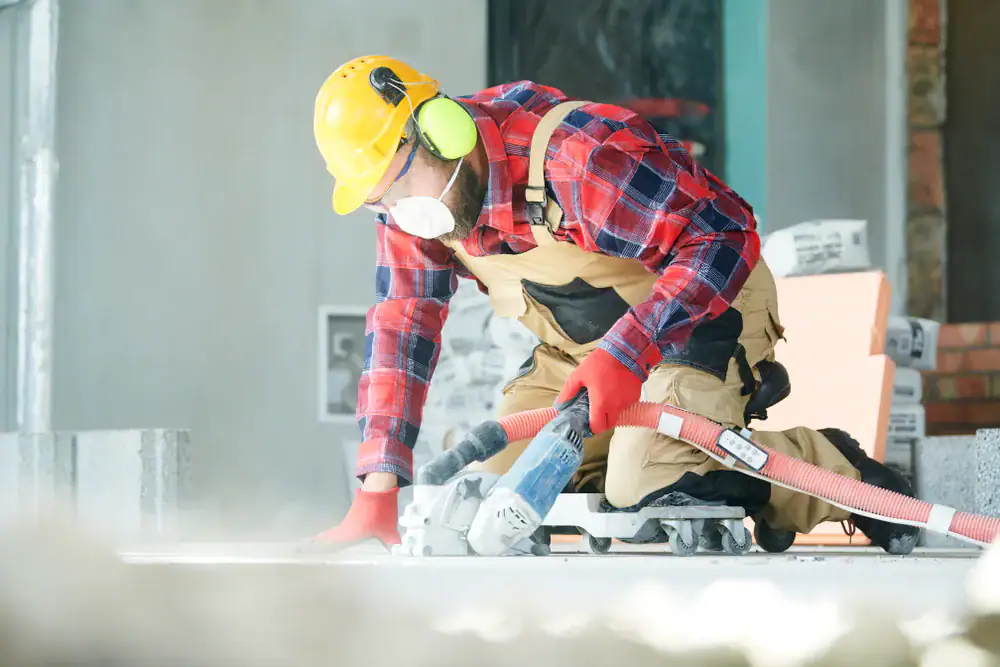
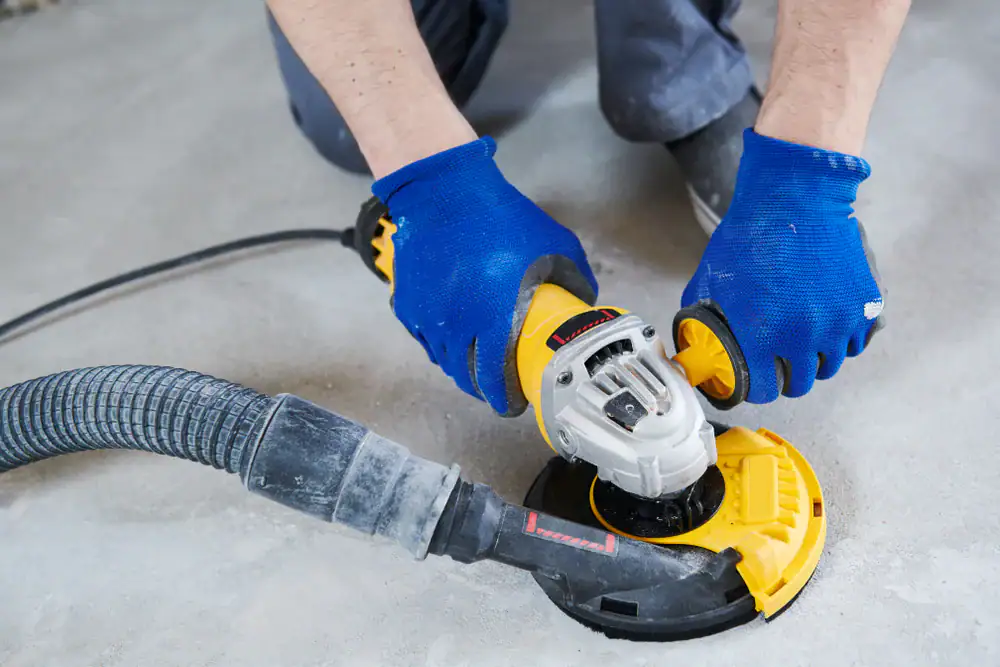
Next, we grind. We use diamond-embedded discs that remove old coatings, adhesives, and surface imperfections while simultaneously opening up the concrete’s pores. Our dustless system captures 99% of airborne particles with HEPA filtration, so you’re not dealing with a job site that looks like a dust storm hit it. This is especially important in Lauderhill’s humid climate where dust can settle into everything and become a nightmare to clean.
After grinding, we inspect and address any repairs—cracks, spalls, or low spots get filled and leveled. Then we clean the surface completely. What you’re left with is a uniform, properly profiled concrete slab that’s ready for polishing, coating, or whatever system you’re installing. Foot traffic is usually safe within 12 hours. Equipment traffic within 72 hours, depending on what comes next.
The process isn’t complicated, but doing it right requires the correct equipment, experience reading concrete, and understanding what the next layer needs to bond properly.
Ready to get started?
Cement Grinding and Polished Concrete Contractors
You get a full surface evaluation before we start. We’re not guessing what your floor needs—we’re identifying the coatings, contaminants, and profile requirements based on what you’re doing next.
The grinding itself uses industrial diamond tooling and dustless extraction systems. We’re removing what needs to go—epoxy, tile adhesive, old sealers, uneven high spots—while creating the surface profile your new coating requires. In Lauderhill’s commercial and industrial spaces, this often means dealing with years of built-up coatings or heavily trafficked concrete that’s seen better days.
We handle crack repair and joint leveling as part of the process. Trip hazards get ground down. Pits and divots get filled with appropriate repair compounds. You’re not just getting a grind job—you’re getting a floor that’s structurally sound and ready for its next phase.
Cleanup is part of the service. Our dustless system means you’re not spending days dealing with concrete dust settling on equipment, inventory, or HVAC systems. For food service facilities, pharmaceutical spaces, or any environment where contamination is a concern, this isn’t a nice-to-have—it’s a requirement.
We work with Sherwin Williams and Fosroc products when coatings or repairs are needed. These aren’t budget-bin materials. They’re what we’d use on a military installation, because that’s the standard we’re held to.

How long does concrete grinding take and when can I use the floor again?
Timeline depends on square footage, what we’re removing, and what condition the concrete is in. A typical commercial space—say 2,000 to 5,000 square feet—usually takes one to three days for grinding and prep. Larger warehouses or facilities take longer.
Foot traffic is generally safe within 12 hours after we’re done grinding and cleaning. If you’re applying a coating system after, you’ll need to wait for that to cure—usually 24 to 72 hours depending on the product. Heavy equipment traffic is typically fine after 72 hours, but we’ll give you specific guidance based on your floor system.
For kitchen floors or spaces that need a faster turnaround, we can often complete the work in 24 to 48 hours. We’ve handled emergency response situations where timing was critical. The key is communication up front so we can schedule appropriately and bring the right crew size.
Is concrete grinding really dustless, or is that just marketing?
It’s not zero dust, but it’s as close as you’ll get with current technology. Our grinders connect directly to high-performance vacuums with HEPA filtration that capture 99% of airborne particles at the source. You’re not dealing with clouds of silica dust or spending days cleaning up afterward.
This matters especially in Florida, where humidity makes dust control even more important. Dust settles into HVAC systems, on products, on equipment—it’s not just a nuisance, it’s a contamination and health issue. For food facilities or pharmaceutical operations, traditional grinding methods aren’t even legal because of the dust.
The difference is visible immediately. With traditional grinding, you’d see a haze in the air and dust covering everything within 50 feet. With our system, the work area stays clean enough that adjacent spaces can often remain operational. We’ve ground floors in active warehouses where operations continued in the next aisle over.
Can you grind any type of concrete, or are there limitations?
We can grind most concrete surfaces, but the condition and age of the concrete affect the approach. New concrete that’s at least 28 days cured grinds predictably. Older concrete with unknown history requires more assessment—we need to know if there’s delamination, if previous coatings penetrated deep, or if the aggregate is unusually hard or soft.
Extremely soft or deteriorated concrete sometimes isn’t a good candidate for grinding alone—it might need repair or overlay first. Very hard aggregate or certain decorative concrete mixes require different diamond tooling and take longer to grind. We’ll tell you up front if your floor has issues that need addressing before grinding.
Exterior concrete in Lauderhill often has different challenges than interior slabs—weathering, root intrusion, settlement issues. We handle both, but the process and timeline differ. The key is the initial assessment. We’re not showing up with one grinder and hoping it works. We’re bringing the right equipment for your specific concrete.
What’s the difference between grinding and polishing concrete?
Grinding is surface prep. Polishing is a finish. They use similar equipment but serve different purposes and require different processes.
Concrete grinding removes material—old coatings, adhesives, surface imperfections—and creates a profile so new coatings bond properly. We’re typically using coarser diamond grits (30 to 120 grit range) and removing anywhere from 1/16 inch to 1/4 inch of surface depending on what needs to come off. The result is a clean, uniform surface that’s ready for epoxy, urethane, or another coating system.
Polished concrete is a multi-step process where we grind the surface, then progressively refine it with finer and finer diamond grits (up to 3000 grit), combined with chemical densifiers that harden the concrete. The result is a glossy, durable floor that doesn’t need coating—the concrete itself becomes the finished surface. It’s popular in retail spaces, showrooms, and modern commercial buildings.
Many projects start with grinding for prep, then either get coated or continue into polishing. If you’re in Lauderhill and not sure which direction makes sense for your space, we’ll walk through the options based on your traffic, budget, and aesthetic goals.
How much does concrete grinding cost in Lauderhill?
Pricing depends on square footage, what we’re removing, floor condition, and site access. As a rough baseline, basic grinding for coating prep typically runs between $2 to $5 per square foot. More complex jobs—thick coatings, multiple layers, heavy repair work—can run higher.
That’s still significantly less than tearing out and replacing a concrete floor, which can easily hit $10 to $15 per square foot or more when you factor in demolition, disposal, and new installation. Grinding preserves your existing slab structure and gets you to a usable surface faster.
We provide transparent pricing after seeing the space. We’re not giving you a number over the phone based on guesses—we’re coming out, assessing what’s actually there, and giving you a clear quote that includes prep, grinding, repairs, and cleanup. No surprise charges. No change orders unless you change the scope. We’ve worked with government contracts where pricing has to be locked in and justified—that’s the standard we operate by for every client.
Do I need concrete grinding before applying epoxy or other coatings?
Yes, if you want the coating to actually stay down. Epoxy and urethane coatings bond mechanically—they need a rough, open surface profile to grip into. If you apply coating over smooth, sealed, or contaminated concrete, it’ll look fine for a few weeks, then start peeling or delaminating.
Grinding removes any existing sealers, oils, or contaminants that prevent bonding. It also opens up the concrete’s pores and creates the texture (called a profile) that coating manufacturers specify for their products. Most epoxy systems require a Concrete Surface Profile (CSP) of 1 to 3, which means the surface needs visible texture but not deep gouges.
In South Florida’s humid climate, moisture issues are common. Grinding also helps identify any moisture problems before coating goes down. If we see moisture coming through during prep, we can address it before it causes coating failure. Skipping proper grinding is the number one reason epoxy floors fail early. You’re not saving money—you’re guaranteeing a redo in a year or two.
Other Services we provide in Lauderhill
Leave a Reply