


Concrete Grinding in Loxahatchee Groves, FL
Floors That Last 30+ Years in Florida’s Climate
Hear from Our Customers
Concrete Floor Grinding Contractors Near You
You’re not looking at a floor. You’re looking at whether your warehouse can handle another decade of forklift traffic without cracking. Whether your showroom lighting bill stays manageable. Whether someone’s going to trip on that uneven slab and sue.
Concrete grinding fixes the surface issues you can see—cracks, lippage, staining—and the structural problems you can’t. The densification process increases abrasion resistance by up to 400%, which matters when you’ve got constant traffic or heavy equipment. It also creates a reflective finish that can cut your lighting costs by 30% in commercial spaces.
Here’s what changes after the work’s done: you mop occasionally instead of constantly patching. Your floors don’t collect dust in the pores. The surface stays level, which means fewer trip hazards and liability concerns. And if you’re in Loxahatchee Groves dealing with Florida’s humidity and temperature swings, you need concrete that’s been treated to handle thermal expansion without cracking apart in five years.
This isn’t about making floors shiny. It’s about making them last and reducing what you spend maintaining them.
Concrete Grinding Services in Loxahatchee Groves
We’ve been operating since July 2020, and we’ve built a reputation working with clients who don’t tolerate mistakes—Coast Guard facilities, US Military installations, municipal projects across South Florida. That’s not name-dropping. It’s context for how we operate.
We’re veteran-owned, which means we show up on time, we do what we say, and we don’t leave a job half-finished. Our team works directly with property owners and facility managers in Loxahatchee Groves and across Palm Beach County, and we prefer it that way. No middlemen, no miscommunication, no surprises on the invoice.
This area has unique demands—larger properties, equestrian facilities, agricultural operations mixed with residential estates. We’ve handled concrete restoration for all of it. If your floors are dealing with Florida’s salt air, UV exposure, or just decades of wear, we know how to fix them correctly the first time.
Professional Concrete Grinding Process
We start with a site assessment—not a sales pitch. We’re looking at your existing concrete condition, what kind of traffic it sees, and what problems you’re trying to solve. Cracks get repaired before grinding starts, because there’s no point in polishing over structural issues.
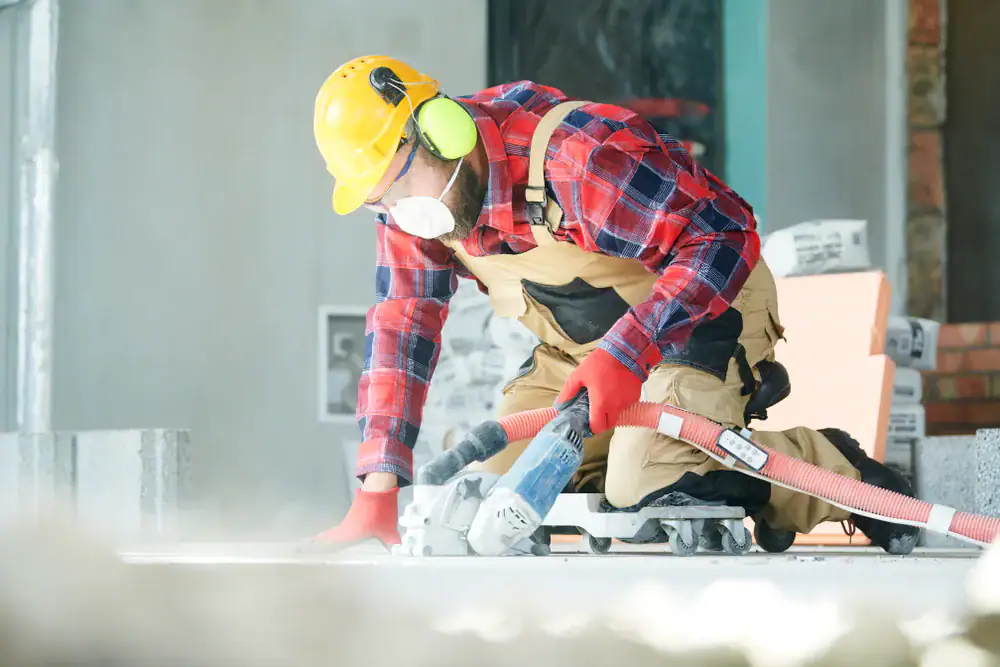
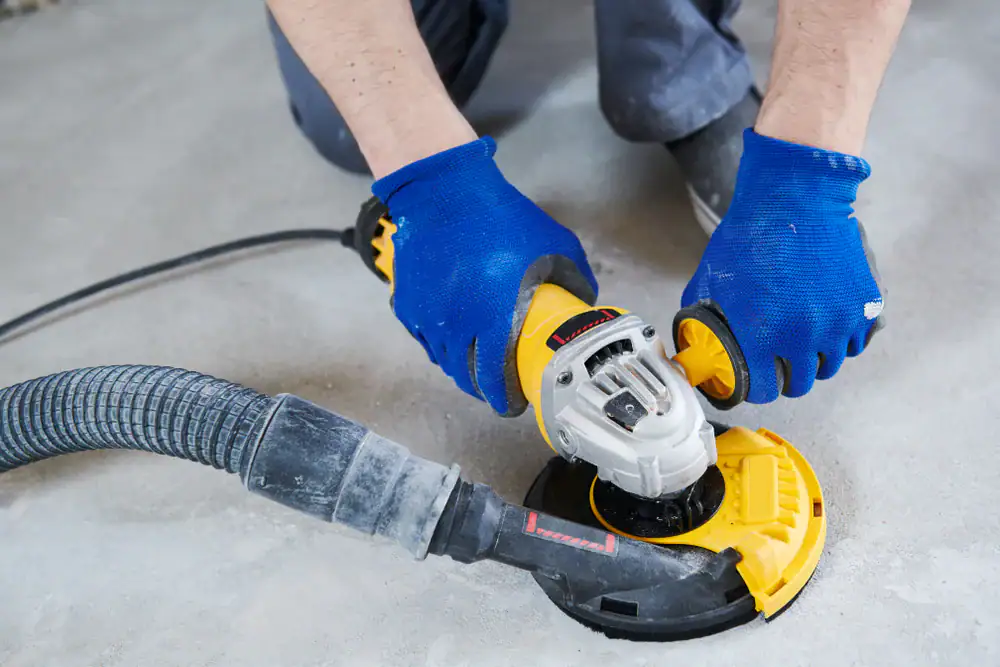
The grinding itself uses industrial diamond tooling in multiple stages. We’re not just smoothing the surface—we’re removing damaged concrete, exposing aggregate, and densifying the slab with a chemical hardener that penetrates deep. This is what increases strength and abrasion resistance. The process is dustless, using HEPA filtration systems, so you’re not dealing with airborne silica or shutting down operations for days.
After grinding and densification, we move into polishing stages that bring up the finish level you need—whether that’s a matte look for a warehouse or a high-gloss reflective surface for a showroom. Each pass refines the surface further until it’s sealed, hardened, and ready for whatever you’re putting on it.
Turnaround depends on square footage and condition, but we’ve completed kitchen floors in 24-48 hours when timing mattered. For larger commercial projects, we work with your schedule to minimize disruption. You’ll know the timeline upfront, and we stick to it.
Ready to get started?
Concrete Restoration Services Loxahatchee Groves
Surface preparation comes first—crack repair, joint filling, and removal of any coatings or contaminants that would interfere with bonding. If your concrete has settled unevenly or you’ve got lippage from tree roots (common in Loxahatchee Groves with the larger lots and mature landscaping), we address that before grinding starts.
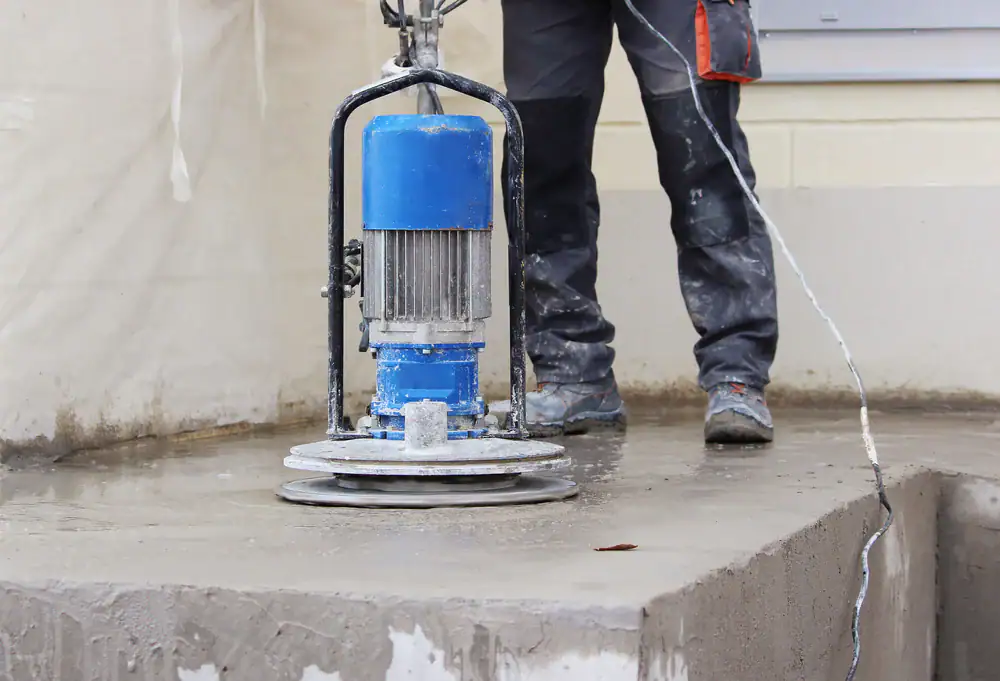
The grinding process itself involves multiple passes with progressively finer diamond abrasives. We’re working through grits the same way you’d sand wood, except we’re removing millimeters of concrete and exposing the aggregate underneath. The densifier application happens mid-process, chemically reacting with the concrete to harden it from within.
Polishing stages follow, bringing the surface up to the finish level you specify. We work exclusively with Sherwin Williams and Fosroc products—not because we’re loyal to brands, but because they perform consistently in Florida’s climate. The final result is a surface that’s harder than it was originally, resistant to moisture and staining, and reflective enough to improve your lighting efficiency.
You’re also getting a floor that only needs occasional damp mopping. No waxing, no stripping, no recoating every few years. For properties in Loxahatchee Groves dealing with dust from unpaved roads or agricultural operations nearby, that’s a significant maintenance reduction. The floor won’t harbor dust in surface pores the way untreated concrete does.

How long does concrete grinding take for a typical residential or commercial project?
For a residential garage or small commercial space under 2,000 square feet, you’re looking at one to two days from start to finish. That includes surface prep, grinding, densifying, and polishing. Larger commercial projects—warehouses, retail spaces, manufacturing facilities—depend on square footage and existing concrete condition, but most fall in the three-to-five-day range.
The timeline also depends on what we’re fixing. If you’ve got significant cracking or uneven settling that needs repair first, that adds time. If the concrete is in decent shape and just needs grinding and polishing, we move faster.
We’ve handled emergency turnarounds when clients needed floors done quickly—24 to 48 hours for kitchen floors that couldn’t stay closed long. That’s not standard, but it’s possible when scheduling allows. During your consultation, we’ll give you a specific timeline based on your project scope, and we don’t pad estimates to look good later. The date we give you is the date we finish.
Is concrete grinding dusty, and can it be done while our business is operating?
Traditional concrete grinding creates a massive amount of airborne silica dust, which is why it’s often illegal or inadvisable in food service, pharmaceutical, or any facility with sensitive products. We use dustless grinding systems with HEPA filtration that capture 99% of particles at the source.
That said, “dustless” doesn’t mean silent or invisible. You’ll still have equipment noise and workers on-site. For some businesses, it makes sense to work during off-hours or schedule the project during a planned closure. For warehouses or facilities that can section off areas, we can often work around operations without shutting everything down.
The bigger concern is usually access and staging. We need clear floor space to work, and we’re running heavy equipment that requires power. If you’re trying to keep a retail floor open or a production line running, we’ll walk through logistics during the site visit and figure out what’s realistic. Some clients prefer to close for a few days and get it done right. Others need us to work nights or weekends. We’ve done both.
How does polished concrete hold up in Florida’s humidity and temperature changes?
Concrete expands and contracts with temperature changes, and Florida’s swings between air-conditioned interiors and 95-degree heat put stress on any flooring system. Polished concrete handles this better than most alternatives because it’s a single monolithic surface—no seams, no layers that can delaminate, no coatings that crack when the slab moves.
The densification process we use chemically hardens the concrete and closes up the pore structure, which reduces moisture absorption. That’s critical in Florida where humidity sits above 70% most of the year. Untreated concrete absorbs moisture, which leads to efflorescence (that white powdery stuff), staining, and eventually spalling where the surface starts flaking off.
Salt air is another factor if you’re near the coast or in areas with brackish water tables like parts of Palm Beach County. The densifier creates a barrier that keeps salts from penetrating and corroding any rebar below. Properly installed polished concrete in Florida should last 30+ years without major maintenance—just occasional cleaning. That’s triple the lifespan of vinyl composite tile and longer than most epoxy coatings, which tend to yellow and degrade under UV exposure if they’re near windows or overhead doors.
What’s the difference between concrete grinding, polishing, and epoxy coatings?
Concrete grinding is the mechanical process of removing the top layer of concrete to expose fresh aggregate, level the surface, and prepare it for whatever comes next. It’s often the first step in both polishing and epoxy applications, but it’s also done on its own to fix uneven surfaces or remove old coatings.
Polished concrete takes grinding further—multiple passes with finer and finer diamond abrasives, plus a chemical densifier, to create a hard, reflective surface. You’re working with the concrete itself, not adding a coating on top. The result is extremely durable, low-maintenance, and improves over time as the surface burnishes from traffic.
Epoxy coatings are a different approach. You’re applying a resin layer on top of prepared concrete, which gives you color options, slip resistance, and chemical protection. Epoxy is ideal for environments with heavy chemical exposure or where you need specific safety markings. But it’s a coating, which means it can wear through, chip, or delaminate if the concrete underneath moves or wasn’t prepped correctly.
We handle both polished concrete and epoxy systems, and the right choice depends on what you’re using the floor for. Polishing makes sense for retail, showrooms, warehouses, and residential spaces where you want durability and low maintenance. Epoxy makes sense for manufacturing, auto shops, and facilities where chemical resistance or specific aesthetics matter. During the consultation, we’ll recommend what actually fits your situation—not just what’s easier for us to install.
Can you grind and polish concrete that already has cracks or uneven settling?
Yes, but the cracks and settling get addressed first. Grinding over damaged concrete doesn’t fix the underlying problem—it just makes it more visible. If you’ve got cracks from settling, tree roots, or just age, we’ll repair those with epoxy or polyurethane injection depending on width and movement. If sections have settled unevenly and you’ve got lippage where one slab is higher than another, we can grind down the high spots to level everything out.
This is common in Loxahatchee Groves where properties sit on larger lots with mature trees. Roots grow under slabs and push them up, or soil settles unevenly and creates trip hazards. Grinding can remove up to a quarter-inch of concrete in a single pass, which is usually enough to level most residential and commercial floors.
What we can’t fix with grinding is active structural movement. If your slab is still settling or you’ve got ongoing water intrusion causing heaving, grinding will only be a temporary fix. We’ll tell you during the site assessment if there’s a bigger issue that needs addressing first—foundation work, drainage correction, root removal. We’re not in the business of selling you a service that won’t last. If grinding and polishing will solve your problem, we’ll do it. If it won’t, we’ll say so upfront and explain what needs to happen first.
How much does concrete grinding cost, and what affects the price?
Concrete grinding typically runs between $3 and $8 per square foot depending on the condition of your existing concrete, the level of finish you want, and how much prep work is required. A basic grind and seal for a warehouse floor sits on the lower end. A high-gloss polished finish for a showroom with significant crack repair sits on the higher end.
What affects the price: surface condition (more damage means more prep), square footage (larger projects cost less per square foot), access and logistics (if we’re working nights or in occupied spaces, that costs more), and finish level (more polishing stages mean more labor and time). If you need expedited turnaround, that also adjusts pricing.
We don’t do estimates over the phone because there are too many variables. During the site visit, we’ll measure the space, assess the concrete condition, and give you an upfront price that includes everything—prep, grinding, densifying, polishing, and cleanup. No surprises, no change orders unless you change the scope. We prefer dealing directly with property owners rather than going through general contractors, which often saves you money because there’s no markup or miscommunication in the middle. You’ll know exactly what you’re paying for and why.
Other Services we provide in Loxahatchee Groves
Leave a Reply