


Concrete Grinding in Parkland, FL
Concrete That Lasts Decades, Not Years
Hear from Our Customers
Professional Concrete Grinding Services
Most property owners in Parkland, FL think damaged concrete means expensive replacement. It doesn’t. Diamond grinding removes surface imperfections, seals the pores, and creates a finish that handles Florida’s humidity without breaking down.
You’re looking at 20-30 years of use instead of 3-5. Daily maintenance becomes sweeping. Weekly maintenance is damp mopping with neutral cleaner. That’s it.
The surface becomes naturally slip-resistant and completely sealed against stains, oil, and moisture. Spills don’t soak in. Cracks don’t spread. And because the polished surface reflects more light, you’ll cut lighting costs up to 30%. That’s not marketing talk—it’s what happens when you densify and polish concrete correctly.
Concrete Floor Grinding Contractors Parkland
We’ve been restoring concrete floors across Florida since 2020. We’ve worked with the U.S. Coast Guard, Army facilities, City of Doral, City of Sunny Isles, and county high schools. These aren’t small jobs with loose standards—they’re projects where the work has to hold up under scrutiny and heavy use.
Parkland’s real estate market moves slower than most of South Florida, with homes sitting for 91 days on average. That gives property owners time to make smart renovation decisions instead of rushed ones. When you’re investing in a home worth $840K on average, you don’t want a floor that needs redoing in five years.
We operate with the same precision we learned in the military. No shortcuts. No surprises. Just transparent pricing, direct communication, and floors that perform exactly as promised.
Concrete Grinding Process Parkland FL
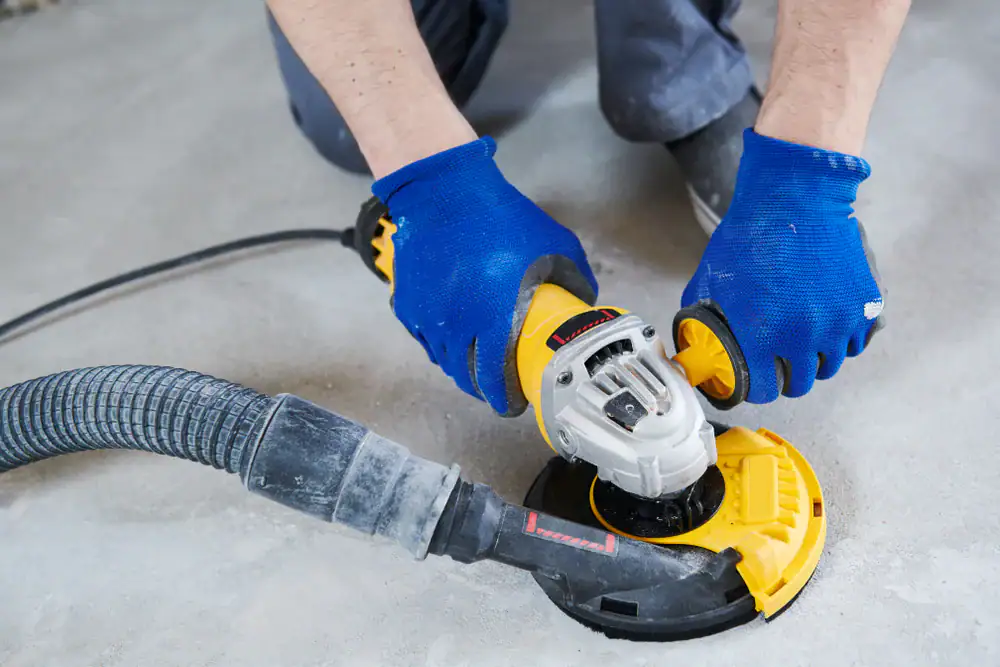
First, we assess your concrete. We’re looking for cracks, spalling, surface inconsistencies, and any hidden issues like VCT ghost shadows or trench repairs. If there’s a problem, we address it before grinding starts—not after.
Next comes surface preparation and crack repair. This step matters more than most contractors admit. If the base isn’t stable, the polish won’t last. We use commercial-grade equipment most contractors don’t have access to—the same machines used in major industrial facilities.
Then we move through progressive diamond grinding. We’re not just smoothing the surface. We’re removing damaged concrete, exposing aggregate, and densifying the material so it resists moisture penetration. Each pass uses finer diamonds until the surface reaches the level of polish you need.
Finally, we apply a protective sealer. Most projects allow normal operations within 24-48 hours. Actual polishing takes 1-3 days depending on square footage. You’re not shut down for weeks. You’re back to business fast, with a floor that won’t need this level of work again for decades.
Ready to get started?
Polished Concrete Contractors Parkland FL
This isn’t a surface treatment. It’s a complete transformation. You get surface preparation, crack repair, full diamond grinding, progressive polishing, and protective sealing. Every step is included because every step matters.
Florida’s climate is brutal on concrete. High humidity, temperature swings, and saltwater exposure accelerate deterioration. Parkland sits inland from the coast, but you’re still dealing with moisture and heat that cause shrinkage cracking and surface breakdown. Properly ground and polished concrete resists all of it.
The finish we create costs about half what a quality epoxy system runs, and it’s more durable in high-traffic situations. There’s no coating to chip or peel. The durability is built into the concrete itself. And because we work with products from Laticrete, Sherwin Williams, and Fosroc, you’re getting materials that meet commercial and industrial standards—not residential-grade substitutes.
You’ll also see that reflective surface cutting down your lighting costs. In a commercial space, that adds up fast. In a residential garage or workshop, it just makes the space more functional. Either way, you’re saving money while getting a floor that actually improves over time as the surface hardens further with use.

How long does concrete grinding take and when can I use the floor again?
Most concrete grinding projects in Parkland, FL take between 1-3 days depending on square footage and the condition of your existing concrete. If we’re dealing with significant damage, crack repair, or multiple levels of restoration, it might extend slightly—but we’ll tell you that upfront during the consultation.
You can walk on the floor within 24 hours. Light use is fine at that point. For full operational use—moving equipment, parking vehicles, or resuming normal business traffic—you’re looking at 24-48 hours after we finish. That’s significantly faster than epoxy coatings, which often require 3-7 days of cure time before full use.
We don’t rush the process to hit an arbitrary timeline. But we also don’t drag it out. You’ll know exactly when we’re starting, how long each phase takes, and when you’re back to normal operations. No surprises.
What’s the difference between concrete grinding and polished concrete?
Concrete grinding is the process. Polished concrete is the result. Grinding uses diamond-embedded discs to remove the top layer of concrete, exposing fresh material underneath and eliminating surface damage like staining, spalling, or minor cracking. It’s also the first step in creating polished concrete.
Polished concrete takes grinding further. After the initial grinding passes remove damage, we continue with progressively finer diamond grits—similar to sanding wood from rough to smooth. Each pass refines the surface until it reaches the level of sheen you want: matte, satin, or high-gloss. Then we apply a densifier that hardens the concrete and a sealer that protects it.
Not every project needs a high polish. Some clients just want a clean, level surface. Others want that reflective, almost glass-like finish you see in retail spaces or modern homes. We match the process to what you actually need, not what looks impressive in photos. Both approaches give you a durable, low-maintenance floor—it’s really about aesthetics and how much light reflection you want.
Will grinding fix cracks and damage in my concrete floor?
Grinding removes surface-level damage and minor imperfections, but it doesn’t fix structural cracks or deep spalling on its own. If your concrete has cracks wider than a hairline or areas where the surface is breaking apart, we repair those first before grinding starts.
Here’s why that matters: Florida’s climate causes concrete to expand and contract. If there’s a crack and we just grind over it, that crack will telegraph back through over time. It might look fine for a few months, but it’ll reappear. Proper repair means routing out the crack, filling it with a high-strength polymer or epoxy filler, and letting it cure before we start grinding. That way, the repair becomes part of the slab—not just a patch sitting on top.
For minor surface scratches, staining, or worn areas, grinding handles it completely. For anything structural, we’ll assess it during the initial consultation and tell you exactly what needs repair and what the grinding process will address. You’ll know the full scope before we start, and you won’t get halfway through the job only to find out there’s more work needed.
How much does professional concrete grinding cost in Parkland?
Concrete grinding typically costs between $3-$8 per square foot in Parkland, FL, depending on the condition of your concrete, the level of polish you want, and how much prep work is needed. A basic grind and seal on concrete in good condition sits at the lower end. A full restoration with crack repair, multiple polishing passes, and a high-gloss finish sits at the higher end.
That’s roughly half the cost of a quality epoxy system, and significantly less than tearing out and replacing the slab. You’re also getting a floor that lasts 20-30+ years with minimal maintenance, compared to 3-5 years for most coatings. So the upfront cost is lower and the lifespan is longer—which is why about 55% of property owners now choose polished concrete over other flooring options.
We don’t do estimates over the phone based on square footage alone. Too many variables affect the final cost: surface condition, moisture issues, existing coatings that need removal, accessibility, and how much furniture or equipment needs moving. We’ll come out, assess the space, and give you a transparent price based on what your project actually requires. No surprises, no upselling once we start.
Does polished concrete work in Florida’s humidity and climate?
Polished concrete performs better in Florida’s climate than almost any other flooring option. High humidity, temperature swings, and moisture exposure don’t affect it the way they do wood, tile, vinyl, or even some epoxy coatings. The densification process we use during grinding fills the pores in the concrete and makes it resistant to moisture penetration.
Florida’s heat causes concrete to expand and contract, which is why you see so much cracking in untreated slabs. Polished concrete doesn’t eliminate that movement, but the sealing process reduces it significantly. And because there’s no coating sitting on top of the concrete, there’s nothing to peel, bubble, or delaminate when moisture tries to push through from below.
Parkland sits inland, so you’re not dealing with direct saltwater exposure like coastal properties. But you still get the humidity and temperature fluctuations that accelerate wear on traditional flooring. Polished concrete handles it without breaking down. The surface stays intact, the finish doesn’t dull from moisture, and you’re not dealing with mold or mildew growth in the pores. It’s one of the reasons we see so much demand for it across South Florida—it just works better in this environment.
What kind of maintenance does a ground and polished concrete floor need?
Daily maintenance is sweeping or dust mopping. That’s it. You’re removing dirt and debris before it gets ground into the surface. Weekly maintenance is damp mopping with a neutral pH cleaner—nothing harsh, no special chemicals. For most residential applications, that’s all you’ll ever do.
Commercial spaces with heavy traffic might need occasional burnishing to maintain the shine, but that’s maybe once or twice a year depending on use. Compare that to epoxy floors, which need recoating every few years, or tile, which requires grout cleaning and sealing. Polished concrete doesn’t have grout lines to scrub or coatings to maintain. The durability is in the concrete itself.
If you spill something, you wipe it up. Oil, chemicals, food, drinks—none of it soaks in because the surface is sealed. You’re not dealing with stains that require special treatment or areas that discolor over time. And because the floor is naturally slip-resistant even when wet, you don’t need additional treatments for safety. The maintenance cost savings over 20-30 years are significant—60-80% lower than traditional flooring options. That’s real money back in your pocket, year after year.
Other Services we provide in Parkland
Leave a Reply