


Concrete Grinding in Richmond West, FL
Smooth Floors That Actually Hold Their Finish
Hear from Our Customers
Concrete Floor Grinding Contractors
When your concrete isn’t ground correctly, coatings peel. Epoxy bubbles. Polished floors look patchy within months. You end up paying twice.
Concrete grinding removes the weak surface layer, levels out trip hazards, and opens up the pores so whatever goes on top actually bonds. That means your epoxy lasts longer, your polished concrete stays glossy, and your resurfacing doesn’t crack at the seams.
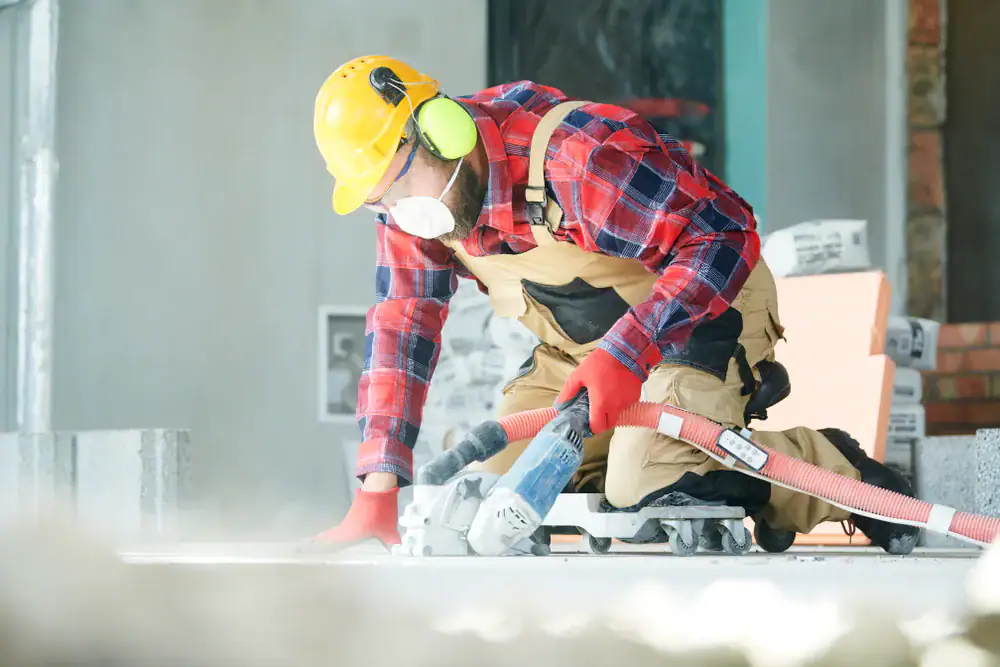
We use dustless equipment with HEPA filtration, so there’s no cloud of silica hanging in your warehouse or coating your retail space. The job stays clean. Your operations keep running. And when we’re done, the surface is ready for whatever comes next—whether that’s a high-gloss polish, a decorative overlay, or a heavy-duty epoxy system.
Concrete Grinding Services Richmond West
Professional Concrete Grinding Process
First, we assess the surface. We’re looking at existing coatings, cracks, lippage, and contamination. That tells us which grit sequence to use and whether you need repair work before grinding starts.
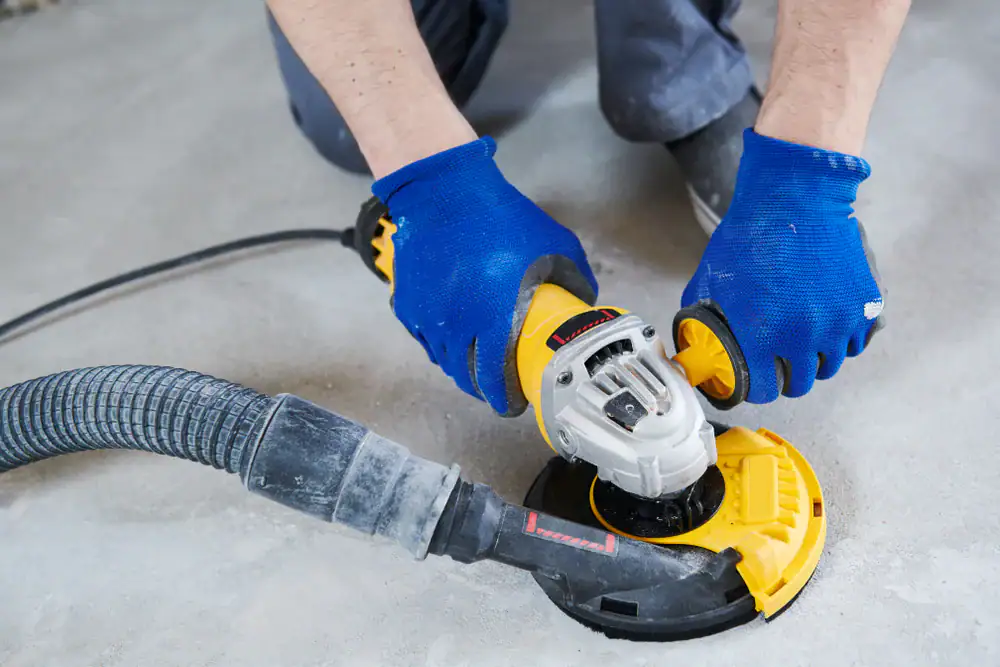
Next, we grind. Depending on the end goal, we might use diamond tooling for a polished finish or aggressive scarifying for epoxy prep. Our equipment connects to industrial vacuums, so dust stays contained. You won’t need to shut down adjacent areas or spend the next day cleaning.
After grinding, we check the profile. Coatings need a certain texture to bond correctly—too smooth and they slide off, too rough and they look uneven. We measure it. Then we clean the surface, remove any slurry, and confirm it’s ready for the next phase—whether that’s staining, sealing, or coating.
If there are repairs needed, we handle those too. Cracks get filled, low spots get leveled, and control joints get recut if necessary. The goal is a surface that’s uniform, clean, and ready to perform.
Ready to get started?
Concrete Restoration Services Near Me
Every concrete grinding project includes a site assessment, equipment setup with dust containment, multi-stage diamond grinding or scarifying, and a final surface profile check. We also remove old coatings, adhesive residue, and surface contaminants that would interfere with your new finish.
In Richmond West, we see a lot of settlement issues and surface spalling due to Florida’s soil conditions and weather patterns. Concrete shifts. Coatings fail. We grind down to stable material and level out the inconsistencies so your new floor starts on solid ground.
We work with both commercial and residential clients. That means anything from a 10,000-square-foot warehouse to a home garage. Our equipment scales to the job. And because we’re local, we can usually get to your site within 24 to 48 hours if it’s an emergency—like a failed coating that needs to be stripped and reground before a health inspection or reopening.
You’ll work directly with our team. No project managers who’ve never touched a grinder. No subcontractors who show up unprepared. Just experienced concrete professionals who’ve done this work across South Florida for government facilities, schools, and private clients who expect it done right.

How long does concrete grinding take for a typical project?
It depends on square footage, surface condition, and what you’re prepping for. A residential garage usually takes four to six hours. A commercial space might take one to three days.
The actual grinding goes faster than most people expect. What takes time is the prep—moving equipment, protecting walls and drains—and the cleanup. Our dustless system cuts down on the latter, but we still need to vacuum thoroughly and check the surface profile before we leave.
If you’re in a hurry, we can work nights or weekends. We’ve turned around kitchen floors in 24 hours when a homeowner needed it done before an event. For commercial projects, we coordinate around your operations so you’re not losing business days.
What’s the difference between concrete grinding and polishing?
Grinding is surface prep. Polishing is a finish. They use similar equipment, but the goal is different.
When we grind, we’re removing material—old coatings, rough spots, weak concrete—and creating the right texture for whatever comes next. When we polish, we’re refining the surface through progressively finer grits until it’s smooth and reflective. Polishing also involves densifiers and sealers to harden the concrete and bring out the shine.
Most polished concrete projects start with grinding. You can’t polish over a contaminated or uneven surface. So if you’re looking at polished concrete for your Richmond West facility or home, grinding is step one. We handle both, and we’ll walk you through what makes sense for your space and budget.
Is dustless concrete grinding really dust-free?
It’s not zero dust, but it’s close. Our grinders connect to high-powered vacuums that capture 99% of the silica dust at the source. What little escapes is minimal compared to traditional grinding, which can coat an entire building.
This matters if you’re in a medical facility, food production space, or any environment where airborne contamination is a problem. It also matters for worker safety—silica dust causes serious respiratory issues over time.
In Richmond West, we’ve ground floors in active retail spaces and school cafeterias without shutting them down. People were working ten feet away. That’s only possible with proper dust containment. If a contractor tells you they’ll “do their best” to keep dust down, that’s not good enough. The equipment either captures it or it doesn’t.
Can you grind concrete that already has epoxy or coating on it?
Yes. That’s one of the most common reasons people call us. Old epoxy fails, bubbles, or just looks terrible. Grinding strips it off and preps the concrete for a new system.
The challenge is that some coatings are harder to remove than others. Thick epoxy or urethane systems take more passes. If the coating is delaminating, it comes off easier, but we still need to grind down to clean concrete so the new coating has something to grip.
We also see a lot of tile removal projects in Richmond West where the thinset is still stuck to the slab. Grinding takes that off without damaging the concrete underneath. Once it’s clean and level, you can go straight to polishing, staining, or a new epoxy system. We’ve done this in warehouses, retail spaces, and homes where the owner wanted to ditch tile for a modern concrete look.
How do I know if my concrete needs grinding before coating?
If the surface is smooth, contaminated, or uneven, it needs grinding. Coatings don’t stick to sealed concrete, oil-stained concrete, or surfaces that are too smooth. They also look bad over uneven slabs.
Run your hand across the floor. If it feels slick or powdery, that’s a problem. If there are high spots, cracks, or old adhesive, those need to be addressed. Most concrete that’s been in use for a few years has some level of contamination—forklift traffic, spills, old wax, whatever. Grinding removes that top layer and opens up the pores.
We do a moisture test and surface profile check before any coating project. If the concrete isn’t ready, we’ll tell you. Skipping the grinding step is the number one reason epoxy coatings fail early. We’d rather spend an extra day prepping than have you call us back in six months because the floor is peeling.
Do you only grind for epoxy, or can you prep for other finishes?
We grind for epoxy, polished concrete, overlays, stains, sealers—anything that goes on concrete. Each finish needs a specific surface profile, and we adjust our process accordingly.
Epoxy needs a rough profile so it can grip. Polished concrete needs to be ground smooth through multiple stages. Decorative overlays need a clean, slightly textured surface. Acid stains need the concrete pores open so the stain can penetrate. We know what each system requires, and we prep accordingly.
In Richmond West, we work with a lot of clients who aren’t sure what finish they want yet. That’s fine. We can grind the surface to a neutral profile and give you time to decide. Or we can walk you through the options during the estimate and recommend what makes sense for your space, traffic, and budget. Either way, the grinding comes first.
Other Services we provide in Richmond West
Leave a Reply