


Concrete Grinding in Sandhill Crossing, FL
Smooth, Level Floors That Actually Last
Hear from Our Customers
Concrete Grinding Services in Sandhill Crossing
You get a floor that’s ready for whatever comes next. The surface is level, the high spots are gone, and any weak concrete has been removed before it causes problems down the road.
If you’re applying epoxy, polyaspartic, or a sealer, grinding opens up the concrete’s pores so coatings actually bond instead of peeling off in six months. If you’re polishing, grinding is where we remove damage, smooth out rough patches, and start building that clean, reflective finish.
Florida’s humidity and temperature swings are hard on concrete. Grinding removes the compromised top layer that’s been weakened by moisture, salt air, or years of wear. What’s left is dense, stable concrete that can handle daily use without cracking, spalling, or breaking down.
This isn’t cosmetic work. It’s structural prep that determines whether your floor holds up or fails early. Most coating failures trace back to poor surface prep, and grinding is the most critical step in that process.
Concrete Floor Grinding Contractors Serving Sandhill Crossing
We handle concrete grinding for commercial facilities, industrial spaces, and residential properties throughout Sandhill Crossing, FL and the surrounding area. We’re a veteran-owned company that works directly with property owners, facility managers, and homeowners who need floors done right.
We’ve worked with the Coast Guard, US Army, City of Doral, City of Sunny Isles, high schools, and county facilities. We also handle warehouses, retail spaces, manufacturing plants, garages, and patios. Everything is done in-house with our own crew and equipment.
Our grinding equipment uses dustless technology with HEPA filtration, which matters if you’re working in an occupied building or anywhere dust control is required. We don’t subcontract the work, and we don’t cut corners on prep. Sandhill Crossing properties deal with the same humidity, salt air, and temperature swings as the rest of South Florida, and we account for that in how we approach every job.
How Concrete Grinding Works in Sandhill Crossing
We start by inspecting the slab to identify cracks, spalling, uneven areas, or old coatings that need to come off. If there are repairs needed, we handle those first so the surface is stable before grinding begins.
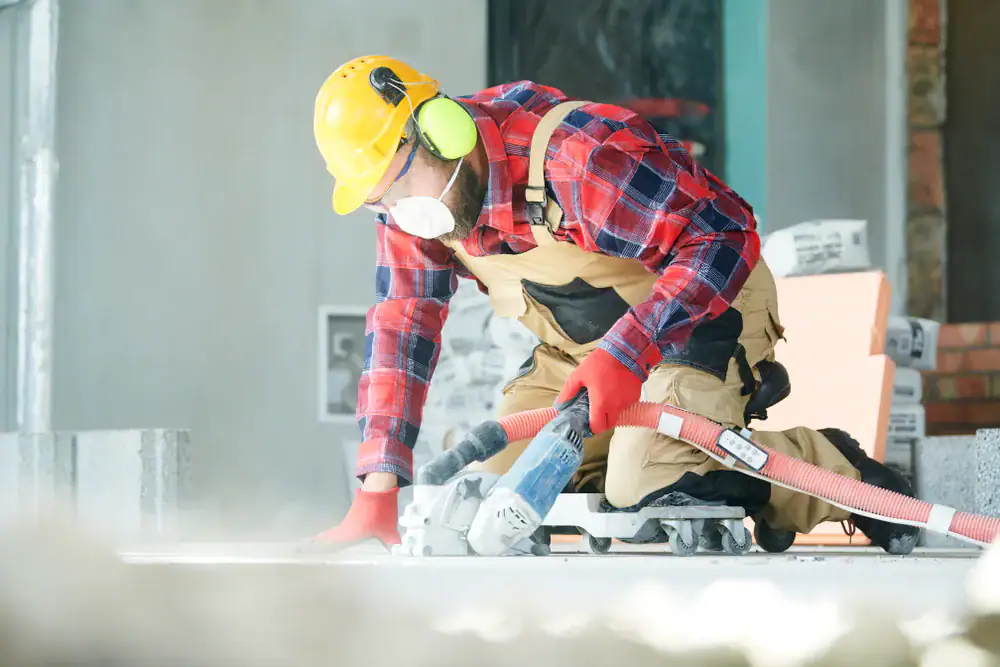
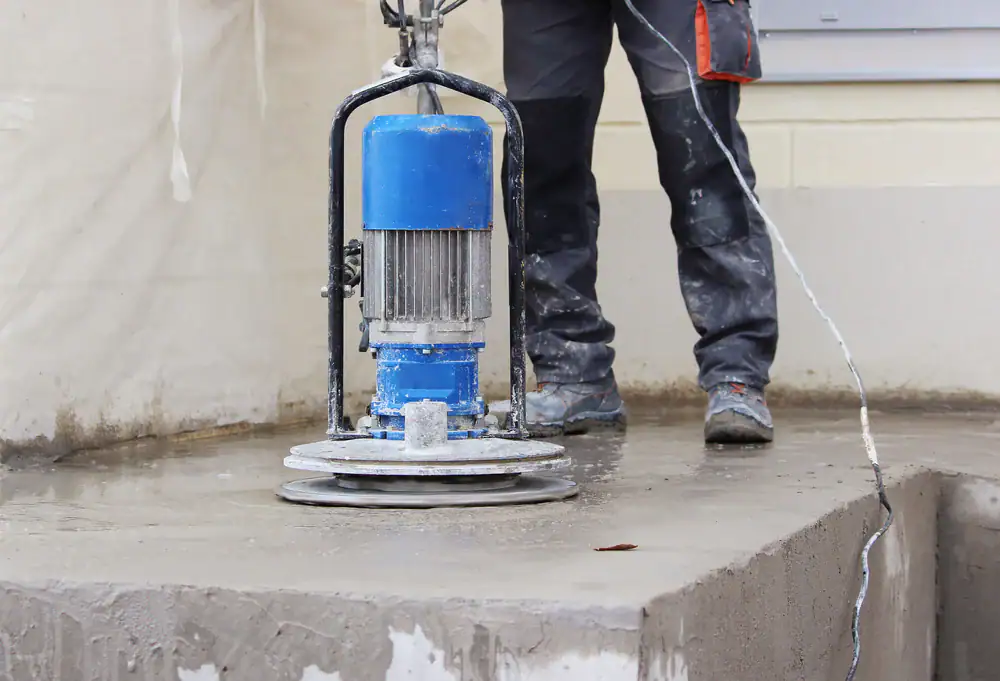
Then we use diamond grinding equipment to remove the top layer of concrete. How much we remove depends on the condition of the slab and what you’re doing next. For coating prep, we’re exposing fresh concrete and creating the profile the coating needs to bond. For polished concrete, we’re working through progressively finer grits to smooth and refine the surface.
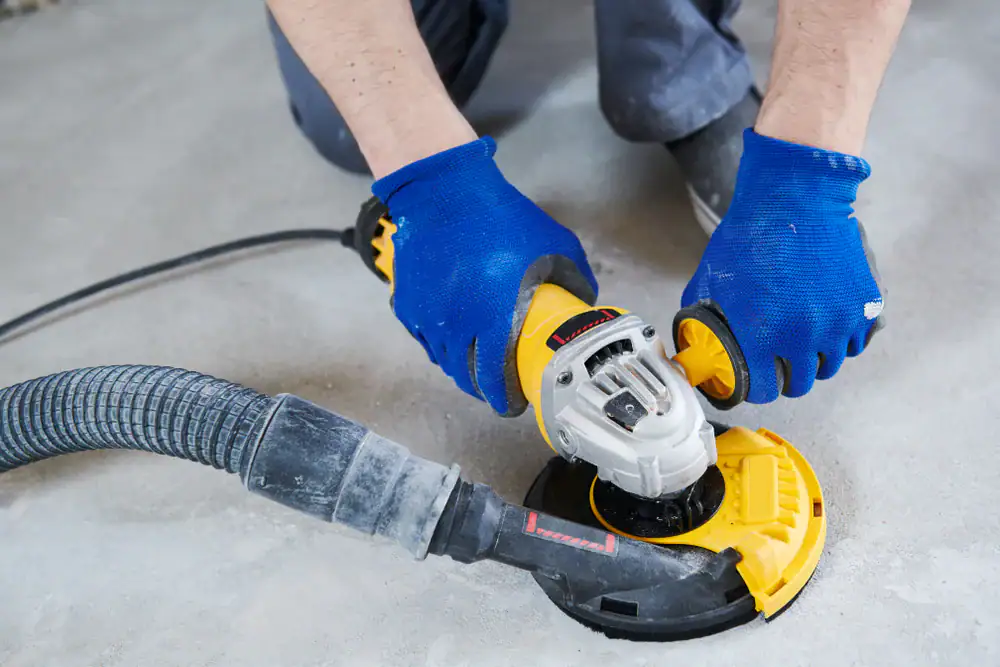
Our grinders are equipped with dust collection systems that capture particles as we work. You’re not dealing with concrete dust settling on everything or creating respiratory issues for anyone on-site. The work area stays cleaner, and we’re not spreading dust into other parts of the building.
Once grinding is complete, we clean the surface and check it for levelness and proper profile. If you’re moving forward with polishing, sealing, or coating, the floor is ready. If the project ends at grinding, you’re left with a clean, level surface that’s prepped for whatever use you have in mind.
Ready to get started?
Concrete Grinding and Restoration in Sandhill Crossing
We handle surface evaluation, crack and spall repair, removal of old coatings or adhesives, diamond grinding to your required profile, and dustless operation with HEPA filtration. If you’re in Sandhill Crossing and dealing with salt damage, moisture intrusion, or surface wear from Florida’s climate, grinding removes that compromised layer.
Concrete in this area faces high humidity, thermal expansion from heat, and saltwater exposure if you’re near the coast. Those conditions cause surface degradation over time. Grinding gets you back to sound concrete and eliminates the weak spots that lead to premature coating failure or continued deterioration.
We also handle concrete polishing, epoxy floor installation, resurfacing, and safety line striping. If your project involves multiple steps, we manage the entire process in-house. You’re working with one crew, one point of contact, and one company responsible for the outcome.
Our equipment handles both commercial and residential projects. We’ve ground floors in warehouses, food processing plants, retail stores, school facilities, and residential garages. The process is the same regardless of square footage—remove damage, level the surface, and prep it correctly for the next step.

How much does concrete grinding cost in Sandhill Crossing, FL?
Concrete grinding typically costs between $2 and $6 per square foot depending on the condition of your slab, how much material needs to be removed, and what you’re prepping for. If we’re just doing surface prep for a coating, that’s on the lower end. If we’re removing thick coatings, repairing damage, or grinding down significant high spots, costs go up.
Florida concrete often has more damage than slabs in other climates due to humidity, salt exposure, and temperature swings. That can add to the scope if there’s spalling or surface deterioration that needs attention before grinding starts. We’ll give you a clear quote after looking at the floor in person.
The cost of grinding is almost always less than replacing the slab, and it’s the most important step in making sure coatings or polishes actually last. Skipping it or doing it poorly leads to failures that cost more to fix than doing it right the first time.
Is concrete grinding dusty, and can it be done indoors?
Concrete grinding produces dust, but we use dustless grinding equipment with HEPA filtration that captures particles as we work. You’re not dealing with clouds of dust or concrete powder settling all over your facility. The work area stays cleaner, and there’s no respiratory hazard for people nearby.
This matters in occupied buildings, food facilities, medical spaces, or anywhere dust control is required. Standard grinding without dust collection isn’t practical indoors and can violate health codes in certain environments. Our equipment is designed for interior work in sensitive spaces.
We still recommend covering or moving anything nearby that you don’t want exposed to fine dust, but the difference between dustless grinding and traditional methods is significant. Most of our commercial clients in Sandhill Crossing are operating during the work, and dust control is non-negotiable for them.
How long does concrete grinding take for a typical project?
A residential garage or small commercial space usually takes one to two days depending on square footage and surface condition. Larger commercial or industrial floors can take several days to a week, especially if there’s extensive damage, old coatings to remove, or multiple areas to grind.
The timeline depends on how much material we’re removing, whether repairs are needed first, and what the floor’s condition is. A clean slab with minor surface prep goes faster than a floor with thick epoxy, adhesive residue, or significant spalling that needs repair before grinding starts.
We’ll give you a realistic timeline after seeing the space. Most projects in Sandhill Crossing move quickly once we’re on-site because we’re set up for efficiency and we’re not waiting on subcontractors or rental equipment. For time-sensitive projects, we can often work evenings or weekends to minimize disruption.
Can you grind concrete that already has a coating on it?
Yes, but the coating has to come off first, and that’s part of the grinding process. We use diamond grinding to remove epoxy, urethane, old sealers, adhesives, or any other coating that’s on the surface. How long that takes depends on the coating thickness and how well it’s bonded.
Some coatings come off easily. Others, especially industrial-grade epoxies or polyaspartics, require more aggressive grinding and multiple passes. If the coating is failing or delaminating, removal is faster. If it’s still well-bonded, we’re grinding through the full thickness.
Once the coating is off, we continue grinding to prep the concrete for whatever’s next. This is common in Sandhill Crossing facilities that have had previous flooring work done. Most of the time, the old coating wasn’t applied over properly prepped concrete, which is why it failed. We make sure that doesn’t happen again by grinding down to clean, sound concrete before any new coating goes on.
What’s the difference between grinding and polishing concrete?
Grinding is surface preparation. It removes damage, levels the floor, and opens up the concrete so coatings can bond. Polishing is a multi-step process that refines the surface through progressively finer diamond grits until you get a smooth, reflective finish.
Grinding is the first step in polishing, but it’s also done on its own when you’re prepping for epoxy, overlays, or sealers. If you’re polishing, we start with coarse grinding to remove the top layer and any imperfections, then move through finer grits, apply a densifier to harden the concrete, and continue polishing until we hit the gloss level you want.
Polished concrete in Sandhill Crossing is popular in commercial spaces, retail stores, and modern homes because it’s durable, low-maintenance, and handles Florida’s humidity better than most flooring options. Grinding alone leaves you with a matte, textured surface. Polishing takes it to a smooth, shiny finish that reflects light and resists stains.
Will grinding fix uneven or sloped concrete floors?
Grinding can level minor high spots and smooth out surface irregularities, but it won’t fix structural slope or major unevenness across a large area. If your floor has a drainage slope or settlement issues, grinding isn’t the solution. You’d need resurfacing or a leveling compound to correct that.
What grinding does handle is localized high spots, ridges, lippage between pours, and surface bumps that create trip hazards or interfere with coatings. We can also grind down areas where old coatings built up thickness or where previous repairs left uneven patches.
If your Sandhill Crossing property has foundation settlement or slab movement, we’ll identify that during the inspection and recommend the right fix. Grinding works when the slab itself is stable but the surface needs correction. For anything structural, you need a different approach, and we’ll tell you that upfront instead of grinding a floor that needs more than surface work.
Other Services we provide in Sandhill Crossing
Leave a Reply