


Concrete Grinding in South Miami Heights, FL
Level Floors That Last in Florida’s Climate
Hear from Our Customers
Professional Concrete Grinding Services Near You
Your concrete takes a beating down here. Humidity causes scaling. Sandy soil leads to uneven settling. Cracks become trip hazards. And when you’re ready to coat or polish, an uneven surface means your investment bubbles and peels within months.
Concrete grinding fixes that. It levels out the damage, removes old coatings, and creates the profile you need for whatever comes next—epoxy, polish, resurfacing, or just a clean, safe walking surface.
You’re not looking at weeks of downtime either. Foot traffic in 12 hours. Equipment and vehicles in 72. And because we use dustless grinding equipment, you’re not dealing with clouds of silica dust shutting down your operation or coating your inventory. The job gets done without the mess, without the respiratory hazards, and without the callbacks.
Concrete Floor Grinding Contractors You Can Trust
We’ve been serving South Miami Heights and the broader Miami-Dade area since 2020, specializing exclusively in concrete polishing, epoxy, and resurfacing. We’re veteran-owned, and we’ve earned contracts with the Coast Guard, US Army, City of Doral, City of Sunny Isles, and county facilities across South Florida.
That’s not luck. It’s because we show up with commercial-grade equipment, we do the work in-house with our own crew—no subcontractors—and we use materials built for Florida’s climate. Laticrete, Koster USA, Sherwin Williams, Fosroc. Products that handle UV exposure, moisture, and the kind of traffic that breaks down cheaper alternatives.
You’re working with people who understand what concrete does in this heat and humidity. And we’re not interested in cutting corners to win a bid. We’d rather give you a straight answer and a floor that doesn’t need a redo in six months.
Our Concrete Grinding Process Explained
First, we assess the slab. We’re looking at damage, moisture levels, existing coatings, and what kind of profile you need based on what’s going on top. If there’s a coating that’s failing, we remove it. If there are lips, cracks, or uneven sections, we map those out.
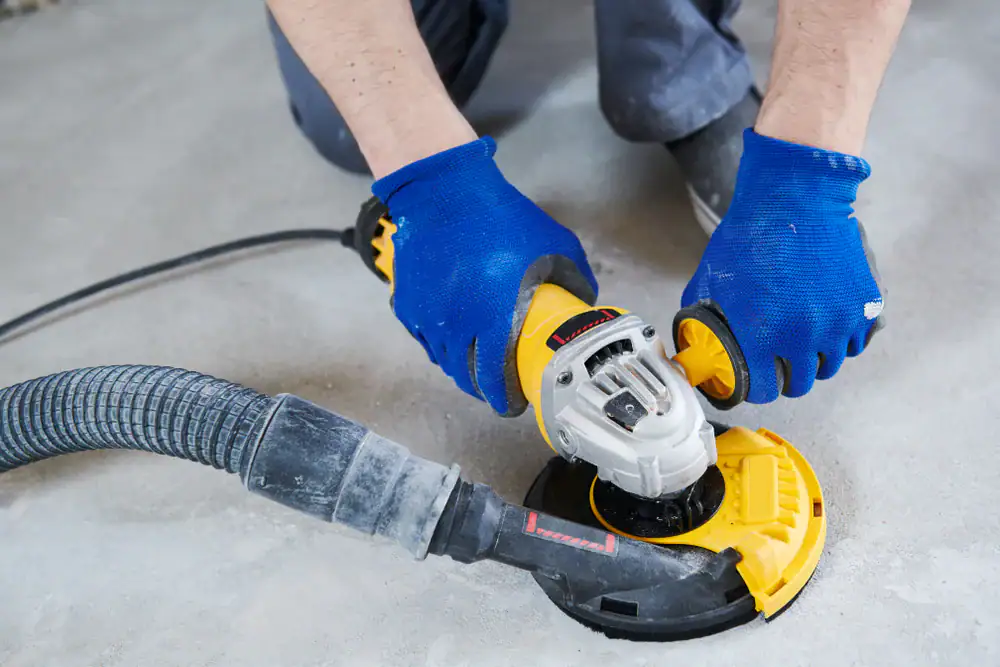
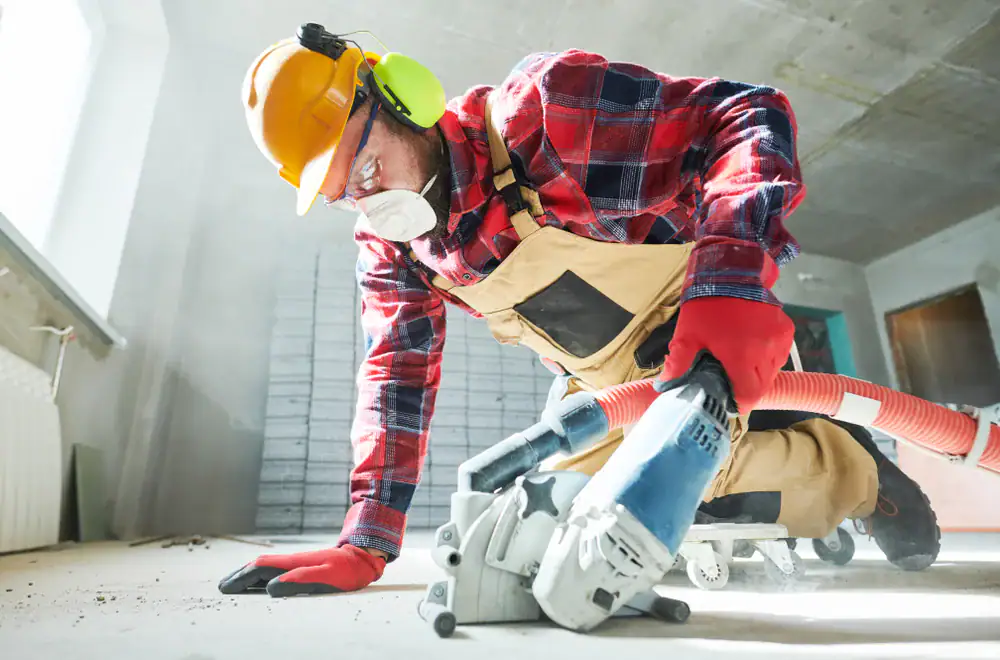
Then we grind. We use planetary grinders with diamond tooling, and the equipment is set up with dust extraction systems that capture particles at the source. You’re not breathing it. Your team isn’t breathing it. It’s contained and filtered. We work in passes, adjusting grit levels depending on how much material we’re removing and what kind of finish you’re after.
Once the surface is level and prepped, we clean it completely. Any dust or residue left behind will compromise adhesion, so we don’t skip this. If you’re coating or polishing after, the surface is ready. If you just needed grinding for safety or aesthetics, you’re done. Either way, you’re back to operations fast—foot traffic in 12 hours, vehicles in three days.
Ready to get started?
What’s Included in Concrete Grinding Services
When we grind your concrete in South Miami Heights, you’re getting a full-service approach. That means surface evaluation, moisture testing if needed, complete removal of old coatings or adhesives, multi-pass grinding to your specified profile, and dustless extraction throughout the process. Everything is done by our crew. We don’t subcontract the work out.
South Florida’s construction market is one of the most active in the country, and Miami-Dade is the seventh most populated county in the US. That means high demand, fast timelines, and a lot of contractors who overpromise. We’ve built our reputation here by doing the opposite—being transparent about what your floor needs, how long it takes, and what it costs.
We also understand the local challenges. Concrete in South Miami Heights deals with high humidity, frequent rain, intense UV exposure, and sandy soils that cause settlement issues. We prep for that. The materials we use are formulated for Florida. The grind profiles we create are designed to handle moisture vapor and thermal expansion. And if you’re in a commercial or industrial facility, we can work around your schedule—nights, weekends, or in phases to keep your operations running.
How long does concrete grinding take and when can I use the floor again?
The grinding itself depends on square footage and surface condition, but most projects are completed in one to three days. Small areas can be done in a few hours. Larger commercial floors might take longer, especially if we’re removing thick coatings or dealing with significant damage.
Once grinding is finished, you can walk on the surface in about 12 hours. If you’re putting equipment, forklifts, or vehicles on it, wait 72 hours. If we’re applying a coating or polish after grinding, those have their own cure times, and we’ll walk you through that timeline upfront.
We also offer rapid turnaround for urgent projects. If you’ve got a tight deadline or an emergency repair, we can mobilize in 24 to 48 hours in most cases. Just call us and we’ll figure it out.
Is concrete grinding really dustless, or is that just marketing?
It’s not completely dustless—nothing is—but it’s as close as you’re going to get. Our grinders are equipped with shrouds and vacuum systems that capture dust right at the point of contact. The particles get pulled into HEPA-filtered collection units before they ever reach the air.
This matters for a few reasons. One, silica dust is a serious respiratory hazard. OSHA has strict limits on exposure, and if you’re running an active facility, you can’t afford to have your team or customers breathing it in. Two, dust contamination ruins coating adhesion. If you’re grinding to prep for epoxy or polish, any dust left on the surface will cause failures. Three, cleanup is a nightmare without containment. You’re talking about dust settling on equipment, inventory, HVAC systems, everything.
We’ve worked on projects for the Coast Guard, municipal buildings, and commercial facilities where air quality and cleanliness aren’t optional. The equipment we use meets those standards, and we don’t cut corners on filtration or cleanup.
What’s the difference between grinding, polishing, and resurfacing concrete?
Grinding is the process of mechanically removing material from the concrete surface using diamond abrasives. You’re leveling it, removing coatings, or creating a texture profile for the next step. It’s prep work, essentially, though sometimes it’s the final step if you just need a clean, level surface.
Polishing takes grinding further. After the initial grind, we move through progressively finer diamond grits to refine the surface until it’s smooth and reflective. Polished concrete is dense, durable, and low-maintenance. It reflects light, which can reduce your lighting costs, and it stands up to heavy traffic better than most coatings.
Resurfacing is when the existing concrete is too damaged to grind and polish effectively. We apply a new layer—usually a polymer-modified overlay or micro-topping—and then grind and finish that. It gives you a fresh surface without tearing out and replacing the entire slab, which saves time and money.
Which one you need depends on the condition of your concrete and what you’re trying to achieve. We’ll assess it and give you a straight answer about what makes sense.
Can you grind concrete that already has epoxy or coatings on it?
Yes. In fact, that’s one of the most common reasons people call us. Old epoxy, paint, adhesives, mastics—we remove all of it. The grinder’s diamond tooling cuts through coatings and grinds them away along with a thin layer of the concrete underneath, which gives you a clean surface to work with.
This is critical if you’re recoating. If you try to put new epoxy over old, failing coating, it’s going to delaminate. The new layer is only as strong as what’s underneath it, and if that’s compromised, you’re wasting money. Grinding removes the weak layer and exposes sound concrete, so the new coating has something solid to bond to.
We’ve stripped floors that had three or four layers of different coatings, each one applied over the last without proper prep. It’s a mess, but it’s fixable. The grinder doesn’t care what’s on there—it comes off. And because we’re using dustless extraction, you’re not dealing with coating particles and dust floating around your facility.
How much does concrete grinding cost in South Miami Heights?
It depends on the size of the area, the condition of the concrete, and what you’re grinding for. A small residential garage is going to cost less than a 20,000-square-foot warehouse. If we’re just doing a light grind to prep for coating, that’s less intensive than removing multiple layers of epoxy or leveling a badly damaged slab.
We don’t do pricing over the phone without seeing the job. Too many variables. But we will come out, assess the floor, and give you a transparent quote. No surprises, no upselling. You’ll know exactly what you’re paying for and why.
What we can tell you is that grinding is almost always cheaper than replacing the slab. If your concrete is structurally sound but the surface is shot, grinding and refinishing it is a fraction of the cost of demo and repour. And if you’re in a commercial facility, the downtime savings alone make it worth it. We can grind and have you back to operations in days, not weeks.
Do you only work with commercial clients or do you handle residential projects too?
We do both. A lot of our work is commercial and industrial—warehouses, retail spaces, municipal buildings, military facilities—but we also handle residential projects. Garages, basements, patios, driveways. If it’s concrete and it needs grinding, we can do it.
The process is the same regardless of the size. We bring the same equipment, the same crew, and the same attention to detail whether we’re working on a 500-square-foot garage or a 50,000-square-foot distribution center. We’re not a company that treats residential clients like an afterthought. You get the same level of service and the same commercial-grade materials.
We prefer working directly with property owners when possible, rather than going through general contractors. It’s easier to communicate, faster to schedule, and you’re not paying a markup for someone else to manage us. If you’ve got a concrete floor that needs work, call us. We’ll come take a look and tell you what it needs.
Other Services we provide in South Miami Heights
Leave a Reply