


Concrete Grinding in Tequesta, FL
Smooth, Level Concrete That Actually Lasts
Hear from Our Customers
Concrete Floor Grinding Contractors Tequesta
You’re looking at concrete that’s uneven, pitted, or just plain worn out. Maybe there’s a lip where slabs meet that’s become a trip hazard. Maybe you’re prepping for epoxy or polished concrete and the surface isn’t anywhere close to ready.
Concrete grinding fixes that. It levels faulting between slabs, removes old coatings, smooths rough patches, and creates the clean profile you need for whatever comes next.
The result isn’t just cosmetic. You get a surface that coatings actually bond to. Floors that don’t cause people to trip. Concrete that looks intentional instead of neglected. And if you’re going for polished concrete, grinding is where the transformation starts—it’s the foundation that determines whether your floor lasts two years or twenty.
This matters in Tequesta, where humidity and salt air accelerate surface deterioration. Concrete that isn’t properly ground and sealed degrades faster here than it would inland. Grinding resets the surface so it can handle South Florida’s climate without breaking down.
Tequesta Concrete Restoration Services
We’ve handled concrete projects for the Coast Guard, US Army, City of Doral, City of Sunny Isles, and county facilities across South Florida. That’s not name-dropping—it’s context. Government and military contracts don’t go to companies that cut corners.
We’ve been operating since 2020, working exclusively in concrete polishing, epoxy systems, and surface restoration. Everything’s done in-house with full-time employees, which means the crew that shows up is the crew we trained. No subcontractors. No surprises.
Tequesta sits in one of the higher-value property markets in Palm Beach County, with median home values pushing $838,000. That means you’re not looking for the cheapest option—you’re looking for the one that doesn’t need to be redone in three years. We use commercial-grade materials from manufacturers like Laticrete and Koster USA because they’re engineered for durability, not just initial appearance.
Concrete Grinding Services Process
First, we assess the surface. That means checking for cracks, measuring height differences between slabs, and figuring out what’s causing the problem—whether it’s settling, tree roots, or just years of wear.
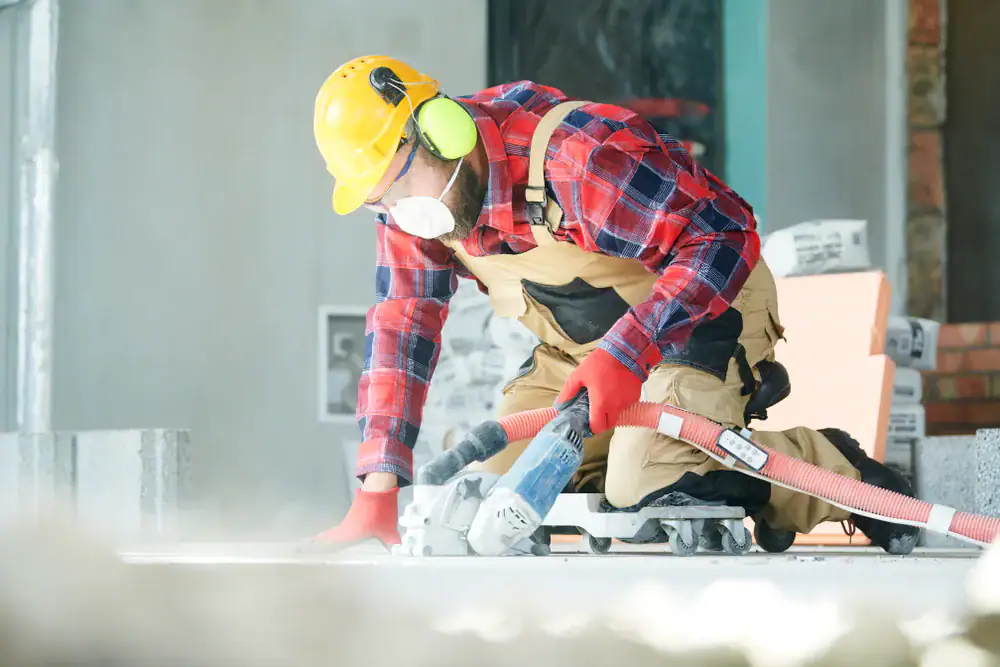
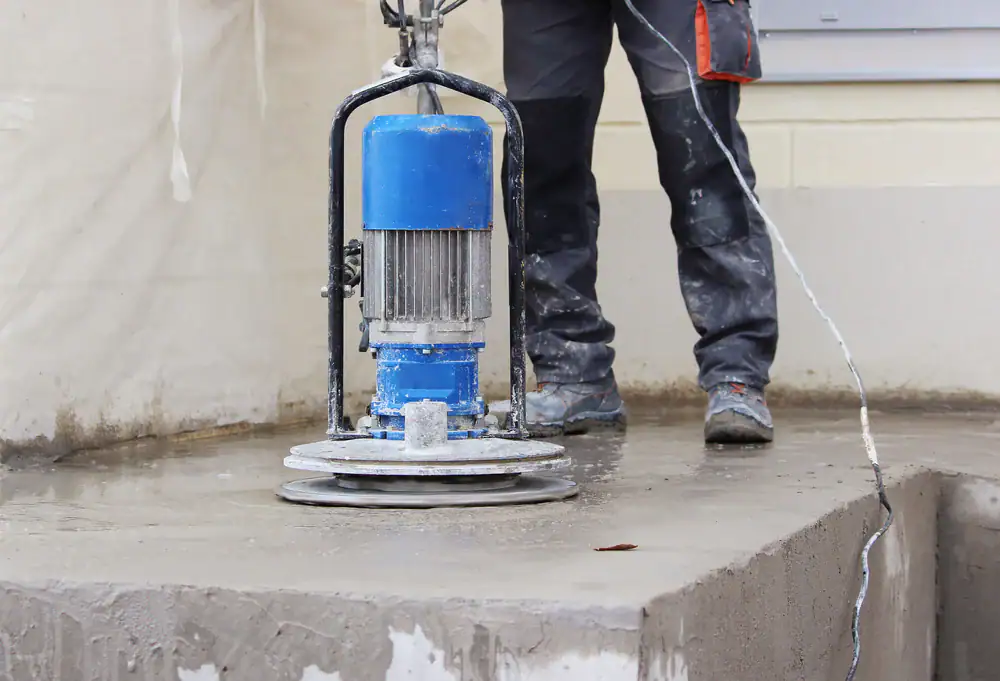
Then we grind. We use diamond-embedded tools that systematically remove material until the surface is level and smooth. If you’re prepping for a coating, we stop at the profile your system needs. If you’re going for polished concrete, we work through progressively finer grits until the surface starts to shine.
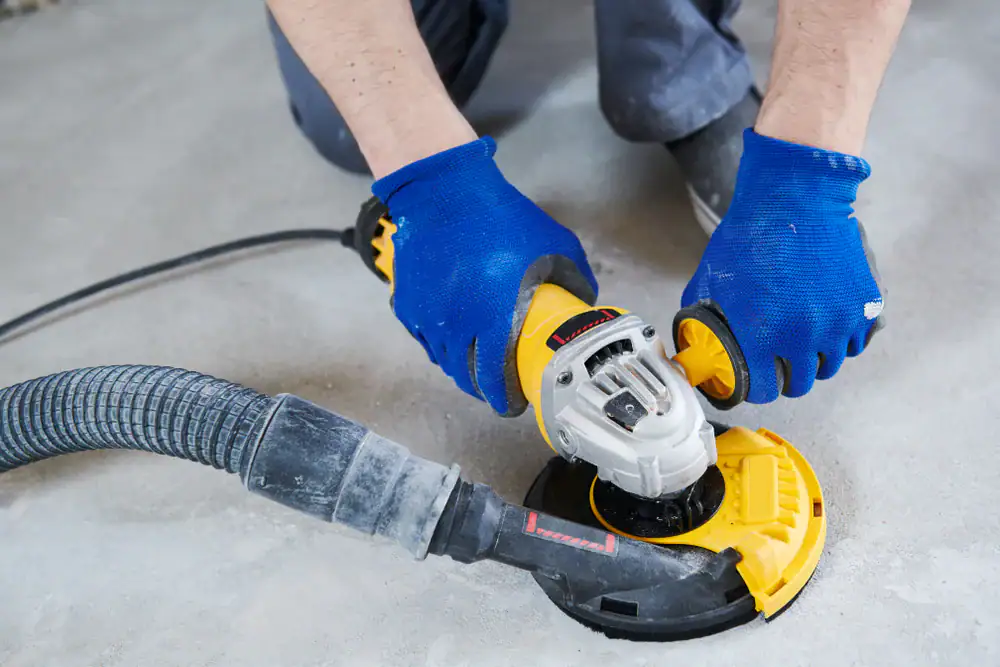
Dust control matters here. Concrete grinding produces a lot of it, and if you’re in a facility that handles food, pharmaceuticals, or sensitive equipment, containment isn’t optional. We run dust extraction systems that keep particulate out of the air and off your product.
After grinding, we clean the surface completely. Any residue left behind will interfere with coatings or sealers, so this step isn’t negotiable. Then, depending on your end goal, we either prep for the next phase—epoxy, urethane, overlay—or continue polishing until you’ve got the finish you want.
Timeline depends on square footage and surface condition, but most commercial projects take three to seven days. Residential jobs are usually faster.
Ready to get started?
Polished Concrete Contractors Tequesta FL
You’re getting diamond grinding, shot-blasting when needed, and scarifying for surfaces that require aggressive material removal. We handle surface leveling, trip hazard correction, and coating removal—whether that’s old epoxy, paint, or adhesive residue from previous flooring.
For polished concrete projects, grinding is just the start. We move through multiple grit levels, apply densifiers to harden the surface, and polish until you hit the sheen level you’re after—matte, satin, or high-gloss.
In Tequesta and the surrounding Palm Beach County area, we’re also dealing with concrete that’s been exposed to salt air and high humidity. That means surfaces degrade differently than they do in drier climates. Grinding removes the weakened top layer and exposes fresh, dense concrete that can be properly sealed and protected.
We’re also equipped to handle large-scale commercial and industrial projects—warehouses, distribution centers, retail spaces—as well as residential garages, patios, and interior floors. The equipment and approach are the same. The difference is in the prep work and the expectations you have for the finished surface.
Everything we use is commercial-grade. That’s not marketing language—it means the materials are rated for high-traffic, high-impact environments and come with manufacturer backing. It also means we’re not experimenting with products that haven’t been tested in real-world conditions.

How long does concrete grinding take for a typical garage or warehouse?
For a standard two-car garage, you’re looking at one to two days depending on surface condition. If the concrete is relatively smooth and you’re just leveling minor imperfections, it’s faster. If there are significant height differences, old coatings to remove, or damage to address, it takes longer.
Warehouses and commercial spaces are different. A 10,000-square-foot warehouse floor usually takes three to five days, but that assumes we’re working uninterrupted and the space is clear. If you need us to work around equipment or in phases so operations can continue, the timeline extends.
What slows things down is surface prep and cleanup. Grinding itself is methodical but not slow. It’s the assessment beforehand and the dust extraction and cleaning afterward that add time. We don’t rush those steps because they determine whether the next phase—coating, polishing, sealing—actually works. If the surface isn’t prepped right, nothing that goes on top of it will last.
What’s the difference between concrete grinding and polishing?
Grinding is the process of removing material to level the surface, eliminate imperfections, or prep for a coating. Polishing is what happens after grinding when you continue through finer and finer grits to create a smooth, reflective finish.
Think of grinding as the foundation and polishing as the finish work. You can grind concrete without polishing it—that’s common when you’re prepping for epoxy or another coating system. But you can’t polish concrete without grinding it first. The grinding phase is what removes the rough, porous top layer and exposes the dense aggregate underneath.
Polished concrete also involves densifiers, which are chemical hardeners that penetrate the surface and make it more durable. After densification, we continue grinding with finer grits until the floor reaches the gloss level you want. The result is a surface that’s harder than it was originally, resistant to stains and moisture, and requires almost no maintenance. That’s why polished concrete has become so popular in commercial facilities—it performs better and costs less to maintain than most other flooring options.
Will grinding fix cracks or do I need to repair them first?
Grinding levels the surface, but it doesn’t repair structural issues. If you have cracks, they need to be filled and stabilized before we grind. Otherwise, you’re just grinding around a problem that’s going to get worse.
Small hairline cracks aren’t usually a concern—they’re common in concrete and don’t affect performance. But anything wider than an eighth of an inch, or cracks that are active and moving, need attention. We’ll fill them with epoxy or polyurea depending on the width and location, let it cure, then grind the surface flush.
If the cracks are caused by settling or shifting—like when tree roots lift a slab—we’ll address that too. Sometimes it means grinding down the high side to match the low side. Other times it means stabilizing the slab before we do anything else. The goal is a level, stable surface that isn’t going to shift again after we’re done. Grinding can make a floor look better, but it can’t fix underlying structural problems. Those have to be handled first.
How much dust does concrete grinding create and how do you control it?
Concrete grinding produces a significant amount of dust—enough that it’s a real problem if you don’t control it. We use dust extraction systems that attach directly to the grinders and pull particulate into HEPA-filtered vacuums before it gets into the air.
This matters more in some environments than others. If you’re grinding a garage, dust control is about convenience and cleanup. If you’re grinding a food processing plant, pharmaceutical facility, or anywhere with sensitive equipment, dust control is a requirement. Airborne silica is a health hazard, and contamination can shut down operations.
We also prep the space before we start. That means sealing off areas that don’t need to be exposed, covering equipment, and setting up negative air pressure zones if the project calls for it. After grinding, we run air scrubbers and do a full cleanup before we leave. The goal is to finish the job without leaving dust on your product, your equipment, or in your HVAC system. It’s not optional—it’s part of doing the work correctly.
Can you grind concrete that already has epoxy or coating on it?
Yes, and that’s one of the most common reasons people call us. Old epoxy fails—it chips, peels, or delaminates—and the only way to properly recoat is to remove it completely. Grinding does that.
We use aggressive diamond tooling to strip the old coating down to bare concrete. Depending on how thick the coating is and how well it’s bonded, this can take anywhere from a few hours to a full day for a typical garage. Once the coating is off, we continue grinding to create the surface profile the new system needs.
You can’t just coat over old epoxy. Even if it looks intact, there’s no way to know if it’s still bonded to the concrete underneath. Any weak spots will cause the new coating to fail in the same places. Grinding removes that risk. You’re starting with a clean, profiled surface that the new coating can actually grip. It’s more work upfront, but it’s the only way to get a result that lasts.
Is polished concrete slippery, especially in a commercial or industrial setting?
Polished concrete is less slippery than most people expect, even at higher gloss levels. The surface is smooth, but it’s not slick like polished stone or glazed tile. When dry, it has enough texture to provide traction. When wet, it actually performs better than many other flooring types because water doesn’t sit on top—it disperses across the surface.
That said, slip resistance depends on the grit level you stop at. If you polish to a high gloss, you’ll have more reflectivity and slightly less traction than a matte or satin finish. For commercial and industrial spaces where slip resistance is critical—like kitchens, production floors, or entryways—we recommend stopping at a lower grit or adding a penetrating sealer that enhances grip without changing the appearance.
We can also test slip resistance using a tribometer, which measures coefficient of friction. Most building codes require a minimum COF of 0.5 for walking surfaces. Polished concrete typically exceeds that, even at higher gloss levels, as long as it’s finished correctly. If you’re in a high-traffic or wet environment, we’ll spec the finish to meet your safety requirements without sacrificing durability or appearance.
Other Services we provide in Tequesta
Leave a Reply