


Garage Epoxy Flooring in Ankona, FL
Floors That Handle Florida Without Failing You
Hear from Our Customers
Epoxy Garage Floor Coating Ankona Residents Trust
You’re not looking for a floor that looks good for six months. You need something that holds up when Florida throws humidity, sudden storms, and hot tires at it every single day.
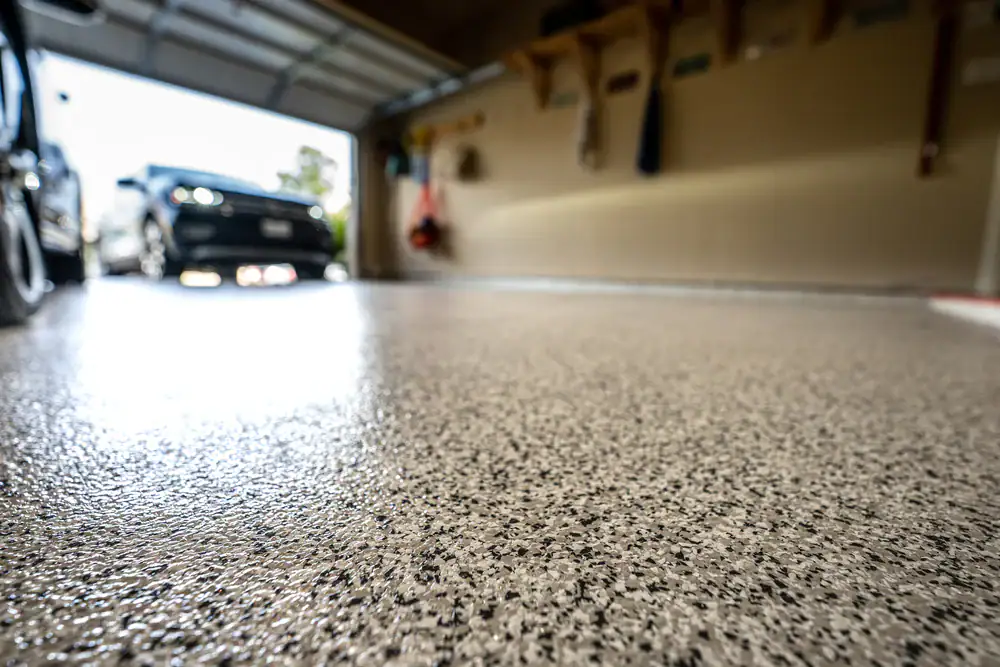
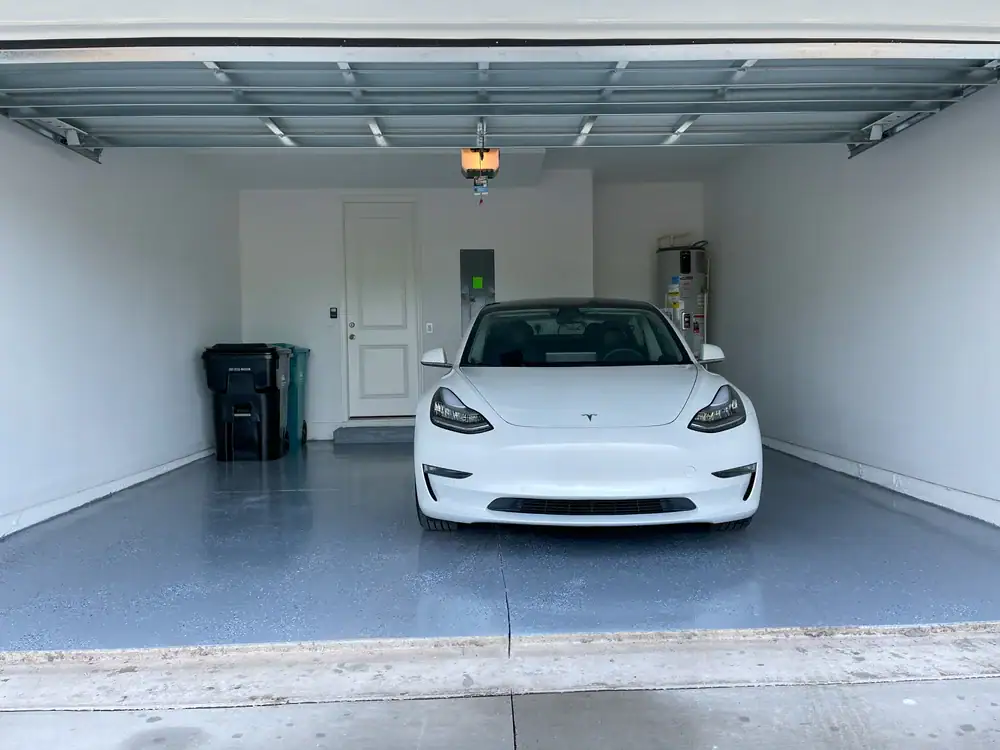
That’s what proper epoxy floor coating does. It seals your concrete against moisture. It resists the chemicals and oils that stain regular floors. And when it’s installed correctly—not rushed, not skipped steps—it lasts 10 to 20 years in South Florida’s conditions.
Most epoxy garage flooring fails because the prep work gets cut short. Surface preparation accounts for 80% of whether your floor holds or peels. We use commercial-grade diamond polishing equipment that costs more than most people’s cars because that’s what it takes to create a surface the epoxy actually bonds to. You can walk on your floor in six hours. Park on it in 24. And you won’t see bubbling, peeling, or hot tire pickup a year later because we did it right the first time.
Ankona’s Epoxy Flooring Contractor Since 2020
We’ve been installing garage floor coatings across Florida since 2020. We’ve worked with the U.S. Military, Coast Guard facilities, the City of Doral, Sunny Isles, and county projects throughout the region. Those clients don’t hire contractors who cut corners.
Ankona sits in St. Lucie County, where salt air and humidity create the exact conditions that make cheap epoxy fail. We’ve seen what happens when installers use retail kits or skip moisture testing. That’s why we only use professional-grade materials from Sherwin Williams and Fosroc, and why we test for moisture issues before we ever open a bucket.
You’re not getting a sales pitch. You’re getting a 1-on-1 consultation where we walk your space, explain what your concrete needs, and give you transparent pricing. No surprises. No upsells. Just the work that needs doing.
Our Garage Epoxy Flooring Process
First, we assess your concrete. Not every slab is ready for epoxy. We check for moisture issues using ASTM-standard testing because Florida humidity causes most coating failures. If your concrete is holding moisture, we address it before anything else touches the surface.
Next comes surface preparation. This is where most installations fail, so we don’t rush it. We use diamond grinding equipment to open the concrete’s pores and create the profile epoxy needs to bond. Any cracks get filled. Any contaminants get removed. The surface has to be clean, dry, and properly profiled or the coating won’t last.
Then we apply the epoxy system in layers. We’re not brushing on a single coat and calling it done. You get a moisture-resistant primer, a base coat, optional decorative flakes if you want them, and a UV-stable topcoat that resists yellowing and hot tire pickup. Each layer cures before the next goes down.
The floor is walkable in six hours. You can move furniture or park a vehicle in 24 hours. And because we used the right prep and the right materials, you’re looking at a floor that holds up for 10 to 20 years in Ankona’s climate.
Ready to get started?
What’s Included in Epoxy Garage Flooring
Every garage floor coating project includes full surface preparation with commercial diamond grinding. That’s not optional. It’s how we make sure the epoxy actually sticks.
You also get moisture testing. In St. Lucie County, 72% of garage surfaces show wear from humidity within five years. We’re not guessing whether your slab can handle epoxy—we’re testing it. If there’s a moisture issue, we use vapor barriers or moisture-tolerant primers designed for Florida’s conditions.
The coating itself is a multi-layer system. Primer, base coat, optional decorative chips, and a UV-resistant topcoat that won’t yellow when the Florida sun hits it. You’re also getting chemical resistance that handles oil, gas, and anything else you’re likely to spill. And if you want safety line striping or custom colors, we do that too.
We also offer a 15-year transferable warranty and a lifetime warranty for the original owner. That means if you sell your home, the next owner still has coverage. Most installers don’t back their work like that because they know their floors don’t last. Ours do.
How long does epoxy garage flooring last in Florida’s humidity?
Properly installed epoxy flooring lasts 10 to 20 years in South Florida when the surface prep is done right and moisture issues are addressed upfront. Florida’s humidity doesn’t damage quality epoxy—it damages bad installations.
The key is using moisture-resistant primers and making sure the concrete is dry enough to accept the coating. We test for that before we start. If your slab is holding moisture, we use vapor barriers or moisture-tolerant systems designed specifically for humid climates like Ankona’s.
Most failures happen because installers skip the prep work or use retail-grade kits that aren’t built for Florida. You end up with bubbling, peeling, or delamination within a year. When the job is done correctly with commercial materials, your floor holds up through storms, summer heat, and everything else this climate throws at it.
Why do some garage floor coatings peel or bubble after installation?
Peeling and bubbling come down to two things: bad surface prep or moisture in the concrete. If the concrete isn’t properly cleaned and profiled, the epoxy has nothing to grip. It just sits on top and lifts as soon as heat or moisture gets under it.
Florida’s humidity makes this worse. Concrete slabs here often retain moisture, especially if they’re on grade or don’t have proper vapor barriers underneath. When epoxy gets applied over damp concrete, the moisture tries to escape and pushes the coating up. That’s what causes bubbles.
We avoid this by grinding the surface with diamond equipment to open the concrete’s pores and by testing moisture levels before we coat anything. If your slab needs a moisture barrier or a different primer system, we handle that first. Skipping these steps is why 73% of epoxy coatings fail within two years. We don’t skip them.
What’s the difference between DIY epoxy kits and professional installation?
DIY kits use thinner coatings and don’t include the surface prep equipment you actually need. Most retail kits fail within a year or two because homeowners can’t grind the concrete properly. You need a $20,000 diamond polishing machine to create the surface profile that epoxy bonds to. Without it, you’re just painting over concrete and hoping it sticks.
Professional installation also uses commercial-grade materials that are significantly more durable than anything you’ll find at a hardware store. Our coatings are thicker, more chemical-resistant, and designed for heavy use. We also test for moisture and apply multiple layers—primer, base, topcoat—that work together as a system.
The cost difference seems big upfront, but you end up spending more fixing a failed DIY job than you would have spent hiring a professional in the first place. And you lose the time you put into it. Most of our clients who call us have already tried a DIY kit once. They don’t want to do it again.
Will hot tires damage my epoxy garage floor coating?
Hot tire pickup happens when the epoxy isn’t cured properly or when a low-quality coating softens under heat. Tires heat up on Florida roads, and when you park on a weak epoxy system, the coating can stick to the rubber and peel up. It’s one of the most common complaints we hear from homeowners who went with cheap installations.
We prevent this by using high-performance topcoats that are heat-resistant and fully cured before you park anything on them. The curing process matters. If an installer rushes it or uses a single thin coat, the epoxy stays softer and more vulnerable to tire pickup.
Our multi-layer system includes a topcoat specifically designed to resist heat and abrasion. You can park your car 24 hours after we finish, and the floor won’t lift. We’ve installed floors for military facilities and municipal garages where vehicles are constantly moving in and out. Those floors hold up because the materials and process are built for it.
How much does professional garage epoxy flooring cost in Ankona?
Cost depends on the size of your garage, the condition of your concrete, and what kind of finish you want. A standard two-car garage typically runs between $1,500 and $4,000 for a professional installation with proper prep, multi-layer coating, and a UV-resistant topcoat.
If your concrete has cracks that need filling, moisture issues that need barriers, or you want decorative flake systems and custom colors, that affects the price. We give you transparent pricing after we see your space. No guessing, no surprise charges later.
What you’re paying for is a floor that lasts 10 to 20 years instead of one that peels in two. You’re also paying for the equipment and expertise that most installers don’t have. The upfront cost is higher than a DIY kit, but you’re not redoing the floor every few years. And if you sell your home, the 15-year transferable warranty adds value. Most buyers in Florida know what a quality garage floor is worth.
Can epoxy flooring be applied to old or damaged concrete?
Yes, but the concrete has to be structurally sound. Small cracks, surface damage, and staining aren’t problems—we repair and prep those as part of the installation. But if your slab is severely cracked, crumbling, or has major settling issues, epoxy won’t fix that. You’d need concrete resurfacing or repair first.
For most garages in Ankona, the concrete is in good enough shape once we grind and fill the cracks. We use commercial fillers that bond with the slab and create a smooth surface for the epoxy. Old oil stains get ground off during surface prep. The goal is to give the epoxy a clean, profiled surface to bond to.
If your concrete does need resurfacing, we handle that too. We specialize in concrete polishing and resurfacing, so we’re not sending you to another contractor. We assess what your slab needs, fix it, and then coat it. You get one team handling the entire project from start to finish.
Other Services we provide in Ankona
Leave a Reply