


Garage Epoxy Flooring in Bayshore Business District, FL
Your Garage Floor Shouldn’t Look Like That
Hear from Our Customers
Professional Epoxy Floor Coating Services
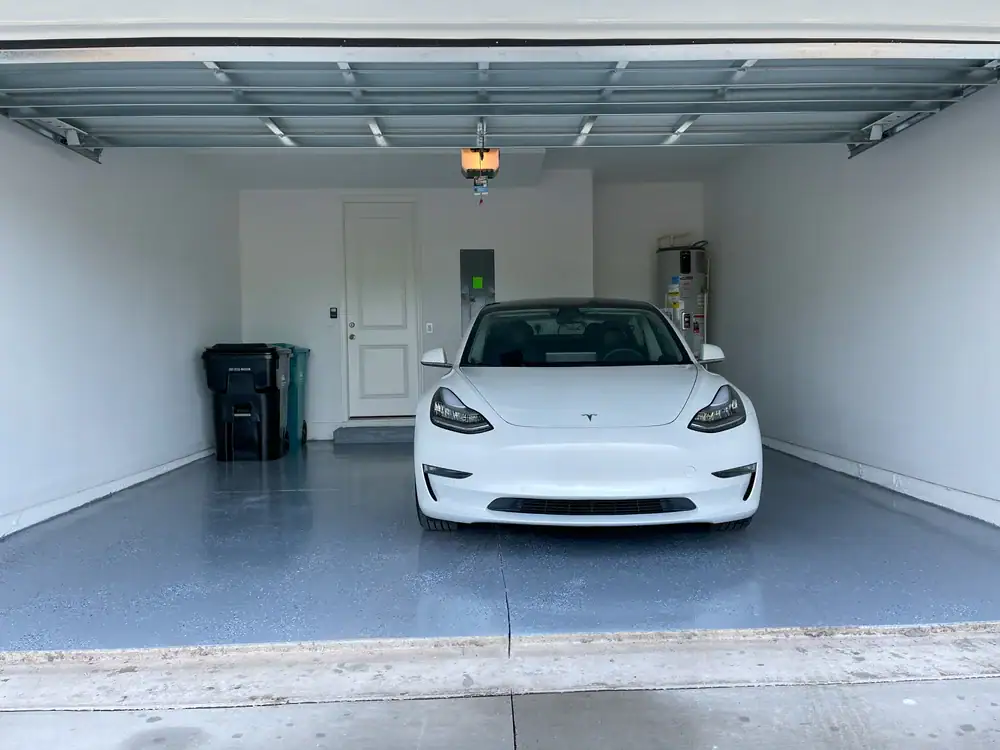
You’re looking at your garage floor right now and it’s either stained beyond recognition, cracking in places you didn’t think concrete could crack, or covered in a DIY epoxy job that’s already peeling up around the edges. Maybe you had someone out there before and they made promises about durability that lasted about six months.
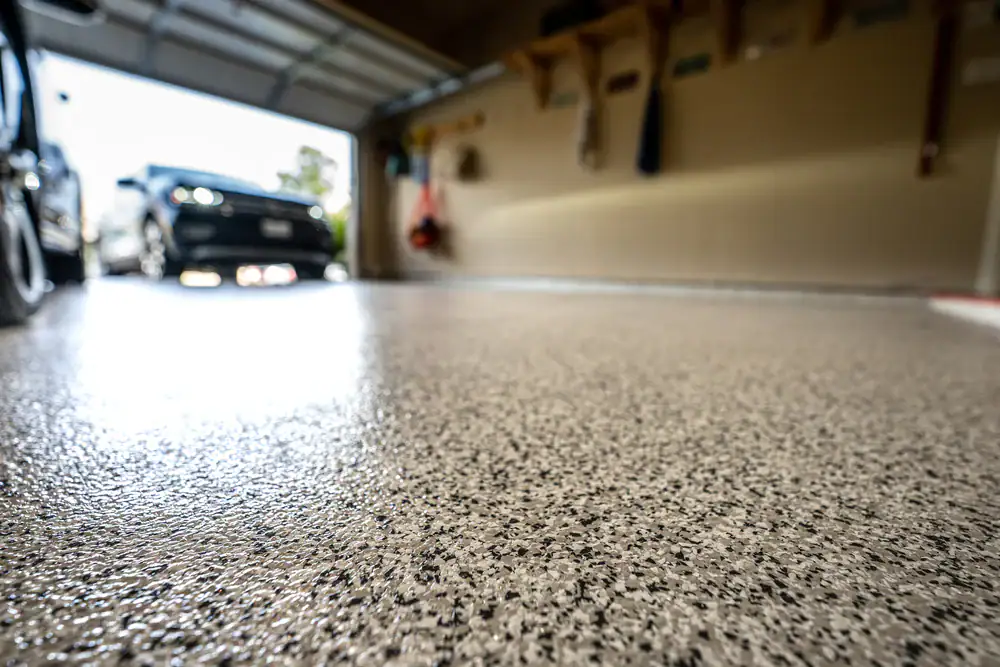
Here’s what actually happens when the installation is done correctly. Your concrete gets prepped the way it should be—ground down, cleaned, and treated so the coating actually bonds instead of just sitting on top waiting to fail. The epoxy we use is formulated for Florida’s climate, which means it won’t soften when your car tires heat up in July, and it won’t bubble when humidity spikes after a storm.
The floor becomes something you can actually hose down without worrying about water seeping through. Oil drips wipe up instead of staining permanently. You can pull your car in and out without wondering if today’s the day the coating starts coming up in sheets.
Most importantly, it stays looking clean. Not showroom-perfect forever, but clean in a way that makes sense for a working garage. That’s the difference between a floor that’s actually sealed and protected versus one that just looks good in photos for a few months.
Epoxy Flooring Contractors in Bayshore
We’ve been operating in South Florida since 2020, and we’ve built our reputation on work that has to meet actual standards. We’ve installed epoxy systems for the Coast Guard, US Army facilities, the City of Doral, and the City of Sunny Isles. Those aren’t clients who tolerate callbacks or failures.
We’re veteran-owned, which means we show up on time and do what we said we’d do. No disappearing after the deposit. No surprise charges when we’re halfway through. When you call, you’re talking to someone who’s going to be on-site, not a salesperson who hands you off to a crew you’ve never met.
Bayshore Business District properties have specific expectations. The homes here aren’t average, and the people who own them aren’t looking for the cheapest option—they’re looking for the option that won’t need to be redone in three years. We work directly with homeowners because that’s where the accountability is clearest. You know exactly who’s responsible, and we know exactly what you expect.
Garage Floor Coating Installation Process
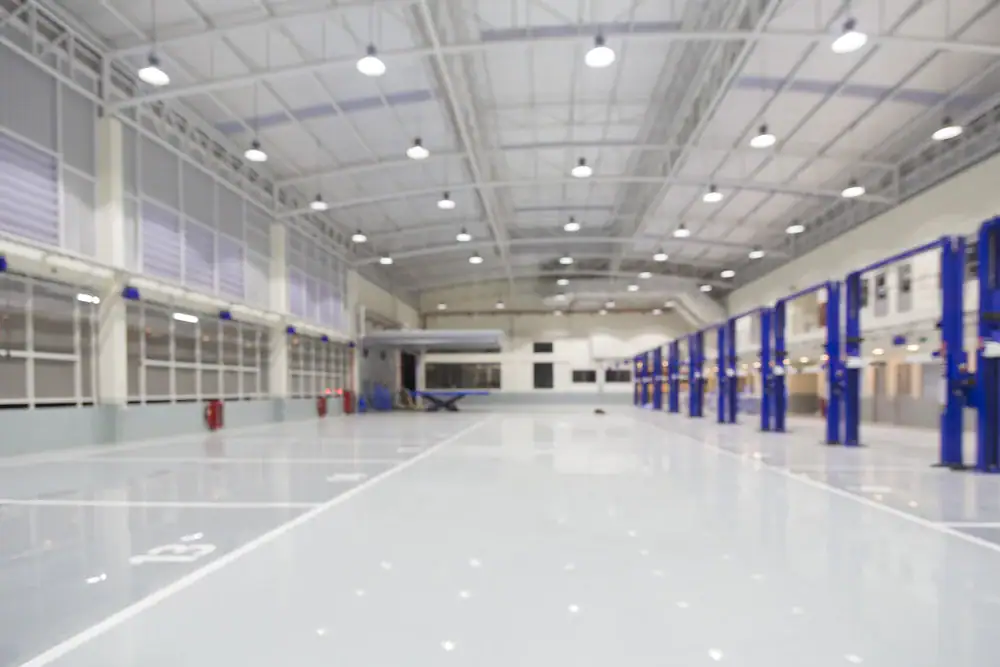
First, we come out and look at what you’re working with. Not every concrete floor is in the same condition, and not every coating system makes sense for every situation. We’ll tell you if there are moisture issues, existing coatings that need to come up, or cracks that need addressing before we even talk about epoxy.
Once we’re clear on the scope, we prep the surface. This is the step that separates installations that last from ones that fail. We grind the concrete to open up the pores, remove any contaminants, and create a profile that the epoxy can actually grip. If there’s existing coating, it comes up completely. If there are cracks, we fill them properly. Shortcuts here mean failure later, so we don’t take them.
Then we apply the epoxy system—usually a base coat and a top coat, depending on what your floor needs. We use Sherwin Williams and Fosroc products because they’re formulated to handle heat, moisture, and chemicals without breaking down. The application has to be done in the right conditions and with the right timing between coats, which is why we control the schedule tightly.
Most garage floors are ready to walk on within 24 hours and ready for vehicle traffic within 48. We don’t leave until the floor is fully cured and you know exactly how to maintain it. If something doesn’t look right or if you have questions after we’re gone, you have a direct line to the people who did the work.
Ready to get started?
Epoxy Garage Flooring in Miami Beach
Epoxy garage flooring in this area has to deal with conditions that don’t exist in most of the country. You’ve got heat that makes some coatings go soft under tire weight. You’ve got humidity that causes cheaper systems to trap moisture and bubble. You’ve got UV exposure if your garage door stays open, which yellows certain epoxies within months.
The systems we install are built to handle all of that. The coatings resist hot tire pickup, which is the issue that causes most failures in Florida garages. They’re moisture-tolerant, so they don’t delaminate when the humidity spikes after summer storms. And they’re UV-stable, so they don’t turn yellow or cloudy when sunlight hits them.
You’re also getting a floor that resists the chemicals and fluids that actually end up on garage floors—motor oil, brake fluid, battery acid, lawn care products. Those don’t stain through or eat into the coating. They wipe up, which is what you’d expect from a sealed surface but don’t always get.
For properties in Bayshore Business District, this isn’t just about function. The garage is part of the home’s presentation, especially in a market where details matter. A professionally finished garage floor adds value—typically between $2,000 and $8,000 for homes in this area—and it signals that the property has been maintained at a higher standard. That matters when you’re selling, and it matters when you’re just living here and want your space to reflect the investment you’ve made.
How long does epoxy garage floor coating actually last in Florida?
If it’s installed correctly with the right products, you’re looking at 10 to 20 years. That’s not a marketing number—that’s what happens when the concrete is prepped properly and the coating is formulated to handle heat and humidity.
The failures you see in two or three years almost always come from poor surface prep or using residential-grade products that aren’t made for Florida’s climate. If the concrete isn’t ground and cleaned correctly, the epoxy has nothing to bond to. If the product isn’t heat-resistant, it softens under your tires and starts peeling up in strips.
We use commercial-grade systems from Sherwin Williams and Fosroc because they’re designed for exactly these conditions. The longevity comes from the combination of proper prep and proper product. You’re not going to get 15 years out of a DIY kit from a big box store, and you’re not going to get it from a crew that skips the grinding step to save time.
Why do some epoxy garage floors peel up after a few months?
Almost always, it’s because the concrete wasn’t prepped correctly. Epoxy doesn’t stick to dirt, oil, existing sealers, or smooth concrete. It needs a clean, porous surface to bond to, and creating that surface requires mechanical grinding—not just cleaning or acid etching.
A lot of installers skip this step or do it inadequately because it’s time-consuming and requires the right equipment. They’ll clean the floor, maybe etch it lightly, and then roll on the epoxy. It looks fine initially, but there’s no real bond. As soon as you drive on it or the temperature fluctuates, it starts lifting.
The other common cause is moisture. If there’s moisture in the concrete and the epoxy isn’t moisture-tolerant, it creates pressure under the coating that eventually causes bubbling and delamination. Florida concrete often has moisture issues because of our water table and humidity, so using the right product matters. We test for moisture before we start and use systems that can handle it when necessary.
What’s the difference between epoxy and the coatings sold at home improvement stores?
The products sold in retail stores are typically water-based or low-solids epoxies designed for easy application by homeowners. They’re thin, they don’t penetrate deeply, and they’re not formulated to handle high heat or heavy use. They’ll give you a decent look for a year or two if you apply them perfectly, but they’re not built for longevity.
Professional-grade epoxy systems are 100% solids, which means there’s no water or solvent that evaporates—everything you put down stays down and cures into a thick, durable layer. These coatings are chemically engineered to resist heat, UV exposure, chemicals, and abrasion. They cost more and require more skill to apply, but the performance difference is significant.
The other factor is surface prep. A DIY kit assumes you’re working with a broom and maybe a cleaner. A professional installation involves diamond grinding the concrete to create the profile the epoxy needs to bond. Without that step, even the best coating will eventually fail. So it’s not just the product—it’s the entire system and process that determines whether the floor holds up or doesn’t.
How much does professional garage epoxy flooring cost in this area?
For a typical two-car garage in Bayshore Business District, you’re generally looking at $1,200 to $4,800 depending on the size, condition of the concrete, and the specific system you choose. That breaks down to roughly $3 to $12 per square foot for professional installation.
The range exists because not all floors are the same. If your concrete is in good shape and just needs a standard coating, you’re on the lower end. If there are cracks that need repair, existing coatings that need removal, or moisture issues that require a specialty system, the cost goes up. We give you transparent pricing after we’ve seen the floor, so there are no surprises.
What you’re paying for is the prep work, the quality of materials, and the experience to install it correctly the first time. Cheaper options exist, but they usually mean shortcuts in prep or lower-grade products. Given that redoing a failed floor costs more than doing it right initially, the investment makes sense. You’re also adding measurable value to your property—homes in this area typically see a $2,000 to $8,000 increase in value with a professionally finished garage.
Can epoxy flooring handle hot tires from cars in Florida heat?
Yes, but only if the epoxy is specifically formulated for it. Hot tire pickup is one of the most common failure points for garage epoxy in Florida, and it happens when the coating softens under the heat and weight of your tires, then literally gets pulled up when you drive out.
The products we use are engineered with high heat resistance, which means they stay rigid even when your tires are hot from sitting in the sun or driving on summer pavement. This isn’t a feature you get with standard residential epoxy kits—it requires commercial-grade chemistry.
The other factor is proper curing. If the epoxy hasn’t fully cured before you drive on it, even a heat-resistant product can fail. We control the curing time and don’t turn the floor over to you until it’s ready for full use. That usually means 48 hours for vehicle traffic, which is longer than some installers will tell you, but it’s what the product actually needs to perform the way it’s supposed to.
Do I need to do anything to maintain the floor after it’s installed?
Not much. That’s one of the main reasons people choose epoxy—it’s a sealed surface that doesn’t absorb stains or require ongoing treatment. You can sweep it, hose it down, or mop it with regular cleaners. Spills wipe up instead of soaking in.
The floor doesn’t need to be resealed or recoated unless you want to refresh the appearance after many years of heavy use. Some people choose to add a clear topcoat every decade or so, but it’s not required for protection—it’s purely cosmetic.
The main thing to avoid is using harsh abrasives or metal tools directly on the surface. The coating is durable, but it’s not indestructible. If you drop something heavy and sharp, it can chip. If you drag metal equipment across it repeatedly, it can scratch. Normal use—parking cars, moving lawn equipment, walking in and out—won’t damage it. Just treat it like the finished surface it is, and it’ll hold up without any special maintenance routine.
Other Services we provide in Bayshore Business District
Leave a Reply