


Garage Epoxy Flooring in Belle Glade, FL
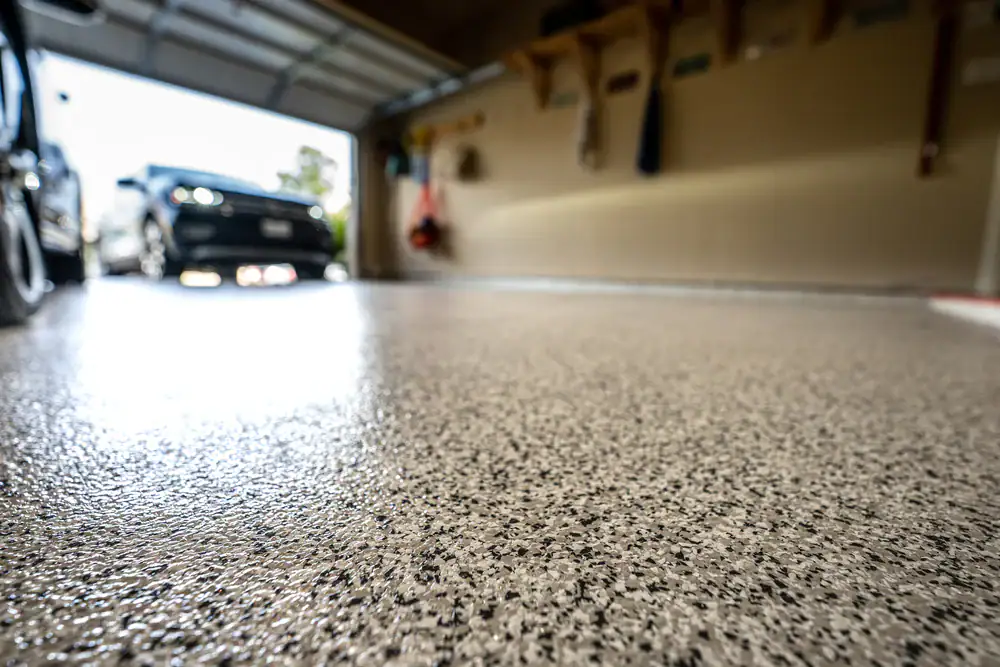
Your Garage Floor Fixed Right the First Time
Hear from Our Customers
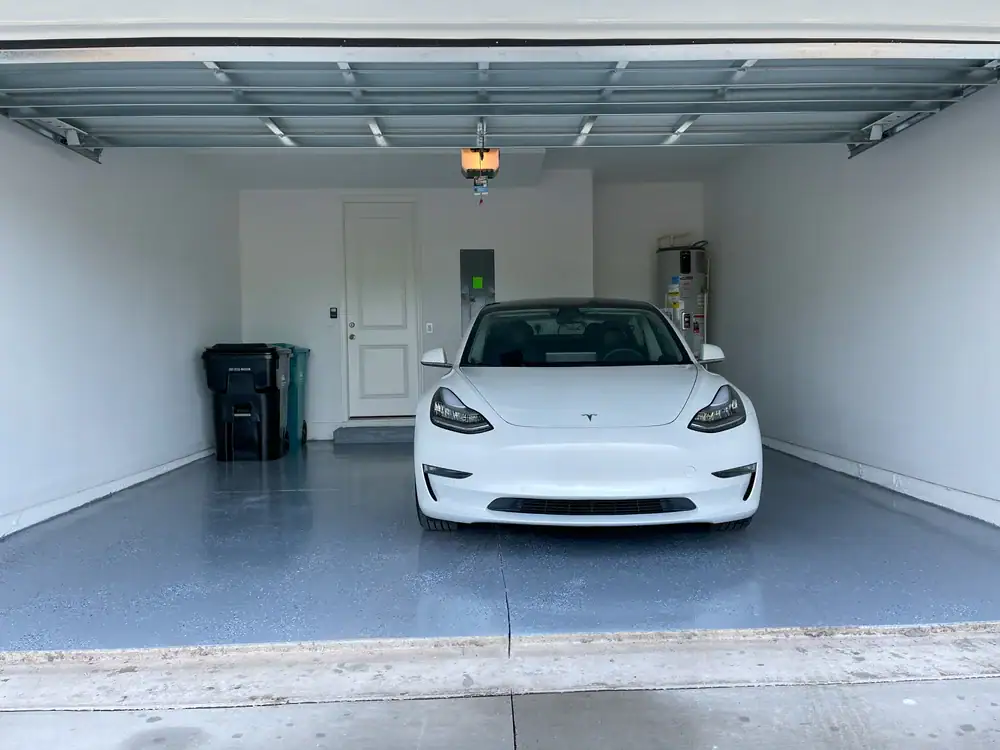
Epoxy Garage Floor Installation Belle Glade
Most garage floor coatings fail because they weren’t designed for South Florida. The humidity alone will destroy a standard DIY kit in under three years. You’ll see bubbles, peeling, and stains that make the floor look worse than before you started.
A proper epoxy floor coating system changes that. You get a surface that resists moisture from the ground up, handles tire marks without staining, and cleans with a hose and soap. No special treatments, no constant resealing.
It also protects your concrete. Once water gets into uncoated concrete, it breaks down the surface and creates cracks that only get worse. Epoxy stops that process and keeps your slab intact for decades. That’s not marketing talk—that’s what happens when the installation is done right with materials built for this climate.
Belle Glade Epoxy Flooring Contractors
We’ve been installing epoxy flooring and polished concrete systems since 2020 across Palm Beach, Broward, and Miami-Dade counties. We’ve worked with the U.S. Military, Coast Guard facilities, City of Doral, City of Sunny Isles, and county school systems—projects where the floor has to perform under serious conditions.
Belle Glade homeowners deal with the same humidity and heat those facilities do. Your garage might not see military vehicle traffic, but it faces the same moisture vapor pressure from below and the same UV exposure that causes cheaper coatings to yellow and crack.
We use Sherwin Williams and Fosroc products exclusively because they’re formulated for high-moisture environments. We don’t cut corners on prep, and we don’t rush the cure time. Most residential garage projects are done in 24 to 48 hours, but that timeline only works because we know exactly what we’re doing.
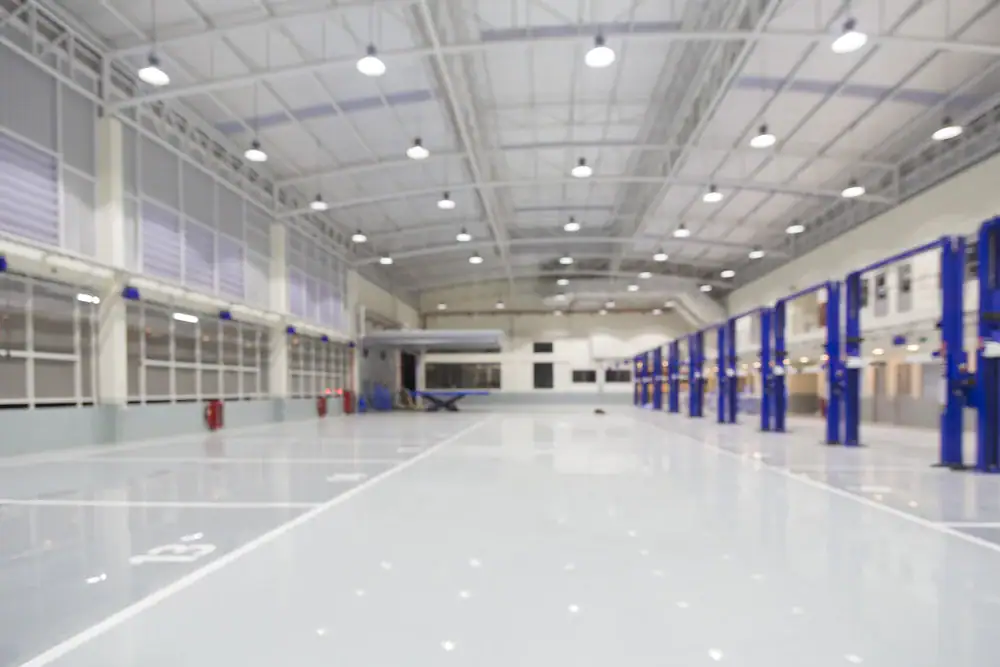
Garage Floor Coating Process Belle Glade
First, we test your concrete for moisture. If the slab is releasing too much vapor, we address it before any coating goes down. Skipping this step is why most epoxy floors fail—it’s not the coating, it’s what’s underneath.
Next, we mechanically grind the surface. This opens up the concrete pores so the primer can actually bond. A quick acid etch won’t cut it in Florida. We also patch any cracks or spalling and make sure the surface is level.
Then we apply a moisture-tolerant primer, followed by the epoxy base coat. Depending on your needs, we can add paint flakes for texture and slip resistance, or leave it smooth for a clean, polished look. The topcoat is a high-solids urethane or polyaspartic sealer that locks everything in and gives you UV stability.
You can walk on it in 24 hours. Full vehicle traffic in 48 to 72 hours. After that, it’s ready for whatever you throw at it.
Ready to get started?
Epoxy Floor Coating Options Belle Glade
You’re getting a moisture vapor barrier that stops ground moisture from pushing up through your concrete. That’s the number one cause of coating failure in Belle Glade and across South Florida. Most installers ignore it. We don’t.
You’re also getting a finish that won’t yellow under UV exposure. Florida sun comes through your garage door every time it’s open, and cheaper epoxies turn amber in six months. We use UV-stable topcoats that stay clear.
The system is chemical resistant, so oil, gas, and brake fluid wipe up without staining. It’s impact resistant, so dropped tools won’t chip the surface. And it’s slip resistant if you choose a flake finish, which most people in Belle Glade do because it hides dirt better and gives you traction when the floor is wet.
This isn’t just about looks. Homes in Belle Glade with finished garages sell faster and for more money. Real estate agents consistently rank garage floors as a top improvement before listing. You’re looking at a 5 to 10 percent increase in home value for a relatively small investment—potentially $10,000 to $20,000 on an average home here.
How much does garage epoxy flooring cost in Belle Glade?
Most residential garage floor coatings in Belle Glade run between $4 and $10 per square foot, depending on the system you choose and the condition of your concrete. A standard two-car garage is around 400 to 600 square feet, so you’re looking at $1,600 to $6,000 for a complete installation.
That range accounts for surface prep, moisture mitigation if needed, primer, base coat, optional flake system, and a UV-stable topcoat. If your slab has significant cracking or needs leveling, that adds to the cost. But those repairs are necessary—if you skip them, the coating will fail no matter how good the product is.
We give you an upfront estimate after looking at your floor in person. No surprises, no upsells during the job. You’ll know exactly what you’re paying for before we start.
Why do so many DIY epoxy garage floors fail in Florida?
Because the kits you buy at the hardware store aren’t designed for Florida’s moisture levels. They’re made for dry climates where ground moisture isn’t constantly pushing up through the concrete. In Belle Glade, that moisture creates vapor pressure that lifts the coating right off the slab.
Most DIY kits also skip the moisture test and use acid etching instead of mechanical grinding. Acid etching doesn’t open the concrete pores enough for a strong bond, especially on older slabs that have been sealed or contaminated with oil. The coating might look fine for a few months, but it starts peeling as soon as the moisture finds a weak spot.
The other issue is cure time. Florida’s heat and humidity affect how epoxy cures. If you apply it when it’s too hot or too humid, it won’t cross-link properly, and you end up with a soft, tacky surface that never fully hardens. We know how to adjust for temperature and humidity. DIY kits don’t come with that knowledge.
How long does an epoxy garage floor last in South Florida?
A properly installed epoxy floor coating should last 10 to 20 years in South Florida, depending on how much traffic it sees and how well you maintain it. That assumes we used moisture-tolerant primers, high-solids epoxy, and a UV-stable topcoat—and that the concrete was prepped correctly.
Most failures happen in the first three years, and they’re almost always due to poor surface prep or moisture issues that weren’t addressed. If your floor makes it past year three without peeling or bubbling, it’s probably going to last a long time.
Maintenance is simple. Sweep or blow out debris regularly, mop with mild soap and water when it gets dirty, and avoid using harsh degreasers that can dull the finish. If you park a hot car on it in the summer, let the tires cool for a few minutes before pulling in—hot tires can leave marks on any coating, though a good polyaspartic topcoat resists that better than standard epoxy.
Can you install epoxy flooring over cracked or damaged concrete?
Yes, but the cracks have to be repaired first. Epoxy doesn’t fill cracks—it bridges over them. If the crack is still moving or if there’s a structural issue causing it, the epoxy will crack too. We assess every slab before we start and let you know what needs to be fixed.
Small hairline cracks get filled with epoxy filler or polyurea. Larger cracks or spalling areas get ground out, cleaned, and patched with a high-strength repair mortar. If there’s a control joint that’s supposed to be there, we’ll respect it and not try to coat over it like it doesn’t exist.
In Belle Glade, a lot of concrete slabs have minor settling cracks from the soil composition. Those are usually fine to coat over once they’re properly filled. But if your slab has major heaving or widespread cracking, we’ll tell you that upfront. Sometimes a full resurface or overlay is the better option, and we handle that too.
What’s the difference between epoxy and polyaspartic garage floor coatings?
Epoxy is the base coating that bonds to the concrete and provides the bulk of the protection. Polyaspartic is a topcoat that goes over the epoxy to add UV resistance, faster cure times, and better chemical resistance. Most professional systems use both—epoxy for the foundation, polyaspartic for the finish.
Polyaspartic cures much faster than epoxy, which is why some installers use it as a single-coat system. It’s more expensive, but it allows you to use your garage sooner. The downside is that it’s harder to apply correctly, and if the installer rushes it, you’ll see streaks, bubbles, or thin spots.
For Belle Glade garages, we typically recommend a full epoxy system with a polyaspartic topcoat. You get the best of both—strong adhesion and moisture resistance from the epoxy, plus UV stability and fast cure from the polyaspartic. That combination holds up better in Florida’s climate than either product used alone.
Do I need to move everything out of my garage before installation?
Yes. We need clear access to the entire floor to prep and coat it properly. That means moving out vehicles, storage shelves, toolboxes, lawn equipment—anything that’s sitting on the concrete. If it’s bolted down, like a workbench, we can work around it, but the floor underneath won’t be coated.
Most people rent a storage unit for a few days or move everything into their driveway and cover it with tarps. If you have a lot of heavy equipment, plan ahead. We can give you a few days’ notice before we start so you have time to clear the space.
The actual installation takes 24 to 48 hours for most residential garages, but you’ll need to keep the floor clear for an additional 24 hours after we finish so the coating can fully cure. After that, you can move everything back in. We’ll walk you through the timeline during the estimate so there are no surprises.
Other Services we provide in Belle Glade
Leave a Reply