


Garage Epoxy Flooring in Boynton Beach, FL
Floors That Actually Hold Up to Florida Heat
Hear from Our Customers
Epoxy Garage Floor Coating Solutions
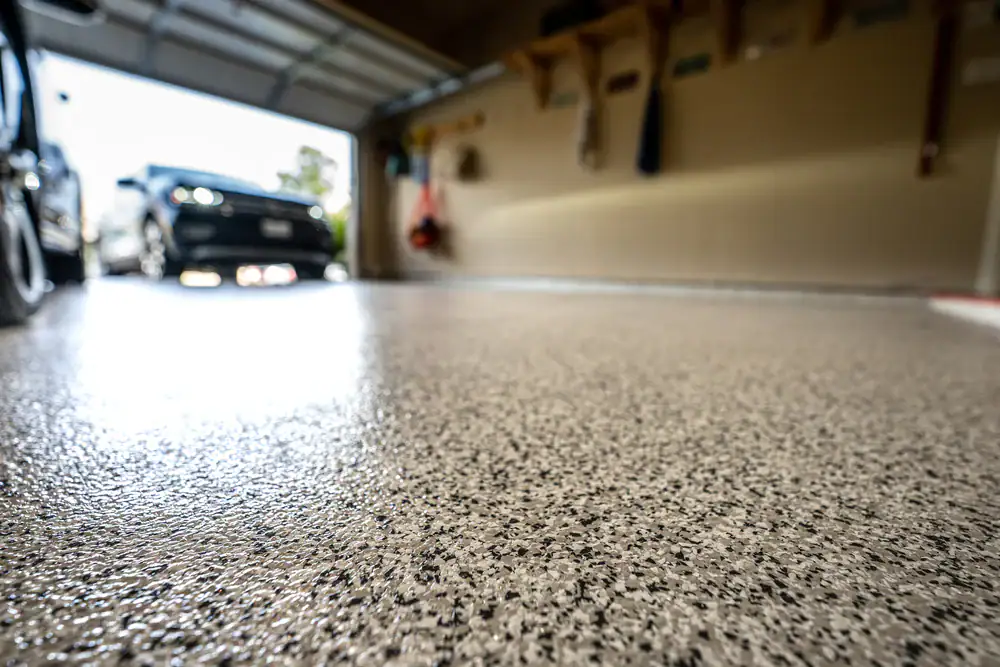
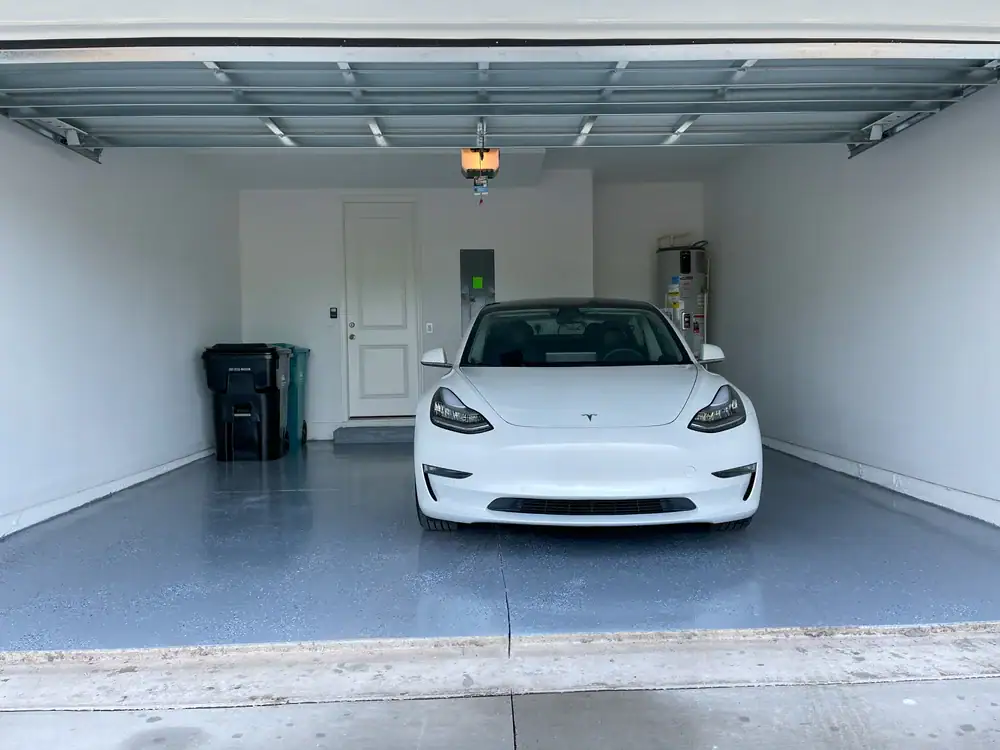
You pull in after a beach day and your garage floor still looks showroom-clean. No stains from salt water dripping off your boards. No tire marks where your car sits in the Florida heat all day.
That’s what happens when the concrete is ground correctly before coating. Most contractors skip this step because it takes time and the right equipment. The epoxy bonds at a molecular level instead of just sitting on top waiting to peel.
Your floor becomes the easiest surface in your house to clean. Oil, chemicals, dirt—everything wipes up because the coating is non-porous. And in Boynton Beach’s humidity, that matters more than most people realize. Moisture can’t creep in and cause mold or that musty garage smell that never goes away.
The metallic finish options catch light differently throughout the day. It’s not just about durability, though that’s the foundation. It’s about walking into a space that feels intentional instead of like an afterthought.
Boynton Beach Epoxy Flooring Specialists
SPF Industrial started in 2020 with one focus: epoxy, resin, and polished concrete. No side projects. No tile work or wood flooring to distract from what we’re actually good at.
The Coast Guard hired us. So did the US Military and cities like Doral and Sunny Isles Beach. Government contracts don’t go to companies that cut corners or learn on the job. They go to specialists who understand how Florida’s 75% humidity interacts with concrete and why most garage floor coatings fail within two years.
Boynton Beach properties face specific challenges. You’re close enough to the coast that salt air is a factor. Summer heat makes your garage an oven. That combination destroys standard epoxy if it’s not formulated correctly. We use commercial-grade materials from Sherwin Williams, Laticrete, and Fosroc—the same products specified for industrial facilities that can’t afford downtime or failures.
Professional Garage Floor Coating Process
First, we assess your concrete’s condition during a free consultation. Not every floor is ready for epoxy, and we’ll tell you if yours needs repair work first. No surprises, no upselling—just an honest evaluation.
Surface preparation takes up most of the installation time because it’s the most critical step. We grind the concrete to create the profile that epoxy needs to bond permanently. This isn’t the same as acid etching that DIY kits recommend. Grinding opens up the concrete’s pores and removes any existing sealers or contaminants that would cause adhesion failure.
The epoxy application happens in layers. Base coat first, then decorative flakes or metallic pigments if you want them, then a clear topcoat with UV inhibitors. Each layer needs specific temperature and humidity conditions to cure correctly—another reason why Florida installations require expertise that most contractors don’t have.
You can walk on the floor in 24 hours. Vehicles can go back in after 48 hours. The full cure takes about a week, but you’re not waiting around unable to use your garage. We work fast because we have the crew size and products in stock to avoid delays.
Ready to get started?
Epoxy Floor Coating Options and Features
Every installation starts with that concrete grinding we mentioned. It’s not optional, and it’s not an upsell. It’s the difference between a floor that lasts 15 years and one that peels up in 18 months.
You get UV inhibitors mixed into the formula. Boynton Beach sun will yellow and fade standard epoxy. The inhibitors keep your floor looking the same color five years from now as it does the day we finish. Hot tire pickup resistance comes from the chemical composition of the epoxy itself plus the surface preparation. Your tires can sit on the floor in 95-degree heat without leaving marks or pulling up the coating.
The warranty covers both materials and workmanship. If something fails because of how we installed it or a product defect, we fix it. Most failures happen because of improper prep work, which is why we spend so much time on that step.
Color and finish options range from solid colors to decorative flakes to metallic epoxy that looks like liquid metal or swirling marble. The metallic finishes are trending right now because they’re unique—no two floors look identical. But solid colors with flakes are still the most popular for durability and ease of maintenance.
How long does garage epoxy flooring actually last in Florida’s climate?
Properly installed epoxy garage floors last 15-20 years in Boynton Beach if they’re formulated for Florida’s humidity and UV exposure. The key word is “properly installed.”
Most failures happen within the first two years because the concrete wasn’t prepared correctly or the installer used a product designed for Arizona’s dry climate instead of Florida’s coastal environment. Your concrete needs to be ground to the right profile—not just cleaned or acid-etched. That grinding creates the mechanical bond that holds up when your garage hits 110 degrees in July.
UV inhibitors are non-negotiable here. Standard epoxy yellows and becomes brittle under constant sun exposure. We mix inhibitors into every coat specifically because Boynton Beach garages take a beating from sunlight. The coating stays flexible and color-stable instead of cracking or fading.
Maintenance extends the life even further. Sweep regularly and mop with a mild cleaner when needed. That’s it. The coating is non-porous, so nothing soaks in or stains. You’re not resealing it every year like you would with a concrete sealer.
What causes hot tire pickup and how do you prevent it?
Hot tire pickup happens when heat softens the epoxy enough that your tires literally pull it off the concrete. It’s one of the most common complaints about garage floor coatings, especially in Florida.
Two things prevent it: the right epoxy formula and proper surface preparation. Cheap epoxy or polyurethane coatings don’t have the chemical resistance to handle tire heat. They’re fine for foot traffic but not for a 3,000-pound vehicle sitting in one spot all day. We use commercial-grade epoxy with high heat tolerance—the same type specified for parking garages and industrial facilities.
Surface prep matters just as much. If the epoxy is just sitting on top of smooth concrete, heat makes it pliable and your tires peel it up. When we grind the concrete first, the epoxy bonds into those microscopic pores. It becomes part of the concrete instead of a coating on top of it. The tire can’t pull up what’s chemically bonded at that level.
DIY kits fail at this because they rely on acid etching, which doesn’t create enough profile. And most contractors don’t own the grinding equipment or don’t want to spend the time. It’s the difference between a floor that fails in year one and one that’s still perfect in year ten.
How much does epoxy garage flooring cost in Boynton Beach?
Expect to pay $5-8 per square foot for a standard flake epoxy system on a typical two-car garage. Solid colors run $3-6 per square foot. Metallic epoxy costs $8-15 per square foot because of the specialized materials and application technique.
Those prices include proper surface preparation, multiple coats, and UV-resistant topcoat. If someone quotes significantly less, ask what they’re skipping. Usually it’s the grinding or they’re using a thin mil coating that won’t hold up.
Your concrete’s condition affects the price. Cracks need repair. Oil stains need treatment. If your slab has moisture issues, we need to address that before coating or the epoxy will fail. We assess all of this during the free consultation so you know exactly what you’re paying for.
The cost makes sense when you compare it to replacing the floor or dealing with a failed coating. Epoxy lasts longer than cheaper alternatives that need reapplication multiple times over 20 years. Plus there’s the hassle of emptying your garage every time. Do it right once with commercial-grade materials and you’re done.
Can you install epoxy flooring over my existing garage floor coating?
Sometimes, but usually it’s better to remove the old coating first. Epoxy only bonds as well as whatever is underneath it. If your existing coating is already failing or wasn’t installed correctly, putting new epoxy over it just delays the inevitable.
We test the existing coating during the consultation. If it’s a quality epoxy that’s still well-bonded, we can rough it up and coat over it. But if it’s a big box store DIY kit or a thin sealer, it needs to come off. Those products aren’t designed to be a base for professional-grade epoxy.
Removal adds to the cost and timeline, but it’s the only way to guarantee the new floor will last. We use grinders to take it down to bare concrete, then proceed with normal prep. You end up with the same 15-20 year lifespan as a new installation.
Paint is the worst culprit. Garage floor paint peels and chips because it sits on top of the concrete instead of bonding into it. You can’t coat over paint with epoxy—it’ll fail within months. The paint has to be completely removed first.
What’s the difference between epoxy and polyaspartic garage floor coatings?
Polyaspartic coatings cure faster and have better UV resistance, but they cost more and require more skill to install. Epoxy is more forgiving during application and still performs excellently in Florida when it’s formulated correctly.
Polyaspartic systems can be driven on in 24 hours versus 48 for epoxy. They don’t yellow at all under UV exposure. But the material costs twice as much and the application window is shorter—once you mix it, you have limited time to get it down before it starts to cure. That’s why fewer contractors offer it.
For most Boynton Beach garages, properly formulated epoxy with UV inhibitors gives you the same longevity at a better price point. You’re looking at 15-20 years either way if the installation is done right. The surface preparation matters more than whether you choose epoxy or polyaspartic.
We offer both options and explain the actual differences during consultation. Some homeowners want the absolute fastest cure time because they can’t be without their garage for two days. Others prefer epoxy because the cost difference is significant and the performance is nearly identical. There’s no wrong choice—it depends on your priorities and budget.
How do I maintain my epoxy garage floor after installation?
Sweep or blow out dirt and debris regularly. Mop with warm water and a mild cleaner when needed. That’s genuinely all the maintenance required.
The coating is non-porous, so spills sit on top instead of soaking in. Oil, antifreeze, brake fluid—wipe them up and they leave no stain. You’re not scrubbing or using harsh chemicals. A microfiber mop and basic floor cleaner handle everything.
Avoid abrasive scrubbing pads or acidic cleaners. They can dull the finish over time. Stick with pH-neutral products. Most people use the same cleaner they use on their kitchen floors.
In Boynton Beach, you might notice more dust and pollen because of the coastal location. A quick sweep every few days keeps the floor looking clean. The UV-resistant topcoat means you don’t need to reapply anything or reseal it. The protection is built into the coating itself and lasts for the life of the floor.
Other Services we provide in Boynton Beach
Leave a Reply