


Garage Epoxy Flooring in Coconut Creek, FL
Florida-Proof Garage Floors That Actually Last
Hear from Our Customers
Epoxy Garage Floor Coating Coconut Creek
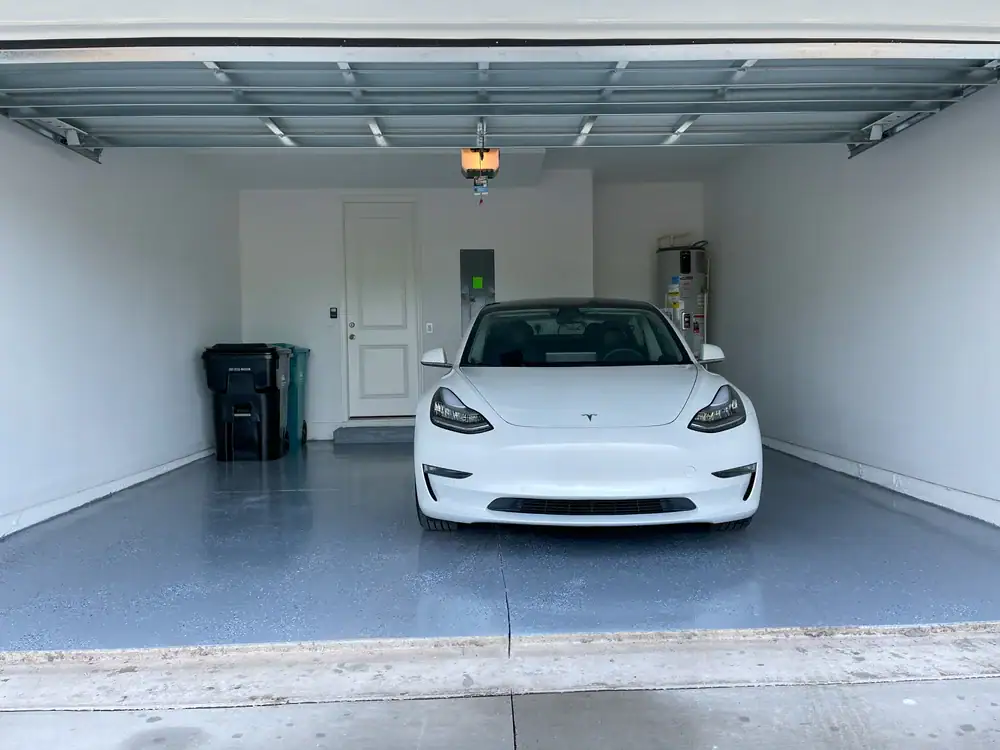
You’re not looking for a floor that looks good for six months. You need something that holds up when you park a hot car on it in August, when humidity hits 90%, and when you’re tracking in salt from the coast.
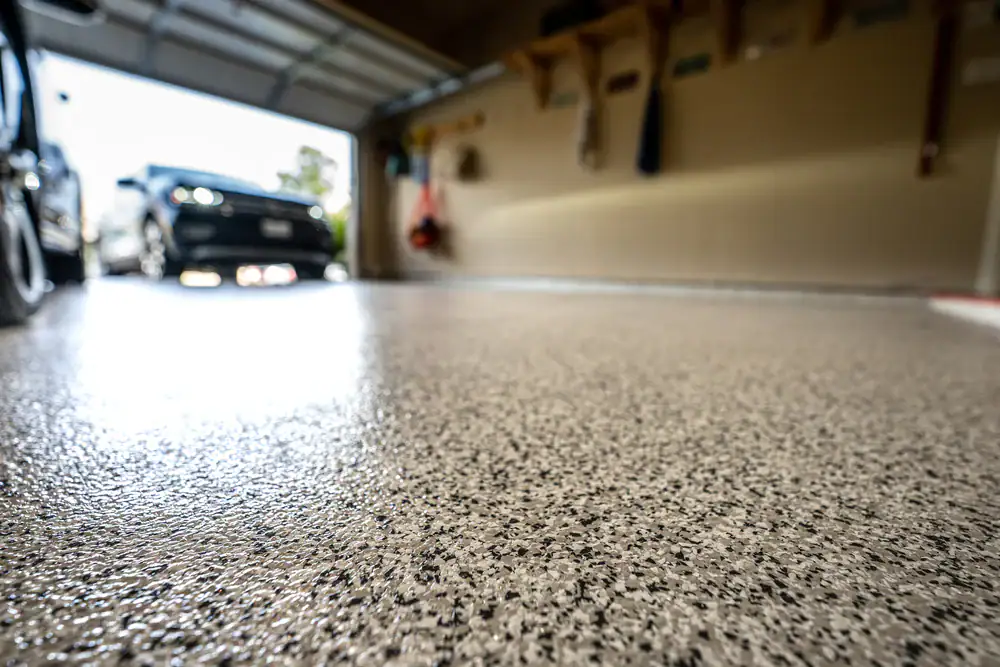
That’s what proper epoxy floor coating does. It seals the concrete underneath so moisture can’t push through and cause bubbling. It resists UV damage so you’re not dealing with yellow spots by next summer. And it’s thick enough that oil, chemicals, and tire marks wipe clean without staining.
Most garage floor coatings fail because the prep work gets skipped or the wrong product gets used for Florida’s climate. We handle both. The concrete gets profiled correctly so the epoxy bonds. We test for moisture vapor. And we only use resin-based systems that are formulated to handle heat and humidity, not the cheap stuff that starts failing after the first rainy season.
Garage Floor Coating Contractors Coconut Creek
SPF Industrial started in July 2020, and we’ve spent the last few years installing epoxy flooring and polished concrete across South Florida. We’re not new to this. We’ve worked with the Coast Guard, the US Army, the City of Doral, the City of Sunny Isles, and plenty of high schools and county facilities that need floors to last.
Coconut Creek homeowners deal with the same climate challenges as our commercial clients—high humidity, sudden storms, and heat that doesn’t quit. Your garage floor needs the same level of prep and product quality that we bring to government projects. That’s what you get when you call us.
We’re certified in moisture vapor mitigation, which matters more in Florida than most people realize. If moisture is trapped in your concrete slab, no coating will last. We test for it, address it, and make sure the floor is ready before any epoxy goes down.
Epoxy Garage Flooring Installation Process
We start with surface prep. That means grinding or shot blasting the concrete to open up the pores so the epoxy can bond. If your slab has old coatings, oil stains, or uneven spots, we address those first. Skipping this step is why most DIY kits and cheap installs fail within a year.
Next, we test for moisture. Florida concrete holds water, especially in coastal areas like Coconut Creek. If the slab is releasing too much vapor, we apply a moisture-resistant primer before the epoxy goes down. This prevents bubbling and delamination later.
Then we apply the epoxy system. Depending on what you need, that could be a solid color, flake system, or metallic finish. We use products from Sherwin Williams and Fosroc—brands that are built for commercial and industrial use, not just residential garages. The coating goes down in layers, and each one is designed to handle Florida’s temperature swings and UV exposure.
Finally, we seal it with a topcoat that adds chemical resistance and makes cleaning easier. Most installs are done in 24 to 48 hours, depending on the size of the space and the system you choose.

Ready to get started?
Garage Floor Painting and Coating Options
This isn’t garage floor painting. Paint sits on top of concrete and peels when tires are hot or moisture builds up. Epoxy bonds to the concrete and becomes part of the surface. That’s the difference between a floor that lasts two years and one that lasts fifteen.
In Coconut Creek, your garage is exposed to humidity year-round. The concrete absorbs moisture from the air and the ground. Without a proper vapor barrier or moisture-tolerant primer, any coating will fail. We account for that during installation. We don’t just roll product onto concrete and hope it sticks.
You also get options. Solid colors work if you want something clean and simple. Flake systems add texture and hide imperfections. Metallic finishes give you a high-end look. All of them are designed to resist staining, UV damage, and the kind of wear that comes from parking cars, moving equipment, or using your garage as a workspace.
We also handle safety line striping if you’re using the space for parking or storage. And if your floor has cracks or damage, we resurface it before applying any coating. You’re not covering up problems—you’re fixing them first.
How long does epoxy garage flooring last in Coconut Creek’s climate?
A properly installed epoxy garage floor lasts 10 to 20 years in South Florida if you maintain it correctly. The key is using moisture-resistant primers and UV-stable topcoats that are formulated for humid, coastal climates.
Coconut Creek sits close enough to the coast that salt air and humidity are constant factors. Cheap epoxy systems or DIY kits aren’t built for that. They’ll start bubbling or yellowing within a year. Professional-grade resin systems handle the heat, moisture, and UV exposure without breaking down.
Maintenance is straightforward. Sweep or blow off debris regularly. Mop with a mild cleaner when needed. Avoid using acidic cleaners or pressure washers on high settings, as those can wear down the topcoat over time. If you notice any areas that need attention, address them early before they spread.
Why do some garage floor coatings bubble or peel in Florida?
Bubbling and peeling happen when moisture vapor pushes up through the concrete and gets trapped under the coating. Florida’s humidity makes this a common problem, especially if the installer didn’t test for moisture before applying the epoxy.
Concrete slabs absorb water from the ground and the air. If the slab releases too much vapor, the epoxy loses its bond and starts lifting. That’s why we use calcium chloride tests or moisture meters to check vapor levels before any coating goes down. If the levels are too high, we apply a moisture-tolerant primer that allows vapor to escape without damaging the epoxy.
Another cause is poor surface prep. If the concrete isn’t profiled correctly, the epoxy won’t bond. It’ll sit on top like paint and peel off when tires are hot or when the floor expands and contracts with temperature changes. Grinding or shot blasting the surface is the only way to create a proper bond.
Can you install epoxy flooring over an existing garage floor coating?
It depends on what’s already there and what condition it’s in. If the existing coating is failing—peeling, bubbling, or delaminating—it has to come off first. You can’t apply new epoxy over a failing surface and expect it to hold.
If the old coating is still bonded and in good shape, we can sometimes apply a new layer over it after proper prep. That means cleaning, deglossing, and profiling the surface so the new epoxy has something to grip. But in most cases, especially with older DIY kits or low-quality coatings, removal is the better option.
We’ll assess your floor during the consultation and let you know what makes sense. Removing old coatings adds time and cost, but it’s worth it if it means your new floor actually lasts. Cutting corners on prep is why most epoxy jobs fail early.
What’s the difference between epoxy and polyaspartic garage floor coatings?
Epoxy is a two-part resin system that cures through a chemical reaction. It’s durable, chemical-resistant, and works well in garages that see heavy use. Polyaspartic is a newer coating that cures faster and has better UV resistance, which matters if your garage gets direct sunlight.
Both work in Coconut Creek, but they’re suited for different situations. Epoxy takes longer to cure, usually 24 to 48 hours before you can walk on it and up to a week before you can park a car. Polyaspartic cures in a few hours, so you can use the space sooner. That’s helpful if you can’t afford downtime.
Polyaspartic also resists yellowing better than epoxy, which is important if your garage has windows or an open door that lets in UV light. Epoxy can yellow over time when exposed to direct sun. If your garage is enclosed or shaded, that’s less of an issue. We’ll recommend the right system based on how you use the space and what kind of exposure it gets.
How much does garage epoxy flooring cost in Coconut Creek?
Cost depends on the size of your garage, the condition of the concrete, and the type of system you choose. A basic solid-color epoxy for a standard two-car garage typically runs between $1,500 and $3,000. Flake systems or metallic finishes cost more because of the materials and labor involved.
If your concrete needs repairs—filling cracks, leveling uneven spots, or removing old coatings—that adds to the cost. Same with moisture mitigation. If we need to apply a vapor barrier or moisture-resistant primer, that’s an extra step that protects your investment but increases the upfront price.
We give transparent pricing during the consultation. No surprises, no hidden fees. You’ll know what the job costs before we start, and we’ll explain what you’re paying for. Cheaper options exist, but they usually fail faster. You’re better off paying for a system that lasts than redoing the floor in two years because the first install was done wrong.
Does SPF Industrial offer emergency or fast-turnaround garage floor installations?
Yes. We’ve handled emergency jobs for commercial clients, and we can move quickly for residential projects when needed. Most garage floor installations are completed in 24 to 48 hours, depending on the size and system.
If you’re on a tight timeline—maybe you’re listing your house, finishing a renovation, or need the space ready for an event—let us know during the consultation. We’ll work with you to schedule the job as soon as possible. That said, we won’t rush the prep work. Surface preparation and moisture testing can’t be skipped, even on fast-turnaround jobs.
We also offer follow-up support after installation. If you have questions about maintenance or notice any issues, we’re available to help. That’s part of doing the job right the first time—making sure you’re taken care of after we leave, not just during the install.
Other Services we provide in Coconut Creek
Leave a Reply