


Garage Epoxy Flooring in Coral Terrace, FL
Garage Floors That Survive Florida’s Worst
Hear from Our Customers
Epoxy Garage Floor Coating Coral Terrace
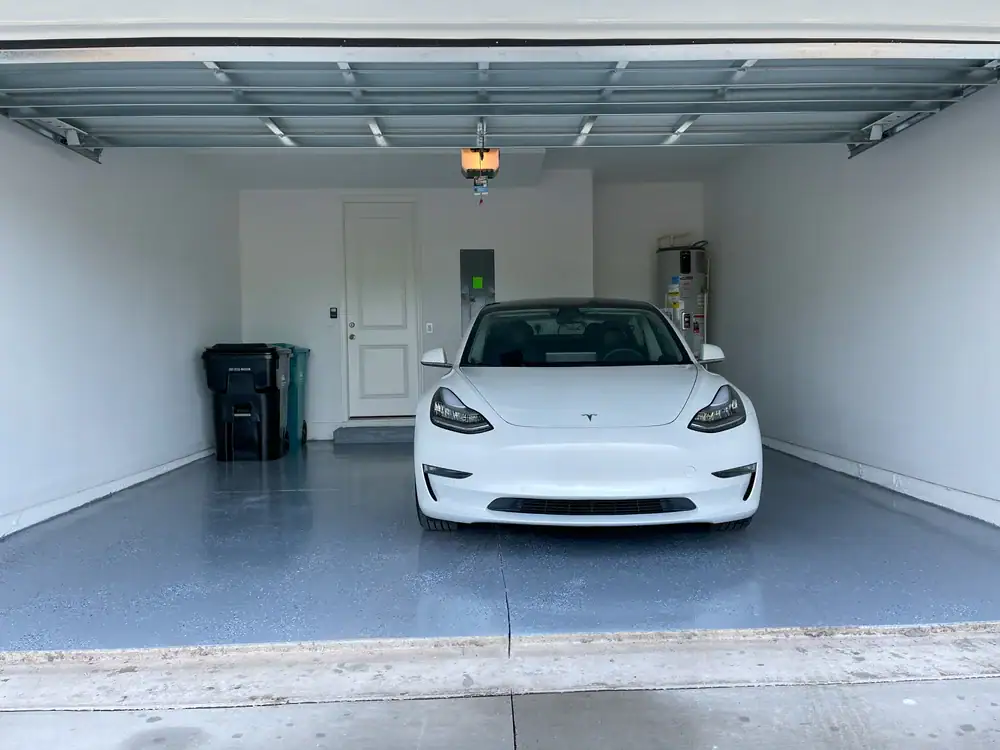
You get a garage floor that doesn’t stain when oil drips from your car. You get a surface that doesn’t crack or peel when Miami humidity tries to push moisture up through the concrete. You get a finish that stays intact when your garage door opens and the temperature swings 20 degrees in seconds.
Most concrete floors in Coral Terrace absorb everything—oil, chemicals, water. That creates permanent stains and slow deterioration you can’t reverse. An epoxy floor coating seals the surface completely. Spills sit on top. You wipe them up. That’s it.
The floors we install handle thermal shock because we prep the concrete properly and use materials rated for Florida’s subtropical climate. We’re not applying a coating over dust and hoping it sticks. We’re shot-blasting or diamond-grinding the surface, repairing cracks, and creating a profile that bonds at the molecular level.
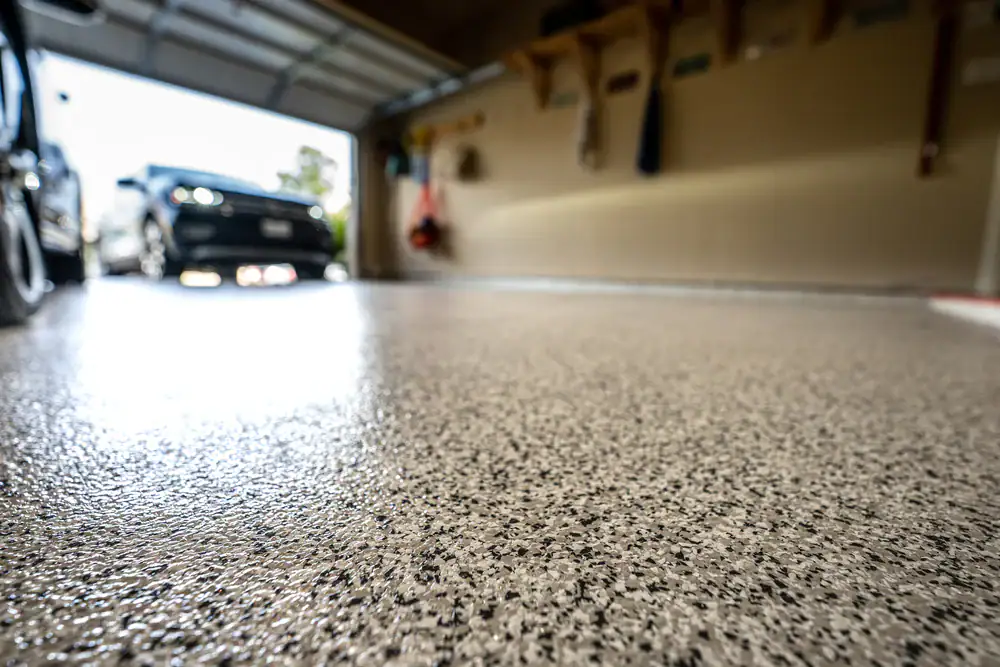
You also get a floor that looks significantly better than bare concrete. The broadcast flake finish hides imperfections, adds slip resistance, and gives your garage the kind of appearance that makes you want to park inside instead of using it as a storage dump.
Garage Floor Coating Contractors Coral Terrace
We’ve been installing epoxy flooring and polishing concrete since 2020. We’re veteran-owned, and we don’t subcontract anything. Every person who shows up to your property is a full-time employee who does this work every day.
We’ve installed floors for the Coast Guard, the US Army, the City of Doral, the City of Sunny Isles, and multiple high schools across Miami-Dade County. Government and military contracts require documentation, insurance, and consistent results. We wouldn’t have that portfolio if we cut corners.
Coral Terrace homeowners deal with the same climate challenges as commercial properties—high humidity, frequent rain, intense sun. Your garage floor needs the same level of preparation and material quality we’d use on a municipal project. That’s what you get when you work with us.
Epoxy Garage Flooring Installation Process
We start with surface preparation. That means shot-blasting, diamond grinding, or scarifying your concrete to remove any existing coatings, sealers, or contaminants. This step determines whether your floor lasts two years or twenty. Most failures happen because someone skipped proper prep.
Next, we repair cracks and imperfections. Concrete in Coral Terrace shifts and settles. We fill those gaps with epoxy or polyurea so moisture can’t get underneath your new coating. If we don’t fix the substrate, the coating won’t matter.
Then we apply the base coat—either epoxy or polyaspartic, depending on your timeline and budget. While that’s still wet, we broadcast color flakes across the entire surface. This creates texture, hides minor flaws, and gives you the look most people associate with professional garage floors.
After the flakes cure, we apply a clear topcoat. This seals everything, adds UV resistance, and gives you a finish that’s easy to clean. Most residential installs are ready for foot traffic in 24 hours and vehicle traffic in 72 hours. We don’t leave until we’ve cleaned up completely and walked you through basic maintenance.
Ready to get started?
Garage Epoxy Floor Options Coral Terrace
Every garage floor coating we install includes full surface preparation—no exceptions. We don’t show up and roll product over dirty concrete. You get shot-blasting or diamond grinding, crack repair, and a surface profile that meets manufacturer specs.
You also get materials designed for Florida. We use Sherwin Williams and Fosroc products rated for high humidity and UV exposure. Cheaper coatings yellow in the sun or bubble when moisture vapor tries to escape through the concrete. The products we use are engineered to handle that.
Coral Terrace sits in a humid subtropical zone. Your garage floor is exposed to moisture from below (groundwater vapor) and above (rain, humidity, temperature swings). Most epoxy garage flooring failures in South Florida happen because installers used the wrong product or didn’t account for moisture mitigation. We test for moisture levels before we start and adjust our process accordingly.
You’re also getting a crew that doesn’t disappear after the deposit clears. We offer follow-up calls, emergency response if something goes wrong, and transparent pricing from the start. You’ll talk to the same person who manages your project—not a call center or a subcontractor who doesn’t know your job details.
How long does epoxy garage flooring last in Coral Terrace?
A properly installed epoxy garage floor in Coral Terrace typically lasts 10 to 20 years. That range depends on how much traffic your garage sees, how well you maintain it, and whether the installer prepped the concrete correctly.
The biggest threat to longevity in South Florida is moisture. If water vapor gets trapped under the coating, it will eventually cause bubbling or peeling. We test moisture levels before installation and use vapor barriers or moisture-mitigating primers when needed.
UV exposure is the other factor. Garages with doors that stay open during the day get more sun, which can cause some coatings to yellow or fade. We use UV-resistant topcoats specifically because of this. If you want maximum durability, polyaspartic coatings handle UV exposure better than standard epoxy, though they cost a bit more upfront.
What’s the difference between epoxy and polyaspartic for garage floors?
Epoxy takes longer to cure but costs less. Polyaspartic cures faster and handles UV exposure better, but it’s more expensive. Both work well in Coral Terrace if installed correctly.
Epoxy typically requires 24 to 48 hours before you can walk on it and up to 72 hours before you can park a car on it. Polyaspartic can be ready for vehicles in 24 hours. If you need your garage back quickly, polyaspartic makes sense.
Polyaspartic also resists yellowing better than epoxy. If your garage gets direct sunlight, epoxy can develop a yellow tint over time. Polyaspartic stays clear. That said, most homeowners choose epoxy because the cost difference is significant and the performance difference only matters in specific situations. We’ll walk you through both options during the consultation so you can decide what fits your budget and timeline.
Can you install epoxy flooring over existing garage floor coatings?
Sometimes, but usually we remove the old coating first. If the existing coating is peeling, bubbling, or poorly bonded, anything we put on top will fail. It’s not worth the risk.
We test the existing coating by trying to scrape it up or checking for delamination. If it’s solid and chemically compatible with what we’re installing, we can rough it up and coat over it. But in most cases, especially with DIY epoxy kits or old paint, removal is the better option.
Removing old coatings adds time and cost to the project, but it’s the only way to guarantee a long-lasting result. We use shot-blasting or grinding equipment to strip everything down to bare concrete. That gives us a clean surface with the right profile for maximum adhesion. Shortcuts here are where most garage floor projects go wrong.
How much does garage epoxy flooring cost in Coral Terrace?
Most residential garage floor coatings in Coral Terrace cost between $3 and $10 per square foot, depending on the size of your garage, the condition of your concrete, and the type of coating you choose. A standard two-car garage (400-500 square feet) typically runs $1,500 to $4,000.
That range accounts for surface preparation, materials, labor, and topcoat. If your concrete has significant cracking or needs moisture mitigation, costs go up. If you choose polyaspartic instead of epoxy, that also increases the price.
We give you transparent pricing after we see your garage. We’re not going to quote you over the phone and then surprise you with add-ons when we show up. You’ll know exactly what you’re paying for and why. We also discuss options—if budget is tight, we’ll show you where you can save money without sacrificing quality.
Does garage floor coating hold up to hot tires and chemicals?
Yes, if it’s installed correctly with the right products. Epoxy and polyaspartic coatings are chemically resistant to motor oil, gasoline, brake fluid, and most household chemicals. Hot tires won’t damage a properly cured floor.
The “hot tire” issue usually comes up with cheap DIY kits or coatings that weren’t fully cured before you parked on them. If the coating hasn’t reached full hardness, hot tires can leave marks or cause the surface to soften temporarily. Professional-grade materials cure harder and don’t have this problem.
Chemical resistance is one of the main reasons people choose epoxy garage flooring. Spills that would permanently stain bare concrete just sit on top of a coated floor. You wipe them up with a rag or mop. Even if something sits for a few days, it won’t penetrate the surface. That’s the whole point of sealing your concrete.
How soon can I use my garage after epoxy installation?
You can walk on most epoxy floors within 24 hours. You can park your car on them after 72 hours. Polyaspartic floors cure faster—sometimes ready for vehicles in 24 hours.
Cure time depends on temperature and humidity. In Coral Terrace, high humidity can slow curing slightly, but we account for that when we schedule your install. We don’t leave until we’ve confirmed the floor is curing properly and given you a clear timeline for when you can resume normal use.
If you need your garage back faster, polyaspartic is the better option. It’s more expensive, but the cure time is significantly shorter. Most homeowners are fine waiting a couple of days for epoxy, but if you’re on a tight schedule or can’t move your cars elsewhere, we’ll recommend polyaspartic from the start.
Other Services we provide in Coral Terrace
Leave a Reply