


Garage Epoxy Flooring in Country Club, FL
Floors That Actually Handle Florida’s Garage Reality
Hear from Our Customers
Epoxy Floor Coating Built for Country Club
Your garage floor takes a beating. Oil from your car seeps into the concrete and weakens it from the inside. Florida’s sandy soil shifts after heavy rain, and suddenly you’ve got cracks spreading across the slab. The humidity doesn’t help—moisture gets trapped in the concrete, expands when it heats up, contracts when it cools down, and before long you’re looking at flaking, peeling, or that chalky surface that never quite cleans up.
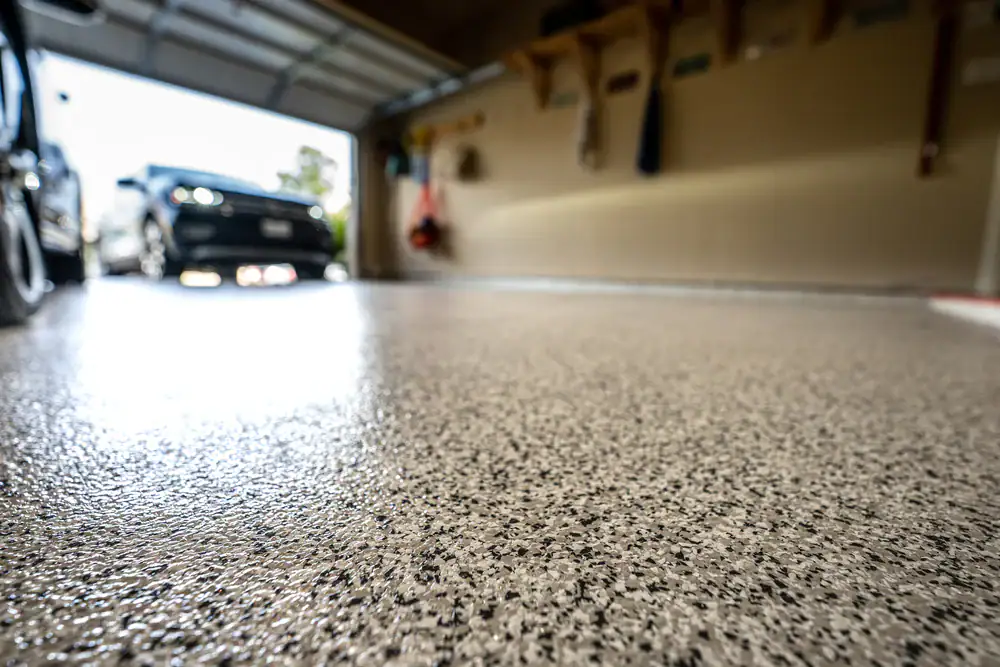
An epoxy floor coating creates a seamless, non-porous barrier over your concrete. Liquids can’t penetrate it. Oil, gasoline, brake fluid—they sit on top until you wipe them away. No staining. No structural damage.
The floor you get from us isn’t a cosmetic fix. It’s a protective system that handles the weight of your vehicles, resists chemicals, and stands up to Florida’s climate without breaking down. Most installations finish in one day. Once it’s cured, it performs for decades.
Garage Floor Coating Experts Since 2020
We’ve been installing epoxy flooring across South Florida since 2020. We’ve worked with the U.S. Coast Guard, the U.S. Army, the City of Doral, the City of Sunny Isles, and county facilities throughout Broward and Miami-Dade. Those contracts don’t go to companies that cut corners.
We bring that same level of prep work and material quality to your garage in Country Club. Everything gets done in-house with our own crew—no subcontractors. We use industrial-grade products from Sherwin Williams, Fosroc, Laticrete, and other manufacturers that produce coatings for commercial and military applications.
You’re not getting a garage floor painting job that peels in two years. You’re getting a floor system that’s built to last, installed by people who’ve done this in stadiums, food processing plants, and government facilities.
Our Epoxy Garage Flooring Process Explained
We start with the concrete itself. If there’s oil, grease, or an old coating on the surface, it has to come off—otherwise the epoxy won’t bond. We use shot-blasting, diamond grinding, or scarifying depending on what your slab needs. This opens up the pores of the concrete so the epoxy can lock in.
Next, we repair any cracks or uneven spots. Florida’s soil movement causes concrete to settle and crack, and if we don’t address that first, those cracks will telegraph through the coating. We fill them, level the surface, and make sure the slab is structurally sound.
Then we apply the epoxy system in layers. This isn’t a single coat of paint. It’s a multi-layer build that creates a thick, durable surface—five times thicker than standard garage floor paint. We can add slip-resistant aggregates if you want traction in areas that get wet.
Most garage projects finish in one day. You’ll need to stay off it while it cures, but once it’s ready, you’ve got a floor that handles whatever you throw at it. We do a final walkthrough, answer any questions, and follow up to make sure everything’s holding up the way it should.

Ready to get started?
What’s Included in Garage Epoxy Flooring
Every installation includes full surface preparation—that’s the shot-blasting, grinding, or scarifying needed to get the concrete ready. We remove any existing coatings, clean off oils and contaminants, and repair cracks or damage. This step takes time, but it’s the reason our floors last decades instead of years.
The epoxy system itself is industrial-grade. We’re using materials designed for commercial facilities, not the stuff you’d pick up at a hardware store. The coating is chemical-resistant, so automotive fluids won’t stain or damage it. It’s also moisture-resistant, which matters in Country Club where humidity is constant and coastal proximity means your garage sees more moisture than most.
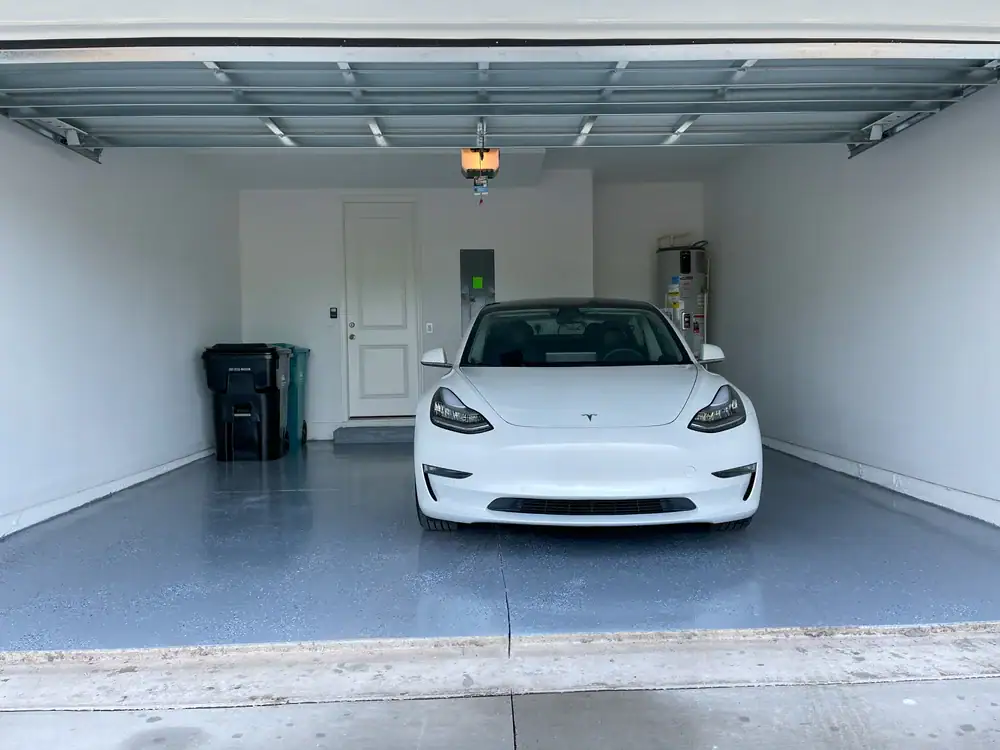
You can customize the finish. We offer different colors, textures, and levels of slip resistance depending on how you use the space. Some clients want a high-gloss showroom look. Others need a more textured surface for safety. We’ll walk through options during the consultation and give you transparent pricing—no surprises, no upselling.
In South Florida, your garage floor has to handle heat, humidity, and the occasional flooding from heavy rain. The epoxy systems we install are built for exactly that. They don’t yellow in the sun, they don’t trap moisture underneath, and they don’t crack when the temperature swings.
How long does garage epoxy flooring last in Florida’s climate?
If the surface prep is done right, you’re looking at decades. The epoxy systems we install are the same ones we use in Coast Guard facilities and municipal buildings—they’re built to handle heavy use, moisture, and temperature swings without breaking down.
Florida’s humidity is tough on coatings, but epoxy is naturally moisture-resistant. It doesn’t absorb water the way concrete does, so you don’t get the expansion and contraction that causes cracking and peeling. The key is proper installation. If the concrete isn’t prepped correctly—if there’s oil residue, an old sealer, or moisture trapped underneath—the epoxy won’t bond, and you’ll see failure within a year or two.
We take the time to prep the surface the right way. That means shot-blasting or grinding to open up the concrete, removing any contaminants, and making sure the slab is dry and structurally sound before we apply anything. Once the epoxy cures, it forms a permanent bond with the concrete. You’re not recoating it every few years. You’re done.
What’s the difference between epoxy and the coatings from big box stores?
Thickness, durability, and how it’s applied. The kits you find at hardware stores are thin, single-component coatings that you roll on like paint. They might look good for six months, but they don’t hold up to tire traffic, hot tires, or chemical exposure. Most start peeling or yellowing within a year.
The epoxy floor coating systems we install are multi-component, industrial-grade products. They’re five times thicker than retail kits, and they’re applied in layers to build up a protective barrier that can handle serious abuse. We’re talking about coatings used in warehouses, manufacturing plants, and military facilities—not residential DIY products.
Surface prep is the other big difference. A DIY kit assumes your concrete is clean and ready to go. In reality, most garage floors have oil stains, old sealers, or surface contaminants that prevent proper adhesion. We use professional equipment to prepare the concrete—shot-blasting, diamond grinding, crack repair—so the epoxy bonds permanently. That’s why our floors last decades and the DIY versions don’t.
Can epoxy flooring fix cracks in my garage floor?
We repair cracks as part of the installation, but epoxy itself isn’t a structural fix. If your concrete slab has cracks from settling or soil movement—common in Country Club because of Florida’s sandy soil—we fill and seal those cracks before applying the epoxy. This keeps them from spreading and prevents moisture from getting underneath the coating.
Small hairline cracks get filled with epoxy filler. Larger cracks or areas where the slab has settled might need more extensive repair, and we’ll walk you through what’s needed during the consultation. The goal is to create a stable, level surface before we coat it.
Once the epoxy is applied, it adds a layer of protection that helps prevent new cracks from forming. It’s not going to stop major structural movement—if your foundation is shifting, that’s a bigger issue—but it does protect the surface from the kind of wear and damage that leads to cracking over time. The seamless coating distributes weight more evenly and keeps moisture out, which are the two main causes of concrete deterioration in South Florida.
How soon can I park my car on the floor after installation?
Most epoxy garage flooring systems are ready for foot traffic in 24 hours and vehicle traffic in 48 to 72 hours. The exact cure time depends on temperature and humidity, which vary throughout the year in Country Club, but we’ll give you a specific timeline based on the conditions during your install.
The epoxy needs time to fully cure and reach its maximum hardness. If you drive on it too early, you risk leaving tire marks or damaging the surface before it’s fully set. We don’t rush this part. You’ve waited this long for a floor that actually works—another day or two to let it cure properly is worth it.
We schedule most residential garage projects so the install happens early in the day, giving the coating as much cure time as possible before you need access. If timing is tight, let us know during the consultation and we can work around your schedule. Some clients park in the driveway for a couple days. Others coordinate the install with a weekend or a time when they’re out of town. We’re flexible.
Will the epoxy coating hold up to oil spills and chemicals?
Yes. That’s one of the main reasons people choose epoxy for garage floors. The coating is chemically resistant, which means oil, gasoline, brake fluid, antifreeze, and most household chemicals won’t stain or damage it. Spills sit on the surface until you wipe them away.
Concrete is porous, so when you spill oil on bare concrete, it soaks in and weakens the structure. Over time, that leads to staining, cracking, and surface deterioration. Epoxy creates a non-porous barrier. Liquids can’t penetrate it. You’re not scrubbing oil stains out of the concrete anymore—you’re just wiping up the spill.
The industrial-grade epoxy systems we use are the same ones installed in automotive shops, manufacturing facilities, and warehouses where chemical exposure is constant. They’re designed to handle it. As long as you clean up spills within a reasonable timeframe—don’t let them sit for weeks—the floor will look the same years from now as it does the day we finish the install.
Do you offer any guarantees or warranties on the work?
We stand behind every installation. If there’s an issue with the coating—peeling, bubbling, adhesion failure—we’ll come back and make it right. That said, the reason we don’t see those problems is because we do the prep work correctly from the start.
Most epoxy failures happen because the contractor skipped steps during surface preparation. They didn’t remove old sealers, didn’t clean off oil residue, or didn’t repair cracks before coating. We don’t cut those corners. Our crew has installed epoxy flooring in government facilities and military bases where the standards are high and the inspections are thorough. We bring that same process to your garage.
We also follow up after the install to make sure everything’s performing the way it should. If you have questions or concerns, you’re talking directly to us—not a call center, not a subcontractor. We’re a local company that’s been working in South Florida since 2020, and we’re not going anywhere. Your floor is built to last, and we’re here if you need us.
Other Services we provide in Country Club
Leave a Reply