


Garage Epoxy Flooring in Cutler Bay, FL
A Garage Floor That Actually Lasts in Florida
Hear from Our Customers
Epoxy Garage Floor Systems Built for Florida
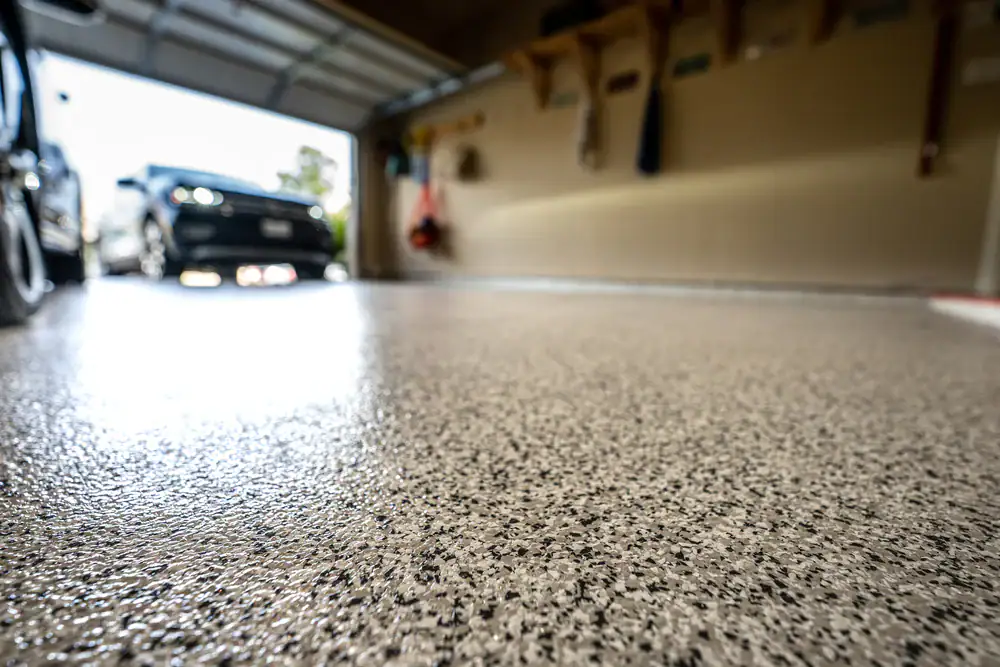
Your garage floor takes more abuse than almost any surface in your home. Hot tires after sitting in Cutler Bay traffic. Oil drips. Sudden afternoon storms that flood water across the slab. Most epoxy floor coatings aren’t built for that kind of punishment, especially in Florida’s climate.
You end up with peeling within two years. Hot tire pickup in the summer. Bubbling after a heavy rain. That’s not a flooring problem—that’s an installation problem.
A proper epoxy garage flooring system starts below the surface. Moisture testing. Shot-blasting or diamond grinding to open the concrete pores. Repairs to cracks and spalling before any coating touches the slab. Then the right products—commercial-grade materials from companies like Laticrete, Carboline, and Flowcrete—applied by people who’ve done this on airport taxiways and military facilities.
What changes? The floor stops being a liability. You can pull in after a rainstorm without worrying about slick spots. Spills wipe up in seconds. The coating doesn’t peel when your tires are hot from sitting in summer sun. And ten years from now, it still looks like it was installed last month.
Garage Floor Coating Experts in Cutler Bay
We’ve been installing epoxy flooring and polished concrete systems across South Florida since 2020. We’re veteran-owned, and our client list includes the U.S. Coast Guard, the U.S. Army, the City of Doral, the City of Sunny Isles, and multiple county facilities and high schools.
That’s not to impress you—it’s to show you what kind of standards we’re held to. Government and military projects don’t tolerate shortcuts, and neither do we.
Cutler Bay homeowners deal with the same climate challenges as commercial facilities: humidity that never quits, temperature swings that crack weak coatings, and salt air that accelerates deterioration. We use the same materials and processes for your garage that we’d use on a Coast Guard hangar floor. No subcontractors. No DIY-grade products. Just industrial systems installed by our full-time employees who know how to prep and coat a slab correctly.
Our Garage Epoxy Flooring Process
First, we test the concrete. Moisture levels, surface hardness, existing coatings—all of it gets evaluated before we touch the slab. Florida concrete holds moisture differently than concrete in drier climates, and if we don’t account for that, the coating fails within a year.
Next comes surface prep. We shot-blast, diamond-grind, or scarify depending on what the slab needs. This isn’t optional. If the concrete isn’t properly profiled, the epoxy won’t bond. We also repair cracks, fill spalling, and level any uneven areas so the finished floor performs correctly.
Then we apply the system. Primer, base coat, optional decorative flakes or quartz, and a topcoat—all chosen based on how you use the space and what kind of traffic the floor will see. We don’t use one-size-fits-all products. A garage that stores classic cars gets a different system than one that sees daily work truck traffic.
Most installs finish in one to two days. The floor is walkable within hours and ready for vehicles within 24 to 48 hours depending on the system. We guide you through the cure process, explain maintenance, and make sure you know exactly what to expect before, during, and after the install.
Ready to get started?
What’s Included in Garage Floor Coating
Every garage floor coating project includes full surface preparation—no exceptions. That means shot-blasting or diamond grinding to open the concrete, crack and spall repair, and moisture testing to confirm the slab is ready for coating. We don’t skip prep to save time or cut costs.
You also get commercial-grade materials. We work with manufacturers like Laticrete, Koster USA, Advanced Polymer Technology, NeoGard, Carboline, Flowcrete, and Arizona Polymers—the same companies that supply products for airports, hospitals, and industrial facilities. These aren’t retail-grade kits. They’re professional systems designed for high-traffic, high-stress environments.
In Cutler Bay, that matters more than most places. The humidity here averages over 70% year-round, and concrete slabs in South Florida deal with constant moisture vapor transmission. A weak primer or a coating that isn’t moisture-tolerant will bubble and delaminate within months. We use systems engineered to handle Florida’s climate, not just look good in a showroom.
You also get transparency. We walk you through the process in a one-on-one consultation, explain what products we’re using and why, and provide a clear timeline. No surprises. No upsells. Just a straightforward conversation about what your floor needs and what it’ll cost.
How long does epoxy garage flooring last in Florida’s climate?
A properly installed epoxy garage floor in Cutler Bay should last 10 to 15 years or longer, even with Florida’s humidity and heat. The key word is “properly installed.”
Most failures happen because of poor surface prep or the wrong products. If the concrete isn’t profiled correctly, the epoxy won’t bond. If the installer skips moisture testing, vapor transmission from the slab will cause bubbling. And if they use a retail-grade kit instead of a commercial system, the coating won’t hold up to hot tires, UV exposure, or chemical spills.
We’ve installed floors in South Florida facilities that are still performing well after a decade. That’s because we test for moisture, prep the surface with shot-blasting or diamond grinding, and use industrial-grade materials designed for high-humidity environments. The systems we install aren’t just resistant to Florida’s climate—they’re built for it.
What causes hot tire pickup, and how do you prevent it?
Hot tire pickup happens when your tires heat up in the sun, then transfer that heat to the epoxy coating when you park. If the coating isn’t fully cured or isn’t designed to handle high temperatures, it softens and peels away when you back out.
This is one of the most common complaints with DIY epoxy kits and low-grade coatings. They look fine for a few months, then start lifting in the tire tracks during summer. Once it starts, it spreads fast.
We prevent it by using high-temperature-resistant topcoats and making sure the system fully cures before the floor sees vehicle traffic. We also apply coatings in the right conditions—temperature and humidity both affect cure times, and rushing the process leads to soft spots. A properly cured, commercial-grade system won’t soften under hot tires, even in July in Cutler Bay.
How much does garage epoxy flooring cost in Cutler Bay?
Most residential garage floor coating projects in Cutler Bay range from $3 to $12 per square foot, depending on the system, surface condition, and any repairs needed. A standard two-car garage runs between $1,200 and $4,800 on average.
That’s a wide range because not all floors are the same. If your slab has significant cracking, moisture issues, or an old coating that needs removal, prep work increases the cost. If you want decorative flakes, metallic finishes, or a thicker build for heavy equipment, that changes the price too.
We don’t give ballpark estimates over the phone because we’d rather be accurate than cheap. After we evaluate your slab, test for moisture, and understand how you use the space, we’ll give you a transparent quote with no surprises. You’ll know exactly what you’re paying for and why it costs what it does. If a number sounds too good to be true, it probably is—and you’ll be recoating the floor in three years instead of enjoying it for fifteen.
Can you install epoxy flooring over an existing garage floor coating?
Sometimes, but not always. It depends on what’s already there, how well it’s bonded, and what condition the concrete underneath is in.
If the existing coating is peeling, bubbling, or delaminating, we have to remove it. Epoxy won’t bond to a failing surface, and if we coat over it, the new system will fail too. We use grinders or scarifiers to strip old coatings down to bare concrete, then profile the surface so the new epoxy bonds correctly.
If the old coating is still solid and well-adhered, we can sometimes prep and coat over it—but we still test adhesion, check for moisture issues, and profile the surface. Skipping those steps leads to problems down the road. Most DIY coatings and cheap contractor jobs don’t hold up well enough to coat over, so removal is more common than not. We’d rather do it right the first time than have you call us back in two years to fix a peeling floor.
How do I maintain an epoxy garage floor after installation?
Maintenance is simple: sweep or blow out debris regularly, mop with a mild cleaner when needed, and avoid harsh chemicals or abrasive scrubbing. That’s it.
Epoxy garage flooring is one of the easiest surfaces to maintain. Spills wipe up with a rag. Dirt and dust don’t stick the way they do on bare concrete. You don’t need special cleaners—just water and a pH-neutral soap. Avoid acidic cleaners or degreasers with high alkalinity, as they can dull the finish over time.
If you park a hot vehicle on the floor, let it cool for a few minutes before moving it—not because the coating will fail, but because it’s a good habit that extends the life of any floor. In South Florida, UV exposure through garage door openings can fade some decorative finishes over time, but that’s cosmetic, not structural. The coating itself will still protect the concrete. We’ll walk you through all of this after the install and answer any questions as they come up.
Why do so many DIY epoxy kits fail in Florida?
Because they’re not designed for Florida’s climate, and most people don’t have the equipment or experience to prep the concrete correctly. It’s not a knock on homeowners—it’s just reality.
DIY kits use thinner coatings, weaker binders, and less durable topcoats than professional systems. They’re also sold with minimal instructions and no moisture testing, which is critical in Florida. If the slab has high moisture vapor transmission—which most Florida slabs do—the coating will bubble and delaminate within months.
Surface prep is the other issue. You can’t just clean the floor and roll on epoxy. The concrete needs to be profiled with a grinder or shot-blaster so the coating has something to grip. Most DIY installs skip this step or use an acid etch, which doesn’t open the pores enough for a strong bond. Add in Florida’s humidity, temperature swings, and UV exposure, and the coating doesn’t stand a chance. Over 70% of DIY epoxy installs fail within 18 to 36 months. Professional systems with proper prep last 10 to 15 years or more.
Other Services we provide in Cutler Bay
Leave a Reply