


Garage Epoxy Flooring in Franklin Park, FL
Garage Floors Built for Florida’s Real Conditions
Hear from Our Customers
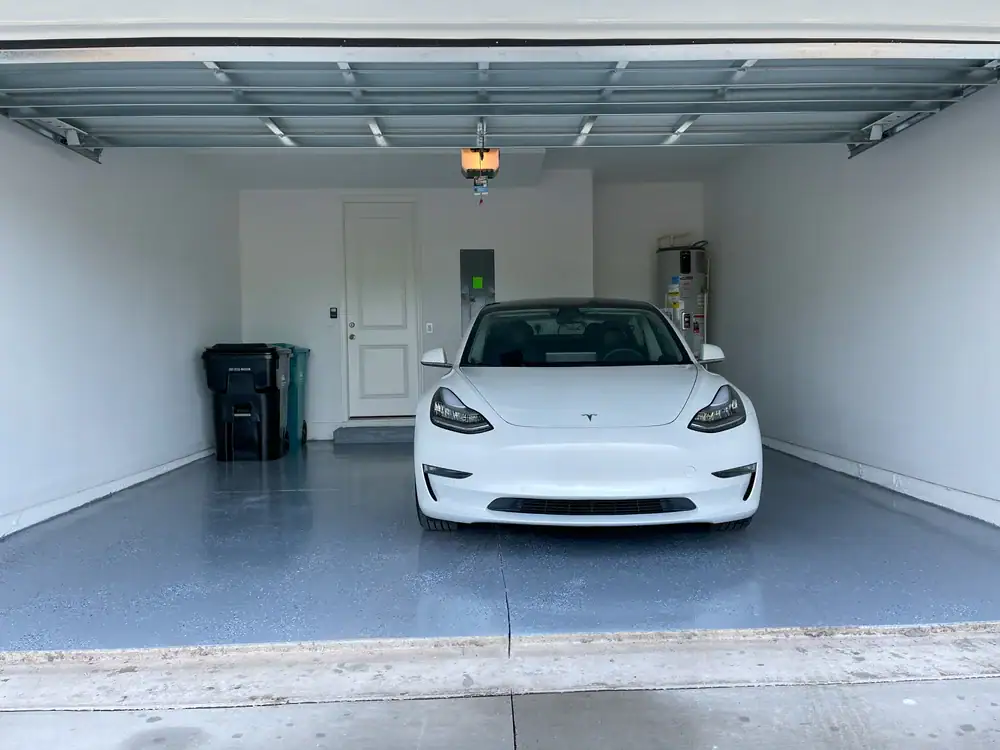
Epoxy Garage Floor Coating Franklin Park
Most garage floor coatings fail in South Florida within a few years. The humidity causes bubbling. The heat makes them peel. Your concrete cracks because the sandy soil shifts after every heavy rain.
You end up with the same stained, cracked mess you started with, except now you’re out the money you spent on a solution that didn’t work.
We use epoxy floor coating systems specifically engineered for Florida’s conditions. We’re talking moisture-resistant formulations that bond to your concrete even in high humidity. UV-stable topcoats that won’t yellow under intense sun exposure. Professional surface preparation with commercial-grade diamond equipment that creates the mechanical bond cheap installations skip.
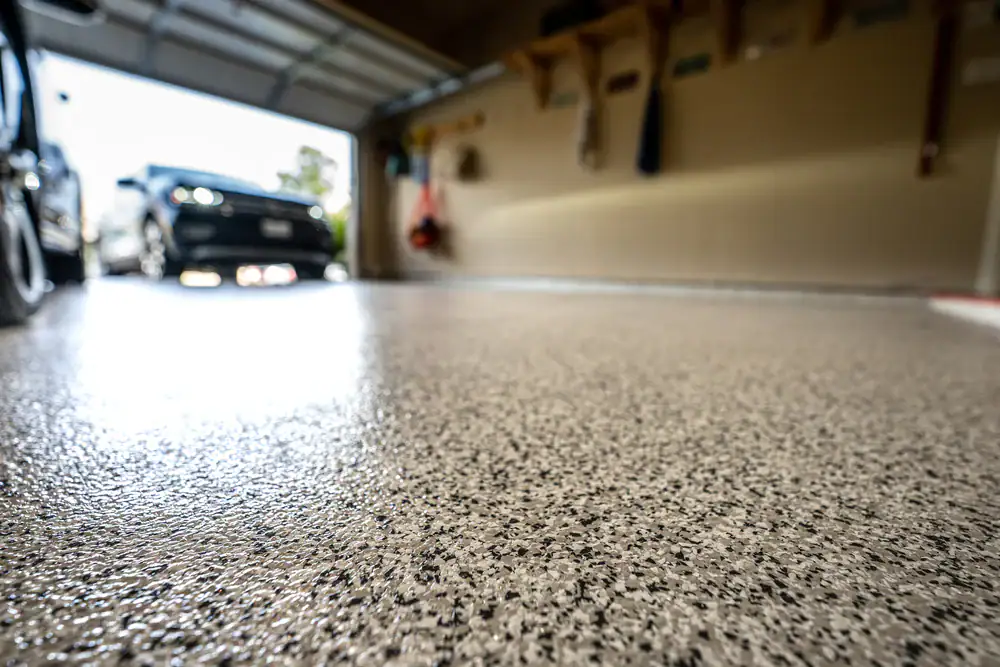
The result is a garage floor that handles your cars, your projects, your spills, and Florida’s climate for 15 to 20 years. You get a floor that’s four times stronger than bare concrete, completely seamless, and ready for whatever you throw at it. Oil, transmission fluid, brake cleaner, gasoline—it all wipes away without leaving a stain.
Franklin Park Epoxy Flooring Contractors
We’ve been installing epoxy and polished concrete floors across South Florida since 2020. We’ve worked with the Coast Guard, US Army, City of Doral, City of Sunny Isles, and multiple county facilities and high schools.
When government and military projects need floors that meet strict standards and last decades, they call us. That same level of preparation, material quality, and installation precision goes into every residential garage we do in Franklin Park and throughout Broward County.
We work exclusively with Sherwin Williams and Fosroc products. We use commercial-grade equipment that costs more than most contractors’ entire truck inventory. We don’t subcontract your job to the lowest bidder. You get a direct consultation, transparent pricing, and the same crew from start to finish.
Garage Epoxy Flooring Installation Process
First, we assess your concrete. We’re looking for cracks, moisture issues, previous coatings, and how your slab is holding up to Florida’s soil conditions. This determines which repair and prep methods we’ll use.
Next comes surface preparation. This is where most installations fail, so we don’t cut corners. We use diamond grinding equipment to open up the concrete’s pores and create a proper mechanical bond. Any cracks get routed out and filled with flexible epoxy compounds that move with your slab as the ground shifts. We remove all contaminants, oils, and previous sealers that would prevent adhesion.
Then we apply the epoxy system in layers. A moisture-mitigating primer goes down first if your slab needs it. The base coat follows, then decorative flakes if you want them for texture and slip resistance. Finally, a UV-stable polyaspartic or polyurethane topcoat seals everything and provides the chemical resistance and durability.
Most garage floors finish in one day. You can walk on it within 24 hours. Full cure for parking cars takes 48 to 72 hours depending on temperature and humidity. We clean up completely, and you’re left with a showroom-quality floor that’s built to last.
Ready to get started?
What’s Included in Garage Floor Coating
Franklin Park sits in Broward County where humidity stays high year-round and afternoon storms roll through like clockwork in summer. Your garage floor needs to handle moisture vapor coming up through the concrete, not just what lands on top of it.
That’s why every installation we do includes moisture testing and vapor mitigation when your slab needs it. We don’t just slap coating over a damp slab and hope it sticks. We address the moisture issue first with primers designed to bond in high-humidity conditions.
Your floor also gets proper crack repair using flexible compounds that won’t re-crack when the sandy soil underneath shifts. South Florida’s soil loses support after heavy rain, and rigid repair materials just crack again. We use products that flex with your slab’s natural movement.
The topcoat options we install are UV-stable formulations that won’t yellow or fade even in a garage with windows or an open door facing south. Traditional epoxy turns amber under UV exposure within months. The polyaspartic and polyurethane systems we use stay clear and maintain their color for the full lifespan of the floor.
You also get chemical resistance that matters for actual garage use. Hot tire pickup, motor oil, transmission fluid, battery acid, brake cleaner—the stuff that actually ends up on garage floors. These spills wipe away without etching or staining the surface.
How long does epoxy garage flooring last in Florida’s humidity and heat?
A professionally installed epoxy garage floor in Franklin Park should last 15 to 20 years when it’s done right. That means proper surface preparation, moisture mitigation if needed, and UV-stable topcoats designed for Florida’s climate.
The installations that fail early almost always skip one of those steps. They don’t grind the concrete properly, so the bond is weak. They ignore moisture issues, so the coating bubbles and peels. Or they use standard epoxy topcoats that yellow and break down under UV exposure.
We use moisture-resistant primers, commercial-grade surface prep equipment, and UV-stable topcoat systems specifically because Florida’s conditions destroy cheaper installations. You’re not just getting a coating. You’re getting a floor system engineered to handle heat, humidity, and South Florida’s intense sun without failing.
What causes garage floor epoxy to peel or bubble in South Florida?
Moisture is the number one reason epoxy floors fail in Franklin Park and throughout Broward County. Florida’s high humidity allows moisture vapor to move up through your concrete slab. If the epoxy isn’t designed to handle that vapor transmission, it loses adhesion and starts bubbling or peeling.
Poor surface preparation is the second biggest cause. If the concrete isn’t properly cleaned and profiled, the epoxy just sits on top instead of bonding into the surface. It might look fine for a few months, but it’ll eventually delaminate under traffic and stress.
The third issue is using the wrong products for Florida’s climate. Standard hardware store epoxy kits aren’t formulated for high humidity or UV exposure. They’re designed for controlled indoor environments in moderate climates. In South Florida, they fail fast.
That’s why we moisture-test every slab, use diamond grinding for proper surface profile, and install commercial-grade systems with moisture-mitigating primers when needed. We eliminate the three main failure points before they become your problem.
How much does professional garage floor coating cost in Franklin Park?
Professional epoxy garage flooring for a standard two-car garage in Franklin Park typically runs between $1,800 and $4,000 depending on the condition of your concrete, the system you choose, and any repairs needed before installation.
That price includes proper surface preparation with commercial diamond grinding equipment, crack repair, the epoxy system itself, and a UV-stable topcoat. If your slab has moisture issues, adding a vapor mitigation primer increases the cost but prevents the floor from failing a year later.
DIY kits cost $200 to $500, but they don’t include the surface prep equipment you need, the moisture testing, or the commercial-grade materials that actually last in Florida. Most DIY garage floors start failing within two to three years because the preparation and products aren’t adequate for South Florida’s conditions.
We provide transparent pricing during the initial consultation. We assess your specific slab, explain what it needs, and give you an exact quote. No surprises, no upsells after we start. You know what you’re paying and what you’re getting before we begin.
Can epoxy flooring handle Florida’s shifting soil and concrete cracks?
Yes, but only if the cracks are properly repaired before the epoxy goes down. Franklin Park sits on sandy soil that shifts after heavy rain, causing concrete slabs to lose support and crack. Those cracks will telegraph through any coating unless they’re addressed correctly.
We route out existing cracks and fill them with flexible epoxy compounds that move with your slab as the ground shifts underneath. Rigid repair materials just crack again because Florida soil doesn’t stay stable. The flexible repairs we use absorb that movement without breaking the bond.
For slabs with significant settling or multiple large cracks, we’ll tell you upfront if epoxy is the right solution or if you need structural concrete repair first. We’re not going to install a coating over a failing slab and pretend it’ll hold. That wastes your money and damages our reputation.
The goal is a floor that lasts 15 to 20 years. That only happens when the foundation is solid and the repairs are done right before any coating gets applied.
How soon can I park my car after epoxy garage flooring installation?
You can walk on your new epoxy garage floor within 24 hours. Light foot traffic is fine at that point. For parking cars and heavy use, you need to wait 48 to 72 hours depending on temperature and humidity levels during cure.
South Florida’s heat actually speeds up the cure time compared to northern climates, but high humidity can slow it down slightly. We’ll give you the exact timeline based on the specific system we install and the conditions during your installation.
Most garage floor installations we do in Franklin Park finish in one day. We start in the morning, complete all prep and coating layers, and you’re walking on it the next day. By the weekend, you’re parking cars and using your garage normally.
That’s significantly faster than concrete resurfacing or other floor replacement options that can take a week or more. You get a completely transformed garage with minimal disruption to your routine.
Does garage epoxy flooring resist oil stains and automotive chemicals?
Yes. A properly installed epoxy garage floor with a quality topcoat is completely non-porous and resists automotive chemicals including motor oil, transmission fluid, brake cleaner, gasoline, antifreeze, and battery acid. Spills sit on the surface instead of soaking in, so you can wipe them away without staining.
Bare concrete is porous, which means any liquid that sits on it eventually soaks in and leaves a permanent stain. Even sealed concrete will stain over time as the sealer wears down in high-traffic areas. Epoxy creates a seamless, non-porous barrier that prevents penetration.
The key is using a commercial-grade topcoat, not just the base epoxy layer. We finish every garage floor with a polyaspartic or polyurethane topcoat specifically formulated for chemical resistance. These topcoats are the same products used in industrial facilities and commercial garages where chemical exposure is constant.
You can spill a quart of oil, let it sit overnight, and still wipe it up the next morning without any stain or damage to the floor. That’s the level of protection you get with a professional installation using the right products.
Other Services we provide in Franklin Park
Leave a Reply