


Garage Epoxy Flooring in Haverhill, FL
Turn Your Cracked Garage Floor Into Something Worth Showing Off
Hear from Our Customers
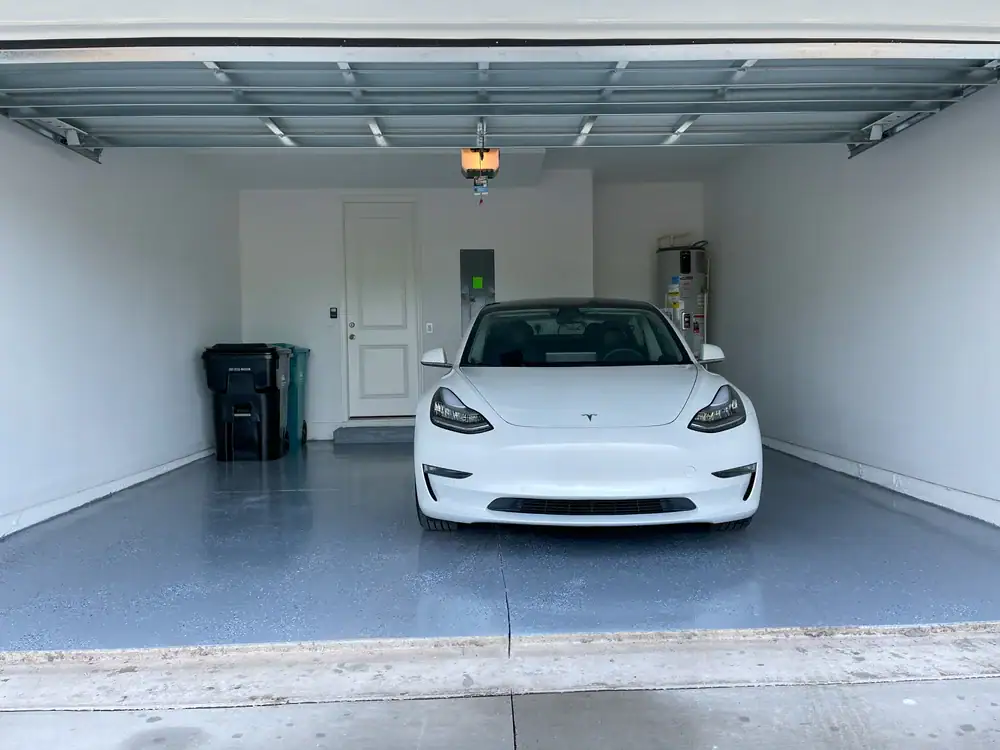
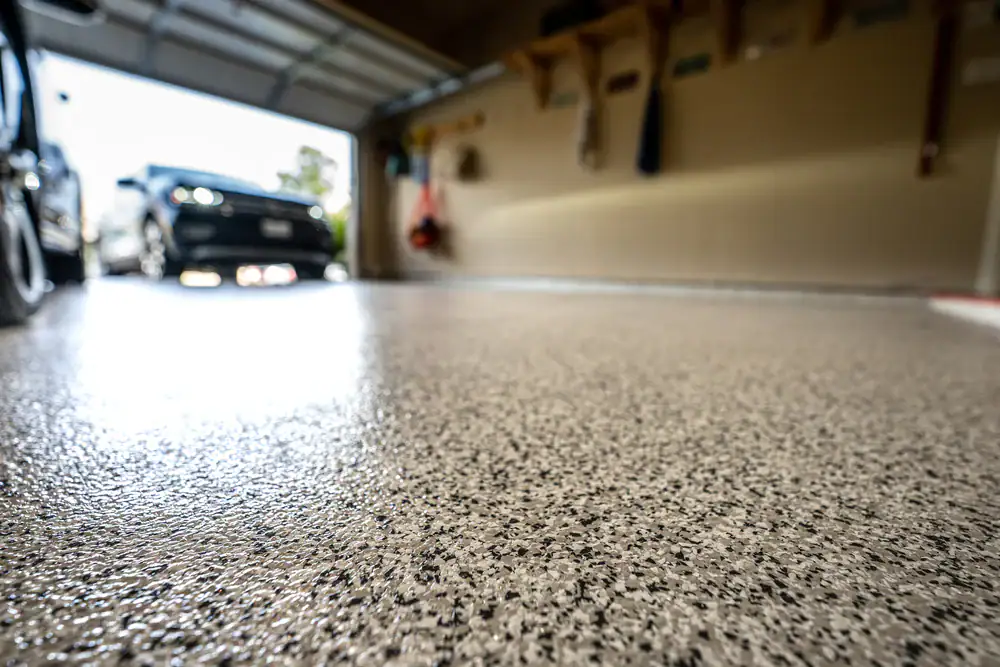
Epoxy Garage Floor Coating in Haverhill
Your garage floor takes a beating. Between the heat that pushes 95 degrees by noon, the humidity that never quits, and the oil stains that seem permanent—you’re dealing with a surface that’s working against you.
Epoxy flooring changes that. It seals the concrete, stops moisture from creeping up through the slab, and gives you a surface that shrugs off spills instead of soaking them in. No more scrubbing stains that won’t budge. No more watching cracks spread after heavy rain shifts the ground underneath.
What you get is a garage floor that looks clean, stays clean, and holds up for 10 to 20 years without needing constant attention. It’s not about making your garage Instagram-ready—it’s about having a floor that works the way it should. You can pull in after a long day, set your tools down, and not think twice about what’s underneath.
The difference shows up fast. Within 48 hours of installation, you’ve got a finished surface that’s ready for whatever you throw at it—literally.
Garage Floor Coating Contractors in Haverhill
We handle epoxy flooring and concrete resurfacing across South Florida, and we’ve built a reputation working with clients who don’t mess around—Coast Guard facilities, Army bases, municipal projects in Doral and Sunny Isles, high schools, county buildings. When government contracts are on the line, the work has to be right the first time.
We bring that same standard to your garage in Haverhill. No upselling. No runaround. Just a straightforward consultation, transparent pricing, and a crew that knows how to prep and install epoxy correctly in Florida’s climate. We work directly with homeowners because it’s faster, clearer, and frankly, easier for everyone involved.
Haverhill’s housing stock mostly dates back to the ’80s and ’90s, which means a lot of garage floors here are dealing with decades of wear, settling, and Florida’s relentless humidity. We’ve seen it all—and we know exactly how to fix it so it lasts.
Epoxy Floor Installation Process in Haverhill
First, we assess the slab. That means checking for cracks, moisture issues, and whether the concrete is sound enough to hold an epoxy system. If there’s damage, we address it before anything else happens. Skipping this step is how most DIY jobs and cheap installs fail within a year.
Next comes surface prep. We grind the concrete to open up the pores, remove any old coatings or contaminants, and create a profile that lets the epoxy bond properly. This is the most important part of the job. If the prep isn’t done right, nothing else matters.
Then we apply the epoxy system. Depending on your needs, that could be a standard epoxy or a polyaspartic topcoat for faster curing and extra durability. We control humidity and temperature during application because Florida’s climate doesn’t play nice with coatings—you need someone who knows how to manage it.
Finally, we let it cure. Most floors are ready for light foot traffic within 24 hours and full use within 48 to 72 hours. You’re not waiting a week to park your car. We also offer a follow-up call to make sure everything’s holding up the way it should.
Ready to get started?
Garage Floor Coatings for Haverhill Homes
When we install garage epoxy flooring in Haverhill, you’re getting a system designed specifically for this area. That means accounting for sandy soil that shifts after storms, humidity levels that sit above 65% most of the year, and UV exposure that breaks down inferior coatings in months.
We use moisture mitigation protocols that most contractors skip. Florida’s water table is high, and vapor drive is real—especially in older homes. If moisture isn’t controlled during installation, the epoxy will delaminate. We test for it, manage it, and apply systems that handle it long-term.
You also get chemical and stain resistance that actually works. Motor oil, battery acid, gasoline, household cleaners—they wipe up without leaving a mark. The surface is non-porous, so nothing soaks in. And if you want anti-slip additives for safety when the floor gets wet, we build that in from the start.
Maintenance is minimal. Sweep it when it’s dirty. Mop it with a pH-neutral cleaner if you want. That’s it. No sealing every year. No repainting every few seasons. The floor does its job without asking for constant attention, which is exactly how it should be.
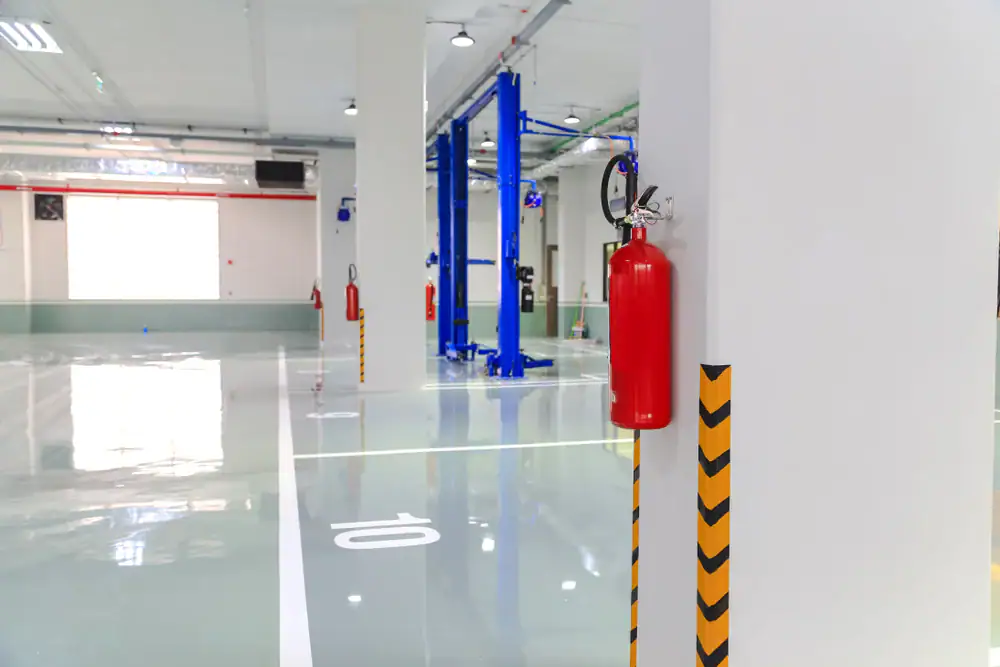
How much does epoxy garage flooring cost for a typical two-car garage in Haverhill?
For a standard two-car garage—around 400 to 500 square feet—you’re typically looking at somewhere between $1,600 and $3,500 depending on the system, the condition of your concrete, and what prep work is needed. If your slab has significant cracking or moisture issues, that’ll add to the cost because we have to fix the foundation before we can coat it.
The price also depends on whether you want a basic epoxy system or a polyaspartic topcoat, which cures faster and holds up better under UV exposure. Polyaspartic costs more upfront but it’s about four times stronger than standard epoxy and doesn’t yellow in Florida sun.
We don’t do estimates over the phone because every garage is different. We’ll come out, look at your floor, talk through what you need, and give you transparent pricing on the spot. No pressure, no games—just a clear number based on the actual work involved.
How long does it take to install epoxy flooring in a garage?
Most garage epoxy installations take one to two days depending on the size of the space and the system we’re installing. The bulk of that time is surface prep—grinding the concrete, repairing cracks, cleaning everything down to bare substrate. If we rush that part, the coating fails. So we don’t.
Once prep is done, the actual epoxy application usually happens in a few hours. Then it’s all about curing. Standard epoxy systems need 24 hours before you can walk on them and 48 to 72 hours before you can park a car. Polyaspartic systems cure faster—sometimes within 24 hours for full use—but they require precise application because they set up quick.
Weather plays a role too. If humidity spikes above 85% or temperatures drop below 50°F at night, we may need to adjust the schedule to make sure the coating cures properly. We’d rather delay a day than install a floor that peels in six months.
Will epoxy flooring hold up in Florida’s heat and humidity?
Yes, but only if it’s installed correctly. Florida’s climate is brutal on coatings. You’ve got constant humidity above 65%, summer temps that hit the mid-90s, and a water table that pushes moisture up through concrete slabs faster than almost anywhere else in the country. Most epoxy failures happen because installers ignore those factors.
We manage humidity during installation using dehumidifiers and moisture meters. We don’t coat a slab that’s reading above acceptable moisture levels because the vapor pressure will just push the epoxy right off. We also use UV-stable formulations that won’t yellow or break down under Florida sun, and we apply at temperatures between 71°F and 77°F to ensure proper curing.
The systems we install are designed for this environment. They’re not the same products you’d use in Colorado or Michigan. When done right, epoxy flooring in South Florida lasts 10 to 20 years without significant issues. When done wrong, it fails in under a year. That’s why the installer matters more than the product.
Can you install epoxy over a cracked or damaged concrete floor?
It depends on the severity of the damage. Minor cracks—hairline fractures or small surface breaks—can usually be repaired as part of the prep process. We fill them, grind them smooth, and make sure the slab is structurally sound before we coat it. That’s standard.
But if your garage floor has major structural issues—wide cracks that indicate settling, sections that have sunk or heaved, or concrete that’s spalling and flaking apart—we need to address that first. Sometimes that means resurfacing the slab or even pouring a new overlay. Coating over serious damage is a waste of your money because the epoxy will just follow the cracks and fail.
During the consultation, we’ll tell you exactly what’s needed. If your floor isn’t ready for epoxy, we’ll explain why and what it’ll take to get it there. We’re not interested in selling you a coating that won’t last. We’d rather do the job right or not do it at all.
How do I maintain an epoxy garage floor after installation?
Maintenance is simple. Sweep or blow out dirt and debris when it builds up. If you want to mop, use warm water and a pH-neutral cleaner—nothing acidic or harsh. That’s really it. Epoxy is non-porous, so spills sit on the surface instead of soaking in. You can wipe up oil, chemicals, or whatever else without scrubbing or staining.
Avoid using metal shovels or dragging heavy sharp objects across the floor. Epoxy is tough, but it’s not indestructible. If you’re moving equipment or toolboxes, just use a dolly or lift instead of sliding. That’ll keep the surface looking clean for years.
You don’t need to reseal or recoat the floor annually like you would with a painted or stained concrete surface. The epoxy system is the finish. Once it’s down and cured, it’s doing its job. If something does happen—like a gouge from a dropped tool—we can usually spot-repair it without redoing the whole floor.
Why should I hire a professional instead of using a DIY epoxy kit?
DIY kits fail because they skip the prep work and use weaker formulations that aren’t designed for Florida’s climate. The coatings in those kits are thin, they don’t bond well to concrete that hasn’t been properly profiled, and they can’t handle moisture vapor or UV exposure. Most DIY epoxy jobs start peeling within six months to a year.
Professional installation means we grind the concrete to create a mechanical bond, we test and manage moisture levels, and we use commercial-grade epoxy systems that are exponentially more durable than retail kits. We also control application conditions—temperature, humidity, mixing ratios—so the coating cures correctly.
The other issue is time and equipment. Grinding a garage floor requires industrial grinders that cost thousands of dollars. Mixing and applying epoxy correctly requires experience and precision. If you’ve never done it before, the learning curve is expensive. You’ll spend money on the kit, the tools, and your time—and then you’ll likely need to pay someone to remove the failed coating and redo it properly. It’s cheaper and faster to just hire a pro from the start.
Other Services we provide in Haverhill
Leave a Reply