


Garage Epoxy Flooring in Highland Beach, FL
Garage Floors Built for Florida Heat and Luxury Vehicles
Hear from Our Customers
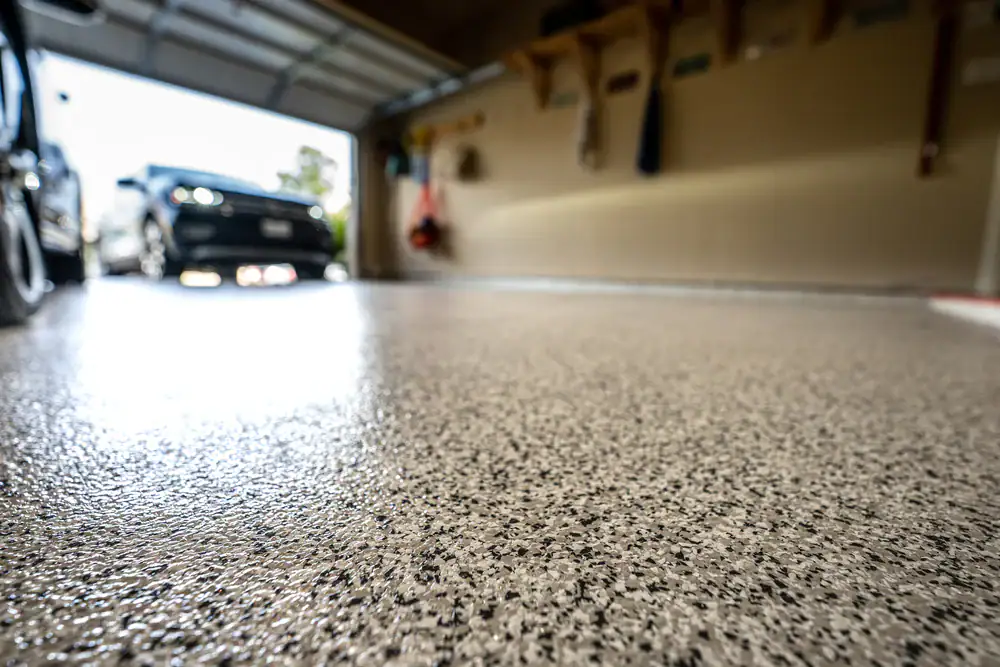
Epoxy Garage Floor Solutions Highland Beach
Your garage floor takes a beating. Florida humidity seeps into concrete pores, causing cracks and flaking. Summer heat pushes past 100°F, making cheap coatings peel within months. And if you’re storing high-end vehicles, boats, or equipment, plain concrete stains easily and produces dust that settles on everything.
A proper epoxy garage floor changes that. You get a sealed, non-porous surface that resists moisture, handles temperature swings, and cleans up with a quick hose-down. Spills wipe away instead of soaking in. The floor stays intact through Florida’s wet season and summer scorchers.
Property value matters in Highland Beach. A professionally installed garage floor coating can add $10,000 to $15,000 in perceived home value. That’s one of the highest ROI upgrades you can make. And if you’re a seasonal resident, the last thing you need is a flooring failure while you’re up north. You want a floor that holds up whether you’re here or not.
Highland Beach Epoxy Flooring Contractor
We’ve been installing epoxy flooring and polished concrete since 2020. We’ve worked with the U.S. Coast Guard, Army facilities, the City of Doral, the City of Sunny Isles, and multiple county projects across South Florida. Those clients don’t hire contractors who cut corners.
Highland Beach homeowners deal with the same climate challenges as military and municipal facilities: high moisture vapor emissions, intense UV exposure, and concrete that cracks because of Florida’s sandy foundation. We use the same heavy-duty primers and coatings for your garage that we use on government projects. That means products rated to handle up to 20 lbs of moisture vapor emissions, not the 8 lbs that standard coatings manage.
We work directly with homeowners. No middleman, no subcontractors. You get transparent pricing, a 1-on-1 consultation, and a crew that shows up when we say we will.
Garage Floor Coating Installation Process
First, we assess your concrete. We check for cracks, moisture levels, and any existing coatings that need removal. Florida concrete often has higher moisture vapor emissions than other states, so we test before we coat. If your slab needs a heavy-duty primer, we’ll tell you upfront.
Next, we prep the surface. That means grinding down the concrete to open the pores, repairing cracks, and cleaning out any contaminants. Proper prep is the difference between a floor that lasts 15 years and one that fails in two. We don’t skip steps.
Then we apply the coating system. Depending on your needs, that could be epoxy, polyaspartic, or a hybrid system. Polyaspartic cures faster and handles UV exposure better, which matters if your garage gets direct sunlight. Epoxy works well for enclosed spaces with stable temperatures. We’ll recommend what makes sense for your setup.
Most residential garages are done in 24 to 48 hours. You’re not waiting a week to park your car. We work fast, but we don’t rush the cure time. Once it’s done, you get a follow-up call to make sure everything’s holding up the way it should.
Ready to get started?
Garage Epoxy Flooring Options Highland Beach
You’re not just getting a coat of paint. A proper garage floor coating system includes surface preparation, crack repair, primer application, the coating itself, and a topcoat for UV and chemical resistance. We use Sherwin Williams and Fosroc products—brands that hold up in Florida’s climate.
Highland Beach garages face specific challenges. The town sits right on the coast, so salt air accelerates concrete degradation. Humidity stays high year-round, and garages that aren’t climate-controlled can hit 110°F in summer. Standard DIY epoxy kits aren’t designed for that. They yellow under UV exposure, bubble when moisture gets trapped underneath, and wear through in high-traffic areas within a year or two.
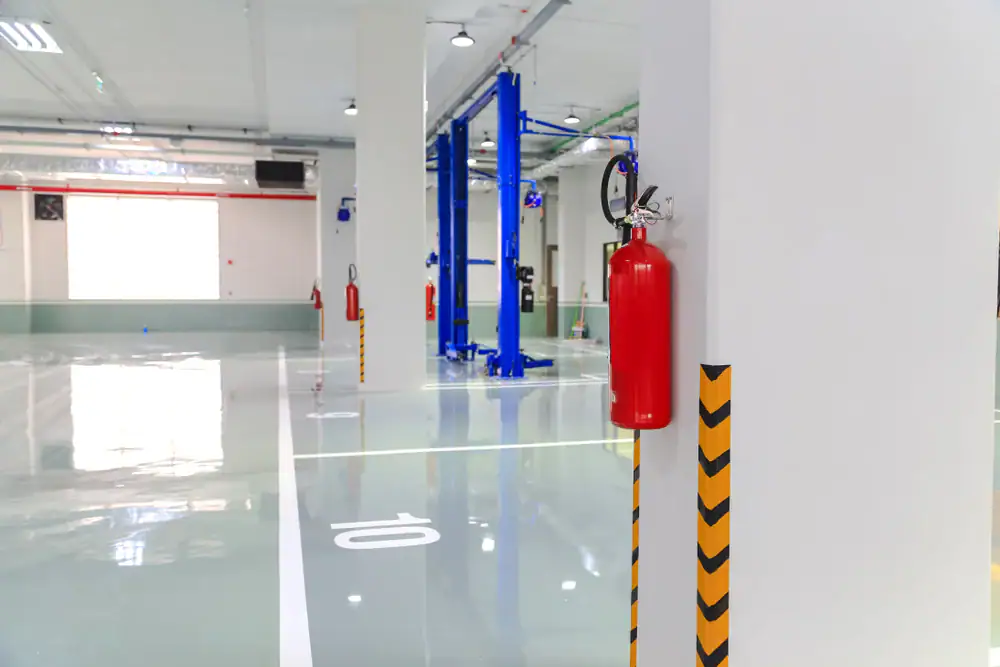
We also offer resurfacing for concrete that’s already damaged, polished concrete for a clean industrial look, and safety line striping if you need defined parking zones or walkways. If you’re storing multiple vehicles, a boat, or recreational equipment, we can customize the layout and coating thickness to handle the weight and wear patterns.
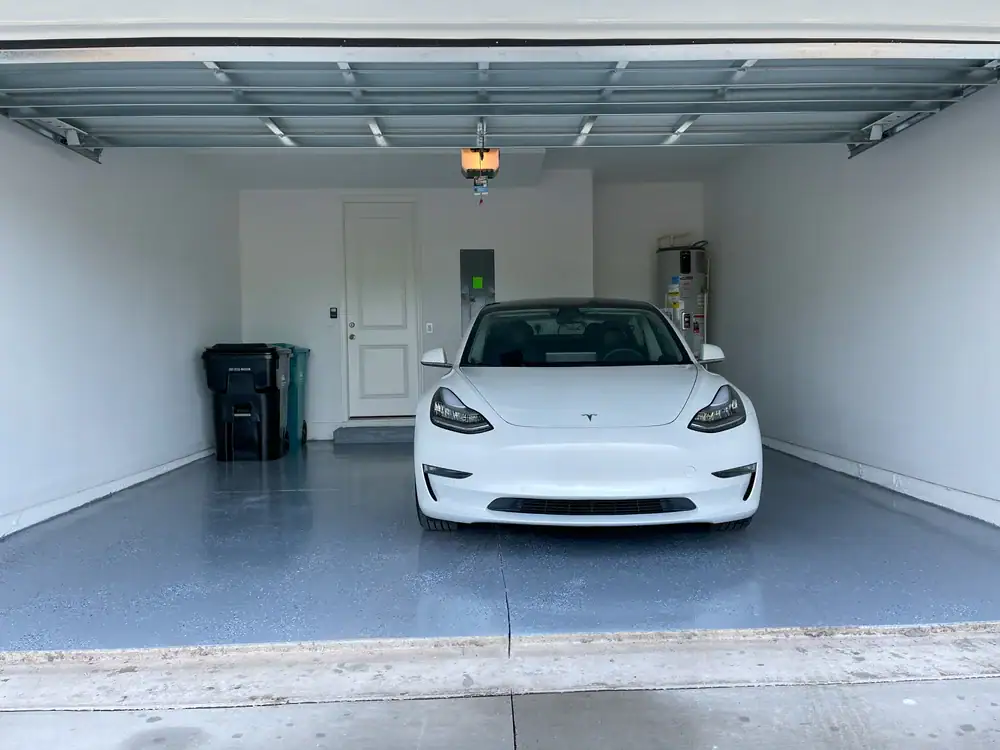
Most of our Highland Beach clients are seasonal residents or own luxury vehicles. You need a floor that doesn’t require constant maintenance and looks sharp when guests visit. That’s what you get with a professionally installed epoxy garage floor.
How long does garage epoxy flooring last in Florida’s climate?
A professionally installed epoxy garage floor should last 10 to 15 years in Florida, assuming proper prep and the right coating system. The key is moisture management. Florida concrete releases more moisture vapor than concrete in drier climates, and if that moisture gets trapped under the coating, you’ll see bubbling and peeling within months.
We use primers rated for high moisture vapor emissions—up to 20 lbs, compared to the 8 lbs that standard coatings handle. That’s critical in Highland Beach, where humidity stays elevated year-round. We also recommend polyaspartic topcoats for garages that get direct sunlight, since polyaspartic resists UV yellowing better than traditional epoxy.
If you’re a seasonal resident, durability matters even more. You’re not here to catch problems early. The floor needs to hold up through summer heat, tropical storms, and months of sitting unused. A proper installation does that. A cheap one doesn’t.
What’s the difference between epoxy and polyaspartic garage floor coatings?
Epoxy is a two-part resin system that’s been the standard for decades. It’s durable, chemical-resistant, and works well in enclosed garages with stable temperatures. The downside is cure time—epoxy can take several days to fully harden—and it yellows under UV exposure. If your garage gets direct sunlight, epoxy will fade over time.
Polyaspartic coatings cure faster, often within 24 hours, and they don’t yellow under UV light. That makes them a better choice for Florida garages that aren’t climate-controlled. Polyaspartic also handles temperature swings better, which matters when your garage hits 100°F in July and drops to 60°F in January.
Some contractors use a hybrid system: an epoxy base coat for adhesion and chemical resistance, topped with polyaspartic for UV protection and faster cure times. That’s often the best option for Highland Beach homes, especially if you’re storing high-end vehicles or need the garage back in service quickly. We’ll walk through the pros and cons during your consultation so you know exactly what you’re getting.
How much does epoxy garage flooring cost for a two-car garage?
For a standard two-car garage in Highland Beach, expect to pay between $3,000 and $6,000 for a professional epoxy floor coating. The range depends on surface condition, coating type, and any custom finishes like metallic flakes or color blends. If your concrete has significant cracking or needs heavy-duty moisture mitigation, that adds to the cost.
DIY kits run $200 to $500, but they’re not designed for Florida’s climate. Most homeowners who go the DIY route end up calling us within two years to redo the floor. The coating peels, yellows, or wears through in high-traffic areas. You save money upfront, but you pay twice in the long run.
We give transparent pricing during the consultation. No hidden fees, no surprises. You’ll know the cost before we start, and you’ll understand exactly what you’re paying for. If you’re comparing quotes, make sure the other contractor is using moisture-rated primers and UV-resistant topcoats. A low bid usually means they’re skipping steps that matter in Florida.
Can garage floor coatings handle hot tires and heavy vehicles?
Yes, but only if the coating is applied correctly and rated for the weight. Hot tires are one of the most common causes of coating failure. When you drive in on a summer day, your tires can hit 150°F or higher. If the coating isn’t fully cured or if the installer used a low-grade product, those hot tires will leave marks or pull the coating right off the concrete.
We use commercial-grade coatings designed for vehicle traffic. That includes proper cure time—no shortcuts—and topcoats that resist thermal shock. If you’re parking a boat, RV, or multiple luxury vehicles, we can adjust the coating thickness and recommend a polyaspartic topcoat for added durability.
Highland Beach homeowners often have high-end cars that sit in the garage for months at a time. You don’t want tire marks or coating failure when you pull the car out for season. A professional installation prevents that. We’ve done floors for clients with Ferraris, Porsches, and custom builds. The floor holds up because we treat it like the high-stakes project it is.
How soon can I park on the garage floor after installation?
With polyaspartic coatings, you can usually park light vehicles within 24 hours. Full cure takes about 48 to 72 hours, depending on temperature and humidity. Traditional epoxy takes longer—typically 3 to 7 days before it’s safe for vehicle traffic. We’ll give you a specific timeline based on the coating system we’re using and the conditions in your garage.
Florida’s heat actually speeds up cure times, but high humidity can slow them down. We monitor both during installation to make sure the coating cures properly. Rushing it leads to problems. If you park too soon, you risk tire marks, indentations, or coating failure.
Most of our Highland Beach clients want the garage back in service fast, especially if they’re seasonal residents with limited time windows. That’s why we often recommend polyaspartic systems. You get the same durability as epoxy, but you’re back to normal use in a day or two instead of a week. We’ll work around your schedule and give you a realistic timeline upfront.
Will garage epoxy flooring crack or peel over time?
If the concrete underneath cracks, the coating will crack too. That’s not a coating failure—that’s a concrete issue. Florida concrete cracks because of the sandy soil foundation and constant moisture movement. We can’t stop concrete from cracking, but we can repair existing cracks and apply a flexible coating system that moves with minor shifts.
Peeling happens when moisture gets trapped under the coating or when the surface wasn’t prepped correctly. That’s why we test for moisture vapor emissions before we start and use primers rated for Florida’s conditions. If the installer skips the moisture test or uses a standard primer, you’ll see peeling within the first year.
We also grind the concrete to open the pores and create a mechanical bond. Some contractors acid-etch instead, which is faster but doesn’t create as strong a bond. Grinding takes longer, but it’s the right way to do it. If your floor peels, it’s almost always because the prep work was rushed or the wrong products were used. We don’t cut corners, and we don’t use products that aren’t rated for coastal Florida.
Other Services we provide in Highland Beach
Leave a Reply