


Garage Epoxy Flooring in Indrio, FL
Your Garage Floor Fixed Right the First Time
Hear from Our Customers
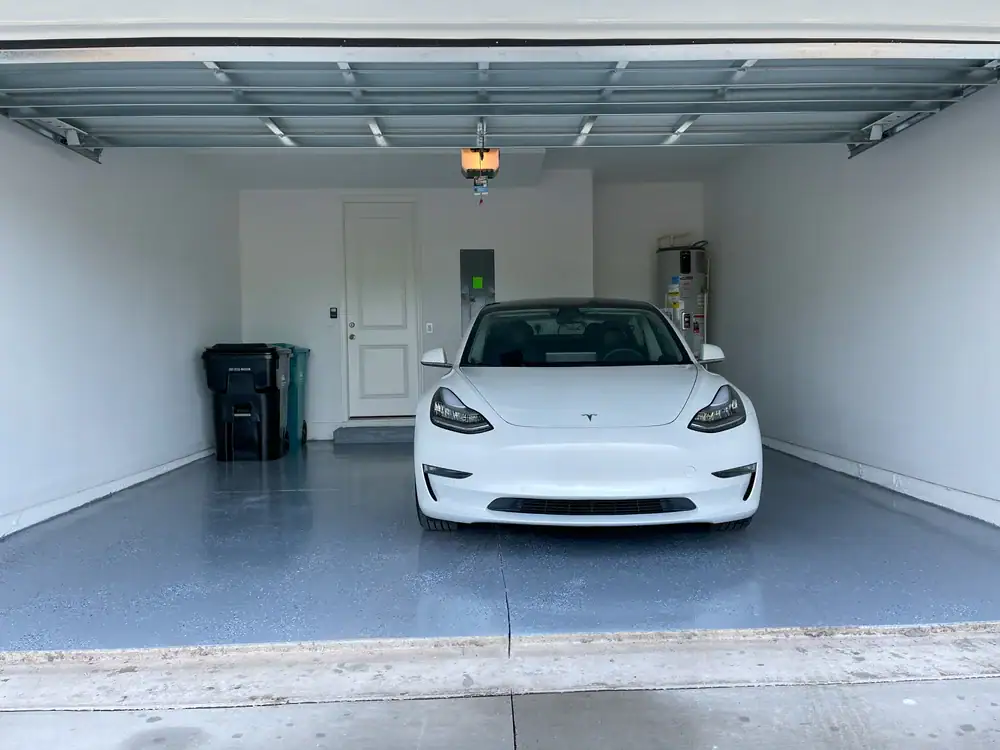
Epoxy Garage Floor Solutions in Indrio
Your garage stops being the space you avoid showing people. The concrete that’s been staining, cracking, or holding moisture finally gets sealed with a system that’s built for South Florida’s conditions—not just painted over with something that’ll peel in two years.
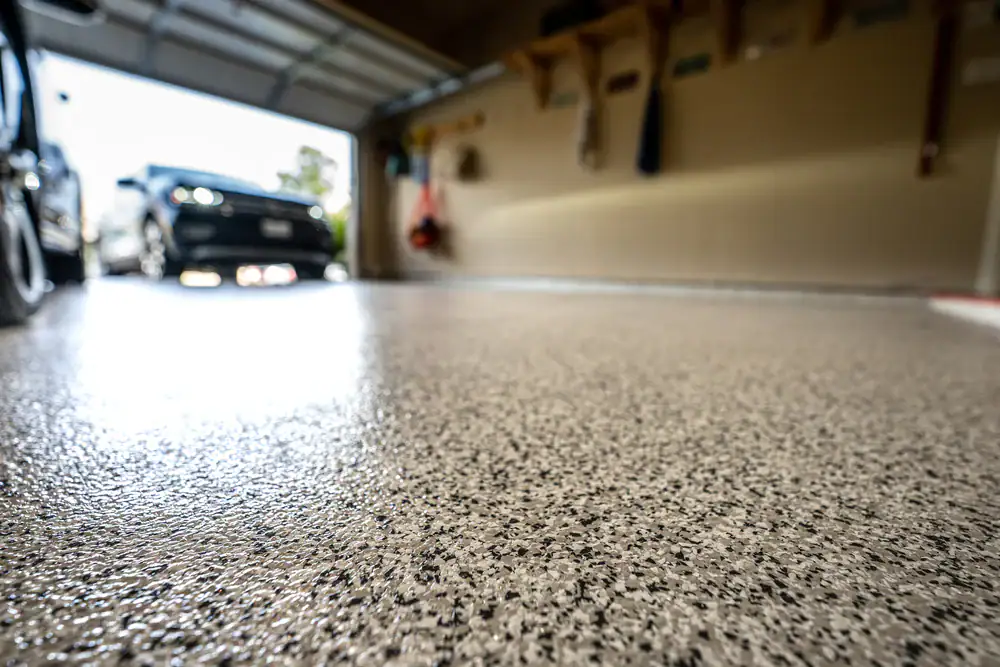
You get a floor that cleans up in minutes instead of staying grimy no matter how much you scrub. Spills wipe away without leaving marks. The surface stays level, slip-resistant, and honestly looks better than most showroom floors.
And it lasts. We’re talking 15-plus years of performance if you treat it reasonably well. That’s what happens when the preparation is done right and the materials are commercial-grade. You’re not recoating it every few summers or dealing with bubbling during hurricane season.
Trusted Epoxy Flooring Contractors Near Indrio
We handle epoxy floor coating and polished concrete for commercial and residential clients across Florida. We’ve worked with the Coast Guard, US Army, City of Doral, City of Sunny Isles, and county facilities that need floors to perform under serious use.
We don’t use subcontractors. Every project is handled by our full-time crew, so there’s no handoff to someone who wasn’t trained on our process. That matters more in Indrio and St. Lucie County than people realize—humidity here isn’t a suggestion, and if your installer doesn’t account for moisture vapor transmission during prep, your coating fails early.
We use materials from Laticrete, Fosroc, Sherwin Williams, and other manufacturers that produce systems rated for Florida’s coastal climate. You’re not getting a retail kit stretched across your slab.
Our Garage Floor Coating Process
We start with a consultation at your property. You show us the garage, we assess the concrete condition, check for moisture issues, and talk through what you’re using the space for. If there are cracks, uneven spots, or old coatings, we note it.
Next comes surface prep. This is where most cheap jobs fail. We shot-blast or diamond-grind the concrete to open the pores and create a profile that epoxy can bond to. Any cracks get filled and leveled. If there’s a moisture issue, we apply a 100% solid epoxy moisture vapor barrier rated for up to 16 pounds per 1,000 square feet. Skipping this step in Florida is how you get delamination six months later.
Then we apply the epoxy system—base coat, optional decorative flakes for texture and slip resistance, and a clear topcoat that seals everything. Most garage floor painting projects finish in one day. Cure time depends on temperature and humidity, but you’re typically walking on it within 24 hours and driving on it within 48 to 72 hours.
Ready to get started?
Garage Floor Coatings Built for Florida
This isn’t a one-coat wonder. You’re getting a multi-layer epoxy garage flooring system engineered to resist moisture vapor, thermal shock, chemical spills, and impact. The base coat bonds directly to properly prepped concrete. The topcoat is chemical-resistant and UV-stable, so it doesn’t yellow under Florida sun exposure.
We offer solid color finishes if you want a clean, professional look. Decorative flake systems if you want texture, slip resistance, and a higher-end appearance. Metallic epoxy if you’re turning the garage into a showroom or functional living space. All options include full surface preparation, crack repair, and a moisture barrier if your slab needs it.
Indrio’s sandy soil and high water table mean moisture management isn’t optional. We test slabs before we coat them. If the concrete’s pushing vapor, we address it with the right primer system. That’s the difference between an epoxy floor coating that lasts 15 years and one that bubbles up during the next rainy season.
You also get transparency on pricing, a timeline that’s realistic, and follow-up after the job’s done. We’re not disappearing after we cash the check.
How long does garage epoxy flooring actually last in Florida’s climate?
If it’s installed correctly with proper surface prep and a moisture barrier, you’re looking at 15 to 20 years of solid performance. That assumes you’re not doing anything extreme like dragging metal across it daily or parking a leaking car on it for months.
The key is preparation. Florida’s humidity and moisture vapor are brutal on coatings that aren’t designed for it. A retail DIY kit might look fine for six months, then start peeling because the concrete wasn’t profiled correctly or moisture wasn’t addressed. Commercial-grade systems like what we install are formulated to handle vapor transmission and thermal expansion.
You’ll need to clean it regularly and avoid harsh chemicals that aren’t rated for epoxy, but that’s about it. Most of our clients are still on their original coating years later with no recoating needed.
What’s the difference between epoxy garage floor coatings and the kits sold at hardware stores?
Material quality and surface preparation. The kits you buy at a big box store are water-based or low-solids epoxy, which means they’re thinner and less durable. They also don’t come with the proper primers or moisture barriers needed for Florida concrete.
We use 100% solid epoxy systems that are two to three times thicker and chemically resistant to acids, solvents, and petroleum products. The bond strength is significantly higher because we’re grinding or shot-blasting the concrete to create a mechanical profile. DIY kits usually just tell you to acid-etch, which doesn’t open the concrete enough for a lasting bond.
The other issue is application. Epoxy has a working time, and if you don’t spread it evenly or apply it in the right conditions, it cures incorrectly. We control temperature, humidity, and timing to ensure proper adhesion and curing. That’s hard to do without experience, especially during Florida summers when humidity spikes.
How much does epoxy flooring for a garage cost in Indrio?
For a standard two-car garage, you’re typically looking at $1,200 to $2,400 for a solid color system, and $2,000 to $3,600 for a decorative flake finish. Metallic epoxy runs higher, usually $3,200 to $6,000 depending on the design. Those are ballpark ranges—actual cost depends on your concrete’s condition, square footage, and whether we need to do significant crack repair or moisture mitigation.
If your slab has major issues—deep cracks, previous coatings that need removal, or serious moisture problems—that adds to the prep time and cost. We’ll tell you that upfront during the consultation, not after we’ve started the job.
Cheaper quotes usually mean corners are being cut on prep or materials. We’ve recoated plenty of garages where someone paid $800 for a “professional” job that peeled within a year. Spending a bit more upfront saves you from paying twice.
Can you apply epoxy floor coating over existing garage floor paint or sealers?
Sometimes, but usually we remove it first. If the existing coating is peeling, flaking, or not bonded well, anything we put over it will fail. Epoxy only bonds as well as whatever’s underneath it, so if that old paint is compromised, the new system won’t last.
We test the existing coating by trying to scrape or lift it. If it comes up easily, it gets removed—usually by grinding or scarifying the surface. If it’s a high-quality epoxy or urethane that’s still fully adhered, we can sometimes scuff it and coat over it, but that’s the exception.
Most garage floor painting jobs we see weren’t done with proper surface prep, so the old coating has to go. It adds time to the project, but it’s the only way to ensure the new system performs the way it should. We’d rather spend an extra few hours on prep than have you call us in a year because the floor’s peeling.
How soon can I use my garage after the epoxy is applied?
You can walk on it after 24 hours in most cases. For vehicle traffic, we recommend waiting 48 to 72 hours depending on temperature and humidity. If it’s summer in Florida and humidity is high, we might tell you to wait closer to 72 hours to be safe.
The epoxy is cured enough to handle light use after a day, but full chemical cure takes about seven days. That means you shouldn’t be spilling harsh chemicals or putting heavy loads on it during that first week. Normal use is fine—just don’t go dragging toolboxes across it or parking a leaking car on it right away.
We’ll give you specific instructions based on the system we installed and the conditions during application. Rushing it doesn’t help anyone. The coating needs time to fully cross-link and harden, and cutting that short can compromise durability.
Does garage epoxy flooring hold up to hot tires and Florida heat?
Yes, if it’s the right system. Hot tires can cause issues with cheap coatings or incorrectly cured epoxy, but commercial-grade systems are designed to handle thermal cycling. We use materials rated for high-temperature exposure, and the topcoat is formulated to resist tire marks and softening.
Florida heat is tough on any coating, but epoxy handles it better than most alternatives. The key is making sure the concrete underneath is stable and the epoxy is applied in conditions that allow proper curing. If it’s applied during a heatwave without controlling the surface temperature, it can cure too fast and become brittle.
We monitor conditions during installation and adjust our process accordingly. That might mean starting early in the morning or using fans to manage temperature. The result is a floor that doesn’t deform, discolor, or lose adhesion when your car’s been sitting in the sun all day.
Other Services we provide in Indrio
Leave a Reply