


Garage Epoxy Flooring in Juno Beach, FL
Garage Floors That Actually Last in Florida
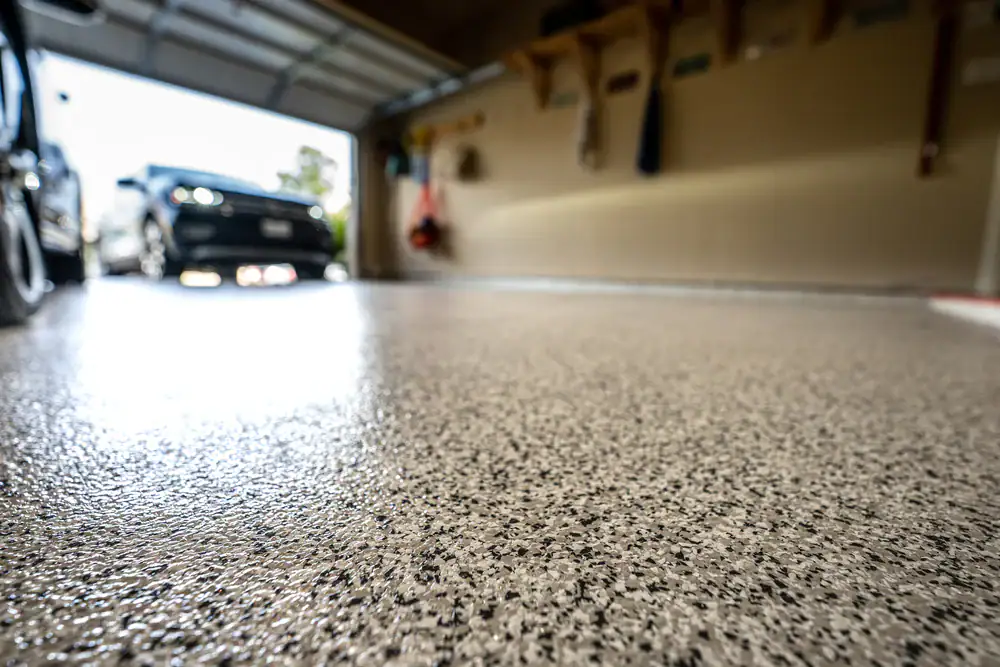
Hear from Our Customers
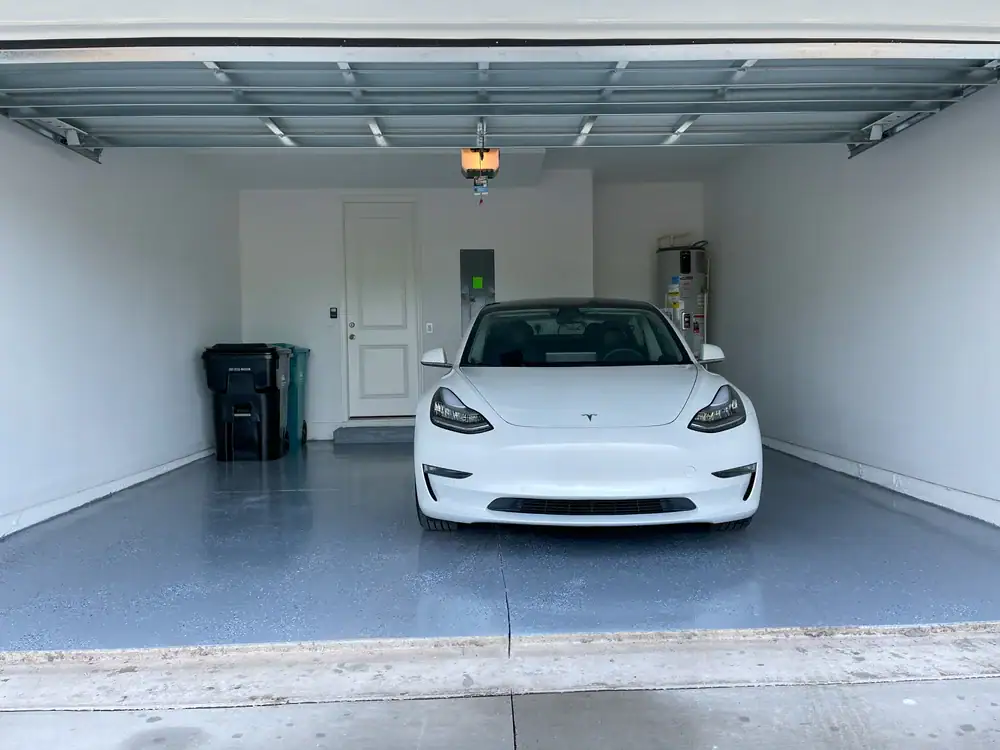
Epoxy Garage Floor Coating Services
Most garage floors in Juno Beach deal with the same problems. The concrete cracks, stains from oil and chemicals set in, and moisture from the ocean air creates a constant battle. You’re tired of looking at it, and if you’re selling, buyers notice.
An epoxy floor coating changes that. The surface becomes resistant to stains, easier to clean, and actually looks finished. No more dust tracking into the house. No more worrying about what spills where.
The real difference shows up over time. A properly installed epoxy garage floor holds up against Florida’s humidity and heat without peeling or yellowing. You’re not repainting every few years. You’re not dealing with bubbles after a rainy season. It’s done right, and it stays that way.
Professional Epoxy Flooring Contractor
We’ve been installing epoxy flooring and polished concrete across Florida since 2020. We’ve worked with the Coast Guard, US Military facilities, and municipal projects throughout Palm Beach County. Those clients don’t hire contractors who cut corners.
We’re based locally and we understand what coastal properties in Juno Beach deal with. The salt air, the summer storms, the concrete that never fully dries out. Every installation we do accounts for those conditions, because a floor that works in Arizona won’t hold up here.
You’ll work directly with us from consultation to completion. No subcontractors. No runaround. Just a straightforward process and a floor that does what it’s supposed to.
Our Garage Floor Coating Process
We start with surface preparation, which is where most failures happen. Your concrete gets diamond ground to create the right profile for adhesion. If there’s moisture in the slab, we address it with vapor barriers rated for Florida’s humidity levels. Skipping this step is why DIY kits peel within two years.
Next comes the primer and base coat. We use high-solids epoxy systems from Sherwin Williams and Fosroc that are formulated to handle moisture vapor emission. The products matter, but so does the application. Temperature, humidity, and timing all affect how the coating cures.
The topcoat seals everything and gives you the finish you want—whether that’s a solid color, flake system, or clear coat over polished concrete. Most residential garage floors are ready to walk on in 24 hours and ready for vehicles in 48 to 72 hours. We’ll give you exact timing based on your specific project and current weather conditions.

Ready to get started?
Garage Epoxy Flooring Options
Every garage floor coating we install includes proper surface prep, moisture testing, crack repair if needed, and a multi-layer epoxy system designed for your specific use. Residential garages get different treatment than commercial spaces, and we adjust the product and process accordingly.
Juno Beach properties face unique challenges. You’re close enough to the ocean that salt air affects everything. Humidity stays high year-round. Your concrete slab is likely dealing with moisture vapor transmission that would cause cheaper coatings to fail. We use moisture-tolerant primers and high-performance topcoats that account for all of that.
You’ll also get options. Solid colors, decorative flakes, metallic finishes, or slip-resistant additives depending on what you need. If you’re looking at polished concrete instead of epoxy, we handle that too. The goal is a floor that fits how you actually use the space, not just what looks good in a photo.
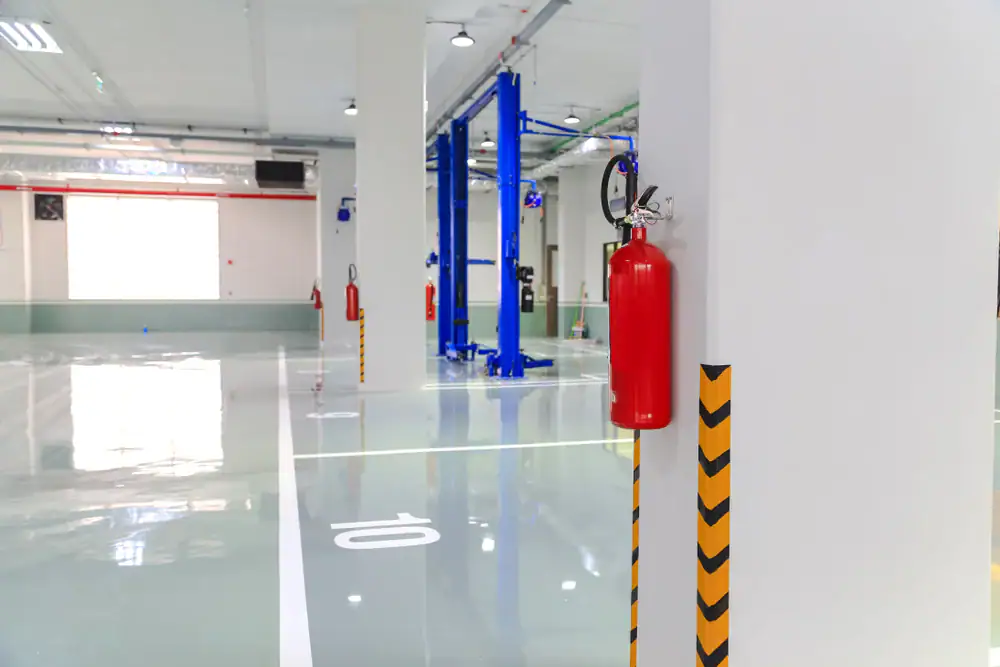
For commercial or industrial clients in the Jupiter and West Palm Beach area, we also offer safety line striping, resurfacing, and emergency response for urgent flooring needs. We’ve handled projects for schools, municipal buildings, and military facilities where downtime isn’t an option.
How long does garage epoxy flooring last in Florida’s climate?
A professionally installed epoxy garage floor in Juno Beach should last 10 to 20 years with minimal maintenance. That’s assuming proper installation with moisture barriers, the right primer system, and a UV-resistant topcoat.
Florida’s climate is tough on coatings. The humidity, heat, and UV exposure break down cheaper products fast. DIY kits usually fail within 18 to 36 months because they’re not designed for coastal conditions and most people skip the surface prep that actually matters.
The lifespan depends on the product quality, how well the concrete was prepared, and whether moisture issues were addressed upfront. We use commercial-grade systems that are formulated for high moisture vapor emission, which is critical in this area. You’re not recoating every few years if it’s done right the first time.
Why do so many epoxy garage floors fail in humid areas?
Moisture is the main culprit. Concrete in Florida retains moisture year-round, and when that moisture tries to escape through the slab, it pushes the coating off from underneath. You’ll see bubbles, peeling, or entire sections lifting up.
Most failures happen because the concrete wasn’t properly prepared or tested for moisture before the coating went down. If the surface is too smooth, contaminated with oils, or hasn’t been profiled correctly, the epoxy won’t bond. Add in Florida’s humidity and you’re looking at failure within the first year.
The other issue is product choice. Big-box store kits aren’t designed for high moisture environments. They’re thin, they don’t include proper primers, and they can’t handle the vapor transmission levels we see in coastal areas. Professional-grade systems cost more upfront, but they’re engineered to handle these exact conditions. That’s the difference between a floor that lasts two years and one that lasts twenty.
What’s the difference between epoxy and polyaspartic garage floor coatings?
Epoxy is a two-part resin system that cures through a chemical reaction. It’s durable, chemical-resistant, and cost-effective for most garage applications. The downside is it takes longer to cure and can yellow over time with UV exposure, which matters if your garage gets direct sunlight.
Polyaspartic coatings cure faster—often within a few hours—and they’re more UV-stable, so they won’t yellow. They’re also more flexible, which helps in areas where the concrete might expand and contract with temperature changes. The tradeoff is cost. Polyaspartic systems run higher than epoxy.
For most residential garages in Juno Beach, a high-quality epoxy system with a UV-resistant topcoat gives you the durability you need at a reasonable price. If you need the garage back in service immediately or if UV exposure is a major concern, polyaspartic makes sense. We’ll walk you through both options based on your specific situation and timeline.
How much does professional garage floor coating cost in Juno Beach?
Most residential garage floor coatings in the Juno Beach area run between $3 and $12 per square foot depending on the system, surface condition, and finish you choose. A standard two-car garage typically ranges from $1,200 to $4,800 for a complete professional installation.
That price includes surface preparation, crack repair, moisture mitigation if needed, primer, base coat, decorative flakes or color if you want them, and a clear topcoat. Cheaper quotes usually mean shortcuts—thinner products, minimal prep, or no moisture testing. Those jobs fail early and cost more to fix than doing it right the first time.
The return is worth it. A quality epoxy floor adds $2,000 to $8,000 to your home’s value in South Florida markets, and properties with finished garages sell faster and often above asking. Beyond resale, you’re looking at 15-plus years of a floor that’s easy to maintain and actually looks finished. We give transparent pricing after seeing your space because every garage is different, but you’ll know exactly what you’re paying for before we start.
Can you install epoxy flooring over existing garage floor coatings?
Sometimes, but it depends on what’s already there and what condition it’s in. If the existing coating is failing—peeling, bubbling, or delaminating—it all has to come off. You can’t coat over a failure and expect different results.
If the existing floor is a well-bonded epoxy or paint in good shape, we can often prep the surface and coat over it. That involves cleaning, abrading the surface to create a profile for the new coating to grab onto, and making sure there’s no contamination. It’s less invasive than a full removal, but it’s not always possible.
The safest approach is removing the old coating and starting fresh, especially in Florida where moisture issues might be hiding under that old layer. We’ll assess your floor during the consultation and tell you what’s actually required. If coating over is an option and makes sense, we’ll do it. If it’s not, we’ll explain why before you spend money on something that won’t hold up.
How soon can I use my garage after epoxy flooring installation?
You can walk on most epoxy garage floors within 24 hours. Light foot traffic is fine at that point. For parking vehicles, you’re looking at 48 to 72 hours depending on the system we install and the temperature and humidity during curing.
Full chemical cure takes about seven days. That’s when the floor reaches maximum hardness and chemical resistance. You can use it before then, but avoid dragging heavy items or parking hot tires on it during that first week if possible.
We’ll give you specific timelines based on your project. Some polyaspartic systems cure faster and can handle vehicle traffic within hours, which matters if you need the space back immediately. Weather affects cure times too—high humidity slows things down slightly. We schedule installations around your needs and the forecast to minimize disruption. Most clients are surprised how fast the process actually is compared to other home improvement projects.
Other Services we provide in Juno Beach
Leave a Reply