


Garage Epoxy Flooring in Jupiter, FL
Your Garage Floor Should Last Decades, Not Years
Hear from Our Customers
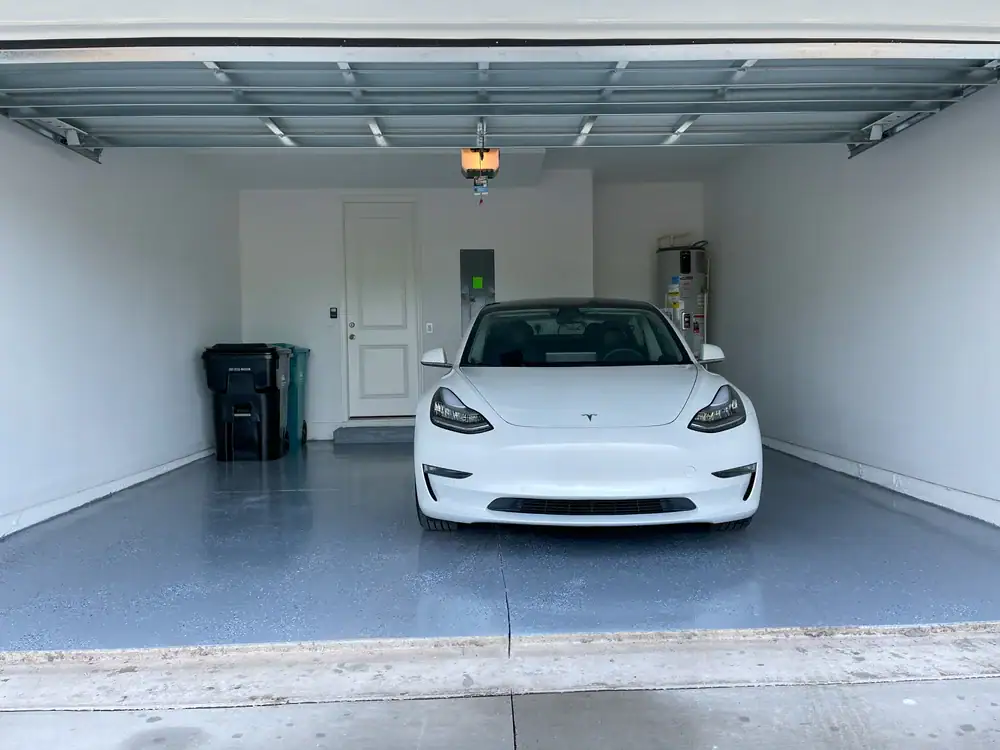
Professional Epoxy Garage Floor Installation
You’ve seen what happens to garage floors in Jupiter. Salt air eats through cheap coatings. Humidity causes bubbling. Poor prep work leads to peeling within months. You’re left with a floor that looks worse than when you started, and you’re out thousands of dollars.
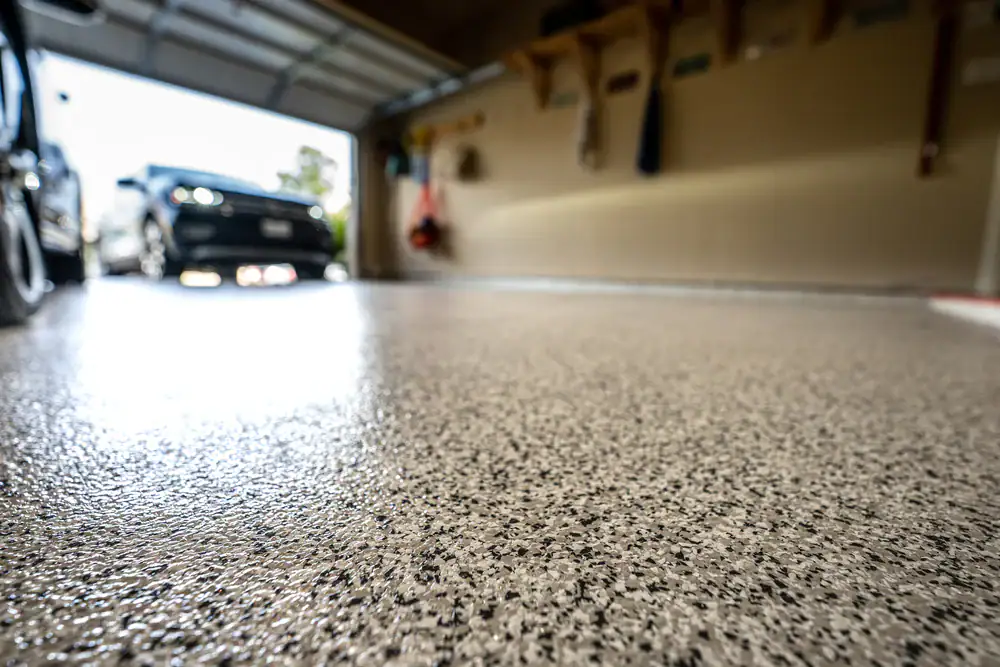
A properly installed epoxy garage floor changes that. The surface becomes non-porous, so salt and moisture can’t seep in. Heavy tools, dropped equipment, and daily wear won’t chip or stain it. You’re not repainting every few years or dealing with constant maintenance.
Your garage becomes a space you can actually use without worrying about the floor. Park your car without tire marks. Set up your workshop without protective mats. Walk in after a beach day without tracking in damage. The floor just works, year after year, because it was installed correctly from the start.
Jupiter’s Trusted Epoxy Flooring Contractor
We’ve installed epoxy flooring for the Coast Guard, US Army, City of Doral, and City of Sunny Isles since 2020. When government agencies trust you with their floors, you learn to do the work right.
We serve Jupiter homeowners and commercial property owners who want the same level of quality that military and municipal projects demand. That means proper surface prep, premium materials from Sherwin Williams and Fosroc, and installation that follows manufacturer specifications exactly.
You’re dealing directly with the team doing the work. No subcontractors. No middlemen. Just experienced installers who know how Florida’s climate affects epoxy and how to account for it during every phase of the job.
Our Garage Floor Coating Process
Surface preparation comes first. We grind the concrete to remove contaminants, open the pores, and create the profile needed for proper adhesion. This step determines whether your floor lasts two years or twenty. Most failures happen because someone skipped or rushed this part.
Next, we apply the epoxy system in controlled conditions. Temperature and humidity matter in Jupiter, so we monitor both throughout the process. We use professional-grade materials that bond at the molecular level, not just sit on top of your concrete.
The floor cures for 24-48 hours depending on the system. We don’t rush this. Once cured, you have a hardened surface that resists impacts, stains, chemicals, and moisture. You can drive on it, work on it, and use your garage the way you actually need to without babying the floor.
Ready to get started?
What’s Included in Garage Epoxy Flooring
Your garage floor coating includes full surface preparation with diamond grinding, crack repair where needed, and a multi-layer epoxy system designed for Jupiter’s coastal environment. We’re not brushing on a single coat and calling it done.
In Southwest Florida, 72% of garage surfaces show wear from humidity and salt air within five years when installed incorrectly. Jupiter’s location means your floor faces constant exposure to these elements. Our installations account for this with moisture barriers, UV-resistant topcoats, and proper curing protocols that prevent the bubbling and peeling common with rushed jobs.
You also get transparent pricing before we start, a consultation to discuss your specific needs, and follow-up after installation to make sure everything performs as expected. If you want decorative flakes, custom colors, or slip-resistant additives, we’ll walk through those options during the consultation. The goal is a floor that matches how you’ll actually use the space.
How long does epoxy flooring last in Jupiter’s climate?
Professionally installed epoxy garage floors typically last 15-20 years in Jupiter when maintained properly. That’s three to four times longer than DIY kits, which often fail within 5-10 years.
The difference comes down to surface preparation and material quality. We grind the concrete to the right profile, remove all contaminants, and use commercial-grade epoxy systems that bond chemically with the concrete. DIY kits rely on mechanical adhesion, which breaks down faster under Florida’s humidity and temperature swings.
Your floor’s lifespan also depends on how you use it. Heavy equipment, constant vehicle traffic, and chemical exposure will wear any floor faster. But a properly installed system handles normal garage use without showing significant wear for well over a decade.
Will epoxy flooring hold up to hot tires and Florida heat?
Yes, but only if it’s installed with the right materials and proper curing time. Hot tire pickup is a common problem with cheap epoxy systems or rushed installations that don’t fully cure.
We use high-temperature resistant epoxy formulations designed for Florida’s climate. These systems cure harder and bond deeper than standard products. The curing process matters just as much as the product itself. Rushing this step leaves the surface soft enough that hot tires can pull up the coating.
Jupiter’s summer heat won’t damage a properly cured epoxy floor. Your tires can sit on it all day without leaving marks or causing peeling. The floor’s heat resistance is one reason government and commercial clients specify professional-grade epoxy over consumer products.
What makes professional installation different from DIY epoxy kits?
Surface preparation is the biggest difference. DIY kits tell you to clean and etch the concrete. Professional installation involves diamond grinding the entire surface to remove the top layer of concrete, open the pores, and create the mechanical profile needed for proper bonding.
We also control environmental conditions during installation. Humidity above 80% or temperatures outside the product’s range will cause failures. Jupiter’s climate makes this challenging. We monitor conditions and adjust our schedule to install when the environment supports proper curing.
Material quality matters too. Professional-grade epoxy systems cost more because they’re formulated to handle commercial and industrial use. They bond at the molecular level, resist UV damage, and maintain flexibility through temperature changes. Store-bought kits use cheaper resins that become brittle and fail faster under Florida’s conditions.
How do you prevent the bubbling and peeling common in Florida?
Moisture is the main culprit behind bubbling and peeling in Florida. Concrete is porous and holds moisture, especially in coastal areas like Jupiter. When that moisture tries to escape through the epoxy, it creates bubbles and breaks the bond.
We test for moisture before installation and use vapor barriers when needed. The grinding process also helps by removing the top layer where most contaminants and moisture sit. Then we apply the epoxy in thin, controlled coats that allow proper degassing between layers.
Timing matters too. We don’t install right after rain or when humidity is too high. The concrete needs to be at the right moisture level, and the air needs to support proper curing. Rushing this process to meet a deadline is how most failures happen. We’d rather reschedule than install in poor conditions.
Is epoxy flooring slippery when wet?
Standard epoxy can be slippery when wet, which is a legitimate concern for garages where water, oil, and other liquids end up on the floor. This is especially true in Jupiter, where you’re tracking in water from beach trips or washing vehicles.
We add slip-resistant aggregates to the topcoat for garage applications. These create texture without making the floor rough or hard to clean. You get traction even when the surface is wet, but you can still sweep and mop normally.
The level of slip resistance can be adjusted based on your needs. Light texture works for most residential garages. More aggressive texture makes sense if you’re running a shop or working with a lot of liquids. We’ll recommend the right option during your consultation based on how you use the space.
How soon can I use my garage after epoxy installation?
You can walk on the floor after 24 hours in most cases. Vehicle traffic requires 48-72 hours depending on the specific system we install and the temperature during curing.
Heavy equipment, toolboxes, and other loads should wait the full 72 hours. The epoxy continues to cure and harden during this time. Using the floor too early won’t cause immediate visible damage, but it can compromise the long-term durability and create weak spots that fail prematurely.
We give you specific timelines based on your installation and the conditions during curing. Jupiter’s heat can speed up curing slightly, but we don’t cut corners on cure time. A few extra days of waiting now means years of additional life for your floor.
Other Services we provide in Jupiter
Leave a Reply