


Garage Epoxy Flooring in Lakewood Park, FL
Garage Floors That Actually Survive Florida’s Climate
Hear from Our Customers
Epoxy Garage Floor Coating Solutions
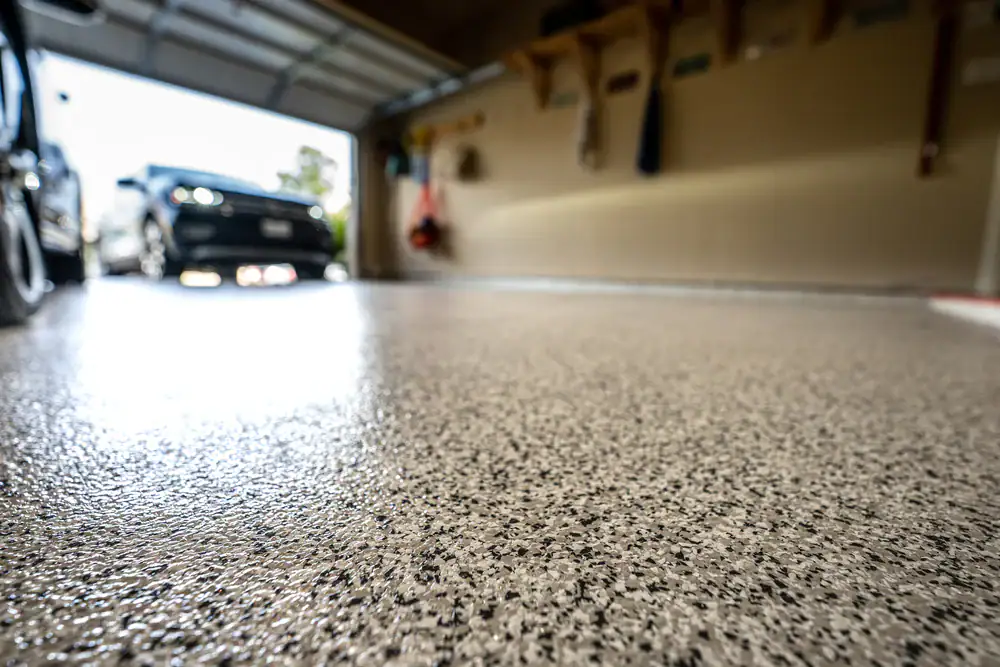
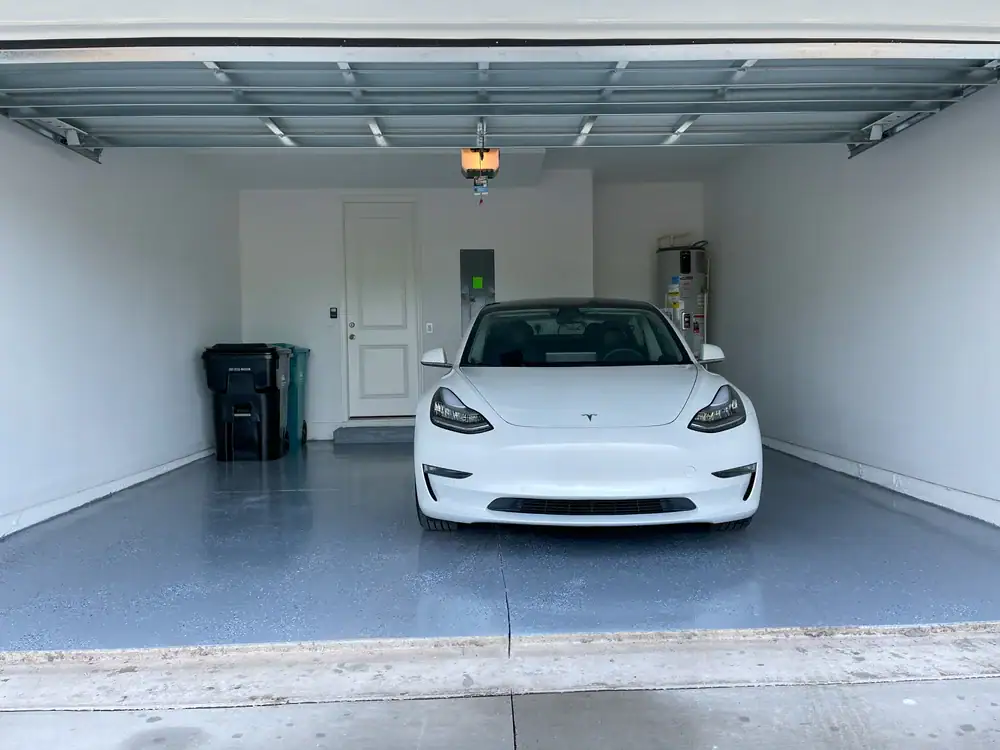
Your garage floor stops being a liability. No more oil stains that won’t come out, no more concrete dust tracking into the house, no more worrying about what spills or drops.
You get a surface that cleans with a garden hose. Chemicals don’t stain it. Heavy equipment doesn’t crack it. And when Florida’s humidity spikes or a hot car sits overnight, the coating stays put—because it was installed by people who know how moisture vapor and heat affect epoxy in this climate.
The floor looks sharp. It functions better. And if you ever sell, buyers notice. A professionally coated garage floor signals that the home was maintained, which matters when you’re competing with other listings in Lakewood Park.
Epoxy Flooring Contractor Lakewood Park
We specialize in epoxy flooring, polished concrete, and resurfacing across Florida. We’ve worked with the Coast Guard, US Army, City of Doral, City of Sunny Isles, and county facilities—projects where failure isn’t an option and the floor has to perform under serious use.
We’re not a general contractor who subcontracts flooring. This is what we do. We work directly with property owners in Lakewood Park and across the state, using Sherwin Williams and Fosroc products we trust to hold up in Florida’s conditions.
You’ll talk to us from the estimate through the follow-up call. No middlemen, no surprises, no disappearing after the check clears.
Garage Floor Coating Installation Process
We start with surface prep, which is where most failures happen. Your concrete gets profiled—ground down to open the pores so the epoxy can bond. We remove oils, grease, and any existing coatings that would prevent adhesion. Cracks get filled and leveled. If there’s a moisture issue, we test for it and adjust our approach before any coating goes down.
Then we apply the epoxy system in layers. The base coat bonds to the prepared concrete. The topcoat adds durability, chemical resistance, and UV stability. We adjust resin ratios based on real-time humidity readings because Florida’s climate demands it—what works in Arizona will bubble here by summer.
Most garage projects finish in a day. You’re back to parking on it within 24 to 48 hours depending on the system. We clean up, walk the floor with you, and explain what to expect as it fully cures over the next week.
Ready to get started?
Garage Epoxy Flooring Lakewood Park FL
You’re getting a system designed for Florida’s high humidity, temperature swings, and the kind of use a garage actually sees. That means moisture testing before we start, proper surface preparation that prevents delamination, and coatings that resist hot tire pickup—the issue that causes cheap epoxy to peel when your car’s been sitting in the sun.
The installation includes crack repair, concrete leveling where needed, full surface profiling, and a multi-layer epoxy system with chemical and impact resistance. We’re not brushing on a single coat and calling it done. This is a build-up that’s meant to last 15 to 20 years in a residential garage when it’s done right.
Lakewood Park sits in St. Lucie County, where summer humidity regularly hits 75% and afternoon storms are a given. Your garage floor has to handle wet tires, standing water, and heat that would soften inferior coatings. We account for that in every step—from the products we use to the timing of the pour to how we manage airflow during cure.
How long does garage epoxy flooring actually last in Florida?
A properly installed professional-grade epoxy system lasts 15 to 20 years in a residential garage. That assumes normal use—cars, tools, occasional spills, the usual wear. Commercial or high-traffic applications see 7 to 15 years depending on load and frequency.
The key phrase is “properly installed.” Most failures happen in the first year, and they’re almost always due to poor surface prep or using a coating not designed for Florida’s humidity. If the concrete wasn’t profiled correctly, the epoxy won’t bond. If moisture wasn’t tested, vapor pressure from below will lift the coating and cause bubbling.
DIY kits and cheap installations fail faster because they skip steps or use products that can’t handle heat and moisture. You’ll see peeling, hot tire pickup, or slippery spots after the first rainy season. A professional system with the right prep and climate-appropriate chemistry holds up because it’s engineered for the conditions your garage actually experiences.
What causes epoxy garage floors to bubble or peel?
Moisture is the main culprit. Concrete is porous, and in Florida’s climate, moisture vapor rises from below. If the concrete wasn’t dry enough when the epoxy was applied, or if there’s an ongoing moisture issue, that vapor creates pressure under the coating. Eventually it lifts the epoxy, causing bubbles or delamination.
Hot tire pickup is another common failure. When your car sits in the sun, the tires heat up. If you park on cheap or improperly cured epoxy, the hot rubber can bond to the coating. When the tire cools and contracts, it pulls the epoxy up with it. You’ll see tire marks and peeling in the traffic lanes.
Poor surface preparation causes most of the rest. If the concrete wasn’t ground and profiled, the epoxy sits on top instead of bonding into the surface. Any oils, grease, or existing sealers will prevent adhesion. The coating might look fine for a few weeks, but it’s not truly attached—so it peels once you start using the space. We test for moisture, remove contaminants, and profile the concrete specifically to avoid these issues.
How much does professional garage floor epoxy cost?
Most residential garage floors in Florida run between $1,100 and $3,500 depending on size, condition, and the system you choose. A standard two-car garage with minimal prep and a basic epoxy system sits on the lower end. Larger spaces, custom colors, or floors that need significant crack repair and leveling cost more.
You’re paying for the prep work as much as the coating. Grinding the concrete, repairing cracks, removing old sealers, and testing for moisture takes time and equipment. That’s also where the quality lives—skip those steps and the floor fails, no matter how good the epoxy is.
Commercial or industrial floors cost more per square foot because the systems are heavier-duty and the prep is more involved. But the return is a floor that handles forklifts, constant traffic, and chemical exposure without breaking down. If you’re comparing quotes, ask what’s included in the prep and what products they’re using. The cheapest bid usually means shortcuts that cost you more when the floor fails in a year.
Can you install epoxy flooring over existing garage floor coatings?
Sometimes, but usually it’s better to remove the old coating first. If there’s an existing sealer, paint, or previous epoxy, we need to know if it’s bonded well and compatible with what we’re putting down. Most of the time, old coatings are failing or were applied incorrectly—so they become the weak point even if the new epoxy bonds to them.
We test the existing surface. If the old coating is peeling, flaking, or not adhered properly, it has to come off. There’s no point in applying a professional system over a failing base—it’ll just fail with it. Removal involves grinding or chemical stripping depending on what’s there and how stubborn it is.
If the existing coating is solid and compatible, we can profile it and apply the new system over it. But that’s the exception. Most garage floors we see in Lakewood Park either have no coating, a failing DIY job, or a builder-grade sealer that’s worn through. In those cases, starting fresh with proper prep gives you a floor that actually lasts.
How soon can I use my garage after epoxy installation?
You can walk on it in 24 hours. Light use—moving things around, parking a car—happens at 24 to 48 hours depending on the system and humidity levels. Full cure takes about a week, which is when the coating reaches maximum hardness and chemical resistance.
Florida’s humidity affects cure time. Higher moisture in the air slows the chemical reaction that hardens the epoxy. We account for that when we mix and apply the coating, but you still need to give it time to fully set before heavy use or exposing it to harsh chemicals.
Most of our garage projects finish in a single day. We start in the morning, prep and coat the floor, and you’re walking on it the next day. If it’s a larger space or a more complex system, we’ll let you know upfront what the timeline looks like. The key is not rushing it—epoxy that’s put into service too early won’t perform the way it should.
Does garage floor epoxy hold up to Florida heat and humidity?
Professional-grade systems do. They’re formulated to handle temperature swings, high humidity, and moisture exposure without softening, bubbling, or delaminating. That’s why product selection and installation technique matter so much in Florida—what works in a dry climate fails here if you don’t adjust for the conditions.
We use epoxy systems from Sherwin Williams and Fosroc that are proven in commercial, industrial, and military applications across the state. These aren’t hardware store kits. They’re engineered to resist moisture vapor, handle thermal expansion, and maintain bond strength even when humidity hits 75% and your garage floor is sitting at 95 degrees.
The installation process also adapts to the climate. We test moisture levels in the concrete before we start. We adjust resin ratios based on temperature and humidity at the time of application. And we manage airflow and cure conditions to prevent issues like blushing or soft spots. Florida heat and humidity are tough on coatings, but when the system is designed for it and installed correctly, the floor performs for decades.
Other Services we provide in Lakewood Park
Leave a Reply