


Garage Epoxy Flooring in Limestone Creek, FL
Floors That Handle Florida Heat Without Failing
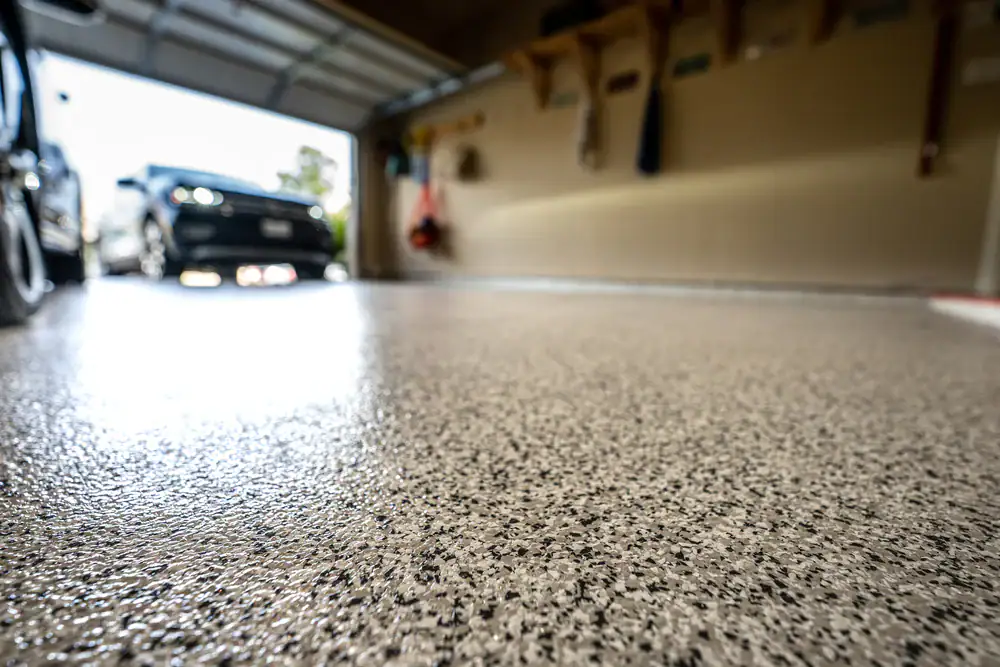
Hear from Our Customers
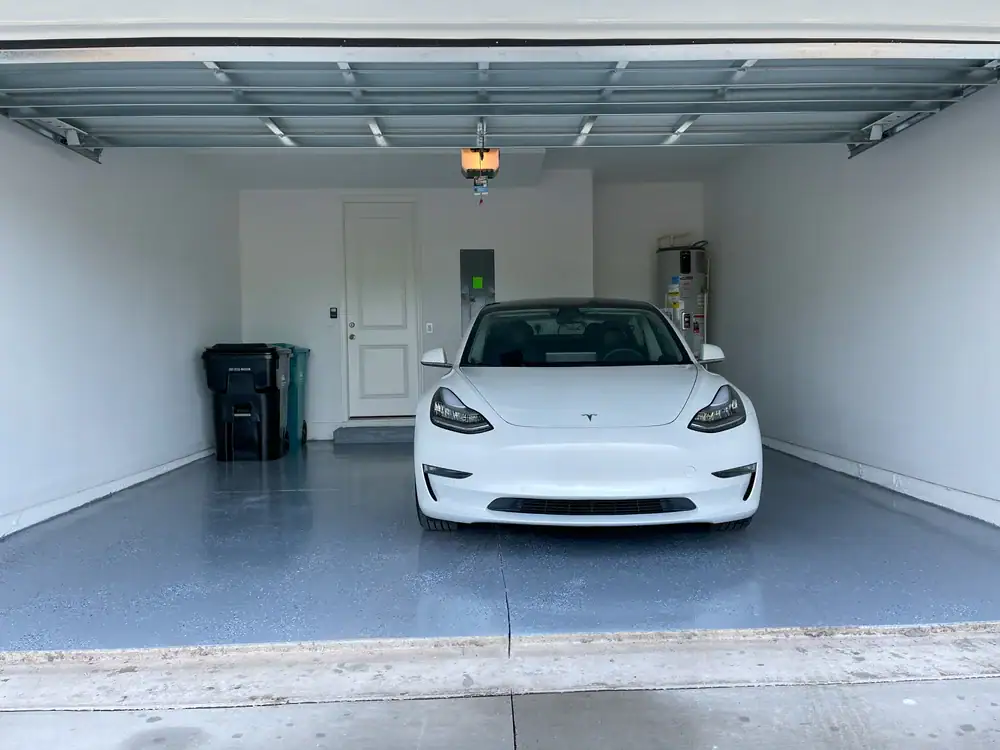
Professional Epoxy Floor Coating Services
Most epoxy garage flooring failures happen because of Florida’s climate, not the product itself. When moisture gets trapped under a coating that wasn’t applied correctly, you’ll see bubbling and peeling within two years. That’s why over 70% of DIY installations fail before they hit the three-year mark.
A professional epoxy floor coating changes how you use your garage. Spills wipe up in seconds. Hot tires don’t leave marks. You’re not scrubbing oil stains or dealing with concrete dust on everything you own.
The floor stays clean with a quick sweep and occasional mopping. No sealing, no waxing, no refinishing. And if you’re thinking about resale value, homes with finished garage floors in South Florida consistently sell 10-15% faster and often see a 5-10% bump in property value. That’s real money back on a relatively small investment.
Trusted Garage Floor Contractors Near You
SPF Industrial has been installing garage floor coatings and polished concrete across South Florida since 2020. We’ve worked with the U.S. Military, Coast Guard, City of Doral, City of Sunny Isles, and county facilities that demand floors capable of handling serious wear.
We don’t subcontract. Every crew member works directly for us, which means you’re getting the same team that handles government projects. We use commercial-grade materials from Laticrete, Koster USA, and Carboline because those products are built for Florida’s humidity and heat.
Limestone Creek sits in a climate zone where most installers schedule work between November and April when humidity drops below 70%. We work year-round because we know how to manage moisture levels and surface prep in less-than-ideal conditions. That’s the difference between a floor that lasts two decades and one that fails in two years.
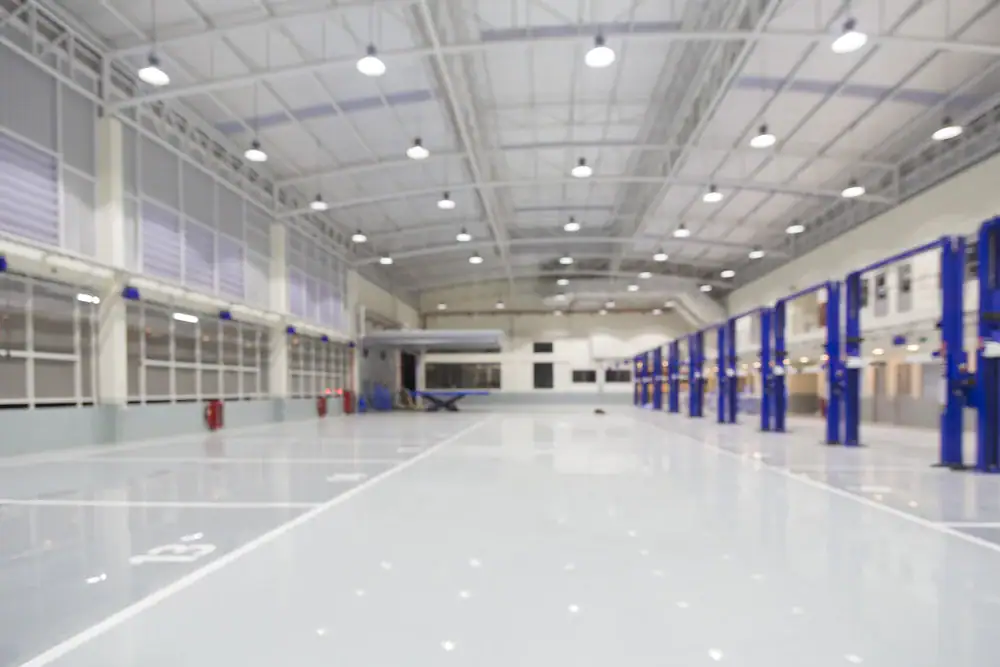
Our Garage Epoxy Flooring Installation Process
We start with surface prep, which is where most failures happen. Your concrete gets shot-blasted, diamond-ground, or scarified depending on its condition. This isn’t optional. Epoxy needs a clean, porous surface to bond properly, and any existing coatings, sealers, or contaminants have to come off completely.
Next, we repair cracks and imperfections. Florida concrete moves. Temperature swings and ground settling create small fractures that will telegraph through a coating if they’re not addressed first. We fill and level everything before any epoxy goes down.
Then we apply the epoxy system in layers. Depending on what you need, that might be a base coat, color flake broadcast, and a clear topcoat. Or it could be a high-build system for commercial spaces that see heavy traffic. Cure times vary based on temperature and humidity, but most garage floor painting projects finish in one to two days.
You’ll get a floor that’s ready for light foot traffic in 24 hours and full vehicle use in 48-72 hours. We don’t rush cure times. Proper curing is what separates a 15-year floor from a 15-month floor.
Ready to get started?
What’s Included in Garage Floor Coatings
Every garage epoxy flooring project includes full surface preparation, crack repair, and a moisture test. We don’t skip the moisture test. Over 65% of premature coating failures happen because trapped water vapor forces its way through the epoxy. If your slab has moisture issues, we’ll catch them before any product goes down.
You’ll get commercial-grade epoxy formulated for Florida’s climate. We don’t use retail-grade kits. The materials we install are UV-stable, which matters in Limestone Creek where garage doors stay open and sunlight hits your floor daily. Retail products yellow and fade. Ours don’t.
We also include a warranty that varies based on your environment and the system you choose. Residential garage floors get different use than commercial warehouse spaces, so the coverage reflects that. We stand behind the work 100%, but we’re also realistic about what different environments demand from a floor.
If you want custom colors, decorative flakes, or metallic finishes, we can do that. But the foundation is always the same: proper prep, quality materials, and an installation process that accounts for Florida’s heat and humidity. That’s what makes the floor last.
How long does epoxy flooring last in Florida’s climate?
A professionally installed epoxy garage floor lasts 15-20 years in Florida when it’s done right. That means proper surface prep, moisture testing, and using materials formulated for high humidity and temperature swings.
DIY kits fail faster because they skip the prep work and use thinner coatings that can’t handle Florida’s conditions. Most DIY installations start peeling or bubbling within 18-36 months. The difference isn’t the homeowner’s skill level. It’s the materials and the process.
We use commercial-grade epoxy systems with UV-stable topcoats. Florida sun is brutal, and retail products yellow over time. The floors we install in Limestone Creek are the same systems we use for military facilities and municipal buildings. They’re built to last decades, not years.
What’s the difference between epoxy and other garage floor coatings?
Epoxy is a two-part system that chemically bonds to concrete. It’s not a paint or a sealer. Once it cures, it becomes part of the surface, which is why it holds up to hot tires, chemical spills, and heavy traffic better than any other coating.
Garage floor paint sits on top of concrete. It doesn’t bond the same way, so it chips and peels under normal use. Sealers protect concrete but don’t add the durability or chemical resistance that epoxy does. If you’re parking cars, storing equipment, or using your garage as a workspace, epoxy is the only coating that makes sense.
The other advantage is customization. Epoxy systems can include color flakes, metallic finishes, or solid colors. You’re not limited to gray concrete or basic paint colors. And because the coating is thick and seamless, it’s easier to clean than bare concrete or painted surfaces.
How much does garage epoxy flooring cost in Limestone Creek?
Most residential garages run between $1,200 and $6,000 depending on size, condition, and the system you choose. A standard two-car garage with basic prep and a single-color epoxy system is on the lower end. Custom finishes, extensive crack repair, or high-build commercial systems cost more.
The price includes surface prep, crack repair, moisture testing, and the epoxy application. We don’t charge separately for prep work because it’s not optional. A floor that isn’t prepped correctly won’t last, regardless of how good the epoxy is.
You’ll also want to factor in the ROI. Homes with finished garage floors in South Florida see a 5-10% increase in resale value. If your home is worth $400,000, that’s a potential $20,000-$40,000 bump for a $3,000-$5,000 investment. Even if you’re not selling soon, the floor pays for itself in reduced maintenance and longer lifespan compared to repainting or resealing concrete every few years.
Can epoxy be applied over existing garage floor coatings?
Not usually. Epoxy needs to bond directly to concrete, and any existing coating creates a barrier. If your garage already has paint, sealer, or an old epoxy system, we have to remove it completely before applying new epoxy.
That’s what the shot-blasting or diamond grinding is for. We’re not just roughing up the surface. We’re removing every trace of old coatings, oils, and contaminants so the new epoxy can bond properly. If we skip this step, the new coating will only be as strong as whatever it’s sitting on top of. And old paint or failing epoxy isn’t strong.
There are rare cases where we can apply a new system over an existing one, but only if the old coating is in perfect condition and was installed correctly in the first place. We test adhesion and moisture levels first. If there’s any question about the bond, we strip it and start fresh. It’s not worth risking a failure to save a few hours of prep work.
What kind of maintenance does an epoxy garage floor need?
Weekly sweeping and monthly mopping. That’s it. Epoxy creates a seamless, non-porous surface that doesn’t absorb spills or collect dust the way bare concrete does. You’re not dealing with oil stains that soak in or tire marks that won’t come off.
Use a pH-neutral cleaner and avoid harsh chemicals or abrasive scrubbers. The topcoat is durable, but you don’t need to attack it with industrial degreasers unless you’ve spilled something truly nasty. Most spills wipe up with a paper towel.
You won’t need to reseal or refinish the floor. Epoxy doesn’t wear down the way paint or sealer does. The coating is thick enough that normal use won’t expose the concrete underneath. If you do manage to damage it, we can repair small areas without redoing the entire floor. But in 15-20 years of normal residential use, most floors don’t need anything beyond basic cleaning.
How soon can I use my garage after epoxy installation?
Light foot traffic is fine after 24 hours. Full vehicle traffic takes 48-72 hours depending on temperature and humidity. We don’t rush cure times because that’s where a lot of DIY projects go wrong.
Epoxy cures through a chemical reaction that’s affected by heat and moisture. In Limestone Creek, we’re usually working in warm, humid conditions, which can slow the cure slightly. We’d rather have you wait an extra day than risk tire marks or surface damage because the coating wasn’t fully hardened.
Once it’s cured, the floor is ready for whatever you throw at it. Hot tires, heavy equipment, chemical spills—it all wipes clean. But those first few days matter. If you need your garage back faster, let us know during the consultation. We can sometimes adjust the schedule or use a faster-curing system depending on your timeline and the conditions we’re working in.
Other Services we provide in Limestone Creek
Leave a Reply