


Garage Epoxy Flooring in Medley, FL
Industrial-Grade Garage Floors That Actually Last
Hear from Our Customers
Epoxy Garage Floor Coating Benefits
Your concrete is porous. It soaks up oil, cracks under pressure, and looks worse every year. An epoxy garage floor changes that completely.
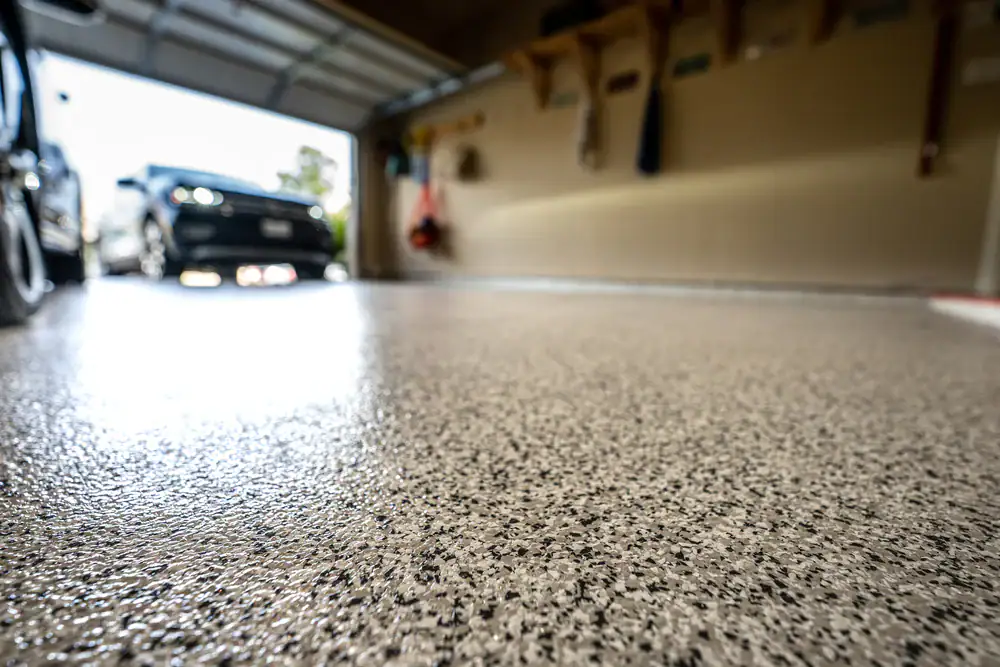
You get a surface that repels stains instead of absorbing them. Spills wipe up in seconds. The floor stays cleaner with less effort, and it holds up under heavy use without chipping or peeling.
Florida’s humidity and heat destroy standard coatings. Industrial epoxy floor coating systems are formulated to bond properly in these conditions. That means no bubbling, no delamination, and no redoing the job in two years.
The difference shows up in daily use. Your garage becomes a functional space you can actually work in. Whether you’re parking vehicles, running a workshop, or storing equipment, the floor handles it without breaking down.
Epoxy Flooring Contractors Medley, FL
We’ve been installing garage floor coatings and commercial epoxy systems in Medley and throughout South Florida since 2020. We work directly with property owners, not through general contractors, so you get transparent pricing and straight answers.
Our client list includes the U.S. Coast Guard, U.S. Army facilities, City of Doral, and City of Sunny Isles Beach. When government agencies need flooring that can’t fail, they call us. That same level of work goes into every residential garage we coat.
Medley sits in the heart of Miami-Dade’s industrial corridor. The businesses here need floors that can handle forklifts, chemical exposure, and constant traffic. Homeowners in the area want the same durability without the hassle of dealing with multiple contractors or surprise costs.
Garage Floor Coating Installation Process
Surface preparation makes or breaks an epoxy job. We start by grinding the concrete to open the pores and remove any existing coatings, oils, or contaminants. If there are cracks, we fill and seal them properly so they don’t telegraph through the new coating.
Next comes the primer coat. This bonds to the prepared concrete and creates the foundation for the epoxy system. We use Sherwin Williams and Fosroc products because they’re formulated for industrial applications and Florida’s climate.
The epoxy floor coating goes down in layers. Depending on your needs, we can add color flakes for texture and slip resistance, or install a clear topcoat for extra durability and UV protection. Each layer needs proper cure time, which is why we don’t rush the process.
Most residential garage floor painting projects take 1-2 days from start to finish. Commercial jobs depend on square footage and complexity. We can work on accelerated timelines when needed—we’ve completed emergency projects in 24-48 hours for clients who couldn’t afford downtime.
You’ll be able to walk on the floor within 24 hours and park vehicles within 3-5 days, depending on the system we install.

Ready to get started?
Garage Epoxy Flooring Options Medley
Every garage floor coating project starts with a site assessment. We look at the concrete condition, moisture levels, and how you use the space. That determines which system makes sense for your situation.
Standard epoxy garage flooring includes full surface prep, crack repair, primer, base coat, and topcoat. You can choose from solid colors, color flake systems, or metallic finishes. We also offer polyaspartic coatings, which cure faster and hold up better under UV exposure if your garage gets direct sunlight.
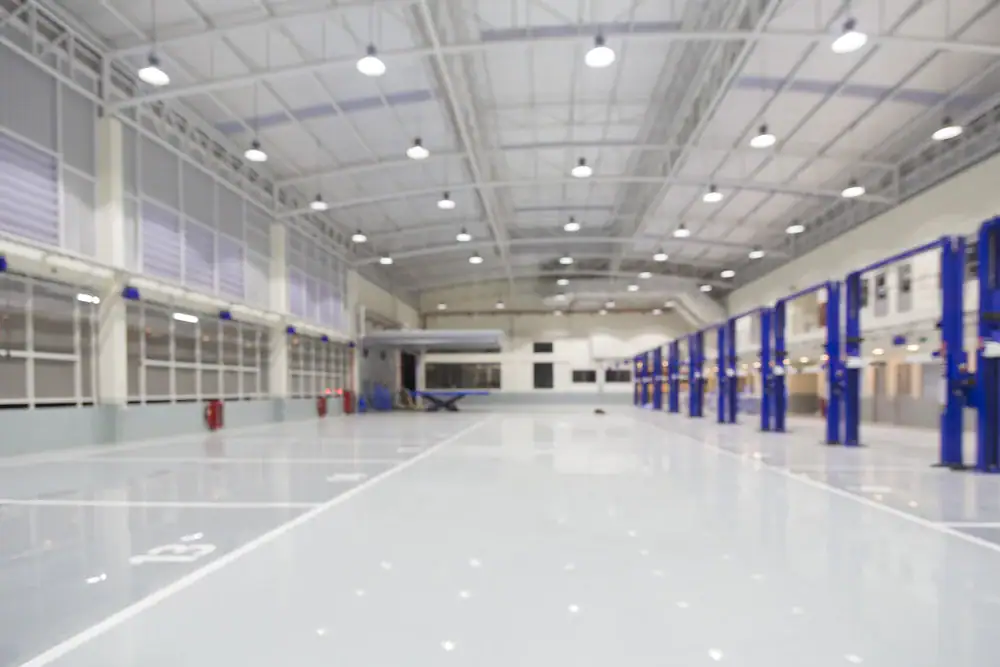
Medley’s industrial environment means floors here face unique challenges. Chemical exposure, heavy equipment, and high humidity all factor into which coating system will perform best. We’ve installed epoxy floor coating in warehouses, manufacturing facilities, and municipal buildings throughout the area, so we know what works.
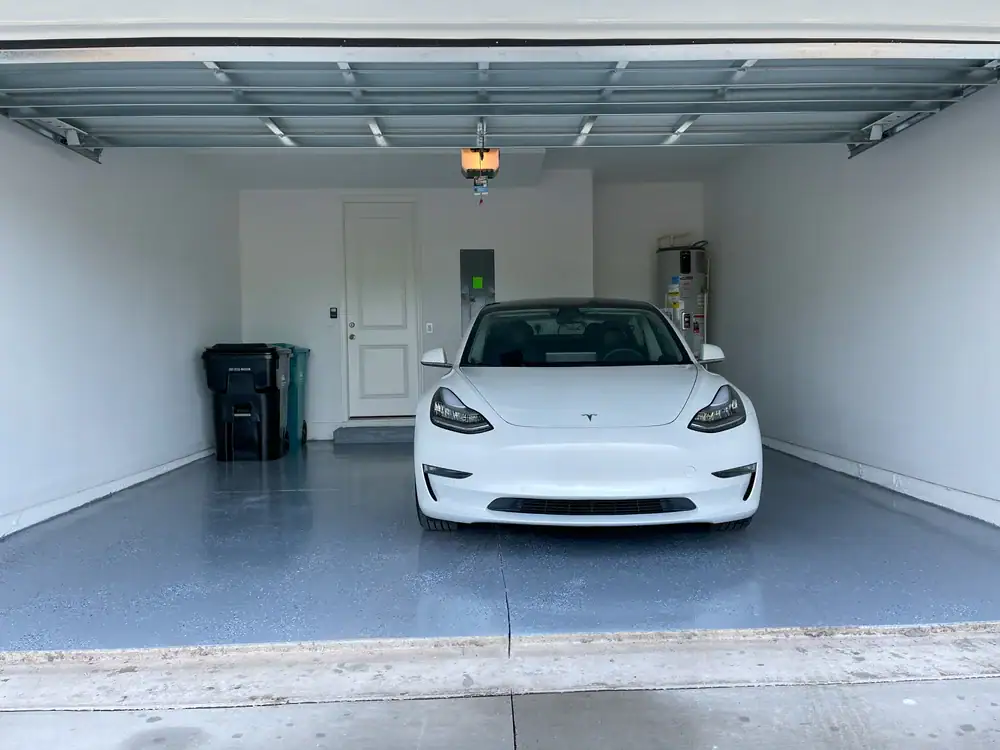
For residential clients, the most popular option is a flake system with a clear topcoat. It looks clean, provides slip resistance, and hides minor imperfections in the concrete. Commercial clients often need solid colors with safety striping or chemical-resistant formulations.
We handle the entire process, including moving items if needed, protecting walls and doors, and cleaning up completely when we’re done. You get a finished floor ready to use, not a project you have to manage.
How long does epoxy garage flooring last in Florida’s climate?
Industrial-grade epoxy systems last 10-15 years in Florida when installed correctly. The key is proper surface preparation and using products designed for high humidity and temperature swings.
Cheap DIY kits fail because they don’t bond well to concrete in humid conditions. The coating delaminates, usually within 1-2 years. Professional systems use moisture-mitigating primers and commercial-grade resins that handle Florida’s environment.
UV exposure is the other factor. If your garage gets direct sunlight, a polyaspartic topcoat prevents yellowing and degradation. Standard epoxy can amber over time with sun exposure, but it won’t affect performance—just appearance.
What’s the difference between epoxy and paint for garage floors?
Garage floor paint sits on top of concrete. Epoxy bonds chemically to the surface and becomes part of the floor structure. That’s why paint peels and epoxy doesn’t when installed properly.
Paint is thin—usually 2-4 mils. Epoxy goes down at 10-20 mils or thicker, depending on the system. That extra thickness means it can handle impacts, abrasion, and chemical exposure that would destroy paint in weeks.
You’ll also see the difference in preparation. Paint can go over concrete with minimal prep. Epoxy requires diamond grinding to open the concrete pores and ensure proper adhesion. Skipping that step is why most failed epoxy jobs actually fail—not because of the product, but because of poor prep work.
Can you install epoxy over my existing garage floor coating?
Sometimes, but it depends on what’s there and how well it’s adhered. We test the existing coating first by trying to scrape or peel it. If it’s loose or flaking, it has to come off completely before we can install new epoxy.
Even if the old coating seems solid, we still grind the surface to create a mechanical bond. Epoxy over epoxy can work, but only if the first layer is fully intact and properly prepared. Most of the time, it’s better to remove everything and start fresh.
Old paint or sealers always need to be removed. They prevent the new epoxy from bonding to the concrete, which means you’d be coating over a failure waiting to happen. The extra time spent on removal saves you from having to redo the entire floor in a year or two.
How soon can I use my garage after epoxy installation?
You can walk on the floor in 24 hours. Light foot traffic won’t damage the coating once it’s set. For vehicle traffic, wait 3-5 days depending on which system we install and the temperature during curing.
Polyaspartic coatings cure faster—sometimes same-day for foot traffic and 24-48 hours for vehicles. Standard epoxy needs more time because the chemical reaction happens slower. Rushing it means tire marks and potential damage to the coating before it’s fully hardened.
Temperature affects cure time. Hotter weather speeds it up, but too much heat can cause issues with application. We schedule installations based on weather forecasts to ensure optimal curing conditions. If you need the space back faster, let us know upfront so we can recommend the right system.
What kind of maintenance does an epoxy garage floor need?
Sweep or blow out debris regularly. Mop with a mild cleaner when needed. That’s it. Epoxy garage floors don’t require sealing, waxing, or special treatments.
For oil or chemical spills, wipe them up when you can. The epoxy won’t absorb them, so they sit on the surface until you clean them. Even if you leave a spill for days, it won’t stain—it just wipes up later.
Avoid using harsh acids or solvents for cleaning. They can dull the finish over time. A pH-neutral cleaner and water handle 99% of cleaning situations. For stubborn marks, a soft brush or scrub pad works without damaging the coating.
How much does garage epoxy flooring cost in Medley, FL?
Most residential garage floor coatings run $2,300-$2,700 for a standard 2-3 car garage, depending on size and system type. That includes surface prep, crack repair, and a complete epoxy system with flakes and topcoat.
Larger commercial projects are priced per square foot based on the coating system and site conditions. Factors like existing floor condition, required chemical resistance, and timeline all affect the final cost. We provide transparent quotes after seeing the space.
The cheapest option isn’t always the best value. A properly installed industrial epoxy system costs more upfront but lasts 10-15 years. DIY kits run $200-500 but typically fail within 2 years, meaning you pay to redo the floor multiple times. We work with Sherwin Williams and Fosroc products because they perform reliably, which saves you money long-term.
Other Services we provide in Medley
Leave a Reply