


Garage Epoxy Flooring in North Bay Village, FL
Your Garage Floor Fixed Right the First Time
Hear from Our Customers
Epoxy Garage Floor Coating North Bay Village
You park on it every day. You track in salt air, humidity, oil drips, and whatever else comes off your tires. Your garage floor takes a beating that most coatings can’t handle.
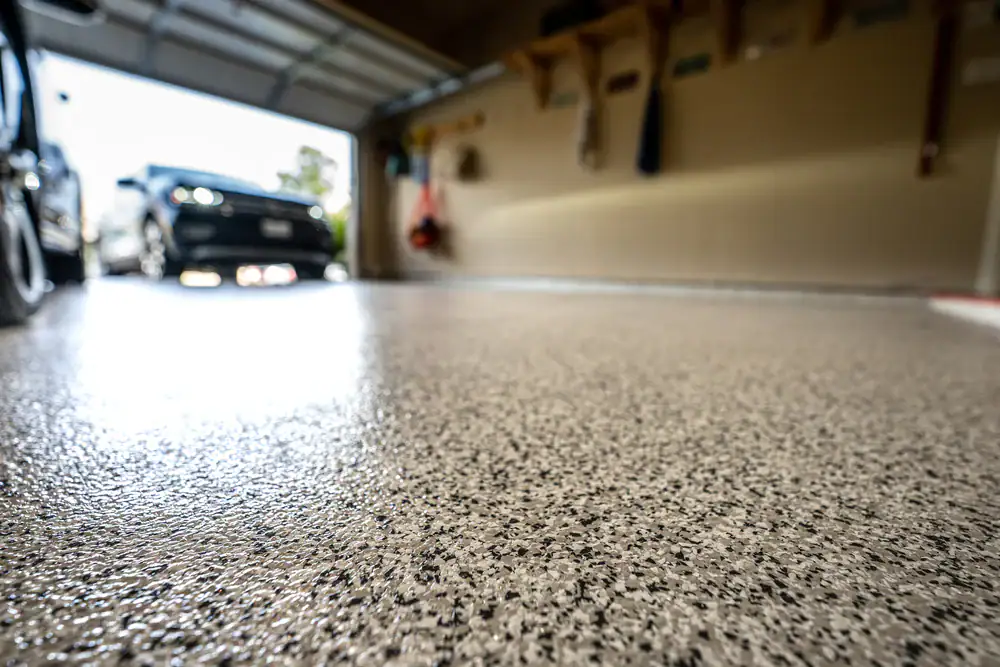
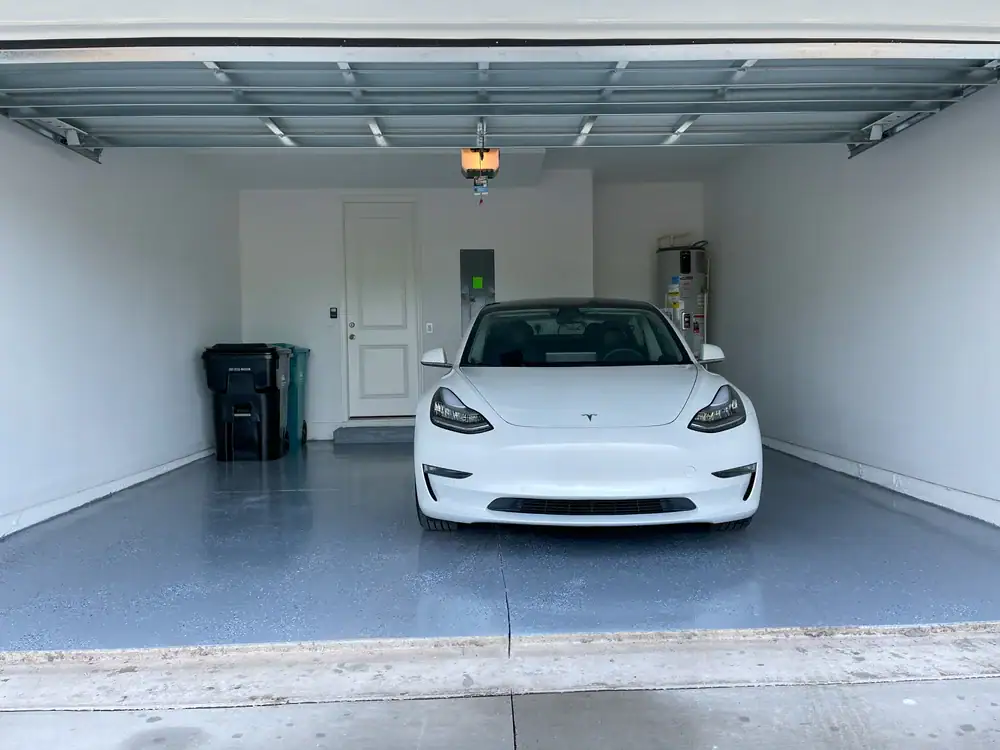
Epoxy flooring changes that. It seals your concrete against moisture, resists stains from gasoline and antifreeze, and holds up under the kind of heat and humidity that makes cheaper coatings bubble and peel within two years. The surface stays smooth, non-porous, and easy to clean with a quick sweep or hose-down.
Most North Bay Village homeowners see their garage as wasted space because the floor looks terrible. Stained concrete. Cracks. Dust that never goes away. An epoxy coating turns that space into something you’d actually want to show off—whether you’re parking a classic car, setting up a workshop, or just tired of looking at a floor that makes your home feel unfinished.
You get a floor that lasts 10 to 20 years with zero special maintenance. No resealing. No waxing. Just a durable surface that keeps looking clean and handles whatever you throw at it. That’s what epoxy does when it’s installed correctly.
North Bay Village Epoxy Flooring Contractor
We’ve been installing epoxy floors across South Florida since 2020. We’ve worked with the Coast Guard, US Army, City of Doral, and City of Sunny Isles—clients who don’t accept shortcuts or second-rate work.
We’re veteran-owned, which means we show up on time, do what we say we’ll do, and don’t leave until the job meets our standards. Most residential garage projects in North Bay Village are done in 24 to 48 hours. We use Sherwin Williams and Fosroc products because they’re proven to handle Florida’s climate without failing.
You won’t get a runaround on pricing or timelines. We walk the space with you, explain what needs to happen, and give you a clear number before we start. No surprises. No upselling once we’re halfway through.
Garage Floor Epoxy Installation Process
First, we prep the concrete. That means grinding down the surface to remove any old coatings, stains, or contaminants that would prevent the epoxy from bonding. We also check for moisture issues—because in Florida, moisture vapor is the number one reason epoxy fails. If your slab has a problem, we address it before we coat anything.
Next, we apply a primer that’s formulated for high-humidity environments. This creates a bond between your concrete and the epoxy system. Then we roll out the epoxy coating itself, which can include color flakes if you want texture and slip resistance.
The floor cures in 24 to 48 hours depending on temperature and humidity. We don’t rush it. Once it’s fully cured, you can park on it, drop tools on it, spill whatever you want—it’s ready. We clean up completely and walk you through basic care, which is mostly just sweeping and occasional mopping. That’s it.

Ready to get started?
What’s Included in Garage Epoxy Services
Every garage floor coating project starts with surface prep. We grind, clean, and repair cracks or damage before any coating goes down. This step matters more than the epoxy itself—skip it, and the floor fails within a year.
You get a moisture test to make sure your concrete can handle epoxy. Florida slabs often have vapor issues that cause coatings to bubble or delaminate. We catch that early and fix it, or recommend an alternative system if needed. You also get a UV-stable epoxy formula that won’t yellow under Florida sun exposure, plus optional color flakes for slip resistance and style.
North Bay Village homeowners deal with salt air, high humidity, and temperature swings that stress flooring systems. We account for all of that in the products we use and the way we install them. Your floor is covered by a warranty that reflects real-world use—not fine print that disappears the first time something goes wrong. Most of our clients are referrals or repeat customers, which tells you how the floors hold up over time.
How long does epoxy flooring last in a Florida garage?
A professionally installed epoxy garage floor typically lasts 10 to 20 years in Florida, assuming it’s installed correctly and you’re not doing anything extreme like dragging heavy equipment across it daily. The lifespan depends mostly on surface prep and the quality of materials used.
Florida’s humidity is tough on coatings. If the installer skips moisture testing or uses a product that isn’t formulated for high-vapor environments, you’ll see bubbling or peeling within 18 months. That’s not an epoxy problem—that’s a prep problem. When the concrete is properly prepped and primed, and the epoxy includes UV stabilizers to prevent yellowing, the floor holds up without needing resealing or special maintenance.
You’ll want to sweep regularly and mop up spills when they happen, but that’s about it. No waxing. No recoating. The floor stays intact because epoxy creates a chemical bond with the concrete, not just a surface layer that wears off.
Why do so many DIY garage epoxy kits fail in Florida?
Over 70% of DIY epoxy installations fail within two years in Florida because the kits don’t account for moisture vapor, and most homeowners don’t have the equipment to prep the surface correctly. You need a concrete grinder to open up the pores of the slab so the epoxy can bond. A quick acid etch or pressure wash doesn’t cut it.
Moisture vapor is the bigger issue. Florida slabs release water vapor that gets trapped under the epoxy and pushes it off the concrete. DIY kits don’t include vapor barriers or moisture-mitigating primers. They also cure too fast in high heat, which causes bubbles and weak spots.
The other problem is thickness. Store-bought kits go on thin, so they don’t have the durability to handle hot tires, impacts, or chemicals. A professional system uses multiple layers—primer, base coat, and topcoat—that add up to a much thicker, tougher surface. You’re not just paying for labor when you hire us. You’re paying for a system that actually works in this climate.
What’s the difference between epoxy and other garage floor coatings?
Epoxy is a two-part chemical system that bonds to concrete at a molecular level. It’s not paint. Paint sits on top of the surface and peels off under heat or moisture. Epoxy becomes part of the slab, which is why it’s so durable.
Polyurethane and polyaspartic coatings are alternatives, and they cure faster than epoxy, but they’re more expensive and don’t always bond as well to concrete that has moisture issues. Epoxy is the most proven option for residential garages in Florida because it handles humidity, resists chemicals, and costs less than the alternatives.
Some contractors use a hybrid system—epoxy base with a polyaspartic topcoat—to get the best of both. That gives you the strong bond of epoxy with the fast cure time and UV resistance of polyaspartic. It depends on your timeline and budget, but straight epoxy is still the most common choice for garage floors because it works and it lasts.
How much does garage floor epoxy cost in North Bay Village?
Most residential garage epoxy projects in North Bay Village run between $3 and $12 per square foot, depending on the condition of your concrete, the type of epoxy system you choose, and whether you want decorative flakes or a solid color. A standard two-car garage is around 400 to 600 square feet, so you’re looking at $1,200 to $7,200 for a complete install.
The low end of that range is basic epoxy with minimal prep. The high end includes crack repair, moisture mitigation, premium coatings, and decorative options. If your slab has serious damage or moisture problems, the cost goes up because we have to fix those issues before we can coat anything.
DIY kits cost $200 to $600, but you’ll spend that again in a year or two when the coating fails and you have to redo it. A professional install costs more upfront, but it’s a one-time expense that lasts 10 to 20 years. You also get a warranty and a floor that actually holds up to Florida weather, which the DIY kits don’t offer.
Can epoxy flooring be applied over cracked or damaged concrete?
Yes, but the cracks need to be repaired first. Epoxy won’t fix structural problems—it just coats the surface. If your concrete has cracks, we fill them with an epoxy-based filler or a polyurea joint filler that flexes with the slab. That keeps the crack from telegraphing through the coating or getting worse over time.
Small hairline cracks aren’t usually a problem. Larger cracks or areas where the concrete is flaking or spalling need more work. We grind down the damaged areas, fill them, and level everything out before the epoxy goes on. If the slab is severely damaged or has major settling issues, epoxy might not be the right solution—you’d need to address the underlying problem first.
The key is honest assessment. Some contractors will coat over anything to get the job done fast. We won’t install epoxy on a slab that’s going to fail, because that just wastes your money and damages our reputation. If your concrete needs repair, we’ll tell you upfront and give you options.
Is epoxy flooring slippery when wet in a garage?
Smooth epoxy can be slippery when wet, but most garage floors include color flakes or an anti-slip additive that creates texture. The flakes are small chips of vinyl or acrylic that get broadcast into the wet epoxy. They add grip, hide imperfections, and give the floor a finished look.
If you’re worried about slip resistance, we can add more flakes or use a grit additive in the topcoat. That gives you a slightly rougher surface that’s easier to walk on when the floor is wet from rain, snow melt, or washing your car. It’s not sandpaper-rough—just enough texture to keep you from sliding.
The other factor is the topcoat itself. Some epoxies dry glossy and smooth, which looks great but can be slick. A matte or satin finish topcoat reduces gloss and improves traction without sacrificing durability. We’ll walk you through the options based on how you use your garage and what kind of traffic the floor will see.
Other Services we provide in North Bay Village
Leave a Reply