


Garage Epoxy Flooring in Pahokee, FL
Floors That Handle Florida’s Worst Days
Hear from Our Customers
Epoxy Garage Floor Solutions in Pahokee
You’re not just covering concrete. You’re stopping moisture from creeping up through the slab, preventing mold growth in Florida’s humidity, and creating a surface that shrugs off oil, gasoline, and battery acid without staining.
Pahokee’s sandy soil shifts after heavy rain. That movement cracks concrete, and those cracks widen over time. An epoxy floor coating seals the surface and adds a protective layer that keeps moisture out and prevents further deterioration.
The result is a garage floor that’s easier to clean, safer to walk on, and looks sharp for years. No more dark oil spots, no mysterious moisture rings, no peeling paint. Just a smooth, sealed surface that handles whatever you throw at it.
Trusted Epoxy Flooring Contractor in Pahokee
We’ve installed epoxy flooring for the U.S. Military, Coast Guard, City of Doral, City of Sunny Isles, and schools across Florida since 2020. When government facilities need floors that last, they call us.
We use Sherwin Williams and Fosroc products because they perform in Florida’s climate. Our installations are fast—most garage floors are done in a day—and we offer transparent pricing with one-on-one consultations. No surprises, no runaround.
If you’re in Pahokee or anywhere in Palm Beach County, we understand what your concrete is up against. We’ve seen what humidity and soil movement do to untreated floors, and we know how to fix it right.
Our Garage Floor Coating Process
First, we prep the concrete. That means grinding down the surface to remove any old coatings, sealers, or contaminants. This step is critical—if the concrete isn’t properly prepared, the epoxy won’t bond correctly, and you’ll have problems down the road.
Next, we repair any cracks or damage. Florida’s soil conditions cause concrete to crack, and we address those issues before applying anything. We fill cracks with the right materials so they don’t telegraph through the coating.
Then we apply the epoxy system in layers. We use a product line designed to bond permanently with the concrete substrate—not just sit on top of it. The coating is chemical-resistant, moisture-resistant, and built to handle vehicle traffic, spills, and Florida’s heat.
Most garage floors are finished in one day. You’ll need to stay off it for 24 hours, and we recommend waiting 48 hours before parking a vehicle. After that, it’s ready for whatever you need it to do.

Ready to get started?
What’s Included in Garage Epoxy Services
Every garage floor coating project includes surface preparation, crack repair, and a multi-layer epoxy system. We don’t skip steps. If your concrete has moisture issues or structural problems, we address them before we coat anything.
In Pahokee, moisture is a constant issue. Florida’s water table is high, and vapor rises through concrete pores. We use moisture mitigation techniques when needed to prevent the coating from failing. That might mean additional prep work, but it’s the difference between a floor that lasts 15 years and one that peels in two.
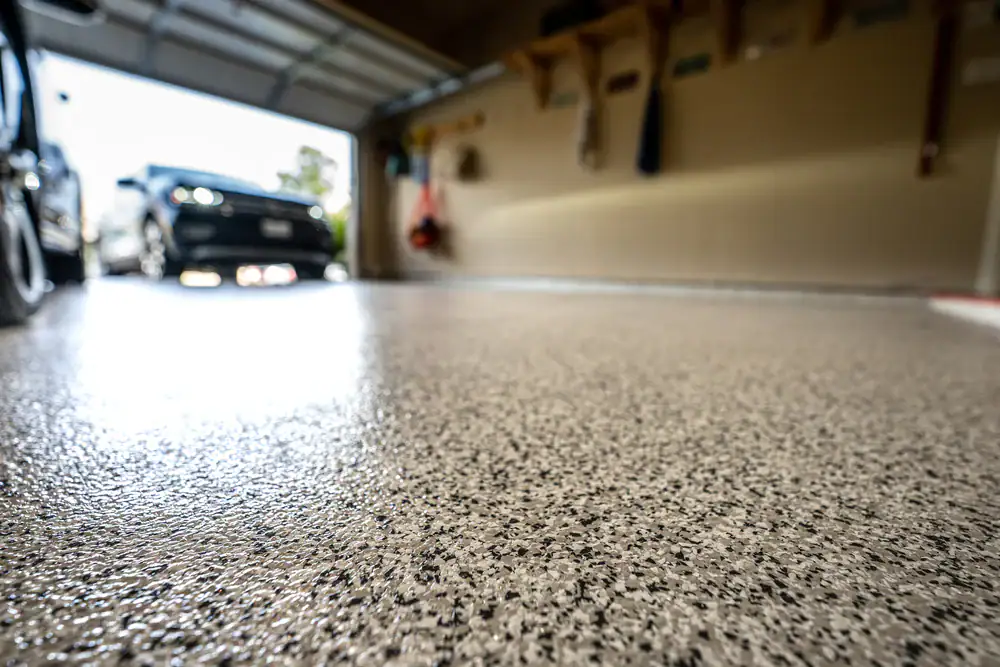
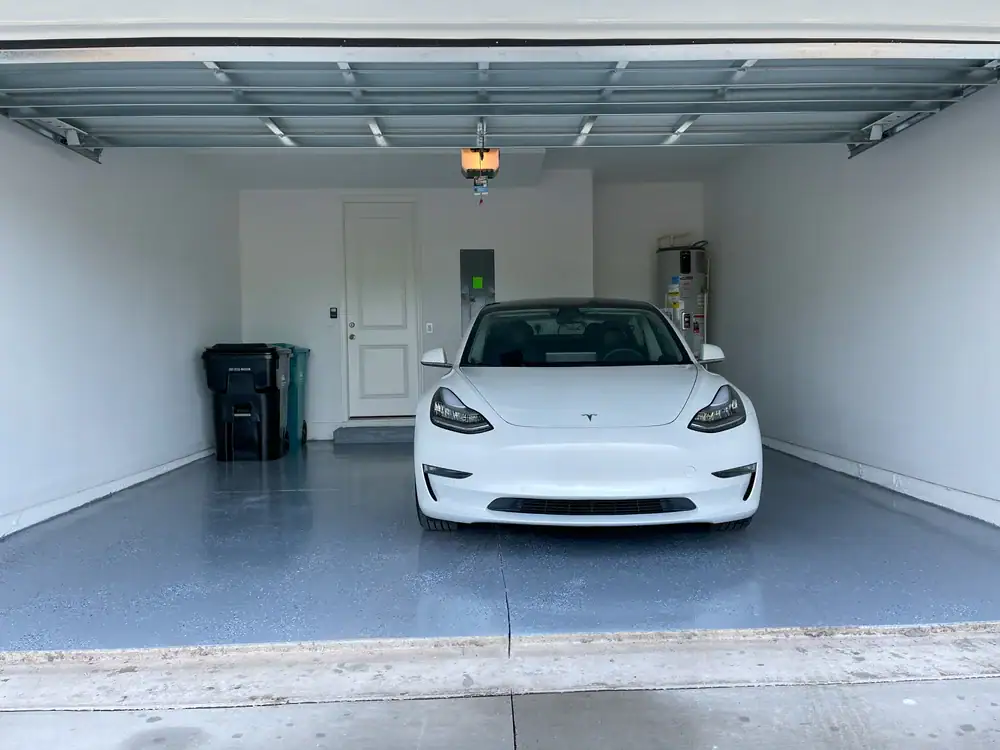
You also get a finish that’s customizable. We offer designer color options if you want something beyond standard gray. The surface is high-gloss, which reflects light and makes your garage brighter. It’s also slip-resistant and easy to maintain—just sweep or hose it off.
We handle commercial and residential projects. If you need safety line striping, concrete resurfacing, or polished concrete, we do that too. Our focus is on epoxy and resin systems, and we’ve been doing this long enough to know what works in Florida’s climate.
How long does epoxy garage flooring last in Florida’s climate?
A professionally installed epoxy garage floor lasts 15 to 20 years in Florida if it’s done right. The key is proper surface prep and using a coating system designed for moisture and heat.
Florida’s humidity and temperature swings are tough on coatings. Cheap DIY kits peel because they don’t bond well to concrete, and they’re not designed to handle moisture vapor rising from the ground. We use commercial-grade epoxy systems that create a permanent bond with the concrete substrate.
You’ll also need to make sure the concrete is properly prepared before installation. If there are existing sealers, oils, or contaminants on the surface, the epoxy won’t stick. That’s why surface grinding and crack repair are non-negotiable steps in the process.
Will epoxy flooring prevent mold and mildew in my garage?
Yes. Epoxy creates a non-porous, sealed surface that prevents moisture from sitting on or soaking into the concrete. That eliminates the damp conditions where mold and mildew grow.
Concrete is porous, which means it absorbs moisture from the air and from the ground. In Pahokee’s humid climate, that moisture creates an ideal environment for mold, especially in garages that don’t have great ventilation. Once you seal the concrete with epoxy, moisture can’t penetrate the surface.
The coating is also easy to clean, so if water does get on the floor, you can wipe it up or hose it off without worrying about it seeping into the concrete. That keeps your garage cleaner and healthier overall.
Can epoxy flooring be applied over cracked or damaged concrete?
Yes, but the cracks need to be repaired first. We fill and seal cracks before applying the epoxy so they don’t show through the coating or cause future problems.
Pahokee’s sandy soil shifts after heavy rain, and that movement causes concrete slabs to crack. If you just coat over those cracks without fixing them, they’ll continue to widen, and the epoxy will eventually crack too. We use flexible fillers and repair materials that move with the concrete and prevent further damage.
In some cases, if the concrete is severely damaged or has major structural issues, we’ll recommend resurfacing or other repairs before installing the epoxy. It’s better to address those problems upfront than to coat over them and deal with failure later.
How do I maintain an epoxy garage floor?
Maintenance is simple. Sweep or blow off dirt and debris regularly, and mop with water or a mild cleaner when needed. The surface is non-porous, so dirt sits on top instead of soaking in.
If you spill oil, gasoline, or other chemicals, wipe them up when you can. Epoxy is chemical-resistant, so these spills won’t stain or damage the coating, but it’s still good practice to clean them up. You don’t need special cleaners or treatments—just basic cleaning keeps the floor looking good.
Avoid using harsh acids or solvents for cleaning, even though the epoxy can handle them. Stick with pH-neutral cleaners or plain water. If you want to add extra protection, you can apply a topcoat every few years, but it’s not required with a quality epoxy system.
How much does garage epoxy flooring cost in Pahokee?
Cost depends on the size of your garage, the condition of the concrete, and the type of epoxy system you choose. Most residential garage floors range from a few hundred to a few thousand dollars.
If your concrete needs extensive crack repair, moisture mitigation, or resurfacing, that adds to the cost. But those repairs are necessary if you want the coating to last. Skipping them to save money upfront usually means you’ll pay more later when the coating fails.
We offer transparent pricing and one-on-one consultations. We’ll assess your concrete, explain what needs to be done, and give you a clear quote before we start. No surprises, no hidden fees. We also have a longstanding relationship with Sherwin Williams, which lets us offer better pricing on high-quality products.
Can I use my garage the same day the epoxy is installed?
No. You’ll need to stay off the floor for at least 24 hours after installation, and we recommend waiting 48 hours before parking a vehicle on it.
Epoxy needs time to cure properly. Walking on it too soon can leave marks or damage the finish. Parking a car on it before it’s fully cured can cause tire marks or indentations. Most installations are done in one day, but the curing process takes a bit longer.
After 48 hours, the floor is ready for normal use. It will continue to harden over the next week or so, reaching full strength and chemical resistance. We’ll give you specific instructions based on the products we use and the conditions in your garage during installation.
Other Services we provide in Pahokee
Leave a Reply