


Garage Epoxy Flooring in Palm Beach Shores, FL
Garage Floors That Actually Hold Up in Florida
Hear from Our Customers
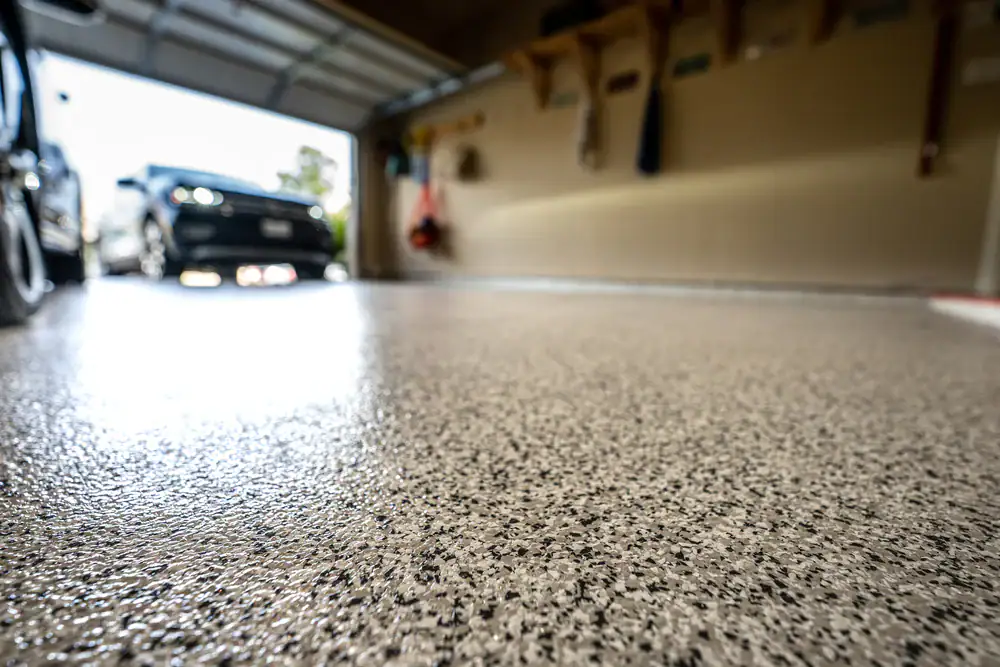
Epoxy Flooring Built for Palm Beach Shores
You’ve seen it happen. The stains that won’t come out. The cracks spreading across your concrete after heavy rain shifts the sandy soil underneath. The coating you paid for that started bubbling up six months later because it couldn’t handle Florida humidity.
Your garage floor takes a beating. Hot tires from sitting in the sun. Oil drips. Spilled chemicals. Moisture creeping in during rainy season. Most coatings aren’t built for that kind of punishment, especially not in South Florida.
A professionally installed epoxy floor coating changes that. You get a surface that resists stains, handles the heat, and doesn’t peel when humidity spikes. It’s the difference between repainting every few years and having a floor that still looks sharp a decade later. The concrete underneath stays protected. The surface stays cleanable. And you stop worrying about what your garage floor looks like when you pull in.
Professional Epoxy Contractors in Palm Beach Shores
We handle epoxy flooring and concrete resurfacing across Palm Beach Shores and throughout Florida. We work directly with homeowners and commercial property owners who want their floors done right the first time.
Our crews have installed epoxy systems for the Coast Guard, US Military facilities, the City of Doral, and Sunny Isles. We use Sherwin Williams and Fosroc products because they perform in Florida’s climate. We don’t subcontract the work. We show up, give you transparent pricing, and finish the job fast.
Most residential garage projects wrap up in 24 to 48 hours. You’re not waiting weeks to park in your own garage again.
Our Garage Floor Coating Process
First, we prep the surface. That means diamond grinding or shot blasting to remove any old coatings, oils, or contaminants. This step matters more than most people realize. If the concrete isn’t properly prepared, nothing sticks long-term.
Next, we repair cracks and address any moisture issues. Florida’s sandy soil shifts after storms, so we make sure your slab is stable before we coat it. We adjust our resin ratios based on real-time humidity readings because South Florida conditions demand it.
Then we apply the epoxy floor coating system. Depending on what your garage needs, that could be a standard epoxy system at 8 to 12 mils or a high-performance polyaspartic system reaching 60 to 100 mils for maximum durability. We finish with a topcoat that resists UV damage, chemicals, and abrasion.
The floor cures fast. You’re usually back to normal use within a day or two. And you’re looking at a system that holds up for 10 to 20 years with minimal maintenance.
Ready to get started?
Garage Epoxy Services in Palm Beach Shores
You get a moisture-resistant coating that won’t bubble during Florida’s rainy season. The epoxy bonds to your concrete at the molecular level when the surface is prepped correctly. That means it doesn’t peel when hot tires sit on it or when humidity climbs.
The finish resists oil, gasoline, brake fluid, and most household chemicals. Spills wipe up instead of soaking in. You’re not scrubbing stains out of bare concrete anymore.
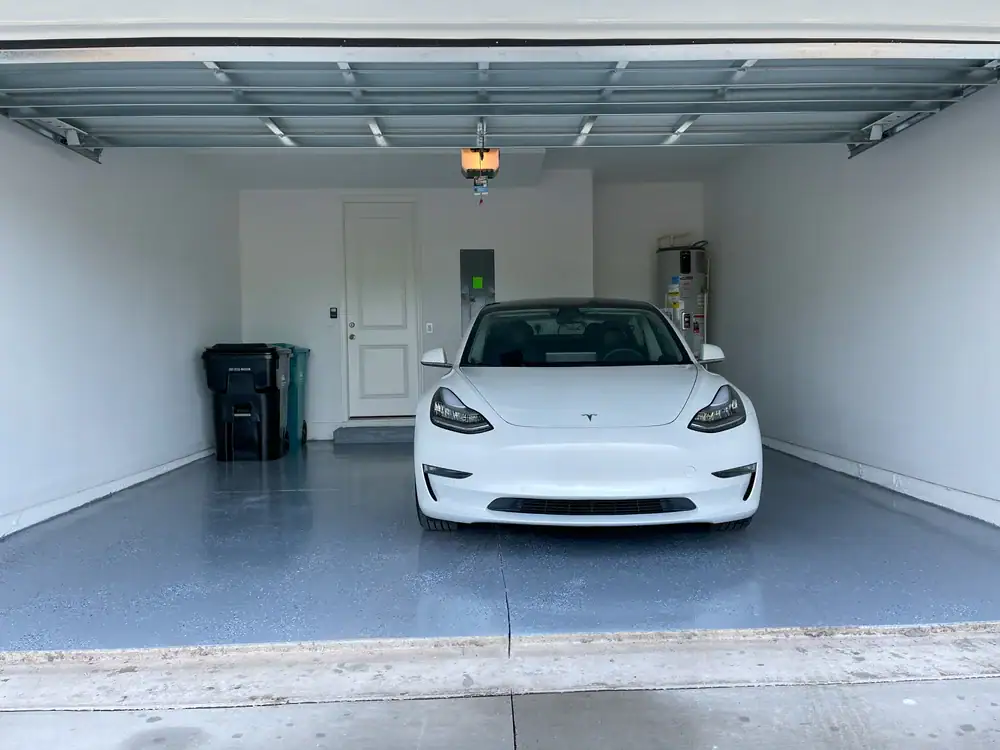
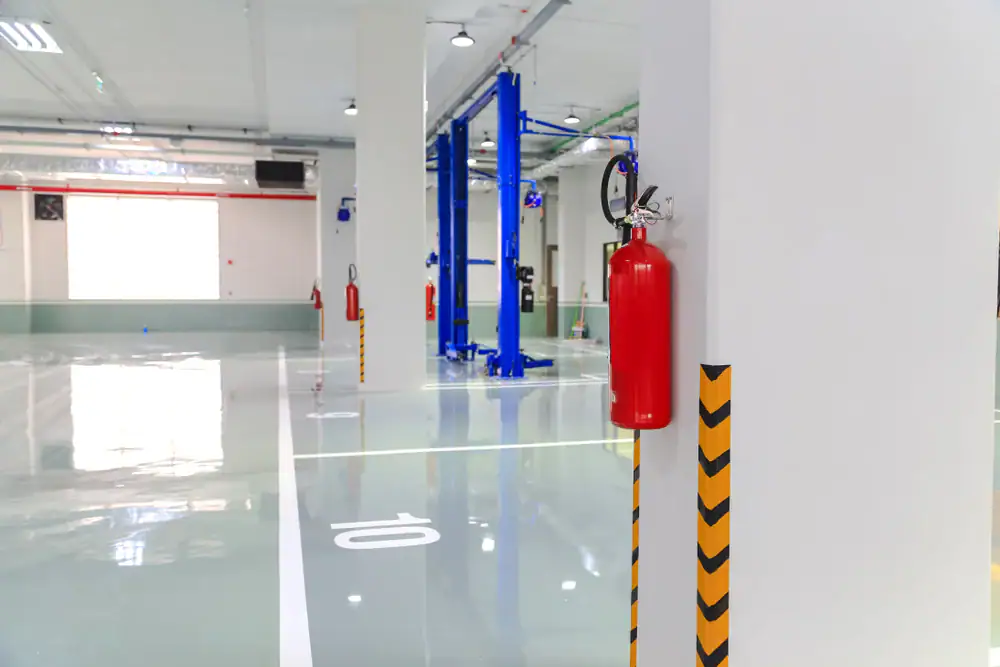
In Palm Beach Shores, garages aren’t just for cars. They’re workshop space, storage, sometimes even entertaining areas. A finished epoxy garage floor makes the space usable. It brightens the room because the coating reflects light. It keeps dust down. And it adds real value to your property—most Miami-area homes see a $2,000 to $8,000 increase in value after a professional garage floor installation.
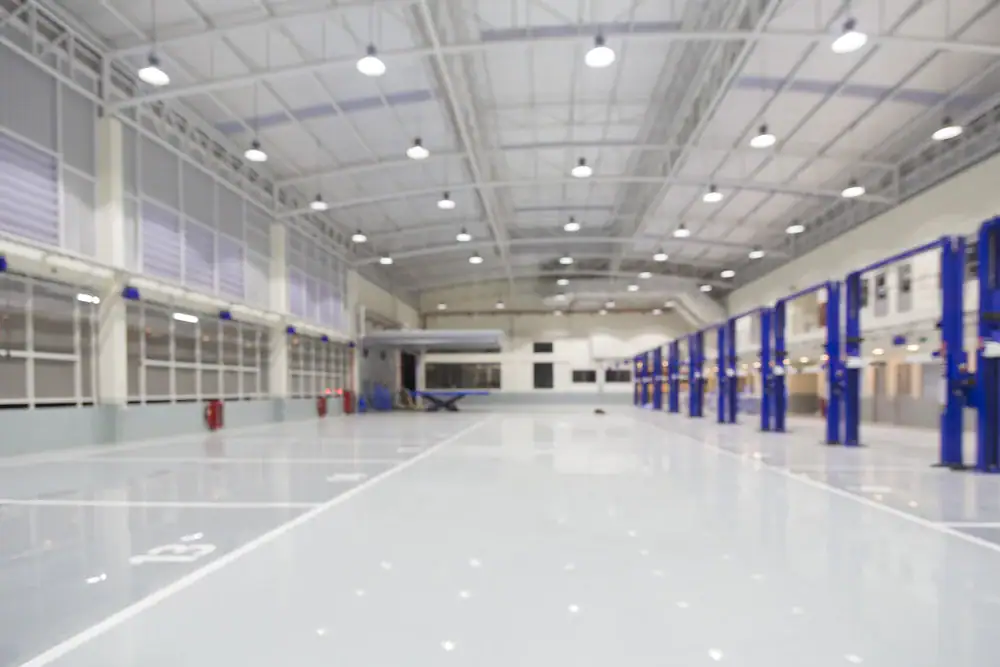
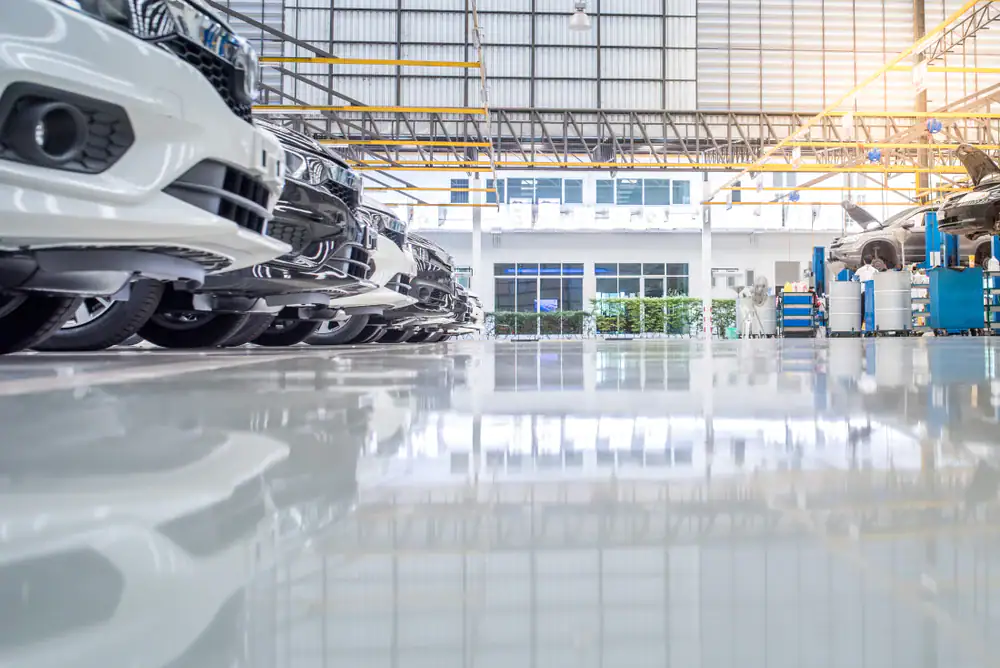
We also handle commercial applications. Warehouses, retail spaces, municipal facilities. The same principles apply: proper prep, climate-appropriate materials, and a finish that lasts.
How long does garage epoxy flooring actually last in Florida?
A professionally installed epoxy garage floor in Palm Beach Shores typically lasts 10 to 20 years. That’s assuming proper surface preparation and a coating system designed for Florida’s climate.
The lifespan depends on a few factors. High-performance polyaspartic systems with 60 to 100 mils of coating outlast standard epoxy systems that only go 8 to 12 mils thick. How you use the garage matters too. A floor that sees daily car traffic and occasional chemical spills will wear differently than one used for light storage.
Florida’s heat and humidity are the real test. Inferior coatings bubble and peel within a year or two because they can’t handle moisture vapor coming up through the concrete or the thermal expansion from hot tires. Systems that use proper moisture barriers and UV-stable resins hold up. That’s why we adjust our installation process based on humidity readings and use products from Sherwin Williams and Fosroc that are proven in tropical climates.
Why do some epoxy garage floors fail so quickly?
Most failures come down to surface preparation. If the concrete isn’t properly cleaned and profiled, the epoxy doesn’t bond. It just sits on top. Then hot tires, moisture, or thermal stress lift it right off.
DIY kits from big box stores skip the crucial prep steps. They don’t include diamond grinding or shot blasting equipment. They assume your concrete is ready to coat, which it almost never is. Oil stains, old sealers, and surface contaminants prevent adhesion. You end up with a coating that looks good for a few months, then starts peeling at the edges.
The other common issue is using the wrong product for Florida. Standard epoxy formulas designed for northern climates can’t handle our humidity levels. Moisture vapor pushes up through the concrete slab, especially during rainy season, and creates bubbles under the coating. We use moisture-resistant systems and apply them when conditions are right. We also adjust resin ratios based on temperature and humidity at the time of installation. Those details make the difference between a floor that lasts two years and one that lasts twenty.
What’s the difference between epoxy and other garage floor coatings?
Epoxy creates a thicker, more durable surface than paint or basic concrete sealers. Paint sits on top of concrete and wears off quickly under tire traffic. Epoxy bonds chemically to the concrete when applied correctly, becoming part of the surface rather than just a layer on top.
Polyaspartic coatings are newer and cure faster than traditional epoxy. They’re more UV-stable, which matters in Florida where sunlight exposure can yellow some epoxy formulas. Polyaspartic systems also handle temperature extremes better. The downside is cost—they run higher than standard epoxy. For most residential garages in Palm Beach Shores, a quality epoxy system offers the best balance of performance and price.
Concrete stains and sealers are cheaper but don’t provide the same protection. They won’t stop oil from soaking in or prevent cracks from spreading. Epoxy floor coating accounts for over 40% of the floor coating market because it delivers actual durability at a reasonable cost. You’re looking at a surface that resists chemicals, hides imperfections in the concrete, and cleans up easily. That’s hard to beat for garage applications.
How much does professional garage epoxy flooring cost in Palm Beach Shores?
Most residential garage epoxy installations in Palm Beach Shores run between $3 and $12 per square foot, depending on the system you choose and the condition of your existing concrete. A standard two-car garage (400 to 500 square feet) typically costs $1,200 to $6,000.
The price varies based on a few factors. If your concrete needs extensive crack repair or has moisture issues, that adds to the prep work. High-performance polyaspartic systems cost more than standard epoxy but last longer and cure faster. Decorative options like color flakes or metallic finishes increase the price but also increase your home’s value—finished garages in South Florida can add $2,000 to $8,000 to property values.
We give transparent pricing after a 1-on-1 consultation. We’re not working through general contractors or paying for expensive pay-per-call leads, so you’re not covering those markups. You’re paying for materials, labor, and a system that’s built to last in Florida’s climate. We can usually turn around a residential project in 24 to 48 hours, which means less disruption to your routine.
Can epoxy flooring handle Florida’s humidity and heat?
Yes, but only if it’s installed correctly with the right products. Florida’s climate is brutal on floor coatings. Temperatures inside garages regularly exceed 100°F. Humidity spikes during rainy season. Hot tires transfer heat directly to the floor surface. Moisture vapor pushes up through concrete slabs.
Standard epoxy systems fail in these conditions if the installer doesn’t account for them. We adjust our resin ratios based on real-time humidity and temperature readings. We use moisture-resistant primers when needed. And we only work with Sherwin Williams and Fosroc products that are proven in tropical climates.
The coating itself needs to be UV-stable so it doesn’t yellow or chalk when exposed to sunlight coming through garage windows. It needs flexibility to handle thermal expansion without cracking. And it needs a proper cure time—rushing the process in high heat causes problems down the line. Our crews have installed epoxy systems for military facilities and municipal projects throughout South Florida. We know what holds up and what doesn’t. The key is using commercial-grade materials and following installation protocols designed for this specific environment, not just copying what works in Arizona or Colorado.
Is epoxy flooring worth it compared to just painting the garage floor?
Garage floor paint costs less upfront but needs to be reapplied every one to three years. Epoxy lasts 10 to 20 years. You’re either paying a little bit repeatedly or paying once for a permanent solution.
Paint doesn’t bond to concrete the way epoxy does. It sits on the surface and wears off under tire traffic, especially when hot tires are involved. It won’t stop oil stains from soaking into the concrete. And it doesn’t protect the slab itself from moisture damage or cracking.
Epoxy floor coating creates a sealed, chemical-resistant surface. Spills wipe up instead of staining. The concrete underneath stays protected from moisture and salt intrusion. The floor looks cleaner and brighter because the coating reflects light. And when you go to sell your home, buyers notice. Real estate agents report that 67% of buyers aged 25 to 40 will pay a premium for homes with finished garages.
If you’re planning to stay in your Palm Beach Shores home for more than a few years, epoxy makes financial sense. You’re not repainting every summer. You’re not scrubbing stains that won’t come out. And you’re adding real value to your property while making your garage actually usable as more than just a place to park.
Other Services we provide in Palm Beach Shores
Leave a Reply