


Garage Epoxy Flooring in Princeton, FL
Turn Your Garage Into Usable Space Again
Hear from Our Customers
Professional Epoxy Garage Floor Solutions
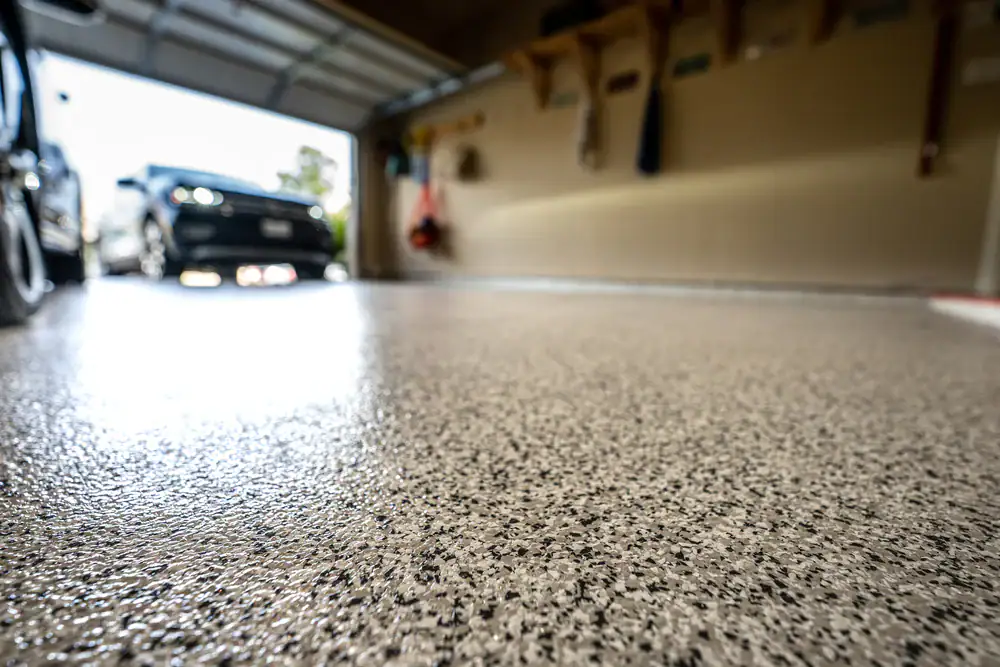
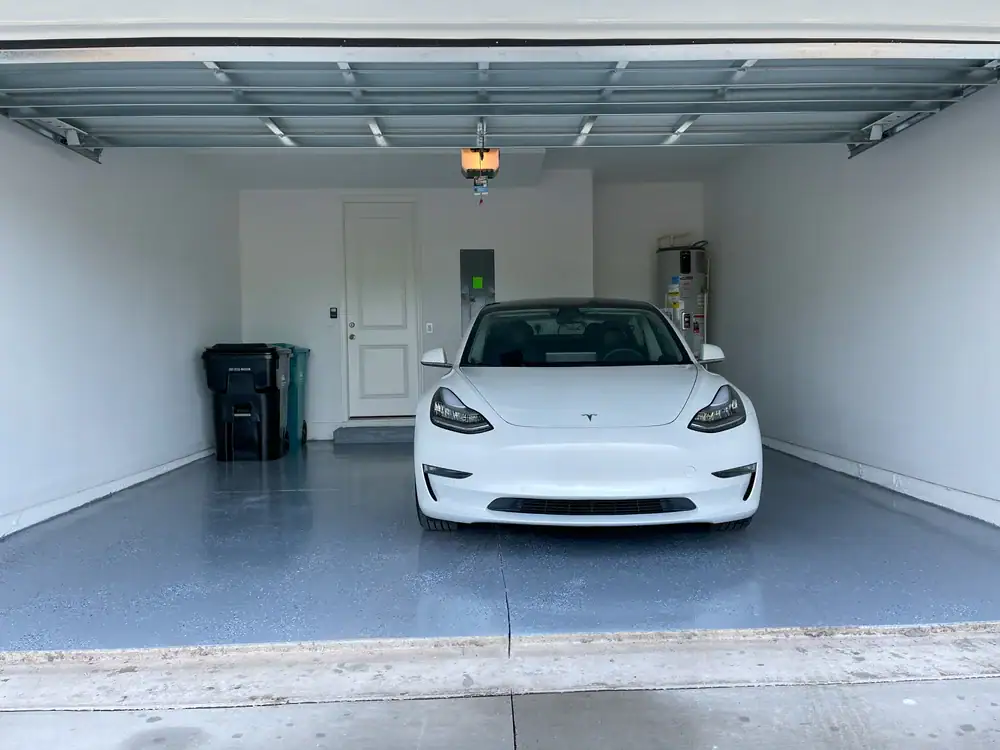
Your garage floor cracks because Princeton sits on sandy soil that shifts after every heavy rain. Water seeps in, concrete settles unevenly, and those hairline cracks turn into real problems. An epoxy garage floor seals out moisture before it becomes mold, protects against oil stains that never come out of bare concrete, and gives you a surface that actually cleans with a quick hose-down.
Florida’s humidity makes cheap coatings bubble and peel within months. Professional-grade epoxy floor coating bonds to properly prepped concrete and flexes with temperature changes instead of cracking. You’re looking at 10 to 20 years of protection when it’s done right.
Most Princeton homeowners spend between $1,100 and $4,300 for a two-car garage, depending on the system and finish. That breaks down to around $3 to $12 per square foot. Compare that to replacing cracked concrete or dealing with constant repairs, and the math makes sense.
Trusted Garage Floor Coating Contractor
We’ve been installing epoxy flooring across South Florida since 2020. We’ve worked with the U.S. Military, Coast Guard, City of Doral, City of Sunny Isles, and county facilities that demand floors tough enough for heavy equipment and constant traffic.
Princeton homeowners get the same systems and attention to detail. We use Sherwin Williams and Fosroc products because they perform in Florida’s climate. We don’t subcontract your job or hand you off to a general contractor. You talk directly to the people doing the work, get transparent pricing upfront, and we follow up after installation to make sure everything holds up.
Most garage floor projects in Princeton wrap up in 24 to 48 hours. We prep the concrete properly, apply the coating system in the right conditions, and give you a realistic cure time before you can park on it.
Our Garage Epoxy Flooring Process
First, we assess your concrete. If there’s existing coating that’s failing, it comes off completely. Cracks get filled and leveled. The surface gets diamond-ground to open up the pores so the epoxy actually bonds instead of sitting on top like a sticker.
Next, we apply a moisture barrier primer. This is critical in Princeton because ground moisture will push up through concrete and ruin any coating that doesn’t account for it. Then comes the base epoxy layer, followed by color flakes or your chosen finish, and finally a clear topcoat that adds UV resistance and makes the floor easier to clean.
Cure time depends on temperature and humidity, but you’re usually looking at 24 hours before you can walk on it and 72 hours before parking a vehicle. We don’t rush this part. A coating that cures properly lasts decades. One that gets rushed starts peeling within a year.
You’ll get a walkthrough before we leave, plus care instructions. Epoxy garage flooring doesn’t need much maintenance, but knowing how to clean it properly keeps it looking new.

Ready to get started?
What’s Included in Garage Floor Painting
Every garage floor coating project includes full surface preparation. That means grinding, crack repair, and cleaning to remove oil, dirt, and any contaminants that would prevent adhesion. We don’t skip this step to save time. It’s the difference between a floor that lasts two years and one that lasts twenty.
You get a moisture barrier system designed for Florida’s water table and humidity levels. Princeton’s soil holds water, and that moisture moves up through concrete slabs. Standard epoxy systems fail here because they weren’t built for this climate. We use systems that account for it.
The finish options range from solid colors to metallic effects to slip-resistant textures. If you’re using your garage as a workshop, gym, or showroom space, we can add safety line striping or custom logos. The topcoat is UV-resistant so it won’t yellow under Florida sun that comes through garage windows or open doors.
Most Princeton garages are 400 to 500 square feet for a two-car setup. We give you an exact quote after measuring and assessing the concrete condition. No surprises, no upselling once we start. The price we quote is what you pay.
How long does epoxy flooring last in Florida’s humidity?
Professional epoxy garage floor systems last 10 to 20 years in Florida when installed correctly. The key is proper surface prep and using a moisture barrier primer. Florida’s humidity doesn’t damage epoxy itself, but it will cause cheap coatings or DIY kits to bubble and peel because moisture gets trapped underneath.
Princeton’s climate means your concrete is constantly absorbing and releasing moisture. A professional system accounts for this with primers that let the concrete breathe while keeping water from pushing up into the coating layers. We also apply epoxy in controlled conditions, not during a rainstorm or when humidity is spiking, because that affects how the coating cures.
You’ll see DIY epoxy kits at home improvement stores for a fraction of the cost. Those fail in Florida within 12 to 18 months because they’re single-component systems that weren’t designed for high-moisture environments. You end up ripping it out and starting over, which costs more than doing it right the first time.
What causes garage floor coatings to peel or bubble?
Peeling happens when the coating never bonded to the concrete properly. Usually that’s because the surface wasn’t prepped right. Oil stains, dirt, existing sealers, or smooth concrete all prevent epoxy from grabbing hold. We diamond-grind the surface to open up the pores and give the epoxy something to lock into.
Bubbling is almost always moisture-related. In Princeton, ground moisture pushes up through concrete slabs, especially after heavy rain. If there’s no moisture barrier, that water gets trapped under the epoxy and creates bubbles as it tries to escape. Once bubbling starts, the coating is compromised and won’t protect your concrete anymore.
Temperature during application also matters. If it’s too hot, the epoxy cures too fast and doesn’t bond fully. Too cold, and it doesn’t cure hard enough. We monitor conditions and won’t start a job if the weather isn’t right. That’s why you see so many failed coatings in Florida – contractors rushing jobs without accounting for climate factors.
Can you apply epoxy over cracked or damaged concrete?
Yes, but the cracks need to be repaired first. Epoxy floor coating isn’t a crack filler. It’s a protective layer that bonds to stable concrete. If your slab is cracked, we fill and level those areas with epoxy mortar or polyurethane crack filler depending on the width and depth.
Princeton garages often have cracks from soil settlement. Florida’s sandy soil shifts when it gets saturated, and concrete slabs lose support underneath. Small cracks turn into bigger ones if you ignore them. We assess whether the slab is still structurally sound or if there’s ongoing movement that would just crack the coating later.
For floors with extensive damage, concrete resurfacing might make more sense before coating. That involves applying a thin overlay that creates a new, level surface. Then the epoxy goes on top of that. It adds to the cost upfront but gives you a floor that looks brand new and will hold up for decades instead of showing every old crack through the coating.
How much does garage floor coating cost in Princeton?
Most two-car garages in Princeton run between $1,100 and $4,300 depending on the system, surface condition, and finish you choose. That’s for roughly 400 square feet. Single-car garages cost $720 to $2,900. The price breaks down to $3 to $12 per square foot installed.
Basic solid-color epoxy with standard flakes sits at the lower end. Metallic finishes, custom colors, or hybrid systems with polyaspartic topcoats cost more but offer better UV resistance and faster cure times. If your concrete needs extensive crack repair or has old coating that needs removal, that adds to the prep work and the total cost.
We give you transparent pricing after seeing your garage. No pressure, no upselling once we start. You’ll know exactly what you’re paying for and why. Some contractors quote low to get in the door, then add charges for “unexpected” prep work. We’ve seen the tricks. That’s not how we operate. You get one price, and that’s what you pay when the job’s done.
What’s the difference between epoxy and polyurea garage coatings?
Polyurea cures faster and has more flexibility, which helps with temperature swings. Epoxy offers better adhesion and chemical resistance, plus more finish options like metallics and custom colors. Both work in Florida, but they’re suited for different priorities.
If you need your garage back in service immediately, polyurea can be ready for vehicle traffic in 24 hours. Epoxy typically needs 72 hours for full cure. But epoxy creates a harder surface that stands up better to hot tire pickup, where tires can pull coating off the floor when it’s hot outside and you’ve been driving.
For Princeton homeowners, we often recommend hybrid systems that use epoxy as the base for adhesion and chemical resistance, then a polyaspartic or polyurethane topcoat for UV protection and faster cure. You get the benefits of both without the drawbacks of either one alone. It costs slightly more than straight epoxy, but the performance difference is noticeable, especially if your garage gets direct sunlight.
Do I need to move everything out of my garage?
Yes. We need complete access to the floor to prep and coat it properly. That means vehicles, storage shelves, toolboxes, everything comes out. If you have built-in cabinets or workbenches, we can work around those, but the floor underneath needs to be clear.
Most Princeton homeowners use their driveway or rent a small storage unit for a few days. The actual work takes 24 to 48 hours, but you need to factor in cure time before moving heavy items back in. We can walk you through the timeline when we schedule your project so you’re not caught off guard.
If your garage is packed and you’re not sure how to handle the logistics, let us know during the consultation. We’ve helped plenty of customers figure out temporary storage solutions. The key is planning ahead so the job doesn’t get delayed once we’re ready to start. A little prep work on your end makes the whole process smoother and gets you back to using your garage faster.
Other Services we provide in Princeton
Leave a Reply