


Garage Epoxy Flooring in Royal Palm Beach, FL
Florida-Proof Garage Floors That Actually Last
Hear from Our Customers
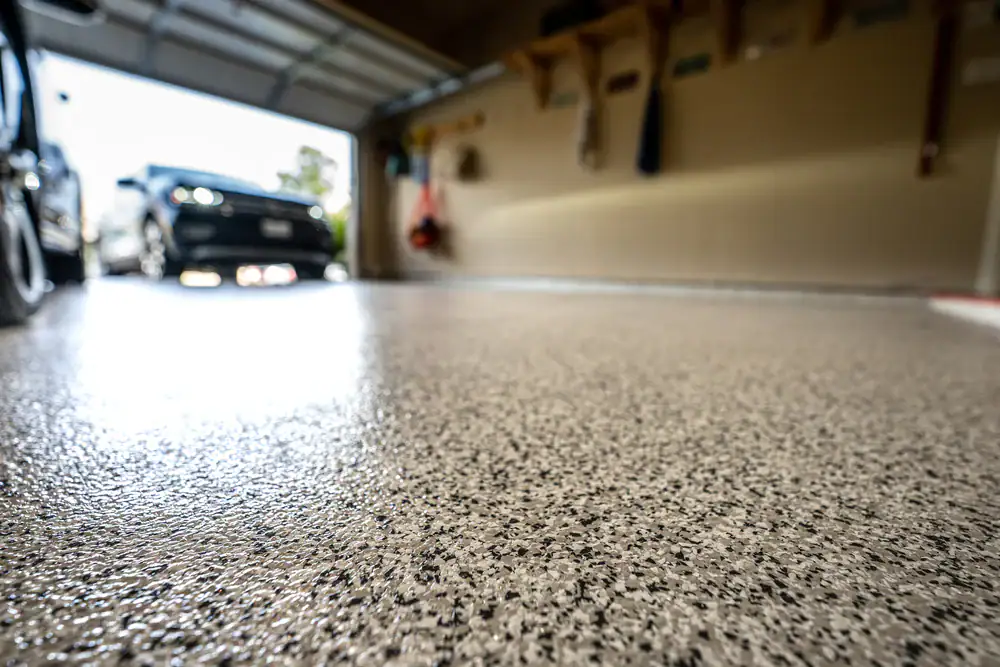
Epoxy Garage Floor Coating Solutions
You’re dealing with concrete that sweats in summer, stains that won’t come out, and cracks that keep spreading. Royal Palm Beach’s humidity doesn’t help. Most garage floors weren’t built to handle Florida’s moisture levels, and it shows.
A proper epoxy floor coating changes that. You get a surface that resists moisture from below and humidity from above. No more sweating concrete in July. No more oil stains that soak in and stay forever.
The floor cures hard enough to handle whatever you roll over it. It’s sealed tight enough that spills wipe up instead of soaking in. And if it’s installed right, accounting for Florida’s moisture and temperature swings, it lasts 10 to 20 years without the peeling or yellowing you see with cheap jobs.
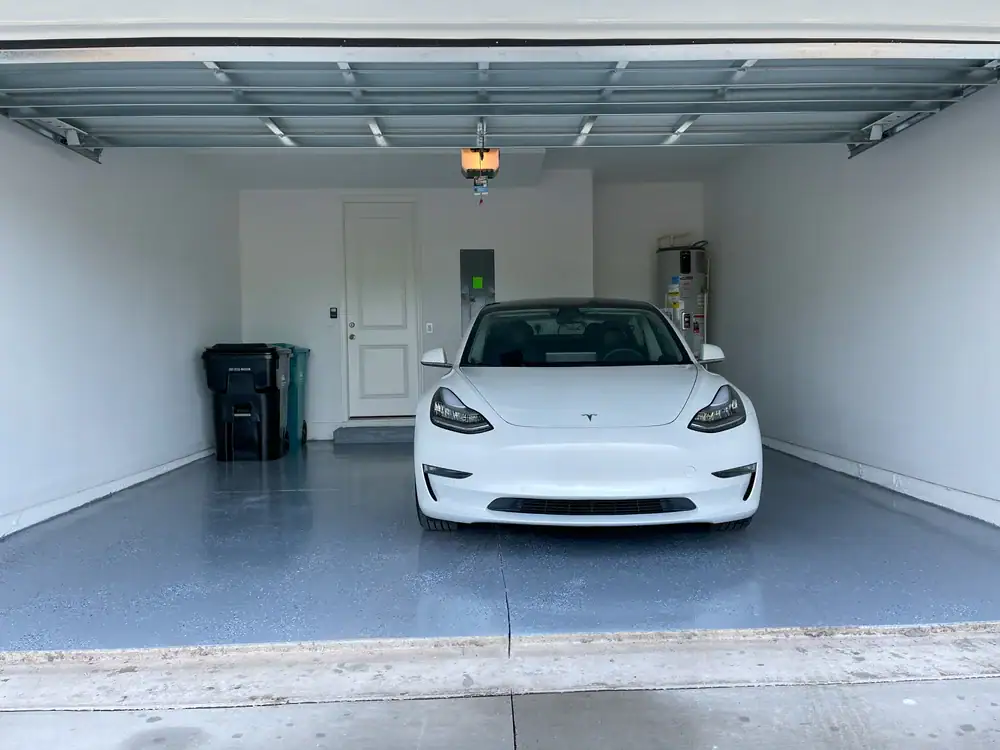
Royal Palm Beach Epoxy Flooring Contractors
We’ve been installing epoxy garage flooring across South Florida since 2020. We’ve done work for the Coast Guard, US Army, City of Doral, City of Sunny Isles, and county facilities that can’t afford to redo floors every few years.
Royal Palm Beach sits in the same humid, moisture-heavy climate that makes epoxy installations tricky. We account for that before we pour anything. Moisture testing, proper primers, cure times adjusted for local conditions—it’s not complicated, but most contractors skip it.
You’re not hiring a crew that learned epoxy last month. You’re working directly with installers who’ve handled commercial floors, government projects, and residential garages that need to hold up in Florida heat and hurricane season.
Garage Floor Coating Installation Process
First, we test your concrete for moisture. Florida slabs hold water, and if we don’t account for that, the coating fails in two years. We’re checking moisture levels and surface integrity before we agree to start.
Next, we prep the surface. That means grinding down the concrete to open the pores, removing any old coatings or sealers, and making sure the epoxy has something to bond to. Most failures happen because this step gets rushed.
Then we apply a moisture-resistant primer if your slab needs it. After that, we install the epoxy system—usually a base coat, optional color flakes for texture and grip, and a clear topcoat that seals everything. For faster projects, we use polyaspartic coatings that cure in 24 hours.
You’re typically looking at one to two days of work depending on the size and system. We’ll walk the space with you first, explain what we’re seeing, and give you a transparent price before anything starts.
Ready to get started?
Epoxy Flooring Options for Royal Palm Beach
You’re getting an epoxy floor coating system designed for South Florida. That means industrial-grade materials from Sherwin Williams, Fosroc, and Rockhard—products formulated to handle coastal humidity and temperature swings.
We install standard epoxy systems for chemical resistance and durability at a lower cost, or polyaspartic coatings if you need the floor back in service fast. Polyaspartic cures in 24 hours and handles UV exposure better, which matters if your garage gets direct sun.
Royal Palm Beach homes deal with moisture year-round. We’re using primers and sealers that account for hydrostatic pressure and humidity levels that would cause cheaper coatings to bubble or peel. You also get options for color flakes, slip resistance, and finishes that range from matte to high-gloss depending on what you’re using the space for.
Every install includes surface prep, moisture testing, and a walkthrough so you know exactly what’s happening. We’re not middlemen—you’re talking directly to the people doing the work.
How long does epoxy garage flooring last in Florida’s humid climate?
A properly installed epoxy garage floor lasts 10 to 20 years in Royal Palm Beach if it’s done right. The key word is “properly.” Florida’s humidity and moisture levels will destroy a bad installation in two to three years.
The difference comes down to surface prep and moisture management. If the installer doesn’t test your slab for moisture, doesn’t grind the surface to open the concrete pores, or skips a moisture-resistant primer when your slab needs it, the coating won’t bond. You’ll see yellowing, bubbling, or full sections peeling up.
We account for Florida conditions before we start. That means moisture testing, proper primers, and materials rated for high-humidity environments. If your garage floor is installed with the right system and maintained with basic cleaning, you’re looking at decades of use—not a redo in three years.
What’s the difference between epoxy and polyaspartic garage floor coatings?
Epoxy is tougher and more chemical-resistant, but it takes longer to cure. Polyaspartic cures faster and handles UV exposure better, but it costs more. Both work in Royal Palm Beach—it depends on your timeline and what you’re using the garage for.
Epoxy systems typically take two to three days to fully cure before you can park on them. They’re excellent for garages that see oil, chemicals, or heavy use. Polyaspartic coatings cure in 24 hours, which is why we use them for projects that need a fast turnaround.
Polyaspartic also resists yellowing from sunlight better than epoxy, so if your garage door stays open or you get direct sun exposure, it’s worth considering. Cost-wise, epoxy runs $5 to $8 per square foot installed, while polyaspartic is closer to $8 to $12. We’ll walk you through both options based on your space and timeline.
How much does garage floor coating cost in Royal Palm Beach?
Most residential garage floors in Royal Palm Beach run between $1,200 and $3,500 depending on size, system, and condition of the concrete. You’re typically paying $5 to $12 per square foot installed for a quality epoxy or polyaspartic system.
A standard two-car garage is around 400 to 600 square feet. If your concrete is in decent shape and doesn’t need major repairs, you’re looking at $2,000 to $3,600 for a full epoxy flake system with topcoat. If you need crack repairs, moisture mitigation, or a polyaspartic system for faster curing, the price goes up.
We don’t do estimates over the phone because every slab is different. Florida moisture levels, existing coatings, and surface damage all affect what’s required. We’ll come out, test the concrete, and give you a transparent price based on what your floor actually needs—not a ballpark guess that changes later.
Can you install epoxy flooring over my existing garage floor coating?
Sometimes, but usually it’s better to remove the old coating first. If the existing coating is failing, peeling, or wasn’t installed correctly, putting new epoxy over it just means you’re bonding to a bad surface. It’ll fail again.
We test the existing coating to see if it’s still bonded to the concrete. If it’s solid and compatible with what we’re installing, we can prep and coat over it. But if we see any lifting, bubbling, or signs of moisture damage underneath, it needs to come off.
Removing old coatings adds time and cost, but it’s the only way to guarantee the new floor lasts. Florida’s humidity is unforgiving—if there’s a weak layer between the concrete and the topcoat, moisture will find it and cause problems. We’d rather do it right once than have you call us back in two years.
How do I maintain an epoxy garage floor in Florida?
Maintenance is simple: sweep or blow out dirt and debris regularly, mop with a mild cleaner when it gets dirty, and wipe up spills before they sit. That’s it. Epoxy floors don’t need sealing or special treatments if they’re installed correctly.
Florida’s humidity means you might see more dust or pollen tracked in, especially during summer. A quick sweep or leaf blower clears it. For deeper cleaning, use a pH-neutral cleaner and a mop—nothing acidic or abrasive that could dull the finish over time.
Avoid using metal shovels or dragging sharp objects across the surface. Epoxy is tough, but it’s not indestructible. If you’re parking hot tires on it right after driving, that’s fine—the coating is heat-resistant. Just don’t let chemicals like battery acid sit on it for days. Clean up spills when they happen, and your floor will look the same in 10 years as it does the day we finish.
Why do some garage floor coatings fail so quickly in South Florida?
Moisture. Almost every epoxy failure in Royal Palm Beach comes down to installers not accounting for Florida’s humidity and the moisture trapped in concrete slabs. If you don’t test for it and prep for it, the coating debonds.
Florida slabs are constantly dealing with hydrostatic pressure—moisture pushing up from below. When you seal the surface with epoxy, that pressure has nowhere to go. If the installer didn’t use a moisture-resistant primer or didn’t grind the surface properly, the coating lifts. You’ll see bubbles, yellowing, or whole sections peeling up within two years.
The other common issue is rushing the cure time. Epoxy needs time to harden, and Florida’s heat and humidity affect that process. If someone coats your floor and tells you to park on it the next day, they didn’t let it cure. It’ll look fine at first, then start failing under load. We account for local conditions, test moisture levels, and use the right products for South Florida. That’s why our floors last.
Other Services we provide in Royal Palm Beach
Leave a Reply