


Garage Epoxy Flooring in San Castle, FL
Floors That Handle Florida Heat Without Cracking
Hear from Our Customers
Epoxy Garage Floor Solutions San Castle
You’ve probably noticed how fast concrete deteriorates here. Oil stains that won’t budge. Cracks spreading after one summer. That powdery dust that gets tracked into your house.
Most garage floors in San Castle fail because they weren’t designed for our weather. When temperatures hit 95°F and humidity stays above 70%, standard concrete just breaks down. Add in the salt air and afternoon storms, and you’re looking at constant maintenance.
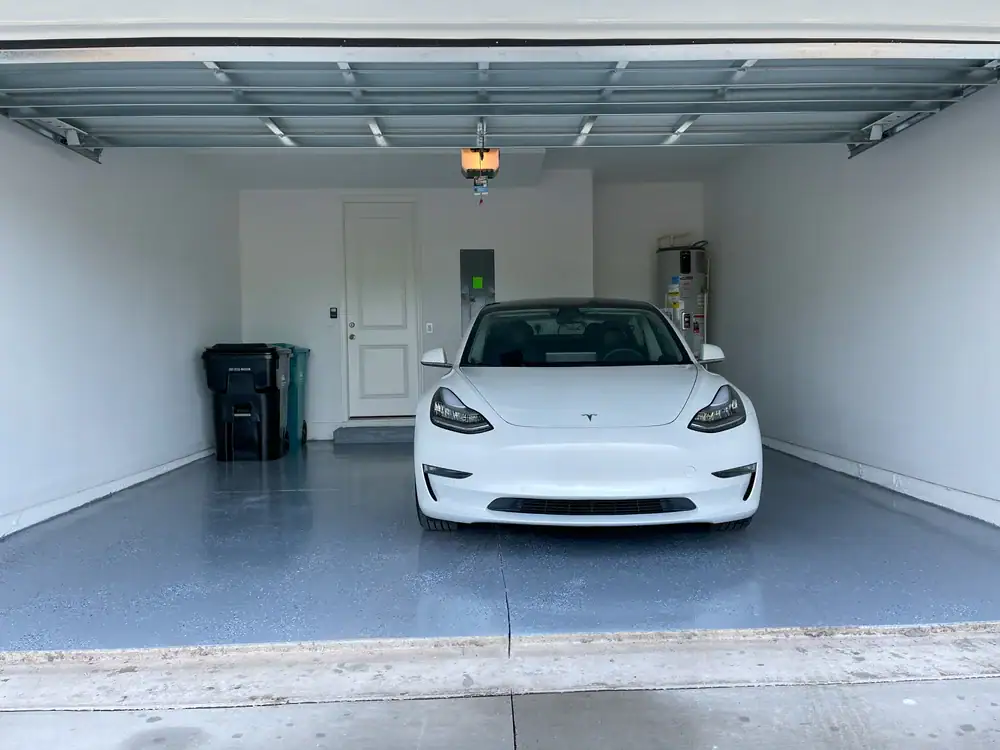
A proper epoxy garage floor changes that. The surface seals completely, so spills sit on top instead of soaking in. You can park a hot car on it, hose it down during a storm, and it looks the same five years later. No more staining. No more resurfacing. Just a floor that works.
The difference is in how it’s installed. We’re not talking about a DIY kit from a big box store. Those fail within two years here because the prep work isn’t deep enough and the materials can’t handle moisture cycling. Professional epoxy flooring uses commercial-grade resins that bond at the molecular level. That’s why it lasts 15-20 years in Florida’s climate while cheaper options peel within months.
San Castle Epoxy Flooring Contractors
We handle epoxy and concrete work across South Florida. We’re veteran-owned, and we’ve installed floors everywhere from residential garages in San Castle to military facilities and municipal buildings.
You’re not getting a sales pitch from someone who learned about epoxy last month. Our team has worked with the Coast Guard, the US Army, and cities like Doral and Sunny Isles. We’ve done floors at Hard Rock Stadium and Miami International Airport. When government contracts require durability and precision, they call us.
That same standard applies to your garage. We use the same materials, the same prep process, and the same attention to detail whether it’s a two-car residential space or a 50,000-square-foot commercial facility. You get transparency on pricing, a realistic timeline, and a floor that actually lasts in San Castle’s heat and humidity.
Garage Floor Coating Installation Process
First, we assess your concrete. We’re checking for moisture issues, existing damage, and whether the slab is structurally sound. If there’s a problem underneath, we address it before any coating goes down. Skipping this step is why most DIY jobs fail.
Next comes surface prep. We grind the concrete to open the pores and create a profile that epoxy can bond to. This isn’t optional. Without proper mechanical prep, the coating will eventually delaminate no matter how good the product is. We also repair any cracks and level any uneven areas.
Then we apply the epoxy system in layers. The primer goes down first to seal the concrete and create maximum adhesion. The base coat follows, which is where you get your color and thickness. We add slip-resistant aggregate if you want traction when the floor is wet. Finally, a clear topcoat goes on for UV protection and chemical resistance.
Most garage floor coating projects in San Castle finish in one day. You’ll need to stay off it for 24 hours, and we recommend waiting 72 hours before parking a vehicle. After that, it’s ready for whatever you throw at it.
Ready to get started?
What’s Included in Garage Epoxy Flooring
When we install epoxy garage flooring in San Castle, you’re getting a complete system designed for longevity. That means proper moisture testing before we start, diamond grinding to prep the surface, crack repair where needed, and a multi-layer application process.
The materials matter. We work with Sherwin Williams and Fosroc products because they’re formulated for high-humidity environments. These aren’t the same resins you’ll find in a retail kit. They’re thicker, they cure harder, and they include UV inhibitors so your floor won’t yellow under Florida sun exposure.
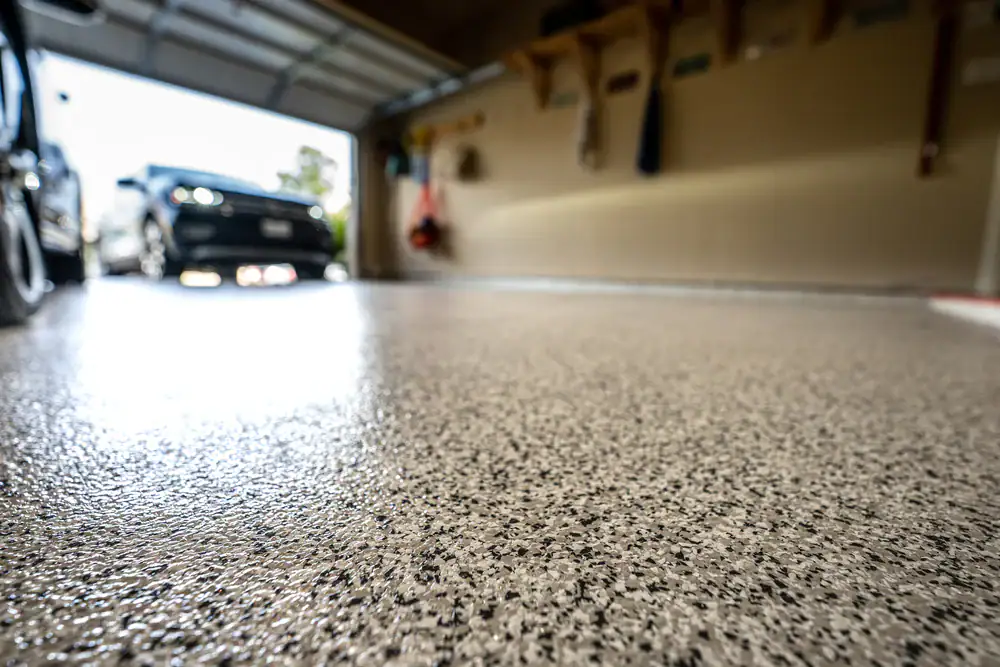
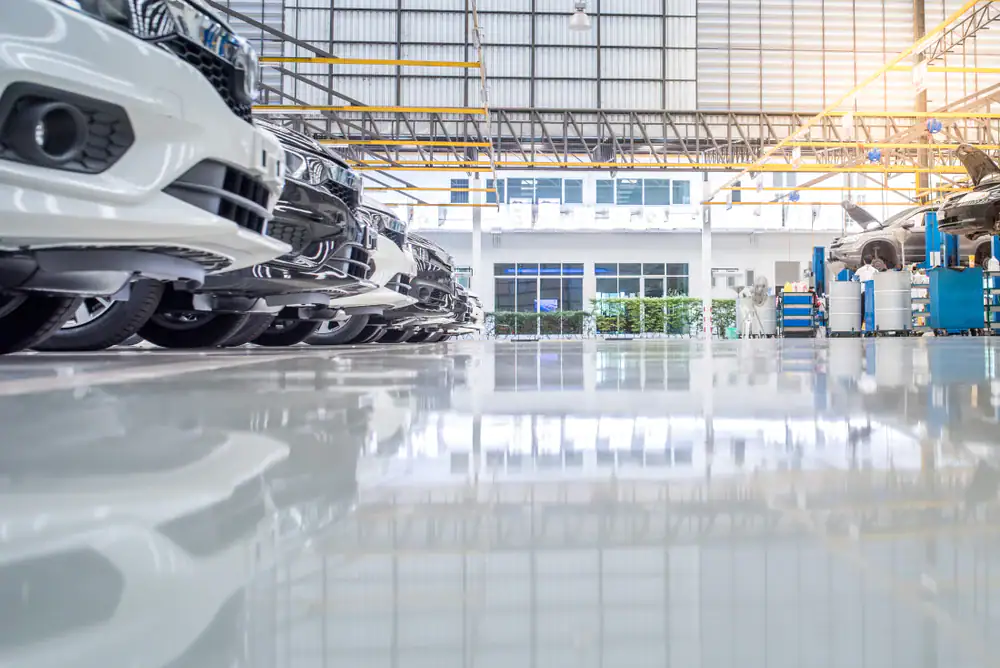
You also get options. Some homeowners want a solid color. Others prefer decorative flakes for texture and visual interest. If your garage doubles as a workshop, we can add extra aggregate for slip resistance. If you’re parking collector cars, we can do a high-gloss finish that looks like a showroom floor.
The typical two-car garage in San Castle runs between $2,300 and $4,500 depending on the system you choose and the condition of your existing concrete. That includes all prep work, materials, labor, and cleanup. No surprises. We’ll walk the space with you, explain what’s needed, and give you a transparent quote before any work starts.
How long does epoxy flooring last in Florida’s climate?
Professional epoxy flooring lasts 15-20 years in South Florida when it’s installed correctly. The key is using materials designed for high humidity and temperature swings.
Cheap epoxy kits from home improvement stores typically fail within 2-3 years here. They can’t handle the moisture cycling and heat we get in San Castle. The coating starts to bubble, peel, or yellow because the resin isn’t UV-stable and the bond wasn’t strong enough to begin with.
Commercial-grade systems are different. They use thicker resins, better primers, and UV-resistant topcoats. The surface prep goes deeper, which creates a mechanical bond that holds even when the concrete expands and contracts. That’s why you see epoxy floors in airports, hospitals, and military facilities. They’re built to last decades under heavy use.
Can you install epoxy over my existing garage floor?
Usually, yes. But we need to assess the concrete first to make sure it’s a good candidate.
If your existing floor has old paint or a failing coating, we’ll remove that completely before applying epoxy. If there are cracks, we’ll repair them. If there’s a moisture issue coming up through the slab, we’ll address that first because no coating will stick if water is pushing up from below.
The concrete itself needs to be structurally sound. Minor surface damage is fine. We can grind that away during prep. But if the slab is severely cracked or crumbling, you might need more extensive concrete work before epoxy makes sense. We’ll tell you honestly what’s needed during the consultation. There’s no point in coating a floor that’s going to fail underneath.
Will the floor be slippery when wet?
Standard epoxy can be slippery when wet, but we add slip-resistant aggregate to create traction. You can customize how much grip you want based on how you use the space.
For most residential garages in San Castle, we recommend a medium-grit aggregate mixed into the topcoat. It gives you enough traction to walk safely after rain or when you’re washing the floor, but it’s not so rough that it’s uncomfortable if you’re working on the ground.
If your garage sees a lot of water, like if you wash vehicles inside or if you live in a flood-prone area, we can add more aggregate for extra slip resistance. The trade-off is that heavier texture can be slightly harder to clean. We’ll talk through your specific needs and find the right balance during your consultation.
How much does garage floor epoxy cost in San Castle?
Most two-car garages in San Castle run between $2,300 and $4,500 for a complete epoxy system. The final cost depends on your floor’s current condition, the size of the space, and which system you choose.
A basic solid-color epoxy with standard prep is on the lower end. If you want decorative flakes, metallic finishes, or if your concrete needs significant repair work, the price goes up. We also factor in things like moisture mitigation if your slab has humidity issues.
Here’s what’s included in that price: moisture testing, diamond grinding for surface prep, crack repair, a multi-layer epoxy application, and all cleanup. You’re not paying extra for materials or surprise fees. We give you a transparent quote upfront so you know exactly what you’re spending before we start.
What’s the difference between epoxy and garage floor paint?
Epoxy is a two-part resin system that chemically bonds to concrete. Garage floor paint is just a topical coating that sits on the surface. The performance difference is massive.
Paint might last six months to a year in a Florida garage before it starts peeling. It can’t handle hot tires, chemical spills, or the constant humidity we get in San Castle. You’ll see tire marks, the color fades fast, and moisture gets underneath, causing it to lift.
Epoxy creates a thick, durable surface that becomes part of the concrete. It’s chemical-resistant, so oil and gasoline won’t stain it. It handles thermal expansion without cracking. And because it’s applied in multiple layers with proper surface prep, it bonds at a level paint can’t match. That’s why epoxy lasts 15-20 years while paint needs constant touch-ups.
How soon can I use my garage after installation?
You can walk on the floor after 24 hours. We recommend waiting 72 hours before parking a vehicle, and a full week before placing heavy equipment or doing anything that puts significant stress on the surface.
The epoxy needs time to fully cure. It’s hard enough to walk on within a day, but the chemical cross-linking process continues for about seven days. During that time, the coating is getting harder and more durable.
Most of our San Castle clients schedule the installation on a Thursday or Friday so they have the weekend for curing. By Monday, they’re parking on it. By the following weekend, it’s fully cured and ready for whatever they need. We’ll give you specific guidance based on the system we install and the temperature during your project.
Other Services we provide in San Castle
Leave a Reply